

The Secret To Scrambled Eggs That Never Stick To Stainless Steel
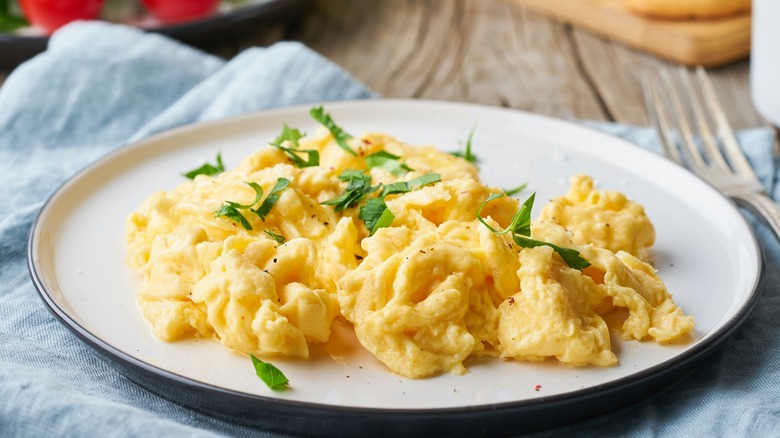
There are a few different schools of thought about the best way to prepare scrambled eggs. To make scrambled eggs like Bobby Flay, pour beaten eggs into a cold pan, whereas Gordon Ramsay's perfect eggs involve a hot skillet and constant stirring. However, there is one golden rule everybody tends to follow: using nonstick cookware. But there's good news for anyone without a nonstick pan or those who simply want to rebel against egg orthodoxy. According to a Viking Cruises chef who spoke with The Takeout, stainless steel pans can make fluffy scrambled eggs without them sticking to the skillet, despite what any puritans claim.
The trick relies on getting that stainless steel pan hot ... like blazing hot. To begin, our Viking chef instructed heating the skillet over medium heat. "[The] pan has to be preheated before adding oil," they said. When you think it's ready, they said, "Do a water drop test." Toss a drop of water into the pan. If it sizzles and evaporates — a definite indication that the pan is piping hot — it's not ready yet.
Give it a little more time and try adding another drop of water. If it's hot enough, you'll notice the water form a ball and roll around the pan. It seems counterintuitive that more heat would prevent the water from evaporating, but that's how the Leidenfrost effect works. In truth, the bottom of the drop of water does evaporate. However, it does so extremely rapidly, creating a little cushion of steam that the remaining water hovers on. The Leidenfrost effect will treat eggs in the same manner, preventing them from sticking while they cook, as long as a couple of other simple steps are followed.
Additional steps for cooking scrambled eggs in a stainless steel pan
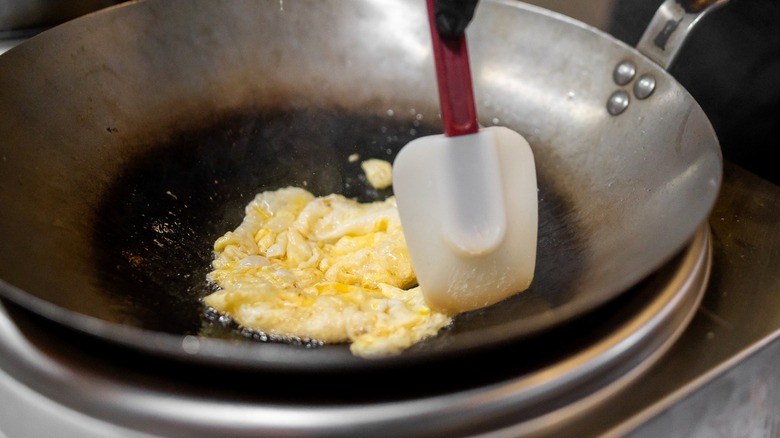
The Leidenfrost effect makes cooking scrambled eggs in stainless steel a viable option, but only if specific measures are taken once the pan is hot. The next step, according to our Viking chef, is this: "Turn down heat; add oil, then butter." The burner should be turned all the way to low. Leaving it at medium nearly guarantees your breakfast will burn.
After turning the burner down, pour in your oil. Let that acclimate to the heat for several seconds, then add butter to enhance the flavor of your eggs. Adding the oil first allows the butter to enter the hot pan without scorching. Now it's time to add your eggs. It's best to whip them up in a bowl while the stainless steel is preheating so you don't lose too much heat doing it when the pan is ready. Pour them in and watch them glide around like they're floating on clouds (essentially, they are).
Just as you should when cooking them in a nonstick skillet, focus on the edges of the pan for scrambled egg perfection. Use a spatula to move the runny parts into the center continually for about a minute. At that point, they should be fully cooked and ready to enjoy. When you slide them onto your plate, you'll notice your stainless steel is free of any burnt-on egg, making clean up a cinch. Is it being contrarian just for the sake of being contrarian to employ the Leidenfrost effect to make scrambled eggs in a stainless steel pan? Perhaps to some, but it's a breakfast game-changer for anyone who doesn't have a quality nonstick skillet within arm's reach.