

11 Grocery Store Items That Aren't Quite What They Say On The Label

Put on your detective hat, because after reading this article, your next trip to the grocery store might feel less like routine shopping, and more like cracking a case. That's because we're about to embark on a sleuthing assignment, delving deep into what's lurking on those store shelves. We're talking about the bright labels, the clever wording, and that eye-catching packaging designed to make products seem exactly how we hope they will, and should, be. You know, the wholesome, natural, and freshly made of it all. This is how they look, remember, because as any good sleuth knows, the truth often hides in the fine print.
From "all-natural" claims that aren't quite revealing the whole picture, to products that sound homemade, but are anything but, grocery aisles are full of sly marketing tricks. Some items rely on clever rouses, using vague buzzwords that sound impressive, but don't actually promise anything at all (much less deliver). It's not always outright deception, but it can definitely be misleading, especially if you're not paying close attention.
That's where a little curiosity (and close label-reading) goes a long way. So, what's a good sleuth shopper to do? Flip that package over, scan the ingredient list, and suddenly, you can start to see the real story (even without your Sherlock Holmes monocle). Consider this your insider guide to decoding the grocery aisle, one label at a time. Here are 11 grocery store items that aren't quite what they say on the label.
1. Honey

Our grocery store label investigation begins amid the golden glow of the honey aisle, as we stroll down the rows of amber bottles promising purity, nature, and maybe even a touch of countryside magic. But, not so fast. We urge you step in and look a bit closer, detective, because something here is sticky. While that bottle labeled "pure honey" isn't necessarily fake, chances are it's far from the raw, straight-from-the-hive nectar you might imagine.
What is raw honey, exactly? Well, what it's not is what you find in most grocery store bottles, thanks to many large-scale producers ultra-filtering their honey, which strips out pollen and microscopic particles to create that perfectly clear, shelf-stable look we love so much. While it's smooth, and pretty, it's also missing some of the natural enzymes and traceability raw honey is known for.
In some cases, honey can even be "adulterated"(meaning it's been cut with cheaper sweeteners, like corn syrup or rice syrup). What is the big deal? Oh, you know, just that this is straight up food fraud (Translation: Swapping or stretching ingredients to boost profits, while the label stays blissfully unchanged). And, before you go thinking this is in shoppers' heads, actual investigations have found a surprising number of products failing basic quality benchmarks. Sadly, to the average shopper, this deception is nearly impossible to tell. So what's a savvy sleuth to do? Read labels carefully. Look for terms like "raw" or "unfiltered," and consider sourcing locally when possible.
2. Wasabi
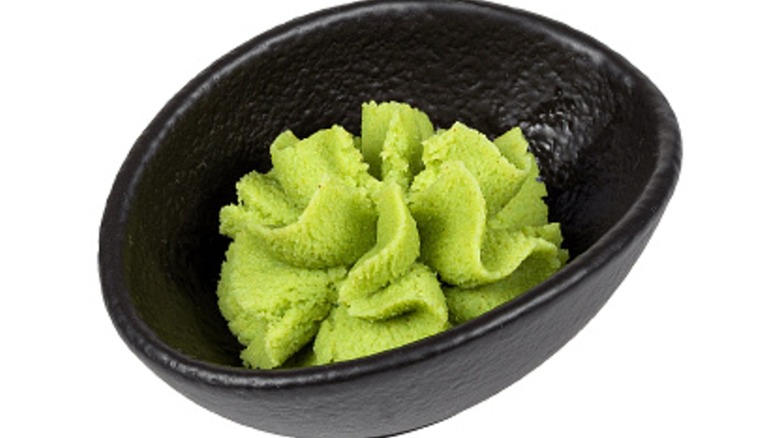
Next stop is the sushi counter. You see that bright green dollop sitting next to your California roll? That's our next suspect. Despite its reputation, most "wasabi" sold in grocery stores (and even in many restaurants) isn't real wasabi. Instead, it's a blend of horseradish, mustard, and green food coloring masquerading as the genuine article.
The real deal, derived from the plant Wasabia japonica, is notoriously difficult to grow, due to its requiring very precise conditions (think cool temperatures and flowing water, just to name two). Real wasabi can also take years to mature, and once it's prepared, loses its flavor within minutes. Translation? True wasabi is rare, expensive, and has a taste that may be superior, but is also quite fleeting. Needless to say, these traits are not exactly ideal for mass production, much less money making sales.
The imitation version, on the other hand, is cheap, stable, and packs a strong flavor punch (though not quite the same). Real wasabi offers a complex flavor (fresh, with a quick, clean heat that fades fast). The impostor? It's known to be more sharp and harsh. Visually, there's a clue there too. Real wasabi tends to present a more natural green hue, while the fake stuff often shocks with an almost neon shade. So, the next time your sinuses light up while noshing on your sushi, that decidedly unrefined heat causing your nose to run and eyes to water? It might actually just be horseradish in disguise.
3. Crab Sticks (Imitation Crab)
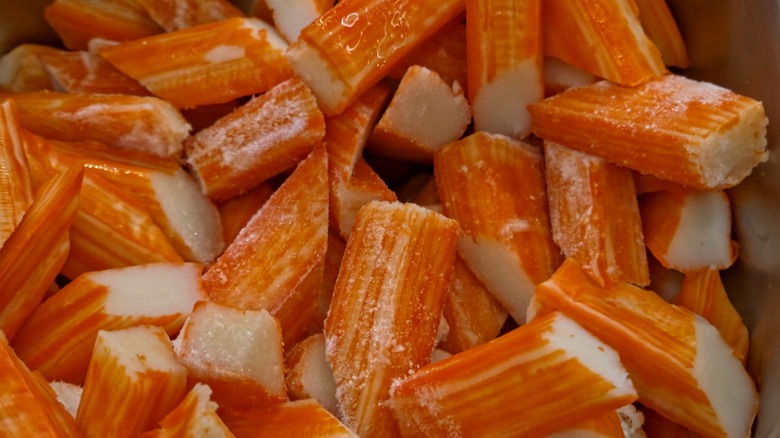
What's in imitation crab? We're so glad you asked, as that's our next case to crack. Crab sticks are sometimes labeled "krab," which should be your first telltale clue that something fishy is going on here. Many shoppers may be shocked to learn that most crab sticks contains little to no actual crab at all. Instead, it's made from surimi, which is a processed paste usually derived from white fish, like Alaskan pollock. This mixture is then blended with starches, egg whites, and additives, before being shaped and colored to exactly resemble crab legs or flakes.
From a distance, it plays the part beautifully. Nutritionally, however, that's where the disguise begins to slip. When compared to real crab, imitation versions typically contain less protein and more carbohydrates (much in thanks to starches and sugars that have been added). In fact, some varieties derive a hefty portion of their calories from sugar alone. Further additives, like sorbitol, can also be seen, along with preservatives and compounds designed to enhance texture and elongate shelf life.
None of this makes imitation crab unsafe (it's widely consumed and approved for use), but this does serve as a classic example of how labeling can blur the line between expectation and reality. So, the next time you're building that sushi plate or seafood salad, take a moment to consider: Is it actual crab in the leading role ... or a cleverly costumed understudy?
4. Extra Virgin Olive Oil
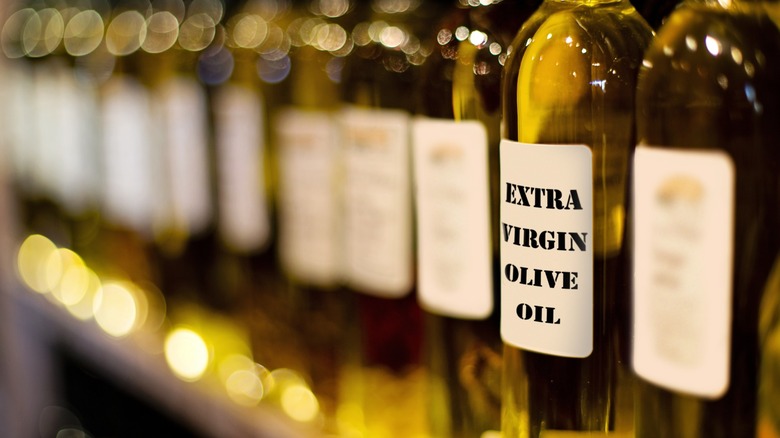
Straighten your monocle, detectives, because our next grocery store item to inspect is extra virgin olive oil. Marketed as an elite pick among all other grocery oils, extra virgin olive oil (EVOO) is known for being pure, unrefined, and packed with the best flavor and health benefits. Yet, lurking behind the elegantly designed bottles lining grocery store shelves lies one of the most sneaky cases of food misrepresentation.
In order to earn the "extra virgin" moniker, olive oil must first meet strict standards. It should be mechanically pressed, free from defects, and rich in natural flavor. Sounds straightforward, but there's the catch. The rub lies in the fact that enforcement of this criteria is quite limited. But, since demand is so high (and authentic production costly), some producers cut corners. This can mean blending true olive oil with lower-grade oils, or even mixing in cheaper alternatives, like soybean or canola oil. The label stays the same, but the contents? Not so much.
Studies have even proven this, finding a large portion of oils labeled "extra virgin" failing quality tests. Even when the oil starts out legit, poor storage can degrade it, stripping away the very qualities that first defined it as the elite EVOO. How do you crack this case? Look for darker bottles, check for harvest dates, and be wary of prices that seem too good to be true. Real extra virgin olive oil won't be cheap.
5. Maple Syrup

The next grocery store item that can be a bit sus is maple syrup. While it may have a romantically rustic label, complete with a picturesque maple tree making an appearance, don't let that front-of-the-package charm fool you. When it comes to real maple syrup, it's a painstaking process. It begins with sap being collected from maple trees, which is then boiled until reduced to a rich, sweet sensation folks have prized above all other syrups for ages. It's also a rarity in that it's seasonal, which may partially explain its expense.
While many people will attest the cost is worth getting a taste of the real thing, the hefty price tag is precisely why many "maple" syrups take a completely different route for production. Flip your average grocery store syrup bottle, and you'll often find evidence of a formula founded on high-fructose corn syrup, cleverly infused with caramel coloring, and artificial flavoring for a taste meant to mimic the real thing. The real shocker? There are zero actual trees involved in that equation (zero trees equals zero sap). Hence, shoppers are getting a carefully engineered illusion specifically designed to hit the same taste, but at a fraction of the price.
These products aren't always labeled deceptively in a legal sense, although terms like "pancake syrup" or "maple-flavored syrup" do quietly signal you're not getting the genuine article. Detective tip? If that bottle you're holding doesn't clearly say "100% Pure Maple Syrup," assume it's just playing dress-up.
6. Vanilla Bean Paste/Extract
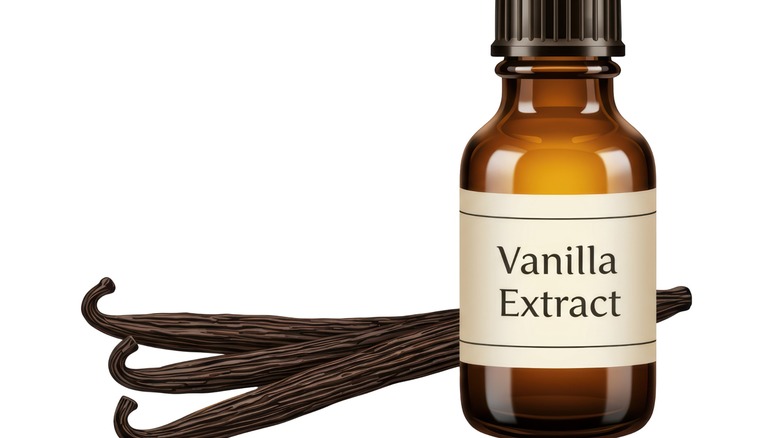
Don't let the name of the next grocery list item deceive you, the average vanilla lining your grocer shelves is anything but "vanilla," especially in terms of its marketing. In fact, marketers are known for "spicing" up and "fudging" the facts on standard labels. The real story starts with an orchid (real vanilla actually comes from the cured pods of orchid plants). These living beauties must be grown under very specific conditions, and harvested via labor-intensive processes. That difficulty helps explain why real vanilla is so expensive, and why producers created a more affordable substitute to take its place.
Enter vanillin, a synthetic compound designed to mimic vanilla's flavor. Not only is it cheaper and easier to produce, but vanillin is also passable for the real thing to normal shoppers' taste buds. Vanillin delivers another shock in that, oftentimes, it doesn't contain anything close to a vanilla bean. In fact, it can be produced from lignin (a component found in wood pulp), or even synthesized from petrochemical sources. Though gross, vanillin isn't actually harmful.
The issue isn't so much safety as it is substitution without clarity, leaving shoppers feeling more than a bit hoodwinked. For example, many products labeled "vanilla flavored" rely entirely on synthetic vanillin, giving consumers the impression they're enjoying something far more premium than they actually are. Detective tip? Look for "pure vanilla extract" if you want the real deal. Anything less specific is a clue you're being sold an imitation.
7. Grated Parmesan Cheese
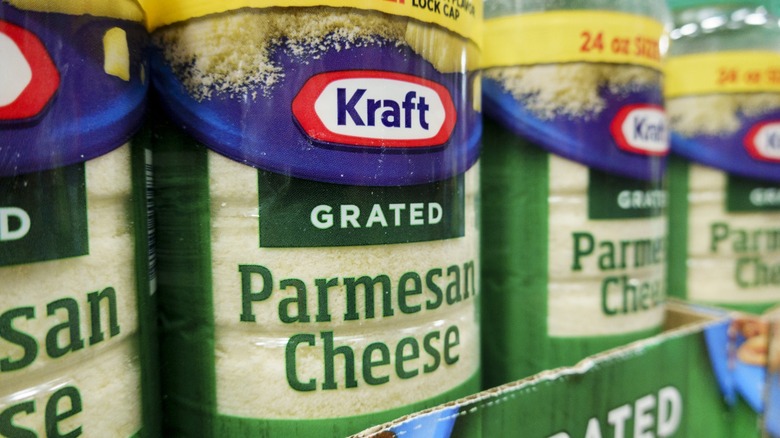
Shoppers shake and sprinkle it over pastas and salads without giving it a second thought, but what they may not realize is that the label that reads "100% Parmesan" may not be 100% true. It may smell similar to the real thing, but we are getting a whiff of something off, at least when it comes to marketing representation. Pre-grated Parmesan often contains cellulose (a plant-based fiber often derived from wood pulp). Its role is functional (to prevent the cheese from clumping together, keep it dry, and maintain ease of sprinkling). On its own, that's not especially alarming, since cellulose is approved for use in food.
Things get murky when investigations have dug a bit deeper. Specifically, testing has revealed that some products contain higher-than-expected levels of cellulose, which indicates that producers are using it as a filler rather than just an anti-caking agent. In some cases, products labeled as "100% Parmesan" were also found to include other, cheaper cheeses mixed in (cheddar or mozzarella, for instance), without clear disclosure of this inclusion on the front label. That's where the detective work comes in.
The issue isn't that these additives are dangerous, but more that they are counter to what you think you're buying. Consumers expect pure, aged cheese. What they get sometimes get is a processed blend padded with unwanted extras. Detective tip? Check the ingredient list carefully. Authentic Parmesan should have a short, straightforward ingredients list (milk, salt, enzymes ... period).
8. White Chocolate
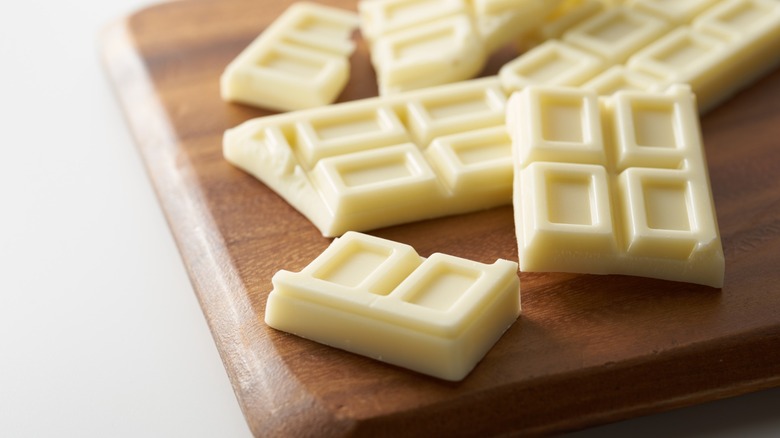
Is white chocolate real chocolate? It's a question heard often, with an answer that isn't so simple. Let's bite into it together. When it comes to traditional chocolate, its defining characteristics are cocoa solids (the part of the cacao bean credited for its rich, deep flavor and dark color). As for white chocolate, it contains none of those, instead being made from cocoa butter (the fat from the bean), paired with sugar and milk solids.
So, is it chocolate? That depends on how strict your definitions are. Technically, while it still comes from the cacao plant (thanks to the cocoa butter), without the cocoa solids, white chocolate lacks the very element that gives chocolate its core identity. Think of it from a sleuth point of view, where white chocolate is basically a suspect with the right last name, but none of the distinguishing features (or proper DNA) that would evidence it as a true family member. It gets more complicated with lower-quality versions, where some products labeled as white chocolate don't even use cocoa butter, instead substituting cheaper vegetable fats. At that point, the connection to chocolate becomes even more thin.
From a labeling standpoint, regulations do require a minimum percentage of cocoa butter for something to be called white chocolate, but not all products meet that standard equally. White chocolate isn't a total fraud, but it exists in a gray area. Just be sure to scan the ingredients carefully (cocoa butter should be front and center).
9. Blueberry Snacks
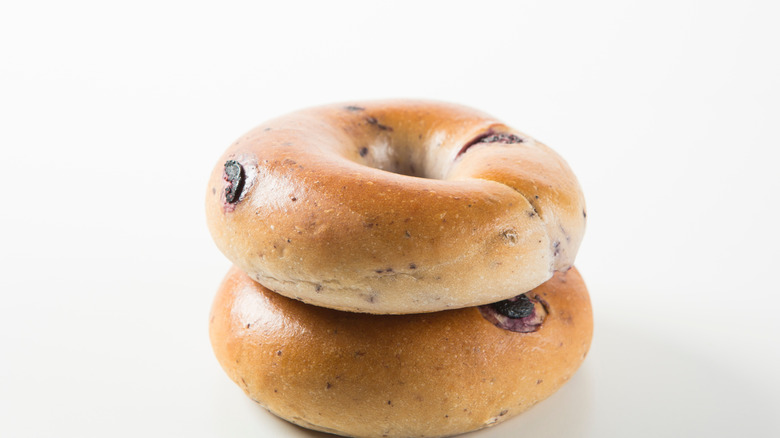
Who doesn't love the classic American favorite, blueberry snacks? From muffins to bars, even cereals and more, blueberries fill a vast majority of the comfort food and convenience fare we reach for every single day. Many times, the packaging on these products promises juicy blueberries bursting with flavor infused throughout each bite. However, when some shoppers dig a little deeper, much like that favorite blueberry muffin, the facade starts to crumble. That's because in many processed foods, those proudly proclaimed "blueberries" aren't actually blueberries at all.
What's in imitation blueberries? Well ... they're manufactured bits (often called "crunchlets"), made from sugar, starch, oils, and artificial coloring. Their purpose is to mimic the appearance and flavor of the real fruit, while costing significantly less to produce. The deception works because it's so subtle. The front of the package leans heavily on imagery and suggestion (filled with oh-so-many blueberries front and center). But, the ingredient list? That tells a different story. To be fair, sometimes real blueberries are even present (albeit in very small quantities), but they are more than overshadowed by engineered imposters. Other times? The harsh truth is that they're missing entirely.
Why go through all this trouble to basically trick shoppers into a substandard swap? Dollars and cents (real blueberries are expensive), and practicality (the actual fruits are perishable). There is also consistency to consider, with manufactured bits offering complete uniformity, as well as longer shelf life, and better profit margins.
10. White Tuna (Escolar)
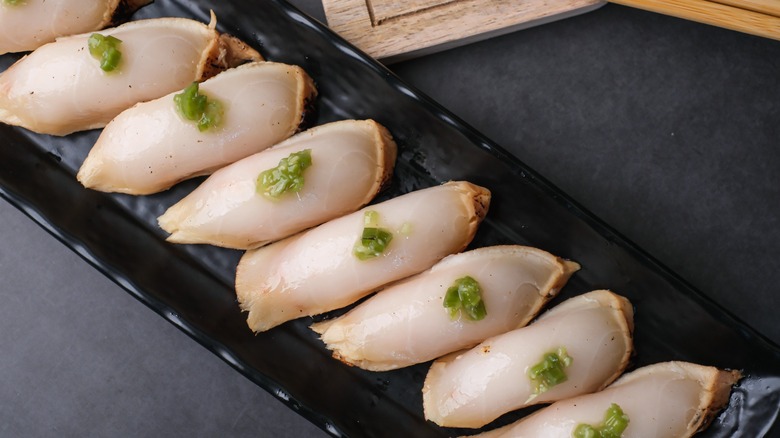
Fish is often considered among the healthiest choices. And, while "white tuna" may sound like an excellent option, health nuts may want to look closer before taking that first bite. This is because there's more than meets the eye here, and, in many instances, what's sold as white tuna isn't even tuna at all. Instead, it's escolar, which is a completely different fish. On the surface, a substitution like this could seem pretty harmless. After all, escolar has a similar texture and flavor to white tuna, making it easy to pass off as the real deal.
But, red flag territory is crossed when one learns that escolar contains a type of indigestible wax ester that has been found to cause significant digestive issues (when consumed in larger amounts). And, before you brush that warning aside, we're not talking mild discomfort. In fact, reports have linked it to a pretty serious condition known as keriorrhea. Because of this, some countries have restricted its accessibility, with Japan even banning escolar fish and sushi altogether. Others simply require warning labels to announce its presence in products.
Despite that pretty dire seriousness, sadly, mislabeling remains a widespread thing. Studies have found that an abundance of fish sold as "white tuna" is actually escolar, particularly in restaurant and sushi settings. Why? As ever, it seems to come down to economics. Escolar is cheaper and more readily available, making it an attractive substitute for businesses looking to cut costs.
11. Fruit Juice (Pomegranate or Cranberry)
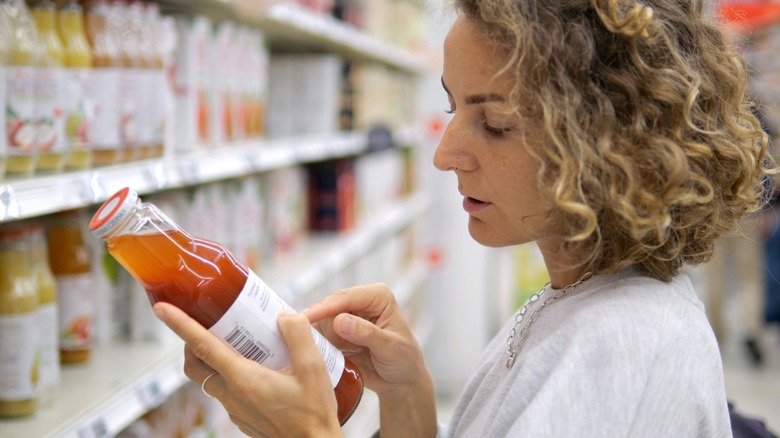
Let's bring this detective adventure home with a final dig into the delicious world of juice. Picture it now: You stroll down that grocery aisle and grab a bottle of crimson-colored liquid. The label reads "cranberry-pomegranate," so you're expecting a tart, antioxidant-rich drink that does your body good. However, as is the sad case with the other offerings on this list, the real truth about what you're actually about to drink is hiding in plain sight (buried within the fine print on that ingredient list).
It may make your head hurt to consider this mind-bending fact, but many of the fruit juice blends on your grocery store shelves actually consist of pretty large portions of apple or grape juice as a primary base (the fruit featured on the front of the package will likely be there, but oftentimes in far smaller amounts than you'd think or hope). It's quite sneaky of manufacturers — a clever way to save money, thanks to these being cheap, available in abundance, and naturally sweet (like so many other fruits).
This core criteria makes them genius swaps that shoppers often never even notice. Hence, while that label might still claim "100% juice" (and technically, that can be true), that doesn't mean it's 100% the exact fruit you think you're buying. Detective tip? Check the ingredient order. The first juice listed is the primary one. If apple or grape appears first, you've cracked the case wide open.