

The Best Jammy Egg Yolks Are Made Using This Low And Slow French Method
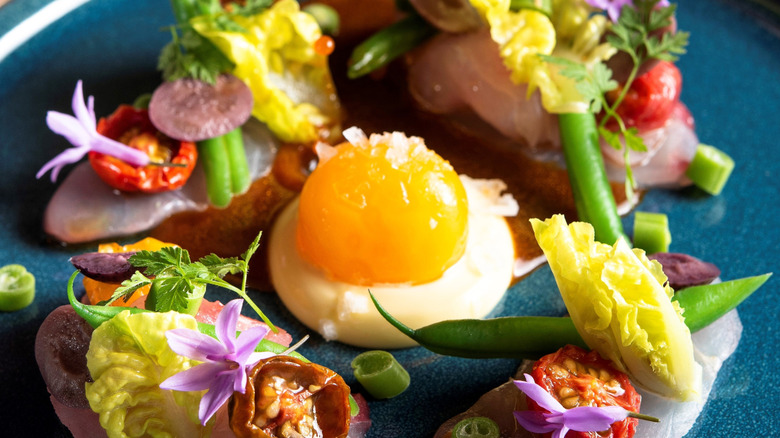
From ultra-creamy French scrambled eggs to custard-like French omelets (which are not the same as the American kind), France has given the world a wealth of famously indulgent egg dishes. If you're a jammy egg yolk lover, one lesser-known French egg preparation well worth a try is confit eggs, according to Nelson Serrano-Bahri, chef and director of innovation at the American Egg Board. "Confit eggs are eggs, usually the yolks or sometimes gently cooked whole eggs, prepared slowly at a low temperature in fat, often oil or butter," he explained. "The goal is not browning or frying, but gentle heat that transforms the yolk into something rich, silky, and deeply luxurious."
The texture is the star of the show in confit eggs. "You get a yolk that is velvety, spoonable, and intensely satisfying in a way that is very different from a standard soft-boiled or fried egg," Serrano-Bahri said. "It feels elegant while still being fairly simple." As for serving suggestions, he says confit eggs complement foods that benefit from richness and a velvety finish, such as toasted bread, roasted vegetables, grain bowls, pasta, potatoes, or a warm breakfast salad. "The reason they pair so well with so many dishes is that the yolk acts almost like a built-in finishing sauce," he explained. "It adds richness, body, and a luxurious mouthfeel without overwhelming the rest of the dish."
How to confit eggs at home
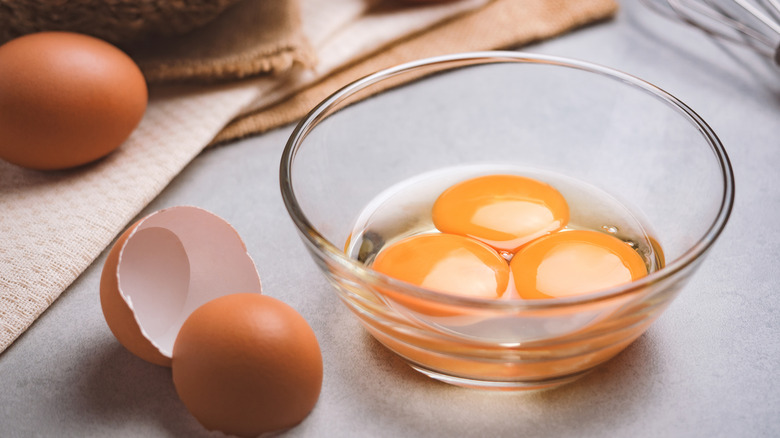
Confit eggs may sound like a mildly intimidating French dish you only pretend to know about, but the preparation method is actually fairly straightforward. "At a basic level, you cook the eggs very gently in fat over low heat until the yolks reach a soft, jammy consistency," Nelson Serrano-Bahri explained. "The key is control. You are not trying to fry the egg, but rather to slowly and delicately set the proteins." For home cooks, Serrano-Bahri recommends keeping the fat between 145 and 160 degrees Fahrenheit. "Once you get much hotter than that, you move away from a true low-and-slow confit effect," he warned. "The finished yolk should be glossy, rich, and spoon-soft rather than firm or crumbly." You can confit separated yolks or whole eggs, he noted, but the goal should be steady, low heat.
For an extra aromatic flavor boost, Serrano-Bahri suggests adding garlic, herbs, or chiles to the oil or butter used to confit the eggs. As for seasoning, "I like flaky salt, black pepper, Aleppo pepper, chives, dill, tarragon, or a little lemon zest," he advised. "They also work beautifully with chili crisp, browned butter notes, or gentle garlic-herb flavors." Whether you love jammy yolks as much as Keke Palmer or you're simply looking to expand your egg repertoire, this slow and elegant French method is worth a crack.