

Lidl Vs Aldi — Which Has The Best Food Bargains?
From a global perspective, these two German grocery chains are joined at the hip. They both have a similar color scheme, both are known for discount grocery shopping, and there's literally only one letter separating their names. But look a little closer, and there are differences. Lidl, for example, didn't arrive in the U.S. until 2017, whereas Aldi opened its first American store way back in 1976, in Iowa.
To be fair, they both expanded out of Germany and into Europe — specifically the U.K. and Ireland — around the same time in the 1990s. Regardless of trajectory, today, the retailers find themselves as huge multinational corporations, reaping hundreds of billions of dollars every year. And each of them has made a significant footprint on the American market.
With all that said, it's naturally time for a showdown. Which of these two titans offers the best deals to customers? Which of the Deutschland dynamos can save you the most money? While prices can vary based on your location, and are subject to change, we still found a heavyweight battle over what are admittedly some pretty lightweight items. Let's see who has the best food bargains between Lidl and Aldi.
Salmon fillet
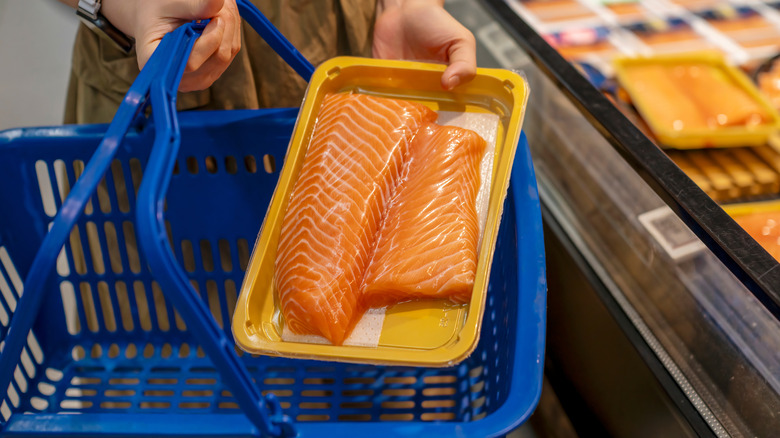
Salmon is the fish for people who don't usually buy fish. It's consistently the most consumed seafood in America behind shrimp, and has been called nature's perfect fish. Bears fattening themselves up for the long hibernation of winter will certainly agree, as well as anyone who loves their lox-and-cream-cheese bagel to start the day. But does Lidl or Aldi give you the best deal on fresh salmon fillets?
Turns out it's Lidl who's slaying it when it comes to salmon prices. It's selling its filleted offering for $7.99 a pound at the time of this writing. Compare that to Aldi, which purveys its salmon for $8.69 a pound, skirting close to a dollar more per. That difference quickly adds up when you're buying a fair amount of salmon.
Both products are coming from the Atlantic, with Lidl's emerging from the waters of Chile, according to the seller. Next time you're in the market for good salmon, and you don't feel like fighting a bear for some, head to Lidl over Aldi to save a few bucks.
Extra virgin olive oil
What exactly makes olive oil extra virgin? In essence, "extra virgin" is a grade, a tier of olive oil, that has to meet stringent standards set by the International Olive Council (IOC) and the U.S. Department of Agriculture (USDA). It mainly has to do with the quality of the olives that go into the extraction. An elite olive doesn't need all the help of a lesser olive. It only needs to be cold-pressed — no need for chemicals or heating to aid production.
Extra virgin is great for cooking, dressing, and just swallowing whole. But which grocer — Lidl or Aldi — sells it for less? This one takes a little math, as Lidl has a 25.4-ounce bottle for $9.35, while Aldi stocks a 16.9-ounce bottle for $7.25.
That breaks down to, on the Lidl side, 37 cents an ounce. For Aldi, it's 43 cents an ounce. Ounce for ounce, it looks like Lidl's got this one. Whether or not the IOC will recognize this achievement with an olive branch crown on the Lidl CEO's head remains to be seen. And whether or not that has ever actually been a thing also remains to be seen.
Navel oranges
Oranges were brought to the Americas by Spaniards in the 1500s, unsurprisingly, to Florida, a state that is closely identified with the fruit. At the time, the variety of orange was called the sweet orange. The sweet orange remains the most eaten variety on the planet, and is the ancestor of the navel orange – the quintessential orange for many Americans.
And it's Aldi that has the best bargain in this regard, though not by much. Aldi was selling its 4-pound bag of navels for $3.39, which works out to about 85 cents a pound. Compare that to Lidl, whose $3.59 bag equals 90 cents per pound. It's only a five-cent difference per pound, but saving money is saving money.
Another thing to consider: Aldi's Cara Cara oranges are highly regarded by some. If you're looking to mix up your orange stock, consider trying these. They have a sweetness that is redolent of candy, according to customers. And it goes for a similar price to the navels.
Whole milk
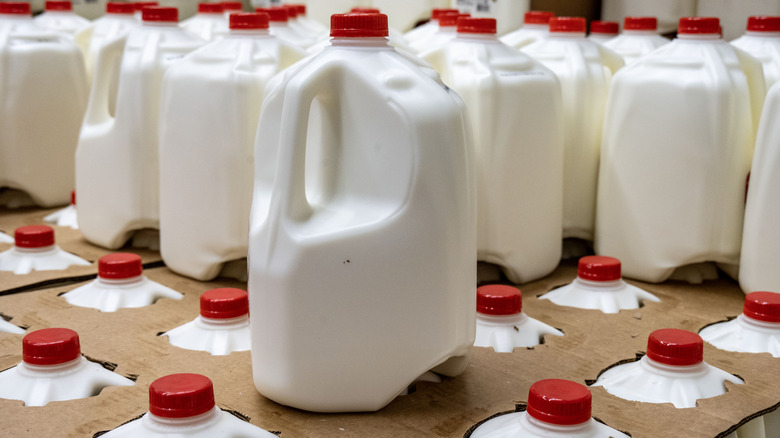
The good news is that both stores have low-priced milk, which is a reassuring thing in an unreassuring grocery economy. The average price of milk is $4.07 per gallon as of March 2026. The sticker has shot up in recent years due to the cost of livestock feed, transportation fuel, and fertilizers, at least according to experts.
Back to that good news: below-average milk prices. A gallon of whole milk at Aldi will set you back $3.13. Impressive. But not as impressive as Lidl's $2.39 gallon. That's a pretty good price, and it makes you wonder if Lidl is paying off cows under the table for this level of discount.
It's probably not that. Mainly because cows don't wear trench coats and therefore can't really hide a manila envelope after a shady parking lot meetup. Whatever the reason, this is just Lidl doing what it does to be one of the most affordable non-member supermarket chains in the country.
Fresh chicken breast
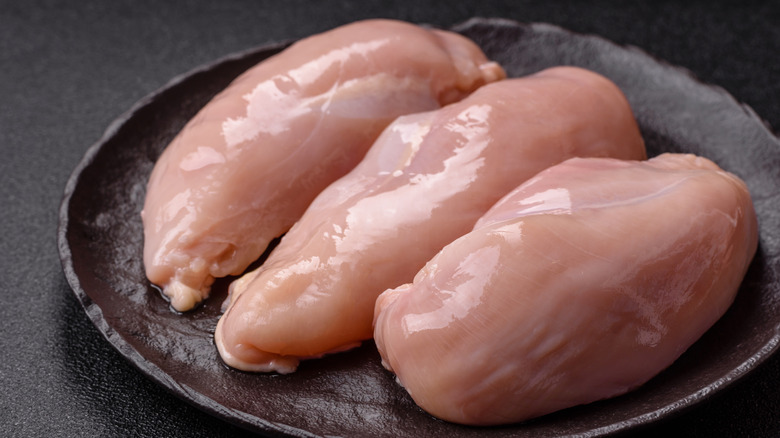
There's nothing that says "Family Pack" more than ready-to-cook chicken breasts. Sometimes literally, because it will actually say that on the package (or at least some variation of that). This is the case for both Lidl's and Aldi's fresh chicken breast offerings. But the similarities stop at the price, because one is cheaper than the other.
That would be Aldi, in this case. It's selling boneless, skinless rib meat chicken breasts for $2.29 a pound. Meanwhile, Lidl's is purveying its also-boneless, also-skinless chicken breasts for $2.99. This contributes to the notion that Aldi's meat is suspiciously cheap. Not saying a film noir detective needs to look into the case (or, for that matter, regular, real-life law enforcement), but anytime meat is sold on the cheap, it raises eyebrows.
But this is how Aldi operates. Everything about its philosophy has to do with cost-cutting, from the purposely low inventory to the array of private labels stocking its stores. Hey, as long as the meat looks above-board, just pay for your goods, pocket the savings, and feed the fam.
Organic whole-grain sliced bread
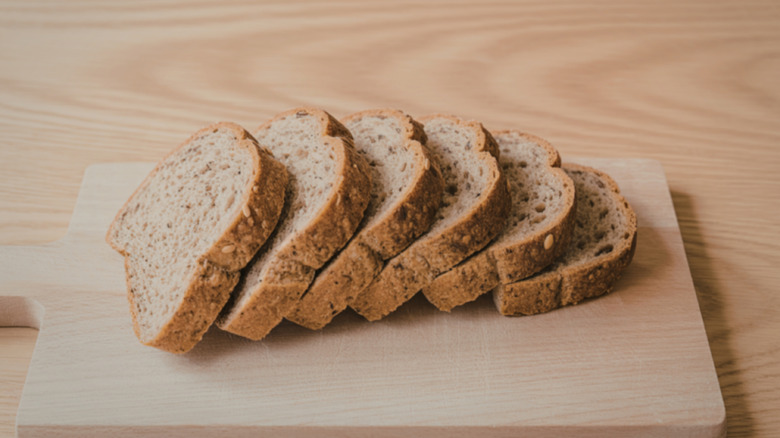
Supermarkets know how to spot a trending item, especially an item that isn't one of their own brands. What a chain will commonly do is give a private-label offering a very similar look to a popular product it's obviously copying. Neither Lidl nor Aldi is exempt from this practice. Just look at the very Lay's-like presentation of Aldi's Clancy's snack brand. That's not an accident.
Both Lidl and Aldi are selling an organic whole-grain sliced bread that looks very much like Dave's Killer Bread from a fuzzy distance (although they can't match the inspiring story behind the brand). Another non-accident. Aldi is doing this through its Simply Nature private label, while Lidl has thrown its own name on the competing item. But here's what really matters: Which one is cheaper?
Lidl is selling it for $3.75 a loaf, and Aldi for $3.99. But here's the thing: Look closer, and you'll see that, weight-wise, you're getting an additional 7 ounces of bread from Aldi for only about 20 cents more. On that, probably have to give this one to Aldi — but only by a nose.
Original potato chips
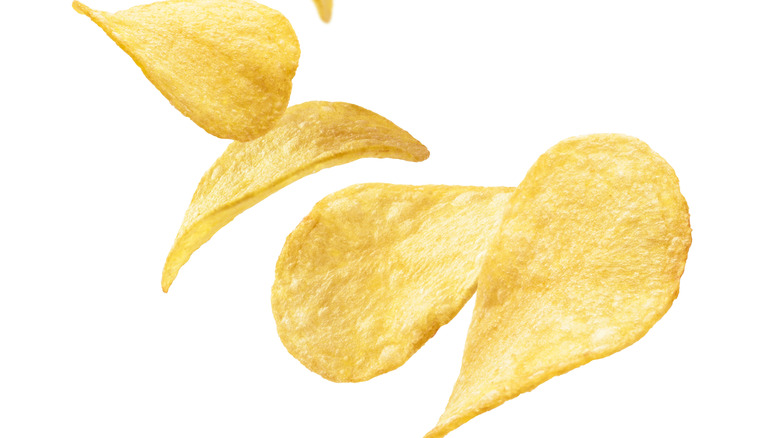
We already mentioned Clancy's. A lot of rumors have circulated about this Aldi chip brand, with people claiming that different manufacturers are behind it. The hush-hush nature of these relationships means we may never get to the actual truth of who's really producing a given house brand.
But what we can comment on for certain is the cost of the product. Aldi's aforementioned original potato chip is selling for $1.69. That's for a 10-ounce bag. Lidl's same-sized version of the classic chip, Snack Day, was on sale at the time of writing for $1.79 — but its regular price was $2.09.
Aldi's price was not a discount. That's what it costs, making it a solid 40-cent difference for the same amount of chips. And at Aldi, it's best you stick with the original flavor, because Reddit has not taken too kindly to Clancy's cheesy queso-flavored chips. Hey, sometimes classic is a classic for a reason.
Sparkling water
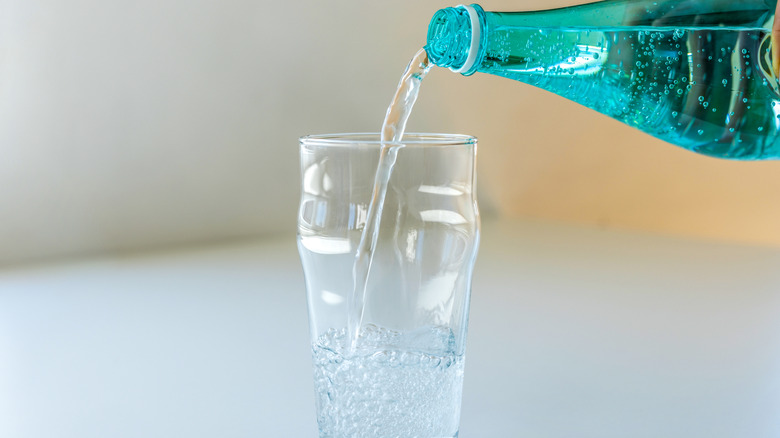
In 2024, the sparkling water market had a total estimated value of more than $30 billion. You can say that we're obsessed with the bubbly stuff. Any trip to any supermarket will bombard you with a dizzying array of sparkling water options — from New York Seltzer to Polar to Spindrift. What did poor old still water ever do to us?
Lidl and Aldi are both trying to make it easier for you to buy lower-priced options in this beverage category. Both have a house brand with a 12-pack of 12-ounce cans. And just for comparison's sake, we looked at the lime-flavored iterations of each. Aldi seemed to be the clear winner here at first. Its dozen-count was going for $3.99.
Lidl's, on the other hand, was selling for $4.49. But Lidl's had something else up its sleeve: a deal that lets you buy two packs for only $6. It doesn't take a Nobel laureate to realize that works out to only $3 per 12-pack. Well played, Lidl. Well played.
Plain yogurt
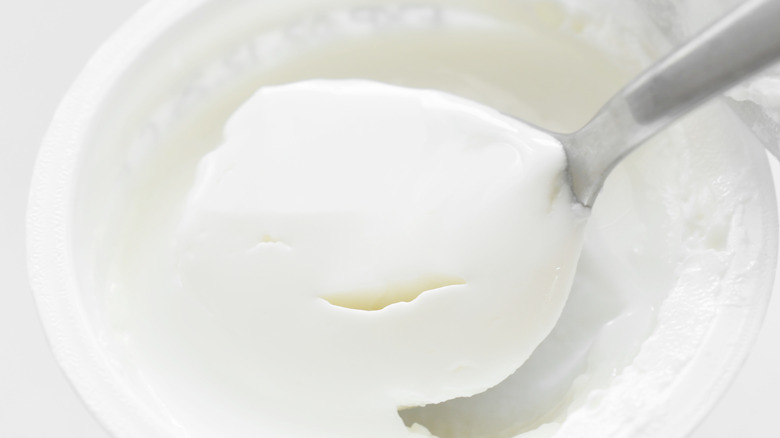
Plain yogurt is all the rage these days, what with its probiotics and its versatility. You can have it as is, you can throw some fruit, granola, and cereal in there, you can cook with it — it's just a fantastic thing to have in your fridge. And while some brands, like Fage, Chobani, and Oikos, can be costly, depending on where you shop, Aldi and Lidl offer a couple of more affordable brands under their roofs.
Aldi's Friendly Farms take on nonfat Greek yogurt — all 32 ounces of it — will set you back a modest $2.79. Not bad. However, Lidl is not going down without a fight. In fact, it's coming out on top, with a house offering of the same quantity priced 20 cents cheaper, at $2.59. When modest outdoes modest, is it more or less modest? That's a paradox for the Greek philosophers. For now, no matter if you're buying your yogurt at Lidl or Aldi, it'll be a bargain compared to the bigger names.
Bacon
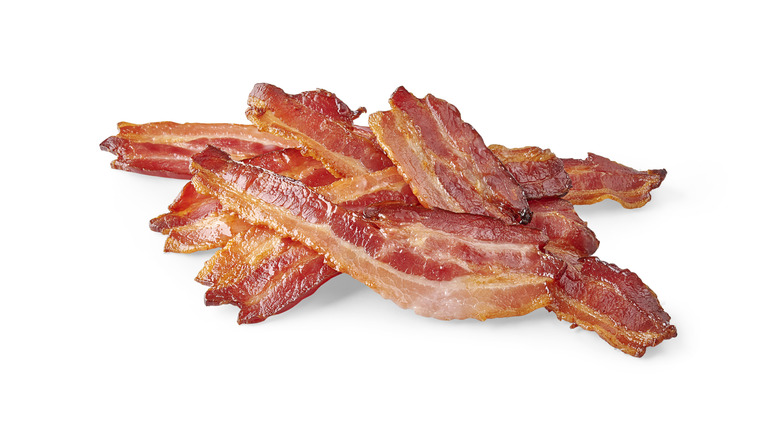
From a trending food item to something that will never go out of style, no matter how health-conscious, plant-based, or anti-meat our society gets. Bacon always has been, and bacon always shall be (biblical citation pending). It soars equally as a standalone eat and as a component that makes almost anything instantly better (especially waffle mix ... yum).
To get a fair analysis, we looked at both stores' packs of hardwood-smoked bacon — Lidl's brand being Dulano and Aldi's brand being Appleton Farms. With both products in a 16-ounce size, Lidl's turned out to be 20 cents cheaper at $4.19. Aldi gave it a solid go, however, pricing its rashers at $4.39.
These both compare favorably to the Kirkland Signature version, which works out to almost $5 a pack even when sold in bulk. Seems like you can't go wrong pricewise with either Lidl or Aldi, even if Lidl is ultimately the cheapest.
Hamburger dill pickles
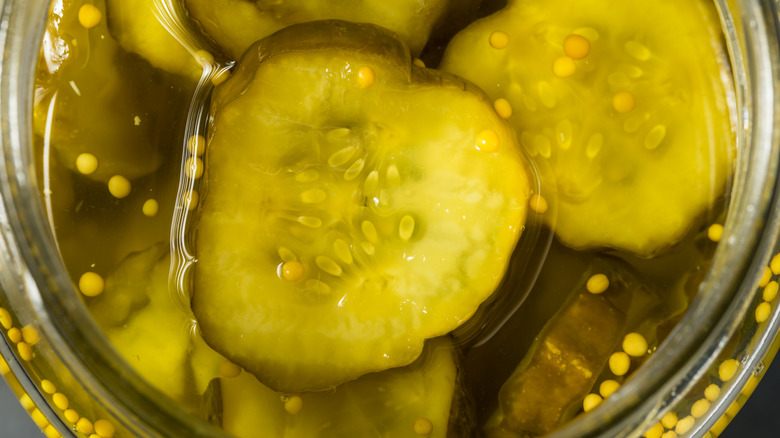
Pickling things has become something of a Gen-Z hallmark. The young'uns are rightfully obsessed with the pickle, and who can blame them? The brine is like a blank canvas for whatever types of flavoring one feels inspired to throw in there. But there's no reason you can't go Boomer and just enjoy a straight-up dill chip on a sandwich.
That's the type of pickle we went with for this comparison: Aldi's Great Gherkin hamburger dill chip vs. Lidl's Mt. Olive hamburger dill chip. They're not going to really clash, because they're in glass and that would turn out to be a dangerous mess. Instead, we'll just pit the prices against each other. Much safer.
Looks like Aldi is a pretty big winner here, relative to the battle so far. A 32-ounce jar is being sold for a lowly (the good kind) $2.59. Lidl can only counter here with a retail listing of $3.09. That's a half-dollar more, which is nothing to sneeze at.
Spinach wraps
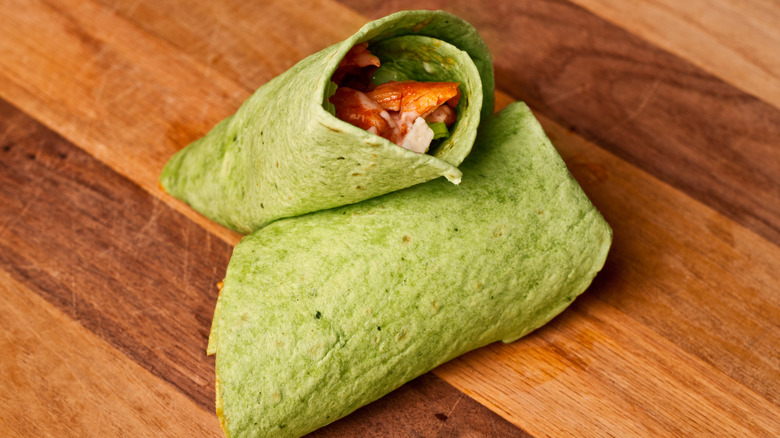
Spinach wraps are a great way to get a sandwich-y experience while keeping the carb count to a moderate level. Anything you can put in between two pieces of sliced bread works equally well inside a spinach wrap. (Though you may want to add some crunch in the middle with cucumbers or something, to offset the softness, if you're having, like, tuna salad.) It's become a staple wrap in bread aisles for a reason.
So, what are Lidl and Aldi selling these very useful veggie-based tortillas for? Lidl's six-count package of spinach-and-herb wraps is going for $2.75. Aldi's L'oven spinach wrap is an eight-pack, retailing for $2.95. What does the deeper math say then? Aldi's works out to 37 cents a wrap, and Lidl's is 46 cents a wrap. Wrap for wrap, Aldi's nabbed this W. Although, in fairness, you're not breaking the bank with either option.
Rao's marinara sauce
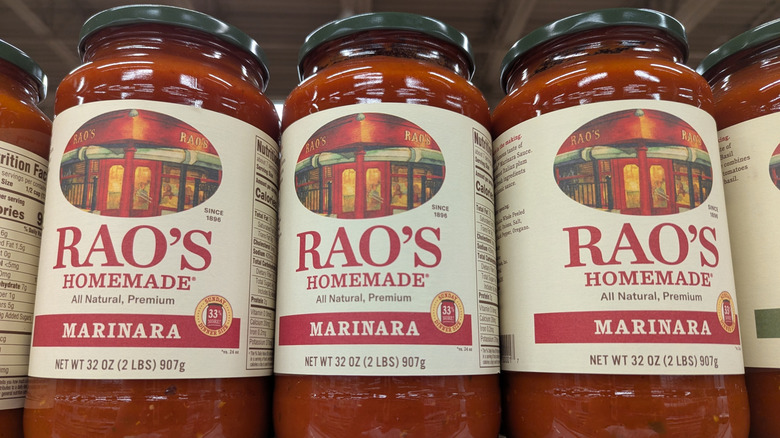
Rao's marinara sauce has grown in popularity and reach since it was bought by Campbell's and sent into another stratosphere of brand visibility and revenue. The folks behind the humble yet legendary namesake Italian eatery in New York City, where it originates, probably never thought the name would take over supermarket shelves. But it has become a favorite.
With both Lidl and Aldi offering a 24-ounce container of the homemade(ish) red sauce, this is a good indicator of how each company's operations and approach lead to cost-cutting, since this is a national brand rather than a private-label.
In this case, it's Aldi showing off its stuff, with a price of $6.98 compared to Lidl's $7.39. Same product, same source, about a 40-cent difference at the register. There is a lot behind the scenes that goes into that 40-cent gap, more than the average shopper might think (or even care to acknowledge). The good thing is, you can just buy really good sauce for a really good price, and that's all that matters.
Canned tuna
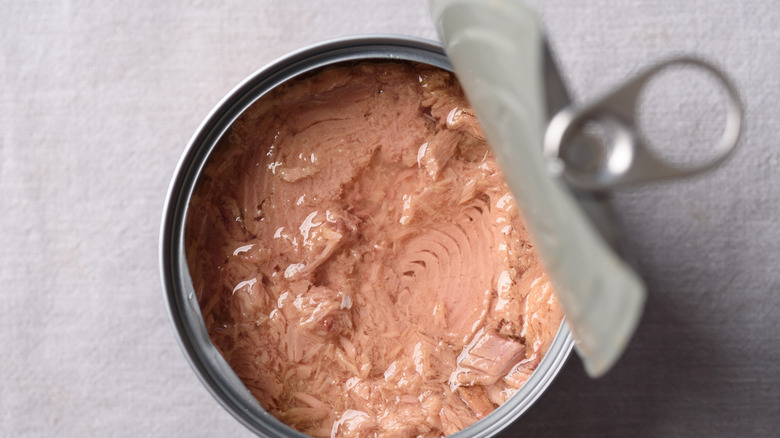
Whether it sits in your cupboard for years or you eat multiple times a week, canned tuna is a pantry stalwart. You might be waiting for an apocalypse to eat it, or you might just be waiting to get your hands on the right mayonnaise to crack it open. But it's there.
And where brands like Bumblebee and Starkist have gone up in price, Lidl and Aldi have stepped in with very inexpensive versions. After all, if canned tuna becomes unaffordable, where have we gone wrong as a society? Anyway, enough with the polemical commentary, let's get to the tinned fish.
A 5-ounce can of solid white albacore tuna in water from Lidl (via the Nixe brand) will run you $1.59. Aldi's brand is selling its Northern Catch 5-ouncer for $1.35. That separation in price can add up a bit if you're stocking up on cans. And it is hard to buy just one can, unless it's for a stray cat hanging outside the supermarket. In that case: aw.
Methodology
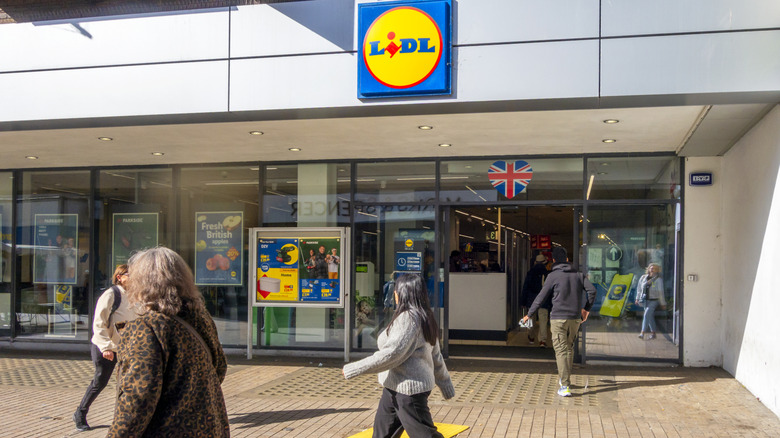
I took several common household items and compared prices at an Aldi and Lidl in Brooklyn, NY, to find the grand champion of price savings. All prices were current at the time of writing, and may be subject to change based on your location, fluctuating sales, and other factors. As it turns out, the pair of grocers made for a pretty even match-up, each with a fair share of deals that outdid the other in turn.
Makes you think how great the savings would be if the two chains combined forces to create the ultimate discount grocer. Problem is, what would you name it? Lidldi? Aldl? Neither of them rolls off the tongue. But then again, neither of them really did in the first place.