

Should You Be Tipping On Takeout Orders You Pick Up? Here's What Restaurant Workers Say
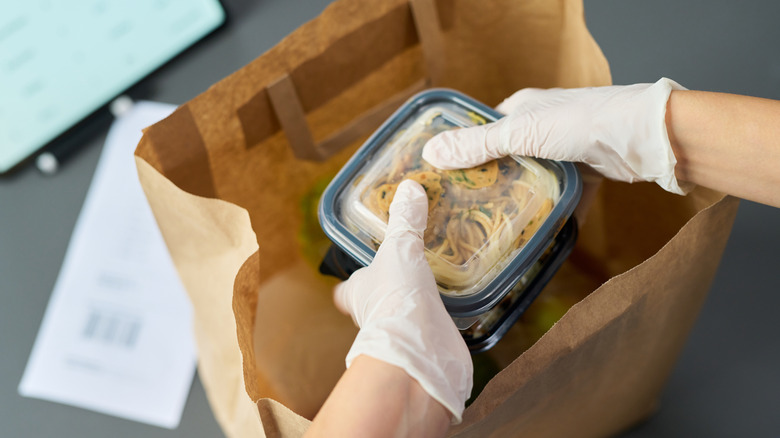
Tipping is a hot-button issue. In the United States, where 25% is expected for good service and anything below 20% is a snub, tips can be a big chunk of your monthly expenses. Understandably, customers are asking questions about when to tip, and why it's necessary. Do you have to tip on fast food, for example? How about tipping etiquette in a coffee shop? Then, of course, there's takeout orders you go to pick up.
For many people, picking food up is a way to save money by avoiding the hefty cut DoorDash and Uber Eats take, but that doesn't mean you should skip the tip. A lot of work goes into taking your order, preparing and packing your food, and making sure that it's ready when you arrive.
As a former counter employee in a college-town Chinese takeout, I remember the work all too well. I've had many jobs in the service industry, from fine-dining waiting and cocktail mixology to sandwich slinging and making lattes, but nothing compares to the takeout counter at that strip-mall Chinese spot during midterms. It was stressful, complicated, boring, and badly paid. This isn't always the case and you should use judgement when deciding how much to tip on takeout, but the job is never just handing over food.
Tips for takeout don't have to be percentage-based, since a few dollars here and there add up over a busy shift. Redditors who have experience working in takeout-heavy environments recommend a couple of dollars per order, and a bit more if you're getting a large family dinner or making a lot of special requests. I tend to agree with them.
What it's like to take and prepare orders in a busy restaurant
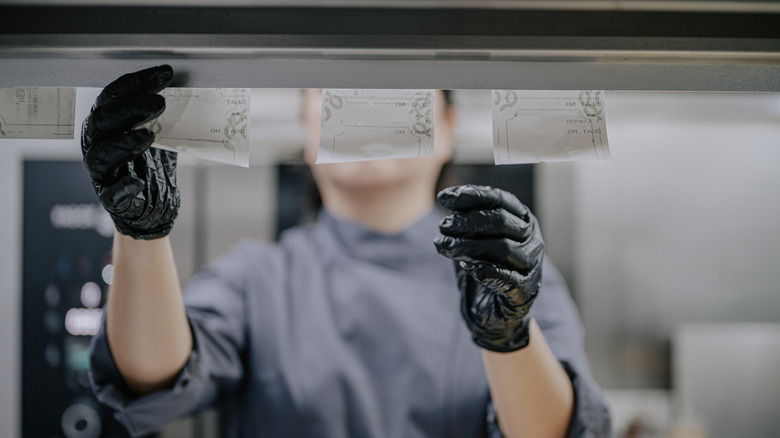
I've worked in many restaurants that offer takeout, but the mom-and-pop Chinese spot's business model was different. In the evenings, it was based mostly around delivery and pickup. We had two phones (always ringing), a printer (always whirring), and a tiny, hot kitchen full of sizzling woks.
I answered the phones and read everything spat out by the printer, which is where app orders arrived. I had to give the checks to the kitchen in a logical order. Some of them were for delivery, some for pickup. It was a Sudoku puzzle of arrival times, order sizes, and driving distances. Once food was boxed up, I double checked every order, including substitutions and special requests. I had to know the menu (and the secret, more authentic Chinese menu) like the back of my hand. Finally, I bagged everything, added cutlery, drinks, and fortune cookies, grouped orders for our drivers, and set takeout aside.
What was happening at the phones while I was away? They were ringing, of course! Sometimes, my boss would answer, shooting me daggers as he wrote down orders wrong. Other times, I would throw myself over the counter and grab the handset just in time, keeping the order in my head until I got back to my pen and paper.
An understaffed, late-night takeout restaurant is particularly hectic, but it's not an unusual job. The kicker? I was making minimum wage, and I was lucky. In most of the country, workers who aren't waiting tables can still be considered tipped employees but make much less.
Why you should navigate murky tipping norms with generosity
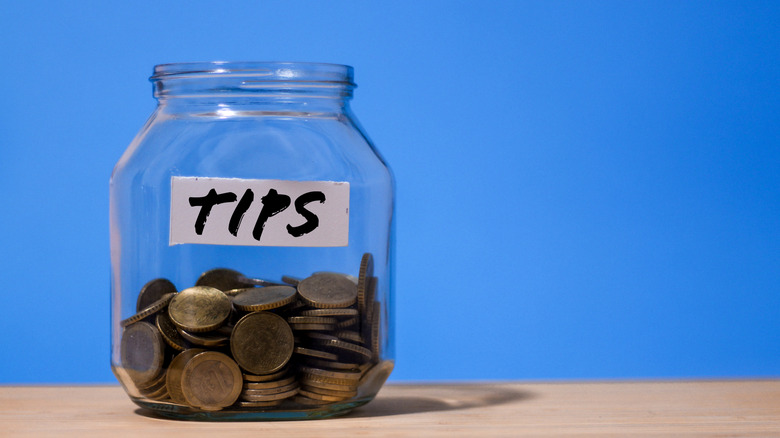
The rules on tipping for takeout aren't hard and fast. When tipping at buffets, coffee shops, sandwich shops, and other less formal locations, you won't be seen as rude if you don't add gratuity. But that doesn't mean you shouldn't.
When in doubt, drop a tip in the jar. If it seems busy next time you're grabbing takeout or it's clear the place is understaffed, add a little more if you can afford it. If you feel comfortable, ask whoever serves you what the situation is. I promise, service workers and former service workers do this all the time since you really can't tell just by looking. We all know about celebrity chefs who were jerks behind the scenes and how they run their restaurants.
In my case, I was making that sweet, sweet $7.50 an hour and so were the kitchen staff. We were in an expensive town, so tips were not only appreciated, but needed. I shared my tips with the four cooks. On good nights, our very sweet, mostly undergrad delivery drivers would tip us out, too. Those cooks in the back? They had seen generations of students come and go in the front of house, and all that time they'd never directly received a tip. That's just how the system works most of the time. The truth is, customers shouldn't be responsible for deciding anyone's wages, but if you're one of the two in five Americans who believe that tipping should be banned, educating yourself and fighting for fairer wages is the way to change the current system; shorting employees isn't.