

Every Bread From The Whole Foods Bakery Ranked Worst To Best
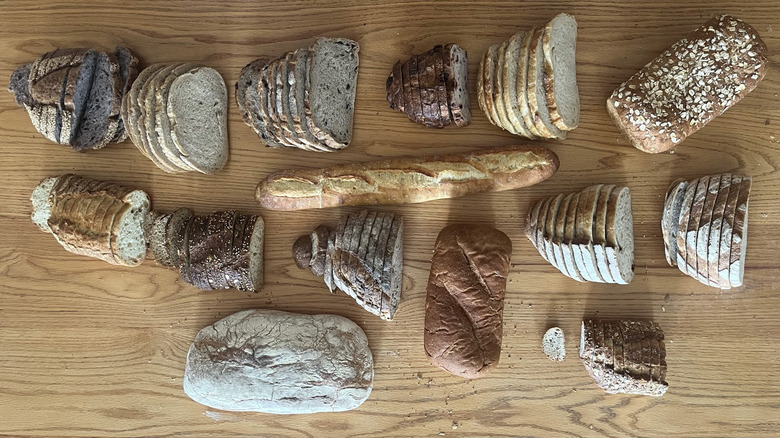
I was met with a curious look from the person manning the counter after asking her for every loaf on offer at the Whole Foods bakery. Even though it's among the world's most beloved way to consume carbs, it's not every day that somebody's cart is filled exclusively with bread.
If you're a regular shopper at Whole Foods, you know the Amazon-owned grocer sports a wide variety of bakery offerings. Batards, pan loafs, and baguettes flavored with nuts, seeds, and grains all tantalize the hungry shopper walking past the bakery counter. But, which ones are worth throwing in your cart and which should you leave on the shelf?
It turns out some of these beautiful breads are duds and others deliver that stretchy, crusty goodness you associate with a delicious freshly baked loaf. I tasted a wide selection of breads to come up with this definitive list of which fluffy, crusty slice you should use as the base of your beloved avocado toast recipe or to cradle those perfectly scrambled eggs in the morning.
15. Seeduction
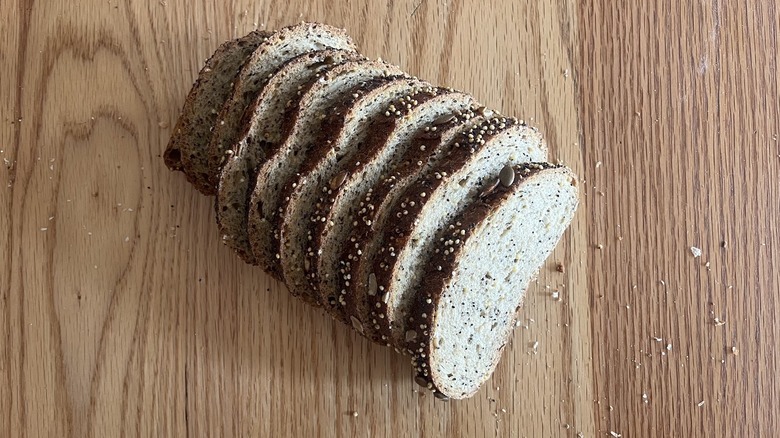
Perhaps the issue with this bread was that I was looking to be seduced. I imagined being wooed by the gentle crunch of poppy seeds, my tongue enrobed by the earthy aromas of sesame seeds and the toasty oils of pumpkin seeds. Instead, what I tasted was dry and flat, the very opposite of the life-giving promise of the loaf's titular seeds.
It wasn't enough that the seeds themselves didn't impart the flavor I had hoped for, but the bread itself was similarly without merit. It was crumbly, lifeless, and without stretch. It tasted old, and had an off-white color, like the sallow skin of somebody who is lacking some essential nutrients. It didn't help that the loaf wasn't nearly as seedy as the name suggested. There were dots of poppy and sesame, but the space between them, made up of bread that smelled like it was off-gassing sawdust, overpowered whatever delicate, seedy flavor they may have imparted.
14. Baguette
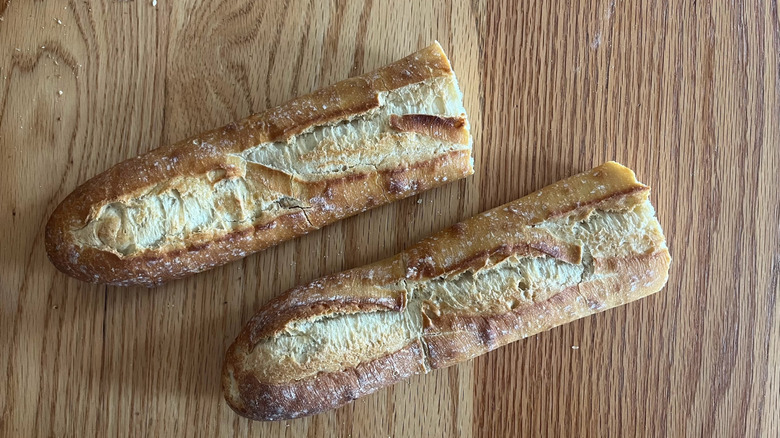
Never have I felt farther from Paris than when I bit into this unholy baguette. A good baguette takes care, attention to detail, and a respect for the finer details of a historic process. This one tasted like a product manufactured speedily and profitably to please the Amazon shareholders who've been at the helm of Whole Foods Market since 2017. The loaf had all the superficial characteristics of a decent baguette — a long, slender shape, a golden hue, and charming diagonal marks where the bread was scored. But, upon closer inspection, it all seemed just a bit off, as though it had been Xeroxed so many times that it lost its finer details.
When I ripped off a bit of the baguette to taste it, it lacked the gentle stretch I've experienced in greater iterations of this iconic bread. It broke like a brittle piece of dry wall, and had about as much flavor. It tasted flat, lacking the gentle yeastiness a fresh bread should offer. It was dry, and even a heavy helping of butter failed to revive it.
13. Mt. Athos Sourdough
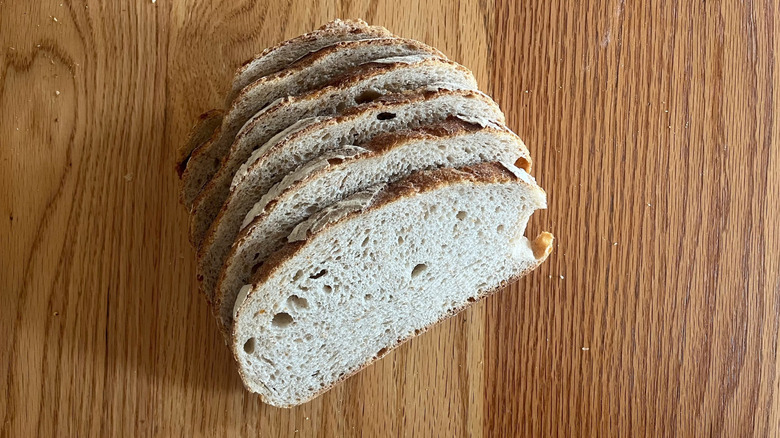
This crusty loaf is named after a holy mountain in Greece where monks make sourdough bread. Though I didn't spy any men of the cloth behind the bakery counter at Whole Foods, one can assume the loaf was not made with the same respect for tradition based on taste alone. The airy bubbles in any good loaf should be distributed evenly, but the bottom of this bread was dense compared to the fluffier top, which usually indicates some error in the bread making process.
Apart from that, there was barely a trace of sour in this dough. Sourdough tastes different from other breads because of chemical compounds created during the fermentation process. But, that signature tang that complements a swipe of butter so well in a decent sourdough was so faint as to be barely noticeable. Apart from that, the crumb wasn't elastic enough. Instead, it was on the dry side, breaking instead of stretching. The crust on top is dusted with an attractive sprinkling of flour, but don't be fooled.
12. Ciabatta
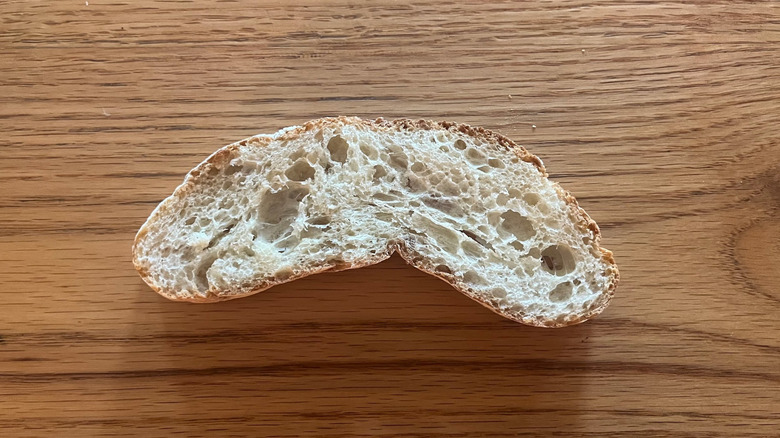
What made me so sad about this ciabatta bread was the fact that I remember when Whole Foods actually produced a decent version of this fluffy, airy loaf. A good ciabatta should bounce, springing forth with vigor when it's pressed with a finger. This one regained its shape slowly, laboriously, as though it were hobbling back to some semblance of respectability, which it never quite attained. The crumb was uneven, with larger pockets of air near the top of the loaf and a denser, stodgier texture at the bottom.
At first taste, the flavor of this loaf was decent and well-seasoned. The texture, however, was less elastic and more gummy, and the bread felt tougher than I'd have expected. A good ciabatta should have a crusty, relatively thick exterior, but my tooth practically came off when I tried to rip a bite out of this loaf. At its best, a great ciabatta is perfect for the ultimate bologna sandwich or soaking up some high-quality olive oil, but the most this mediocre loaf could hope for is a future as a pile of croutons.
11. Multigrain pan loaf
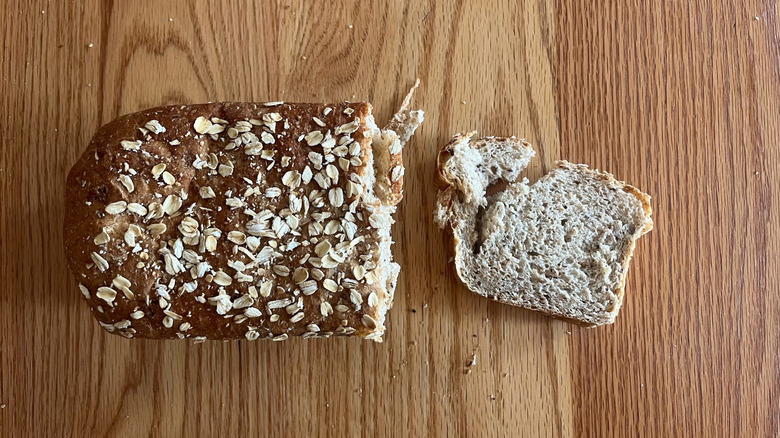
This loaf came dotted with flecks of oats, a decoration I thought portended a wholesome, flavorful experience. But, this pan loaf succeeded in disappointing me. While it appeared fluffy, and my knife fell easily through its interior, as I was about to find out, texture was not the problem.
The taste of this pan loaf was overwhelmingly bitter. Whole wheat bread often sports a gentle bitterness due to the chemical makeup of the grains used to make the flour, but even taking this into account, this loaf was so bitter that it bordered on acrid. Whole wheat flour can go rancid because of the oils in it, and I started to suspect that's what happened here. Toasting and buttering a slice of this loaf did little to mitigate its failures. Finally, I resorted to drizzling it with honey, which made it edible, but I would still avoid this whole wheat loaf if you've got other options.
10. Sourdough Boule
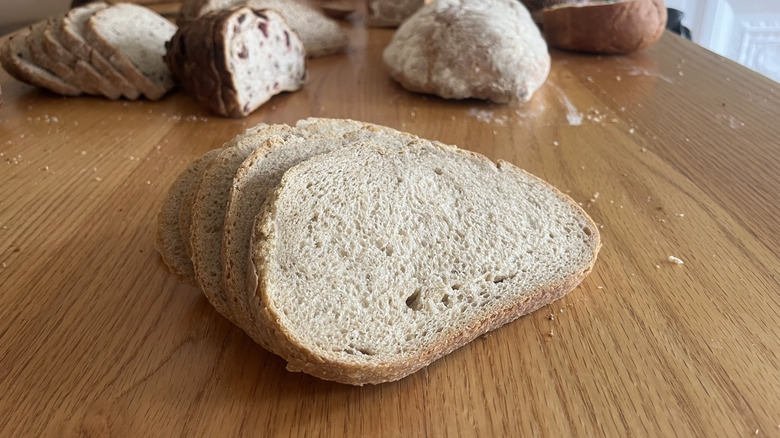
I'll be the first to admit that this sourdough boule appeared perfectly charming. The word "boule" means ball in French, and it refers to the tall, rounded shape of this loaf. Taking a look at the cross section, the crumb appears tight and uniform, an auspicious sign for a loaf like this one. But, when it came time to actually eat this loaf, the texture was remarkably dry, and the sourness promised by the bread's name was conspicuously absent.
This bread didn't appear over baked, as the light brown exterior looked squarely within the bounds of a normal loaf of this type, so I can only assume the reason it was so dry was because it had been sitting out too long. If that were this loaf's only sin, I could look past it. The bread was well-seasoned and possessed decent, if forgettable, flavor. But, the marked lack of tanginess made me feel duped. Toasting and buttering a slice of this bread improved it markedly, but not enough to climb any higher on this list.
9. Italian Semolina Loaf
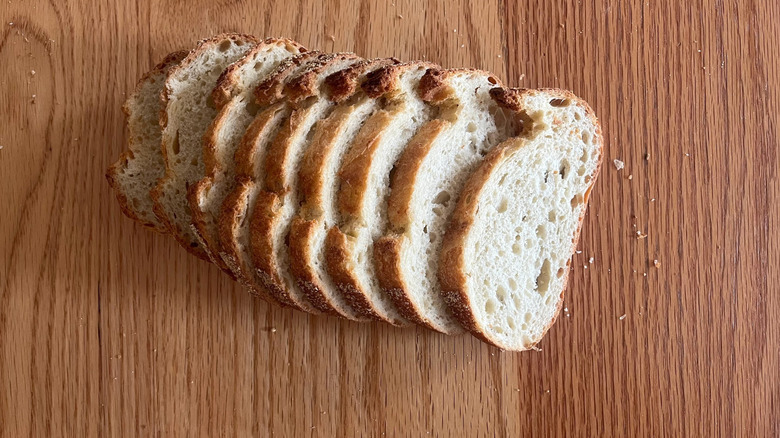
Even if you're not familiar with the word semolina, you've almost certainly eaten it. This coarse flour is made from durum wheat and has a high protein content. (The best store-bought dried pasta is made with only semolina flour and water.) When it comes to bread making, semolina's protein-forward makeup manifests into a bread that's stretchy and moist — or at least it's supposed to. While the Whole Foods iteration of this loaf has redeeming qualities, it was far from a home run.
The crust had a faint yellow hue, which is characteristic of a good semolina loaf. It was also studded with some coarsely ground semolina flour, giving it an air of Italian authenticity. But, when I pushed on the loaf I was expecting to hear a crackle. What I heard was a discouraging silence, which foreshadowed the fact that the exterior was softer and less robust than I'd hoped. The center had a decent, stretchy crumb, but lacked the signature elasticity I'd hoped for. While the flavor was decent, it was missing much in the way of memorable characteristics. It tasted simply like bread, and without a heavy helping of butter, its taste might've been almost indistinguishable from the air around it.
8. Ancient Grains Loaf
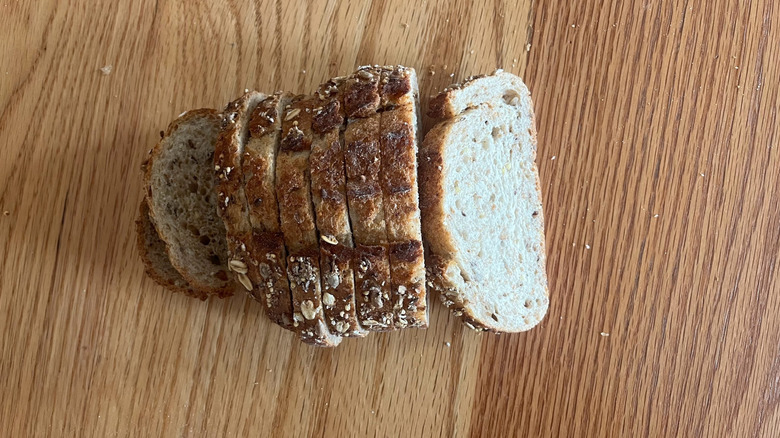
I'm still puzzled as to what makes a grain ancient. As far as I could discern, the crust of this loaf was studded with oats, sunflower seeds, flax seeds, and quinoa, most of which are not grains, and all of which seem perfectly modern. From the outside, this loaf very much looked the part. But, its hearty, rustic-looking exterior betrayed its fluffy, delicate, white crumb.
I was expecting this bread to be dense and full of fiber-packed seeds and grains, but the loaf's interior was gleaming white apart from the flecks of flax and sunflower seeds. The crumb was fluffy and pale, much like what I would've expected from an average loaf that didn't advertise itself with a dubious moniker like "ancient grains." It was seasoned nicely and the sunflower seeds added a welcome nuttiness, but overall, it lacked the personality to live up to its name.
7. Honey Wheat Pan Loaf
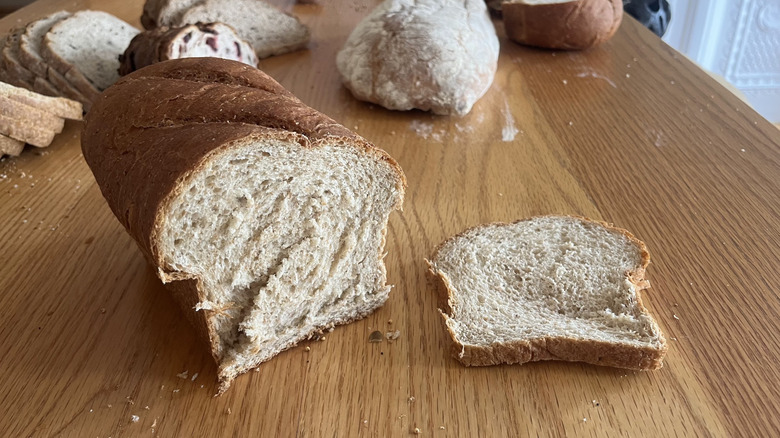
The honey wheat pan loaf is a happy medium between the fluffy, manufactured pan loaves in your average grocery store and the slightly elevated vibe of Whole Foods. It is easy to eat, and unlike the other pan loaf on this list, it's not overly bitter. While there is a slight bitterness from the inclusion of whole wheat, it's offset by the inclusion of a touch of honey, which restores this loaf's equilibrium, making it a decent choice to have around the house for assembling a mess-free peanut butter and jelly sandwich or a morning toast with butter and jam.
The honey was barely discernible, not strong enough to lend the loaf an overtly floral flavor and interfere with other ingredients you may want to enlist to top a slice of this pan loaf. While the fluffiness gave the bread a light, airy texture, it did make it a challenge for cold butter, which can be difficult to spread on a slice with such little structural integrity. I'd recommend toasting this bread and spreading it with a generous slab of room temperature butter that has been sitting out on the counter briefly for best results.
6. Pecan Cranberry
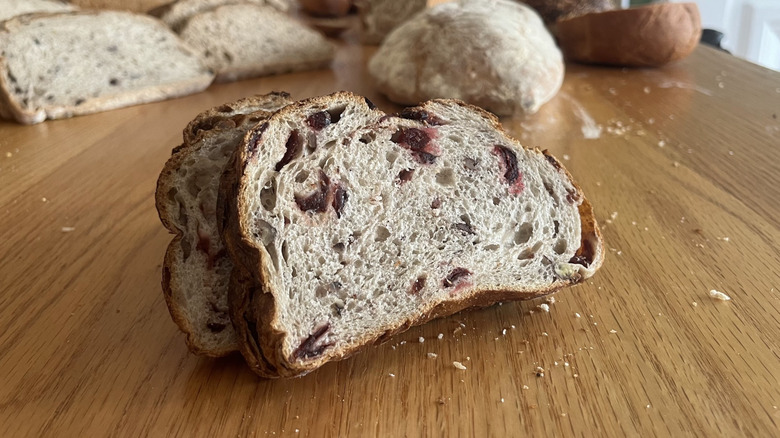
Finally, a loaf that delivers on the promise of its name. The pecans and cranberries imparted a strong balance of earthy nuttiness and sweet, tart satisfaction. The crust was darker than that of the average loaf, probably due in part to the fact that it was made with unbleached hard wheat flour, which, along with its darker color, has a high protein content.
This gives bread a chewier, more elastic interior, and, in this case, the crumb can better stand up to the texture of the pecans and cranberries. Hard wheat flour also carries a nuttier, more intense flavor, complementing the earthiness of the pecans and contrasting the gently bitter sweetness of the cranberries. I recommend toasting this bread and spreading some salty, fatty cream cheese over the top. If not, I'd reach for a salted European butter. While the cranberries were plentiful, I found myself wishing for a stronger pecan presence to balance them out.
5. Rustic Rye
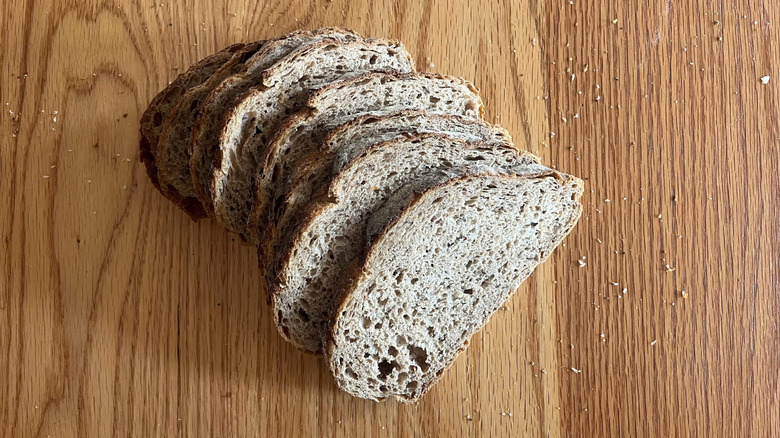
You should know going into this that I'm a huge fan of rye bread. The intensity of this historic loaf can be divisive, and the haters may not like what I'm about to say. What I liked the most about this loaf was its intense flavor, which is flavored with caraway seeds. For the uninitiated, these dark seeds have a distinct, aromatic, bittersweet flavor reminiscent of black licorice. While not all rye bread is flavored with caraway, it's a common enough occurrence that the two have become linked in the minds of many.
This particular loaf is dark and crusty on the outside, with a deep tan color that communicates the bread's titular rusticness. While the distinct rye fragrance is powerful and intense, the only thing missing from this rye bread was a dense crumb. The interior was a little fluffier than I expected, more like a standard loaf than a traditional rye. Apart from that, it was fragrant, delicious, and well-seasoned.
4. Rosemary Sourdough
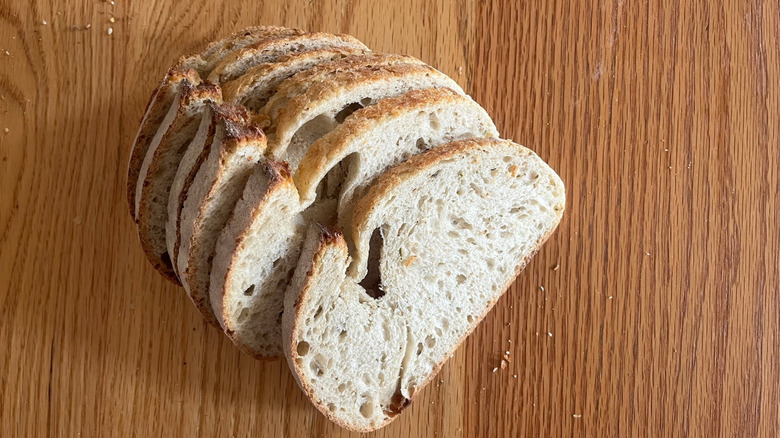
While most loaves on this list squarely failed to deliver anything close to an artisan experience, the rosemary sourdough had a strong, resinous fragrance so delightful that for a moment I forgot that Whole Foods was owned by Amazon. The crust was sturdy, jagged, and golden, offering a noisy, satisfying crunch when you pressed down on it. Bits of rosemary dotted the loaf's interior, and contrasted the pale yellow glow of the bread's crumb.
The loaf delivered on the promise of rosemary flavor. As you bit down into the loaf, the intensely herbaceous rosemary aroma filled the senses. The bread was nicely seasoned, which helped elevate the flavor of the rosemary without being overpowering. Because the loaf was already on the salty side, I'd recommend dressing it with a hefty helping of unsalted butter. If this loaf starts to go stale, it would also make for an excellent batch of croutons given its herby intensity.
3. Olive Loaf
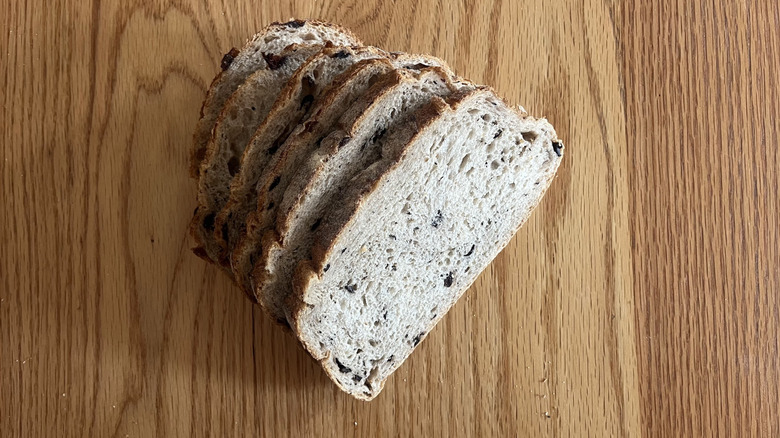
Let's get one thing out of the way before we proceed with this review: I love olives. Salty, briny, umami — these Mediterranean morsels are my preferred snack, so I'm partial to their presence in my preferred carbohydrate. Most hearteningly, the olives in this loaf were generously portioned, and each bite delivered the complex, mineral, saline chew characteristic of the mighty olive.
The loaf itself was delicious, sporting a toned-down flavor that made it clear that the bakers of this loaf knew the bread itself was in service of it's starring fruit. The loaf was large and fluffy, with a thick crust that gave way to an expansive interior. The large volume gave the loaf plenty of fluffy crumb to display the chunks of olive, and a swipe of unsalted European butter brought a slice of this bread a step closer to heaven.
2. San Francisco Sourdough
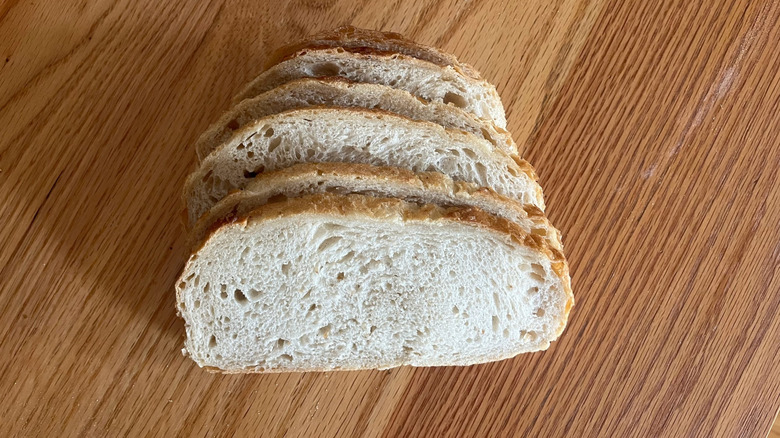
As San Francisco becomes ever more saturated with an oligarchy of tech bros, it's charming to remember a time when the first thing that came to mind when somebody mentioned the city by the bay was sourdough bread. Of all the sourdoughs on this list, this was the only one that actually possessed the signature fermented tang that I expect from a decent specimen of this type of bread worthy of the name. The crust was light and golden. It was softer than expected, but I didn't mind the fact that I didn't get a super crunchy exterior.
On the inside, the crumb was a perfect balance between dense and fluffy, with holes just big enough to capture bits of butter as I dragged my knife across its surface. The bread was soft and chewy, and it had enough elasticity to make it texturally interesting without losing its pillowy softness. It's wonderfully versatile, and would make an ideal base for an avocado toast with a drizzle of balsamic vinegar or a pile of soft scrambled eggs with a dusting of Parmesan cheese.
1. Forbidden Rice Batard
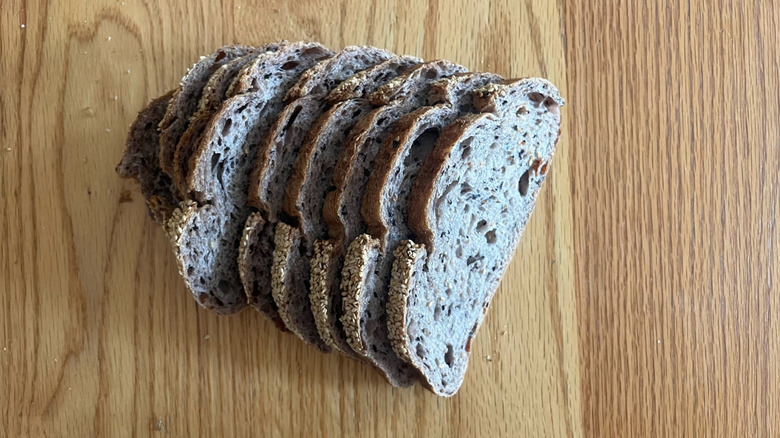
I'm not one for gimmicks, especially when it comes to a subject as serious as bread. And, when I spied the purple interior of this batard, I thought the unique hue was little more than a sales tactic. The bread was colored with forbidden rice, a type of this grain with a distinctive dark purple color and a long history in China, where it was reserved for the noble classes. The loaf was also topped with a generous crust of sesame seeds, lightly toasted in the oven as the bread baked, giving them a deep, earthy flavor profile that hits your tongue first when you take a bite.
That crunchy, sesame richness is embedded in a crust that's crisp and thick, crackling sonorously as you sink your bread knife into the batard. Inside you'll find an airy crumb flavored gently by the once-forbidden grain that gave this loaf its name. The rice gives the interior a distinctly chewy, elastic texture and a notable nuttiness. The loaf's cross section is attractively decorated with grains of rice so deeply purple they appear black, adding to the bread's mysteriously delicious character. While you could certainly use this bread to make a sandwich or a tartine, it's best enjoyed alone to get a sense of the unique flavor and texture imparted by the rice.
Methodology
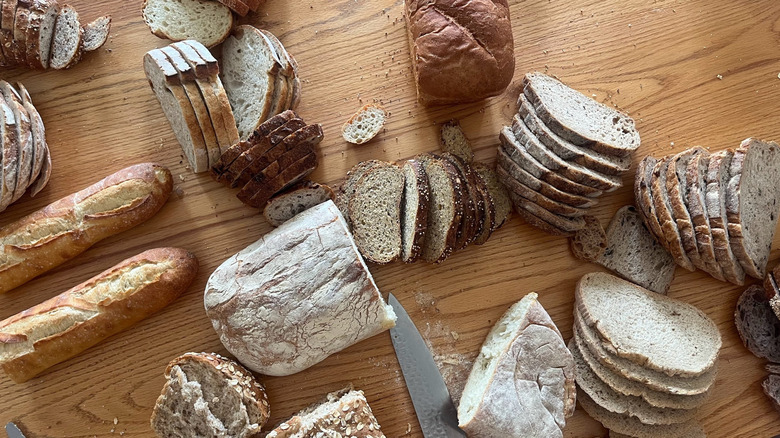
As every bread head knows, a loaf's quality diminishes quickly after it's baked, so I rushed home to taste these breads before they lost their luster. First, I examined each loaf to get a sense of its crust. I then carefully ripped a piece of each loaf off and listened intently. A good bread can reveal a lot about itself through the crackling noises it makes.
I then tasted each bread plain to get a sense of its natural, unadulterated character before placing a slice in the toaster and enjoying it with a modest amount of unsalted butter. I was looking for how well each bread delivered on its promise. Was the sourdough sour? Was the pan loaf fluffy and perfect for a PB & J? I took into account the crumb, flavor, and crust, and ranked these breads according to how badly I wanted to go in for another bite.