

The Biggest Mistakes You're Making With Fried Food
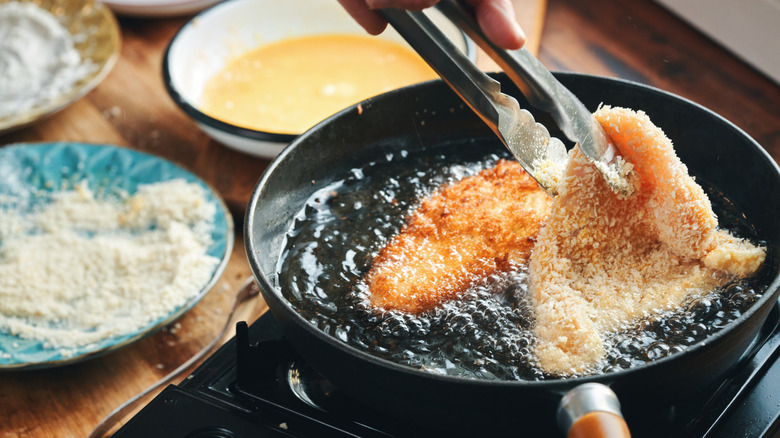
Few cooking techniques frustrate home chefs as much as frying, often to the extent that many prefer to leave fried foods to professional kitchens. Done well, good frying techniques can deliver food that is light, crunchy, and deeply satisfying. But when done badly — let's not even get started on the greasy, soggy, or half-cooked messes most of us have dealt with at some point. Fortunately, the mistakes that lead us there are almost always the same ones, often repeated over and over.
The truth is that frying has rules. These are grounded in chemistry and physics and ignoring them rarely ends well. So, to cut through the chaos, we spoke to two of the industry's most experienced voices. Chef Sean Huggard, founder and president of Shucking Good Hospitality, adds his expertise from building high-performance restaurant concepts, while chef Brandon Cook, director of culinary research and development operations at The Cheesecake Factory, contributes deep institutional knowledge and creative menu planning skills. Together, our experts identify and solve the most common frying mistakes and tell us how to avoid them.
Overcrowding the pan
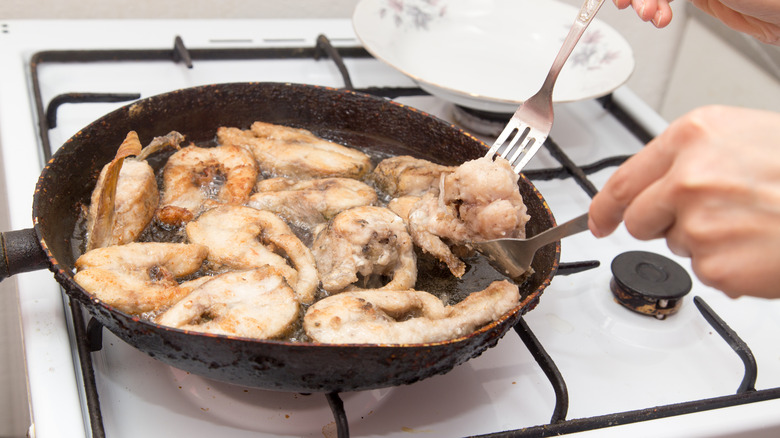
No matter whether you are pan-frying or deep frying – and yes, certain foods do better with one method than the other – one of the most common frying mistakes (and often the costliest) is overcrowding the pan. Chef Brandon Cook understands the reasoning behind the overcrowding is the urge to cook too much at one time and get it done quickly. But he points out that the problem is more about heat than the space in the pan. He explains, "An overcrowded fryer will drop the temperature too quickly, resulting in a slow recovery of the oil's temperature." When too much (cold) food hits the oil at one time, it causes the temperature to drop sharply. Cook tells us that this slow recovery of the oil's temperature "will then lead to an overcooked, greasy coating that may be done before the items are fully cooked throughout."
And even worse, when your food is sitting in oil that is not hot enough to crisp it properly, it ends up absorbing more fat than it should. As chef Sean Huggard cautions, "That's when you get greasy, soggy food instead of something light and crisp." The fix is simple, though, it requires you to be patient. It is absolutely imperative that you fry in smaller batches to give the oil time to return to temperature between each round. A wider pan can help as well, as this allows each piece to be surrounded by oil, and results in a consistent crunch.
Assuming one temperature works for every ingredient
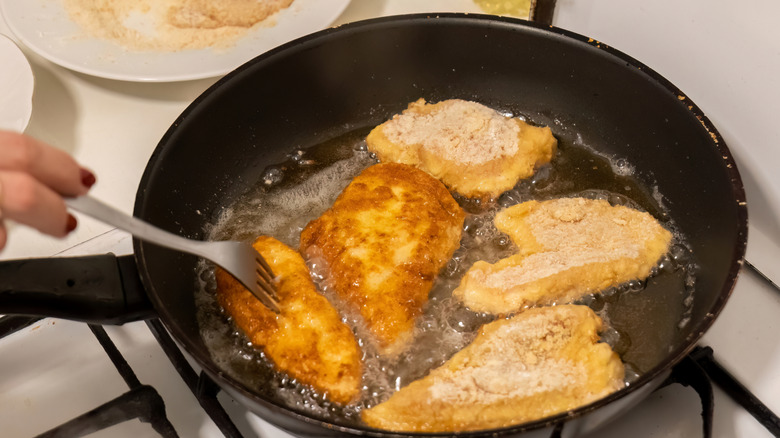
Next up on the list of overlooked frying mistakes is assuming that a standard temperature works for every ingredient. Needless to say — it doesn't. And if you insist on applying the same heat to delicate items, the results will be ruined. Chef Sean Huggard explains, "Delicate items like oysters or calamari need a slightly lower, controlled temp so they don't overcook before the coating sets, while heartier items like fish or potatoes can handle higher heat. Consistency matters more than anything." When you push the temperature too high, the outside burns before the interior is cooked through. In the end, wild temperature swings will undermine even the most thorough of prep work.
Chef Brandon Cook is not afraid to push the envelope even further as he champions the double-frying cooking method. Rather than treating temperature as a one-time decision, he is a fan of frying first at a lower temperature to cook the food thoroughly, followed by a speedy, second fry at a higher heat to create that crave-worthy, golden, crispy crust. The takeaway? Know your ingredients and treat each with respect, understand its needs, and resist the urge to leave the pan unmonitored and walk away.
Using the wrong oil
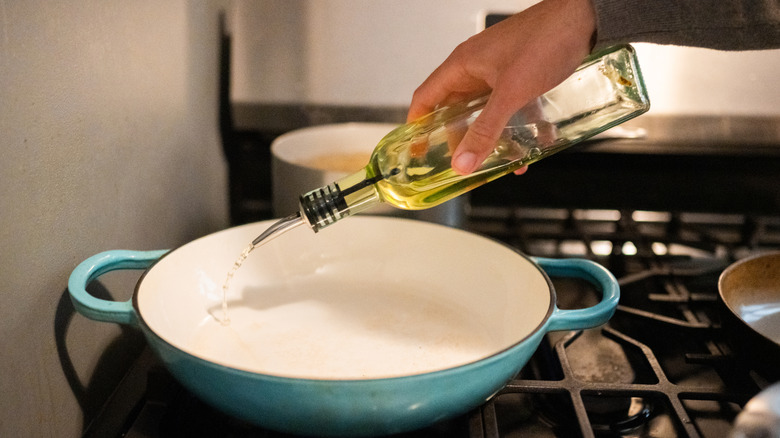
Want to compromise your dish before it even hits the pan? Reaching for the wrong type of oil is one of the easiest ways to do it. Oil should be treated less as just a cooking medium and more as an active ingredient in any recipe. Choosing it carelessly is another common mistake, and one that chef Sean Huggard is quick to point out. At his seafood restaurant, one rule is non-negotiable. He explains, "We always use neutral oils with a high smoke point. A clean flavor is key, especially with seafood. You don't want the oil competing with the product. For us, the goal is to let the oyster, the clam, or the fish be the star."
Science backs this up. If you heat cooking oil beyond its smoke point (literally the temperature where it stops shimmering and starts getting smoking hot), the oil begins to break down and releases free radicals. When this happens, the oil imparts a bitter taste to the food as well as damages beneficial nutrients. This is why olive oil is never the best choice for deep frying. For frying foods at high temperatures, refined oils such as avocado, peanut, and canola with high smoking points are among the most reliable options. Alternatively, you can experiment with clarified butter for a unique flavor profile. That said, don't fall for the myth that mixing butter with oil raises its smoking point. You'll just end up with burned, buttery food.
Ignoring moisture before it hits the oil
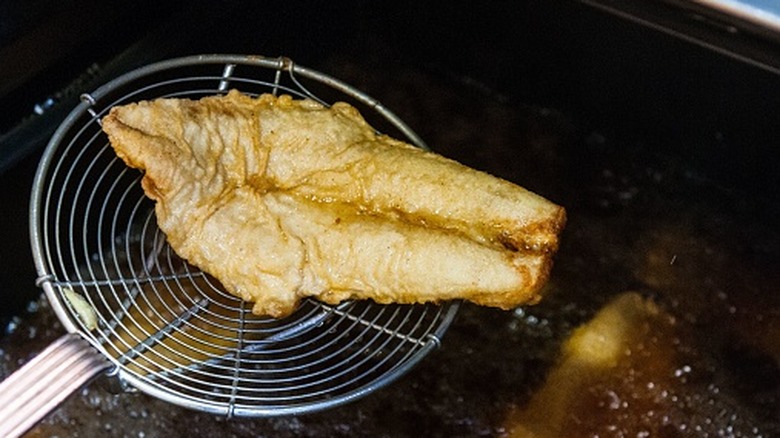
There's one non-negotiable rule when it comes to frying: moisture and hot oil do not mix. Skip the step of drying your ingredients before they hit the hot oil in a pan, and you are assured of ending up with soggy, soft, and disappointingly greasy food. Chef Sean Huggard regards this as a matter of structure. Removing moisture, he explains, creates the ideal outer later. What follows then, is "a light coating, a properly dried product, and the right oil temperature." He prefers to use a mix of flours with a preference for corn flour, that imparts a particularly subtle sweetness to fried seafood.
Chef Brandon Cook adds another facet to this process. For him, the secret to crispiness, begins earlier, with brining. While it might seem counterintuitive, brining actually aids the frying process by helping the protein retain moisture internally, so it stays juicy where it counts. The next critical step according to chef Cook, is to air-dry the brined item so that it dries completely before it gets coated in the batter of choice. This gives the breading something solid to grip.
What type of flour you use also matters. Both of our experts prefer low or no-gluten options for the best results. Chef Cook points out that low-gluten or gluten-free flours typically have ingredients like cornstarch or rice flour, which absorb less oil than standard wheat flour, which means a lighter, crunchier result without the greasiness.
Over- or undercoating your breading and batter
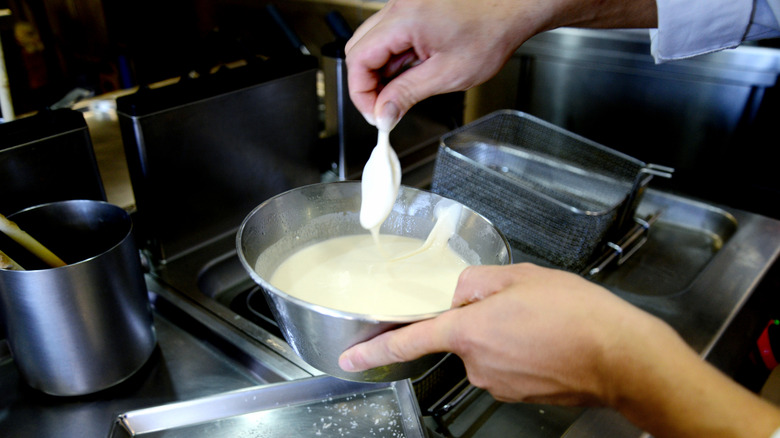
Getting the coating right is one of the most nuanced parts of frying — and both too much and too little will let you down in completely different ways. Chef Brandon Cook prefers to "pre-dredge items like chicken in seasoned flour followed by resting under refrigeration for 30 minutes." Only after this does the final coat go on. The chilling time is essential as it allows the flour to hydrate and grip the surface of the meat or vegetables properly. Try this the next time you want the final coating to stay crunchy and not slide right off.
Chef Sean Huggard's approach is one built on restraint and intention. He explains, "We often use a quick 'dip' first, like a touch of clam juice or even a light condensed milk mixture, depending on the dish. It helps the coating adhere better and builds another layer of flavor. From there, it's a seasoned flour or delicate batter. The biggest mistake is overcoating. You want to enhance the product, not bury it."
Both experts agree that excess flour is actually counterproductive. You think you are creating a more solid foundation for the coating to stick but what you succeed in doing is building a thick, unpleasant barrier that prevents the batter from latching onto the meat. Another risk with too much batter is undercooked centers. Pro tip: If you shake it off and it doesn't naturally cling — it wasn't needed in the first place.
Seasoning at the wrong time
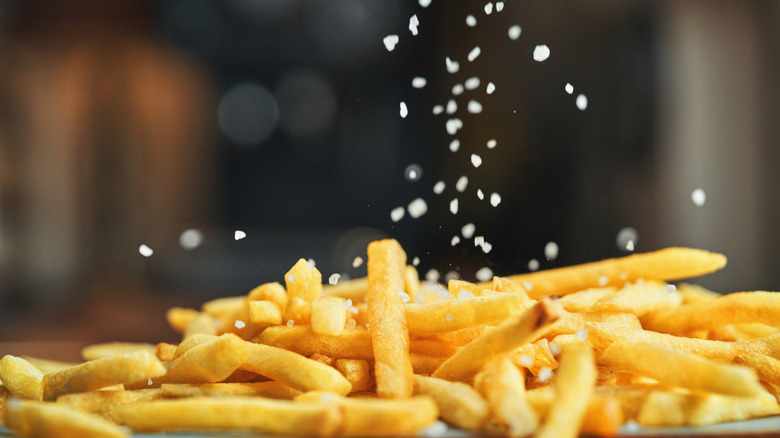
Seasoning fried food is not something that happens only at the end of the cook. Instead, it's an ongoing process and one that many people get wrong. Chef Sean Huggard is precise about the finish. For him, it's important to season the moment food comes out of the fryer, while it's still hot. This window matters enormously — it's "when the seasoning adheres best and distributes evenly." This happens because the heat causes a slightly sticky, welcoming surface that attracts seasoning in and distributes it evenly across the crust. If you wait even a few minutes longer, the cooler surface has firmed up, and the seasoning will simply sit on top, or worse, slide right off the fried food.
But chef Brandon Cook takes a wider point of view. According to him, seasoning needs to happen at every single stage. He reiterates, "At every layer of the process, I season. The item itself, the coating and the finished product could always use a little reinforcement seasoning love!" As you season along the way, each layer builds on the last, creating a welcome depth of taste and flavoring. Looking at it in this light, it is as important to season the batter to add flavor that gets locked into the coating itself. This promises a balanced, flavorful bite. Seasoning after frying, in turn, preserves the freshness and aroma of the spices, which might have gotten burned in the hot oil.
Trying to get it all done in one go
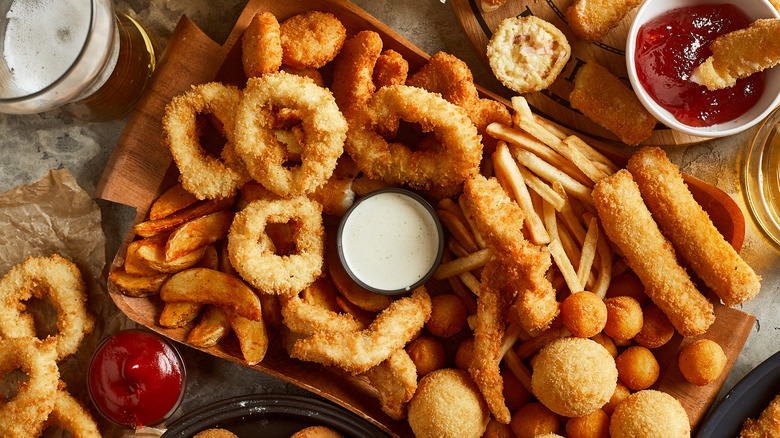
We've all been there. Faced with a hot stove and a list of things to be done, it's only natural to want to get everything done as quickly as possible. But, when it comes to frying, this impulse can do more harm than good. The best results come not from speed, but according to chef Sean Huggard, from thinking in waves. He elaborates, "Start with items that take longer and stagger your drops so everything finishes together. In a busy restaurant, that's critical to getting hot, consistent plates to the table." The same logic applies equally at home.
Greasiness is the result of poor timing and skipping key steps. Timing doesn't stop at the fryer. It also extends to when the food should be served. Fried food is best enjoyed within half an hour of emerging from the pan. After that, even the crispiest of batters begins to get stodgy and unappetizing. And finally, if you are frying multiple batches of food, don't forget to strain out any blackened bits of food between rounds. Those burnt bits of food will affect the flavor of everything else that follows.
Skipping techniques like double frying
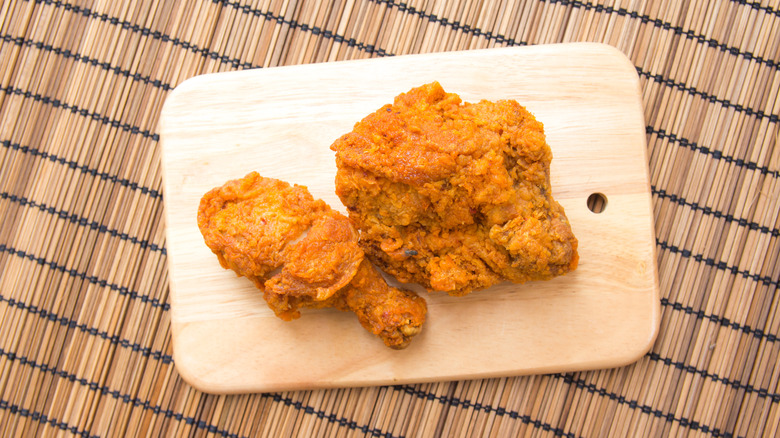
Ever wondered how restaurants consistently keep their food so crunchy on the outside, yet so impossibly juicy on the inside? Well, the answer is almost always — double frying. For chef Brandon Cook, the double-frying approach is non-negotiable. The logic, for him, is straightforward. The first fry is always at a lower temperature to gently cook the food through. The second fry, on the other hand, is where the higher heat does all the crisping up. He says, "Some of the best french fries are cooked twice. First, at a lower temperature to cook the item through, then a higher temperature to develop the crisp we all love. Some Asian-style fried chicken recipes follow a similar technique to develop the unforgettable crispy texture with the juiciest chicken!"
Aim to do the first fry at around 325 degrees Fahrenheit. This ensures that the interior is cooked without any significant browning (and consequent burning). After a short resting period, finish the second fry at around 375 degrees Fahrenheit to trigger the Maillard reaction. Keep in mind, though, that not every ingredient benefits from the double-frying methods. Delicate fried items like fish fillets or vegetable tempura do better with a single fry. Reserve the double method for moisture-heavy ingredients such as chicken or potatoes that need extra time to get crispy without drying up inside. And where fries are concerned, ignore the resting period at your own risk or try these simple fixes for soggy fries.
Frying without the right tools
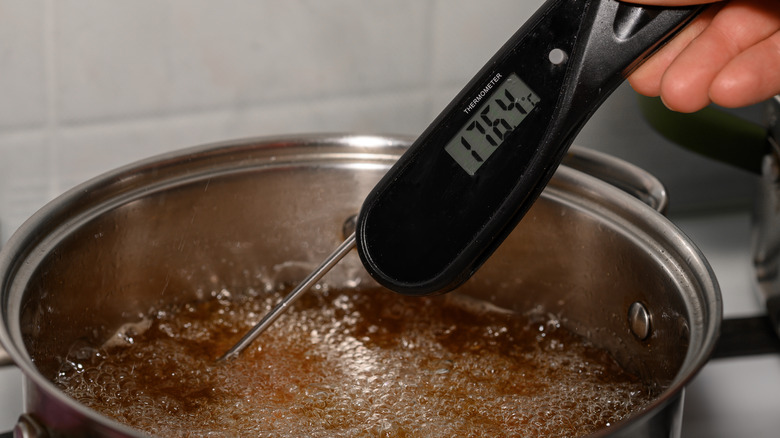
You could have done everything right. From using the perfect technique to choosing the correct oil and even timing it down to the last second, but your fried food may still be coming out mediocre. If this is the case, it might be time to take a closer look at the equipment you are using. Chef Sean Huggard is unequivocal in his advice. For him, "A reliable thermometer and proper fryer maintenance are huge."
Start with the thermometer. If the oil is too hot, your food browns too fast while the insides remain uncooked. If the oil is too cool, the food absorbs oil like a sponge, turning it into a greasy mess (with no crunch). When choosing a thermometer, a clip-on model is your best bet as it sits in the oil and gives a continuous, accurate reading. As for the racks, these matter more than people realize. A wire rack keeps fried food suspended and allows for the proper circulation of air. Plus the height allows oil to drip away cleanly. In contrast, paper towels keep food sitting (and steaming) in its own heat and resulting in a soggy, oily bites. And finally, don't overlook the cooking vessel itself. A deep, heavy-bottomed pot is ideal. If you can, get yourself a Dutch oven in cast iron or ceramic as these conduct and hold heat more evenly, giving you the temperature stability necessary for excellent frying results.
Using the same technique for every ingredient
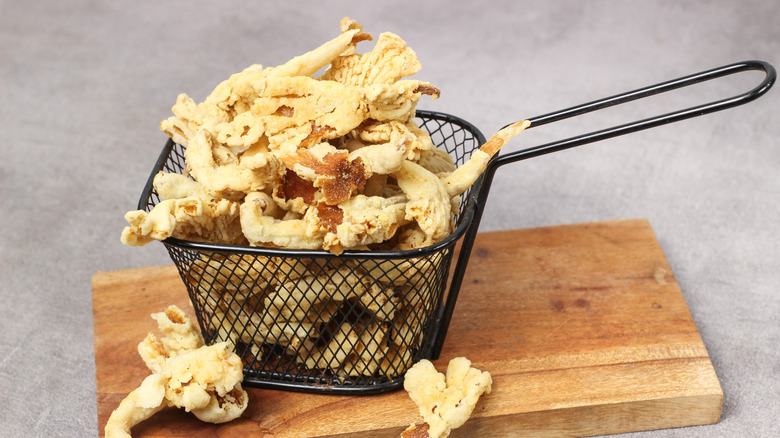
Our experts have been telling us one thing consistently — you cannot treat every ingredient the same way. Applying an identical approach to a robust chicken drumstick versus a delicate fish fillet will only result in a kitchen mishap. Plus this reflects a fundamental misunderstanding of how frying actually works. Chef Sean Huggard breaks it down for us: "Every product is different. Frying oysters is completely different from frying fish or potatoes. At Blue Island, we tailor the technique to highlight each ingredient. The goal is always to protect the integrity of the product while delivering that perfect crisp texture."
So, what changes from ingredient to ingredient? Well ... everything, actually. From temperature to coating style, frying time to prep work, it all depends on what is being fried. Seafood and delicate vegetables call for lower frying temperatures, while chicken and fries come out better at higher temperature ranges. Cut and size matters too. The more uniformly sliced and sized the ingredients are, the faster and more even everything fries up. Pro tip: Chilling food before frying tends to produce more even results and less absorption all around. The instinct to find one method and apply it across the board is understandable, but is precisely what separates great frying from average efforts.
Overlooking basic frying safety
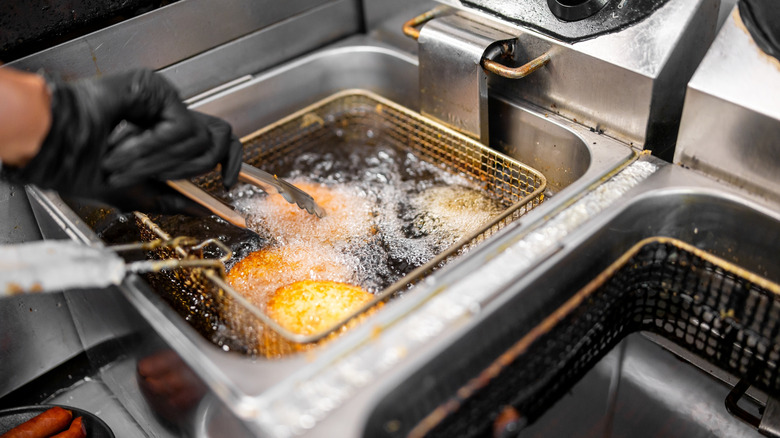
While frying can be one of the most rewarding cooking techniques, it is also one of the most dangerous. Ignore even the basic safety rules, and you could risk a serious injury or a kitchen fire. Chef Sean Huggard keeps his safety message simple and no-nonsense: "It is imperative to make sure that it cools down before throwing out." It may sound obvious, but disposal of hot oil is, in fact, one of the most preventable causes of accidents in the kitchen. Chef Brandon Cook tells us a story that really brings this point home. "I once saw someone cleaning a fryer that they forgot to turn ... off before cleaning!" says Cook. "The whole thing caught fire with flames reaching the hoods in the kitchen. ... It is a hard lesson to learn, and a mistake only made once."
Some other fundamentals to remember: never use water to extinguish an oil fire. Instead reach for salt, a tight-fitting lid, or a fire blanket. Next, never leave frying oil unattended and keep the surrounding area grease-free. Cold, used oil should never be poured down the sink as it congeals, clogging pipes and can cause wider environmental issues. It's better to transfer cool oil to a sealed container and dispose of it in the trash or local recycling facility or invest in oil solidifiers for a safe and innovative way of getting rid of used oil.