

10 Harsh Rules Chefs On Hell's Kitchen Must Follow

There are reality cooking shows, and then there is "Hell's Kitchen". In addition to the inherently competitive energy that comes with a kitchen full of chefs trying to impress, it also has Gordon Ramsay. If you've watched even 30 seconds of a single "Hell's Kitchen" episode, you have already witnessed how Chef Ramsay dominates the kitchen and beyond. It's a different type of food fight, where only one chef can make it to the finish line based on their culinary prowess and ability to work under pressure. The prize? A chance to headline in one of Gordon Ramsay's popular restaurants. With any competition comes a set of rules, and "Hell's Kitchen" has its own flavor of requirements for battle.
Gordon Ramsay guides the chefs through intense cooking challenges with his proprietary style of tough love. There's known to be yelling, name-calling, and throwing food and kitchen tools. The comp can get pretty intense as the group of chefs work their way through situations that test their culinary skills as well as their temperament. Ramsay employs a merciless teaching style because he's looking for winners who can handle pressure without faltering. With such a heightened set, it seems only fitting that "Hell's Kitchen" contestants are subject to some quirky rules. Here are 10 of the harsh rules competing chefs are required to follow.
Methodology

As an avid "Hell's Kitchen" viewer, I already had a general understanding of some of the more common rules associated with the reality show. To gain a better understanding of the official rules, I headed straight to the "Hell's Kitchen" application and associated information about show requirements. I also found a number of websites, YouTube videos, and social media content discussing "Hell's Kitchen" rules. As always, Reddit is a great source to dig around for reality show behind-the-scenes specifics. I was also able to speak with former contestant Adam Pawlak to get his perspective on the "Hell's Kitchen" rules and incorporated those answers into the article as well.
No contact with anyone outside the show
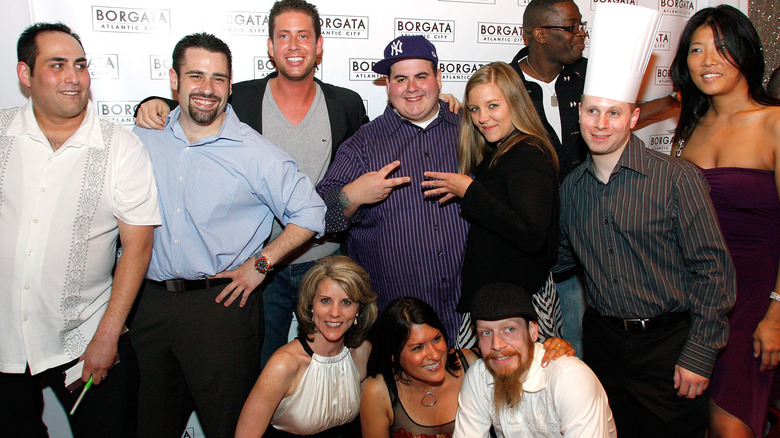
The no-contact rule seems standard across most reality shows. Whatever the genre, reality shows need the contestants to be fully dialed in, immersed, and invested in the process. That little bubble is crucial to creating what reality television is meant to be. It's a self-contained little world made up of strangers all vying for the same prize. Plus, being cut off from your support system impacts emotion, mood, and performance. It's a perfect storm that creates undeniable drama, a time-honored pillar of reality television that has the power to boost ratings.
"Hell's Kitchen" contestants are required to go off their usual communication grid for five weeks. The sequestering includes more than just cutting off communication. In addition to cell phones, producers also ask for your identification, wallet, and anything else linking you to the outside world. The "Hell's Kitchen" set is locked down, making it contained and controlled. While being cut off from family and friends can make some chefs crumble, there are others who welcome the reprieve from communication and technology overload. Season 19 contestant Adam Pawlak, Chef and Owner of Egg & Flour, says, "I really didn't mind that at all. It was a nice break from reality, and I was extremely focused on the competition and everything going on. Every day was extremely long and busy."
No personal tools for cooking
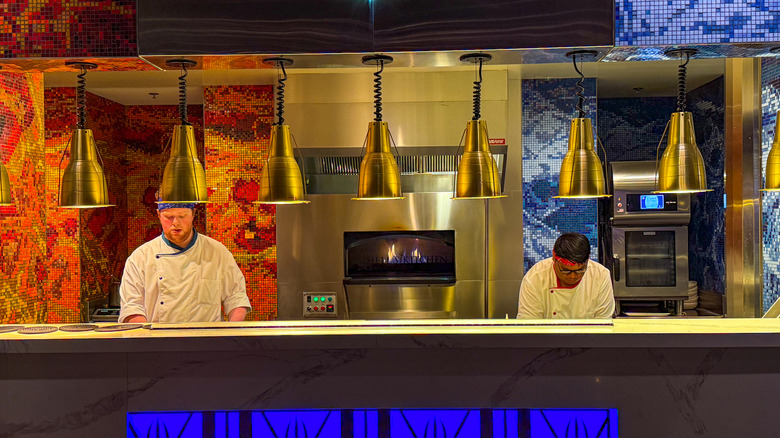
During Season 24 of "Hell's Kitchen", drama erupted in the kitchen when a contestant used a meat thermometer he brought from home. That's a hard no. Competitors are prohibited from bringing anything from the comfort of their own kitchens. All contestants get access to the same tools and supplies, which maintains an even playing field. There is no home court advantage on the "Hell's Kitchen" set. There are always some rule breakers in the bunch, and in one season, Matthew Francis, a chef from Minnesota, was one of them. He smuggled in a meat thermometer, and after a string of missteps, it was the last straw leading to his "Hell's Kitchen" banishment by Ramsay.
A meat thermometer can definitely come in handy when cooking steaks. Comments on social media flowed about how any respectable chef should be skilled enough to gauge the temperature of a steak, without a thermometer at all. Francis served raw chicken to the judges, even with the use of the banned kitchen tool, and Ramsay was not having it. That's not the only time a meat thermometer stirred up a scandal on "Hell's Kitchen". Chicago Chef Vlad Brianstev was eliminated for trying to be deceptively creative by using a cake tester as a hack for a meat thermometer on Season 21. The "Hell's Kitchen" meat thermometer moment was bad but the fact that Brianstev came to the show with specific experience in a Chicago steakhouse and couldn't deliver was even worse.
Harsh punishments are doled out for failure

Everyone makes mistakes. However, mistakes are not so easily forgotten or forgiven on "Hell's Kitchen". Ramsay demands that chefs operate under intense pressure and deliver flawless dishes. And if a chef doesn't, they will hear about it in Ramsay's signature no-holds-barred style. As if being on the receiving end of a Ramsay reprimand isn't enough, "Hell's Kitchen" is known for coming up with some unorthodox punishments for failing to meet the already high standards. The stakes are high, and Gordon Ramsay has zero issue booting someone from his kitchen.
Some "Hell's Kitchen" contestants have been forced to dig through garbage to separate trash, recyclables, and compost materials. Others have had to shovel cow manure and even drink "shakes" made up of nonsensical, disgusting ingredients. Humiliation also comes into play for many of the punishments. Screw up the scallops, and you are toast. It can be difficult to cook scallops properly — just ask the chef who prepared the scallops that Ramsay deemed inedible. After scolding the chef, Ramsay then forced her to sit in front of Hell's Kitchen diners while she choked them down. Despite the punishments regularly dished out by Ramsay, it's not all doom and gloom in Hell's Kitchen. Pawlak, a long-time "Hell's Kitchen" viewer and fan of Gordon Ramsay, revealed that it was a "dream come true" cooking under Ramsay's eye and learning from him along the way.
Yes, Chef is not just a fun catch phrase

Kitchen culture comes with its own list of vernacular, expressions, and lingo. You'll often hear a number of common phrases yelled within the kitchen, like "heard!" and the famous "Yes, Chef!" It happens in restaurant kitchens everywhere, including in "Hell's Kitchen". "The Bear", an FX original series that streams on Hulu, also added a boost of mainstream popularity to yessing the chef, played by actor Jeremy Allen White. "Yes, Chef" is a response used to let a chef in the kitchen know that you heard them loud and clear and are following whatever it is they asked of you.
In Ramsay's kitchen, a "Yes, Chef!" is a universal sign of respect and hierarchy in shared cooking spaces. You don't talk back or argue with Gordon Ramsay unless you want to feel his wrath. When he asks something of contestants, the only right response is an emphatic, "YES CHEF!"In "Hell's Kitchen" and other high-pressure cooking environments, it's a simple sign of respect that shows you are on the ball and understand the sense of urgency to handle whatever is asked of you. Often, kitchens are crowded with an army of employees, and it can get loud and chaotic. Shouting a quick "Yes, Chef!" essentially closes the communication loop on any given task with all parties on the same page, leaving no room for confusion or error.
No history of reality show stints in your past

Many reality franchises take on a cult following, and it's not just among the fans. It's not atypical to see someone make the reality show rounds after their first stint in front of the cameras. That first taste of their 15 minutes of reality fame makes them hungry for more. It happens all the time on dating shows like "The Bachelor", when people pop back up on later seasons and score spots on "Bachelor in Paradise". There's also reality star crossover, like when contestants from Bachelor Nation, "Big Brother", and others, end up competing against one another on shows like "The Challenge". Some reality stars have cobbled out their own living by becoming a mainstay in the reality show circuit.
While it can also happen on cooking-themed reality shows, "Hell's Kitchen" has a very specific rule about reality shows on a potential contestant's resume. The casting rules are very clear and will not consider applicants if they have already appeared on two or more reality shows within the five years before taping their "Hell's Kitchen" season. Among all of the fields to fill out about culinary experience, medical information, and personality questions, the "Hell's Kitchen" application spells out reality show appearance regulations in black and white, and there are no exceptions.
Mics are on all 24hrs of the day

In addition to contestants being cut off from any communication with the world outside of "Hell's Kitchen", they are also required to wear a microphone the entire duration of the filming. The mics are on, and filming occurs 24 hours a day while the chefs are competing for the highly coveted first-place spot. This leaves little privacy, and one chef even claimed producers would sometimes have to change the mic batteries while contestants were asleep. Supposedly, the only time the cameras go down is when it's lights out for bedtime, which is also controlled by producers.
Since the days are usually 16 to 18 hours long, full of grueling work and intense competition, producers want to catch every last word so they don't miss a single moment that may add color, excitement, or drama to an episode, and there is certainly no shortage of it while the chefs juggle arduous days. Not all chefs are there for the drama, though. Chef Pawlak admitted that while he cooked well, he probably "should have made more drama and been more in the spotlight. That's what they want to see as well as great food." Pawlak wasn't bothered by the microphone situation at all and said they are able to take them off for bathroom breaks and to go to sleep.
Mental health checks are not optional
In a highly competitive environment where contestants are heavily scrutinized on national television for the world to see, mental health can be the elephant in the room. What happens amid the stress swirling around "Hell's Kitchen" to ensure contestants are handling everything thrown at them? Thankfully, "Hell's Kitchen" production does have important processes in place to address mental health concerns behind the scenes. Between the unyielding pressures in the kitchen and emotional eliminations, things can reach a tipping point quickly. Upon a contestant's elimination from the show, they are promptly taken to be evaluated by a mental health clinician as per "Hell's Kitchen" standard procedure.
Previous contestants have said that immediately after your elimination and subsequent psychiatric evaluation, you are whisked off to a beautiful house for some pampering and R&R. Chef Pawlak confirmed that "Hell's Kitchen" staff does check in with contestants to make sure everyone is ok during the filming and also offers mental health support after their time on the show is up. Regarding his own experience on Hell's Kitchen, Pawlak said he "was very prepared mentally and physically for this competition, and had one goal in mind: Cook good food."
Hygiene and food safety are non-negotiable
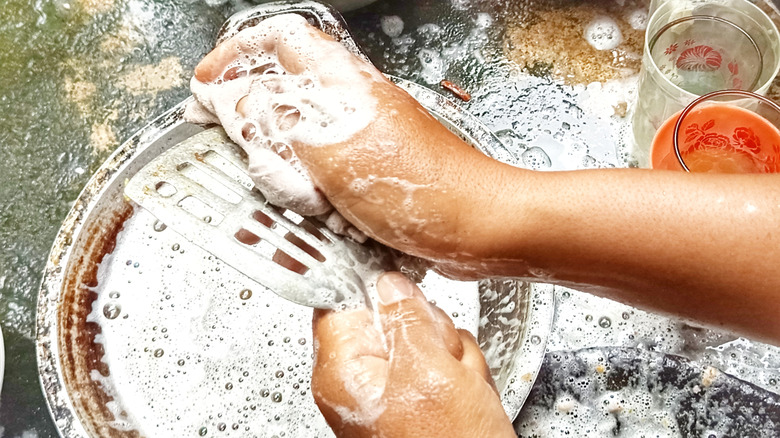
Gordon Ramsay does not play when it comes to proper hygiene and food safety practices on the "Hell's Kitchen" set. There is no leniency with proper kitchen rules regarding hygienic practices. Ramsay has chided competitors for some pretty serious no-nos that are enough to overwhelm you with nausea. There was the time that one chef wiped his face with a bloody towel before using the same blood-soaked towel to wipe down the pan he was cooking with. If that's not gross enough for you, another chef realized they were short on pasta and pulled some cooked noodles they had thrown out earlier straight from the garbage to a plate.
The list of stomach-turning offenses goes on to include serving undercooked chicken to a pregnant diner as well as lamb with blood on it; plastic wrap buried in food, and another chef sticking a finger in a pan of risotto to taste it before serving. One of the hardest moments to stomach included a chef's plate being sent back for being too salty. It wasn't due to actual salt content, but rather his own sweat dripping into the pan while cooking. If salt derived from chef sweat isn't enough to make you dry heave, another contestant served his lobster with a side of hair that nobody asked for. Ramsay is a quintessential perfectionist and practices what he preaches in the dishes he creates. It's no surprise he expects elite performance from the competitors.
Physical confrontation is prohibited
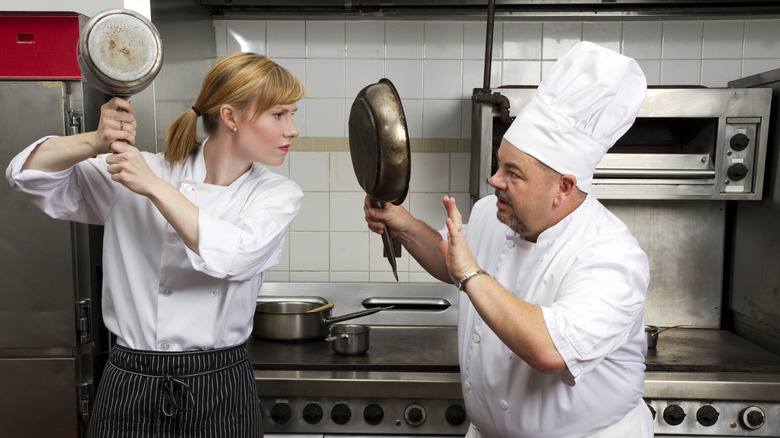
Holding a cooking competition in the pressure cooker of "Hell's Kitchen" is bound to make some people snap. It's a lot to navigate. When you take a bunch of chefs with different demeanors and cooking styles and throw them into a winner-takes-all comp, the stress is imminent. Add no communication with friends and family while working long, laborious hours, and it's easy to see how someone can lose it. There have been verbal altercations between contestants, dramatic tongue lashings from Chef Ramsay, and other heated interactions that create unrelenting stress.
While Ramsay can easily get away with harsh verbal attacks and even name-calling chefs who have gotten him into a tizzy, there is one thing that is completely off-limits on "Hell's Kitchen". Physical confrontation is a hard stop, and contestants who do get physical risk being kicked off the show. From a contestant dumping a full ashtray on a fellow competitor to another chef getting aggressive and challenging Ramsay to a physical fight, there is no shortage of rage-filled rule-bending and breaking on the show. Even Ramsay himself has blurred the lines by going nose-to-nose with contestants and having aggressive verbal altercations. Regardless, physical violence of any kind is not tolerated on Hell's Kitchen and can get you eliminated faster than you can say, "Yes, Chef!"
You can sing for your freedom

It's clear that the environment of "Hell's Kitchen" is rife with stressors. High intensity challenges coupled with a multitude of big personalities all trying to come out on top can make for a tense undertone even on a good day in the kitchen. We also know that the contestants are hooked up to mics the entire time, with very little downtime to decompress after mentally and physically trying days surrounded by kitchen heat. So what is a chef to do when they can't take another minute and need a break before they completely lose it?
They sing. Freedom will cost you, but instead of money, the currency is song. It's true, and the reason behind the clever tactic is wild. If a contestant needs a moment from being followed by cameras, all they have to do is start belting out a known, published tune. Because of stringent copyright rules tied to licensed music, television shows can't use any clips where someone is singing a song. All you have to do for the cameras to cut is to start singing before you snap, and it prevents production from using that footage. This workaround is a way for the stressed-out chefs to gain a little privacy and ensure that whatever is going down at that moment cannot be aired due to the potential threat of expensive legal repercussions.