

11 Secrets Grocery Store Workers Know That Customers Don't

We've covered customer behaviors that grocery store workers hate, but what about the secrets those workers know that we don't? Most of us go grocery shopping, wheeling around the store, choosing what's on our lists, and not thinking a bit beyond getting in and out the door with what we want. Giving second thoughts to what's actually happening behind the scenes isn't really on most of our agendas. After all, the shelves look full, and everything usually appears straightforward, with sales marked with stickers and everything else as common as can be. But beneath those stickers, sell by dates, and shelves stocked, there's an entire sales and marketing system at work that the customers are never fully aware of.
Grocery stores are well-oiled machines, ones that run both efficiently and specifically according to many factors including a fair amount of shopper psychology. Everything from exactly how specific grocery items are stocked on the shelves (and where), to when the items are marked down, are not chosen at random. They are intentional and specifically designed to save, and make, money.
To the average grocery shopper, these subtle things are never noticed, but the employees working at the grocery stores must learn fast how things work and get with the program. In this article we're taking you behind the scenes, offering insights from those who have actually worked in the aisles and grocery back rooms, including this writer. Here are 11 insider secrets grocery store workers know that most customers don't.
1. The first in, first out rule
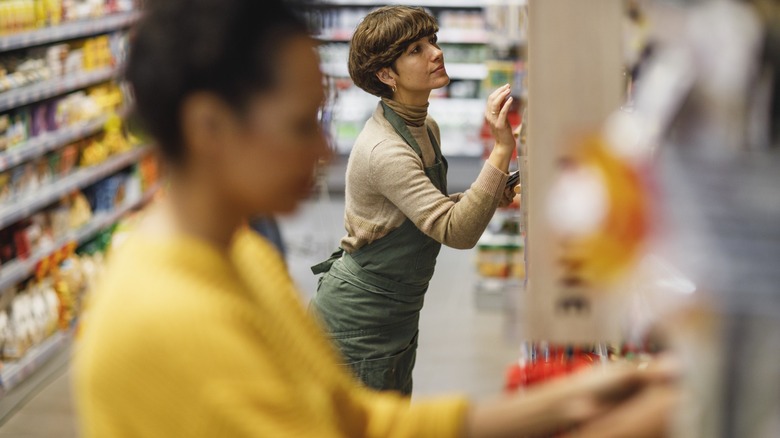
Grocery workers know it by its acronym shorthand, "FIFO," and it's one of the oldest tricks in the book. It stands for First In, First Out, and it describes the system grocery workers use to stock the shelves. Specifically, when new stock arrives, opposite to what you might think, grocery workers don't just place the new products on the front,which would be the easiest choice. Instead, these clerks are instructed to place the older items at the front so they will sell sooner, and then relegate the newest, just-arrived items at the furthest back.
This makes such good sense when you think about it, with the grocery stores doing all they can to avoid products expiring, and being sure that the ones customer reach for first are the ones closest to their sell-by dates. Genius, really. Practicality, reducing waste, and keeping products on a proper rotation is the name of the game here. This also means that if you know this game (now you do!), you also can be aware that the freshest item you might be hoping for is likely in the very back of that row.
It honestly doesn't matter whether you are looking for milk, packaged foods, or even produce, this same rule stands. This means (you guessed it), if you just grab the first yogurt cup you see, you're likely getting the cup closest to expiry.
2. Morning markdowns
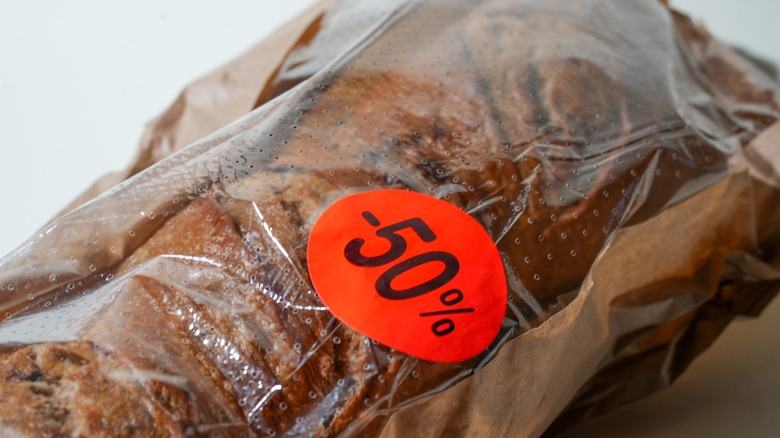
For the grocery deal hunters, here is one secret you need to know. When it comes to finding the best grocery store mark down deals, it's all about timing. Specifically, the early hours of the morning is when those grocery store workers work their mark down magic. Once the grocery workers clock in for their day shifts, moments after the store opens its doors to the general public, grocery employees are charged with going through each department (from meat to cheese, and fish and chips ... you name it) and picking out the items that are nearing their dates of expiry.
These specific grocery items will get marked down to place them in the best position for a quick sale before they actually do expire and must be removed without sale (a complete loss to the store at that point). So, this means that the time slot to shoot for is just about an hour or so after that opening bell. This gives the grocery workers time to have gotten in gear, and already even have marked down a few of your favorite finds if you are lucky.
Wondering why you just wouldn't wait and go when you want, a bit later perhaps? That would be fine, if these deals lasted ... but they usually don't. Far from sitting around all day, when shoppers find these marked down steals, they snap them up (as one would). So, get there early, and snag those super deals before they disappear.
3. The fresh bakery illusion
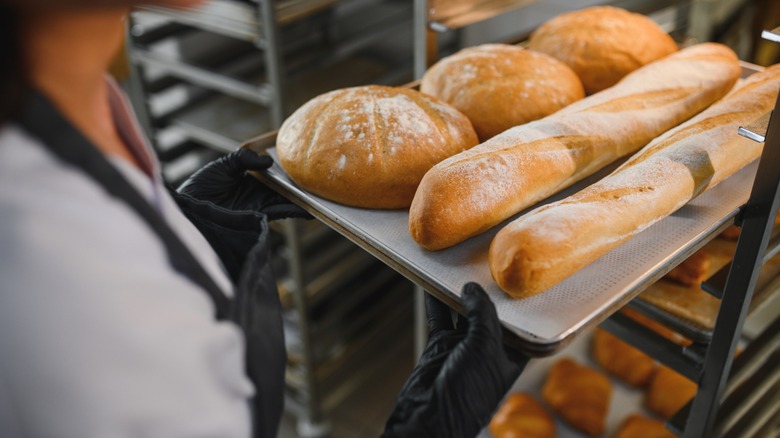
While you may be shopping at one of the best grocery store chain bakeries in the entire United States, one thing may still be surprising to you. It's about that bread that is baking. Spoiler alert: Most of that magical dough sending the most delicious aromas wafting throughout the rest of the grocery store may not have actually been made from scratch onsite. True story. The truth of the matter is that in many (especially larger) grocery stores, a majority of the baked goods sold actually arrive frozen – picture pre-portioned dough and pastries from commercial manufacturers, or at least a larger, offsite factory kitchen.
Here, the dough can be more efficiently made (mixed via huge mechanical mixers using standardized recipes that ensure exact, uniform sizes, etc.). The items are then frozen, boxed to move, and shipped straight to your favorite grocery store bakery, ready for the grocery workers to unpack and bake them — not fresh, but that still "feel" fresh. It's a bizarre thing, and not necessarily a deal breaker, but it's something few shoppers are actually aware of about their favorite local grocery store bakery behind the scenes.
This explains why all those loaves can look so perfectly identical (it ain't human grocery worker hands that are rolling each one out, that's for sure). In fact, besides thawing and then baking the pre-made products, all of the real grunt work has been done long before bakery grocery workers arrive to their daily shift.
4. The sale tag trap
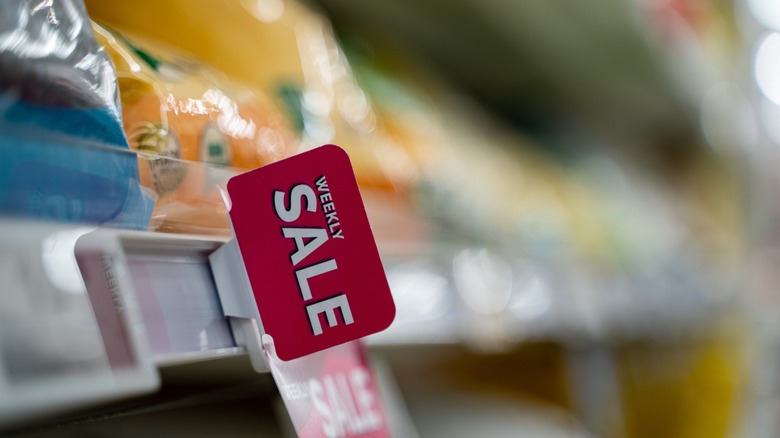
Among the supermarket habits costing you money is actually one you would think is saving you the most dough. We're talking about those big red or yellow (or pick your local store's preferred color) stickers. Whatever the hue, it's likely scrawled with the text (in huge print) screaming "SALE!" As a shopper, you immediately see these stickers and think ... Jackpot! You just beat the system and scored a big deal. Right? Well, maybe. Or ... maybe not.
Here's the secret that most grocery shoppers aren't privy to: just because a sale sticker is placed on a product does not necessarily mean that it has been marked down by even a single penny. Harsh, but true reality. Grocery stores can, and do, place "sale" tags on articles without ever touching that basic price. It's a sad fact that oftentimes, just because your eyes catch a bright yellow or red sticker on an item, you automatically reach for it, prompted even more by the feeling that "sales" make shoppers feel a sense of urgency, like they will miss out on something if they don't snap up whatever it is right now.
So how do you know? The tell here is if the original price is also placed on the item, so you can actually see what the new price is saving you. If not, then you really can't know if that sale is really a sale.
5. Sanitation gaps
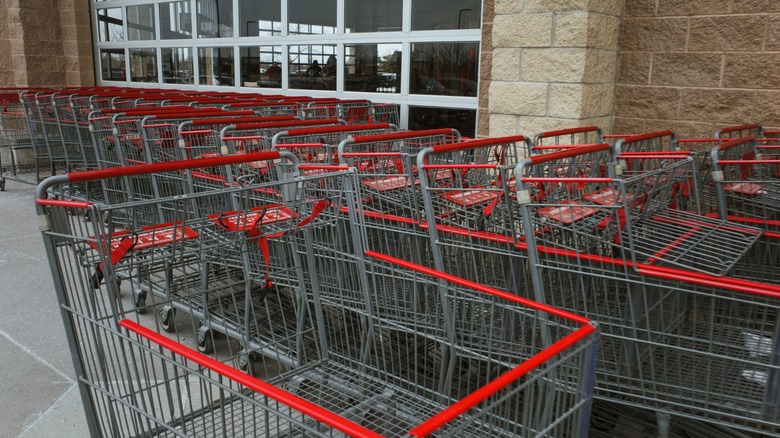
One of the biggest red flags for a grocery store is having dirty floors, but what about those shopping carts? This is unfortunately among the secrets grocery workers know that many shoppers don't. That grocery shopping cart you grab when walking in the store, then proceed to wheel around the store and place all your items in, including fresh produce and the like? Yeah ... it possibly hasn't been actually washed or truly cleaned and sanitized in quite some time.
Not only shopping carts, but also conveyor belts and even bulk bins are often merely wiped down with wet cloths, and hardly ever given deep cleaning on the daily. Most stores are just visual, and into the more of the fast wipe-down to rid of seen dirt mode of cleansing. And that means that for shopping carts, many times the closest thing to a deep cleaning or "wash" they get is when it rains outside and they are parked in the car lot waiting to be brought inside. We wish we were kidding.
But in fact, studies conducted by consumer research groups have even shown that a large portion of grocery store shopping carts carry bacteria (including fecal matter). Yes, you read that right. While this isn't necessarily news to panic over, it is important to take note of. Why not bring alcohol-based wet wipes with you, and give that cart a good swipe before taking it for a spin?
6. The second life of food
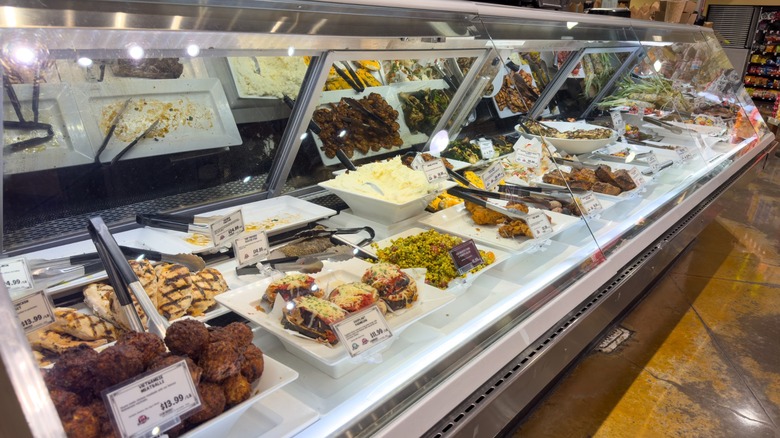
Grocery stores are in the business of making money, and this means not casually throwing away anything that is still perfectly usable. Waste is not a word grocery stores like to use — it's expensive, and socially frowned upon to say the least. That means that when perishables like meat, veggies, fruit, and more near their sell-by dates, grocery stores often repurpose them to be able to sell them still within their best-by window ... but "dressed" as something else entirely (think prepared foods).
For example, a portion of beef isn't selling, and sell-by dates are creeping close. That beef might be ground up and placed in a chili via the deli's prepared food section hot bar hoping to be sold that very day at the lunch or dinner rush. The same goes for steaks or grilled chicken breast, and even veggies. These items may not be at their peak when packaged, but are still absolutely safe for consumption. If seasoned, marinated, or placed in a soup or salad, new life can be breathed into them and still give them their moment in the sun (and shoppers' shopping carts).
Even for fresh fruits, when those bananas are looking a little ripe to shoppers, the prepared foods sections sees a banana pudding mainstay at its prime. It's super smart really, and a great way for grocery stores to reduce waste, while still staying within the lines of food safety.
7. Try before you buy
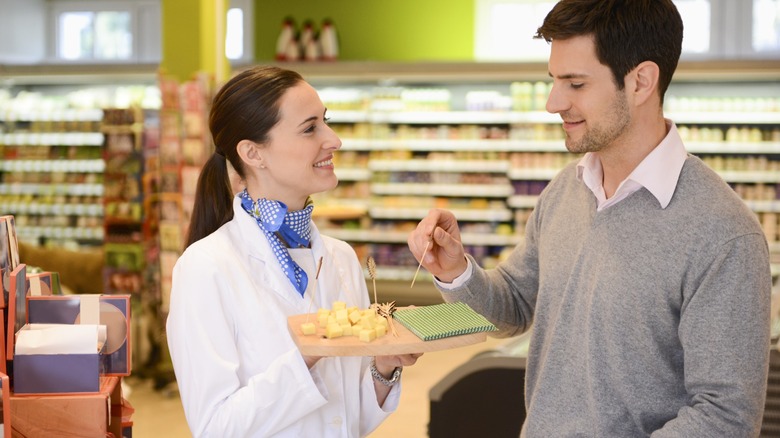
Have you ever heard of the grocery store chain taste test? You know, that exact moment when you are at the grocery store, and you are looking at a product and wondering something like, "This looks super yummy, but will I really like it ... and what if I don't? It would be such a waste." Well, there is good news for many shoppers out there. At some grocery stores, you are actually allowed to try items before purchasing them. This is completely up to the discretion of each store, but Trader Joe's was known for this practice pre-pandemic, for example, and it has been reintroduced in some stores. Sounds too good to be true, but all you have to do is ask.
For example, grocery stores have been known to allow employees to open products (please do not just go opening items yourself, willy nilly!), so that shoppers can literally "taste and see" before taking the full plunge of purchase. These are often non-perishable goods — things like chips or packaged snacks — so the store can them use them for samples if the customer ends up not wanting them.
But even in cases of perishables, with things like cheese, for instance, those can also be used as samples if the store sees fit to allow customers to try before they buy. If all else fails, employees have also been allowed to use the extra in their break rooms. So don't worry about waste.
8. Delivery timing
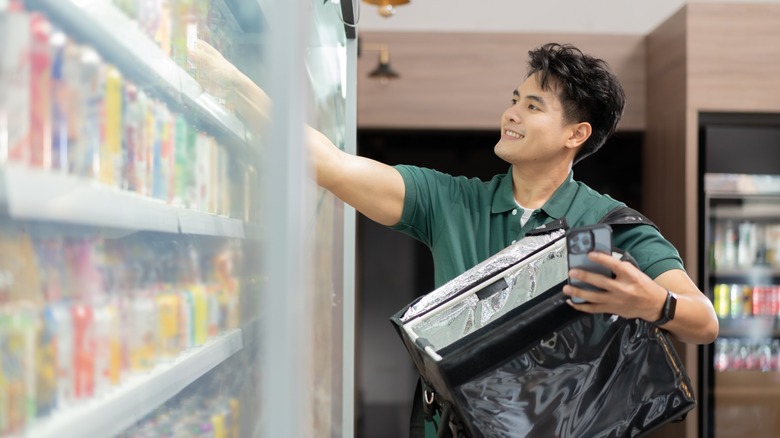
Ordering groceries online for delivery straight to your home sounds like a slam dunk. That is, if you get your timing right. There's almost nothing more frustrating than painstakingly putting together your grocery list (going meticulously through your week's menu and ensuring each exact item you need is on it), then having your delivery arrive with the message that, "Sorry, we sold out of the exact product you wanted." It sometimes even makes opting for delivery an absolute disaster, depending on the item.
While there is no 100% surefire way to ensure your exact items will indeed be at the store when you order, there are certain times in the day that can definitely raise your chances of scoring your exact brand of yogurt or select salad exponentially. The grocery store worker secret tip regarding delivery pulling? Based on personal experience working in stores, the very earliest morning hours aren't your best friends.
While this may be when mark downs are the best to snag, for grocery workers pulling delivery orders, many of the items from the overnight shipments that have arrived most likely haven't been pulled out from the pallets yet, much less placed on shelves for grabbing. And if you think that overworked grocery worker is going to rifle through gargantuan unwrapped pallets to attempt to find your two Yoplait yogurts? Keep dreaming. So, if you want to avoid unwanted deletions or substitutions, give the workers a little more time after opening to unload and restock.
9. Scent marketing
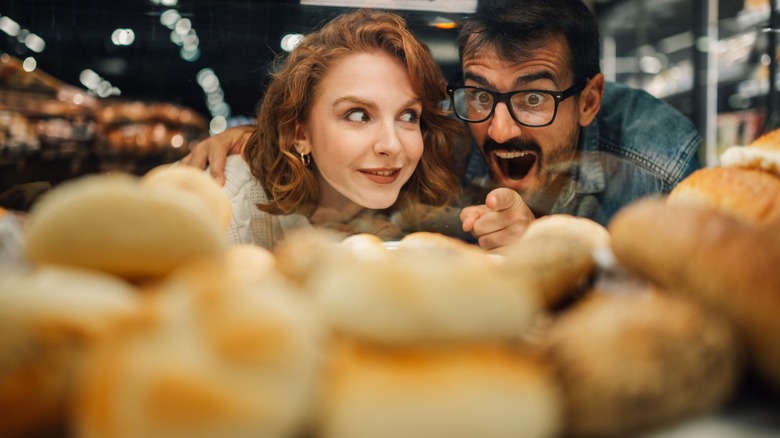
Next up for discussion? The reason why the bakery is at the front of your supermarket. We're talking bakery and deli smells. Think about it: You stroll into the grocery store, and are instantly hit with an undeniable aroma of fresh-baked bread, pastries, and more. Suddenly, even though you went in looking mainly for meal staples like meat and veggies, the only thing on your mind now is chowing down on some croissants and coffee — and maybe even that brownie giving you the eye from the display case.
You could chalk it up to low self control, or your sweet tooth and carb-loving character taking over, but there is actually a deep science behind it. In other words, this reaction is not random, but by design. The scent of food has been proven to trigger hunger (duh), but when the aroma of fresh bread or just out of the oven pastries enter the mix? That craving reaches primal levels, and your brain responds near instantaneously.
Grocery stores are so smart. Not only are they aware of this scientific phenomenon, but they bank on it, literally designing their stores so that the bakeries and delis (looking at you, rotisserie chickens roasting over spits) are some of the first things you see –and smell — when entering or exiting a store. They are also designed to be open, allowing all of those sweet and savory scents to travel, and work their magic, as shoppers shop.
10. The eye-level tax
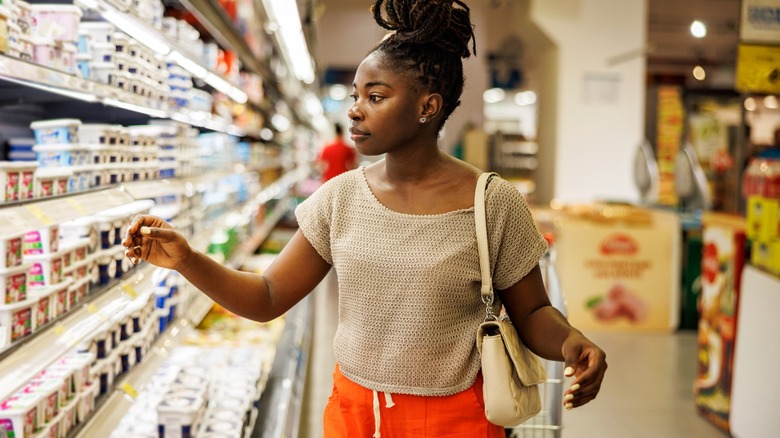
While we're (sort of) on the subject of psychology, let's look at the strange phenomenon of placement in grocery store products ... vertically. Think of it like shelf psychology, where the average human height actually plays a specific role in where grocery store items are stocked for sale. Imagine you are making your way through your shopping list, cruising among the aisles with your cart. You stop in front of that famous wall of cereals and don't even know where to start, and begin scanning.
What you do know is that there are waaaaaaaay too many options, but what you may not realize is that, chances are that the cereal boxes directly in front of your peepers — at eye level – are the exact ones the grocery store wants you to reach for. This is because adult eye level is the sweet spot for stores, where they place the most expensive, name-brand products in hopes you see them first and take a packet immediately (forgoing a longer search for more economical options).
You'd be surprised how well this usually works, in fact, with how busy and hurried grocery shoppers can be. Grocery retailers are counting on this on-the-go mentality (and love of quick ease) when they intentionally set the Cheerios at eye level ... and the half-priced Toasty-Oh's on the very bottom shelf. Those off-brand products may not necessarily be completely out of reach, but they certainly make you work for it (in hopes you won't).
11. The produce cart hack
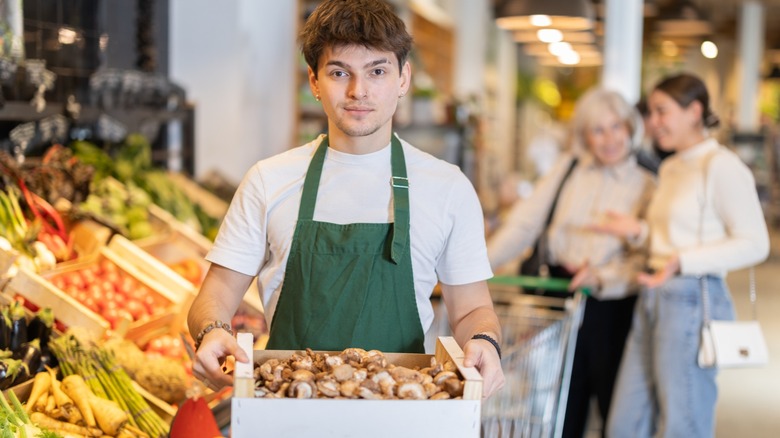
This last grocery store worker secret is for all of those grocery shoppers too shy to broach the subject of "Could I please ..." with the produce workers. It's perfectly valid to not want to bother anyone, but have you ever been in that produce section perusing the peaches, maybe even hoping to snatch some fresh spinach for a salad, when you spot with your little eye the produce worker, rolling out the fresh fruits and veggies that just arrived on the scene. Your impulse (that desire to go directly to them and beg for the crispest spinach they have .... you know, the leaves that haven't been sitting out for hours?) is valid.
In fact, that impulse is human, and near universal. And grocery workers are aware of it. We all know that cart the produce worker is wheeling around (yes, the one with items not yet placed on display) holds the very freshest of the fresh. So, what to do when you want that shiny apple, those still-green bananas, or that oh-so-crisp lettuce? You can simply ask nicely, and chances are, that grocery store clerk will more than happily acquiesce to your request.
The key word here is ask, versus strolling straight up to the produce cart and grabbing what you like. A simple, "Excuse me, would it be okay if I scored some of that beautiful lettuce from that batch?" while the worker is in your near vicinity, will suffice.