

13 Types Of Rice And How To Use Them
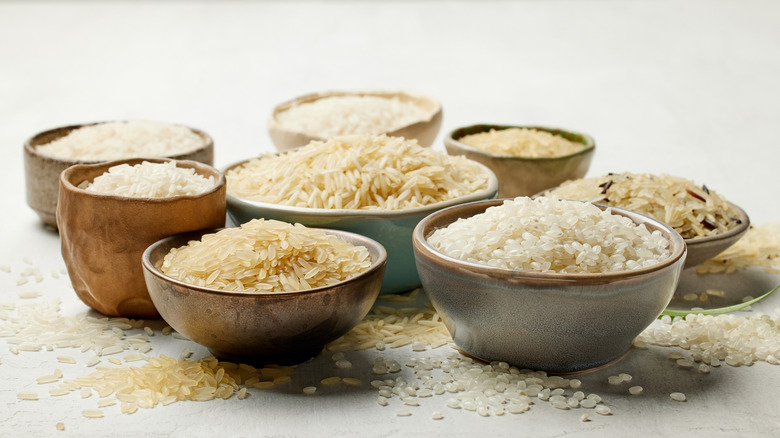
Rice is a popular pantry staple the world over, eaten by over half the global population. While its nutritional values are often overshadowed by debates over its calorie and carbohydrate content, the fact remains that rice still has significant benefits. It has a pleasant, chewy texture and, due to its absorbent nature, can adapt to any flavor or seasoning. For this reason alone, it pairs efortlessly with almost any cuisine.
In the United States, rice is primarily grown in the Southern states, along the Gulf Coast, and in California. There are several different types of rice varieties available, with the indica and japonica subspecies being most popular. The shape and size of the grain will depend on the type of subspecies. Indica varieties are mostly long-grained while japonica is usually a short-grained variety — though both can produce grains of varying lengths.
From a cook's perspective, the most important factor to consider is the content and type of starch in the grain. This will dictate your choice of rice and the length of time required to cook it. While the varieties of rice can feel overwhelming at first, a closer look at their individual characteristics make it much easier to choose the right grain for your needs.
White rice
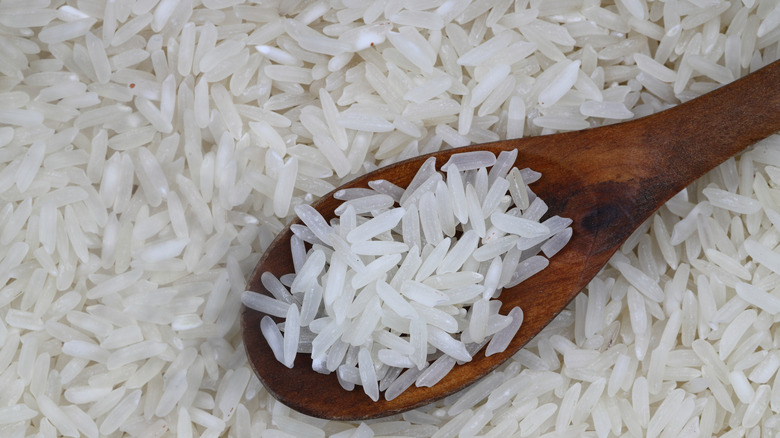
One of the most popular and commonly used rice varieties is white rice (brands battle it out every day to prove their mettle). It's a staple ingredient for a large proportion of the global population, thanks to its versatility and ability to take on any flavor profile. White rice can be divided into numerous categories based on the length of the grain and these can be further categorized depending on the type of processing used. The two most common varieties are long-grain and short-grain.
The cooking period will depend on the type of rice you use. For example, ready-to-heat rice is fully cooked, which means that the preparation time is conveniently shortened. Short-grain white rice is starchy, making it popular for Japanese dishes as well as to make risotto and paella. Like its long-grained counterpart, it needs to be rinsed before cooking. This makes the rice grains fluffier and improves both its taste and texture.
Long-grain rice is usually less starchy and needs to be cooked with the lid on. It is usually popular in Chinese, Thai, and Indian cuisine, where its ability to absorb the intense flavors of the accompanying dishes makes it an indispensable part of many cuisines.
Brown rice
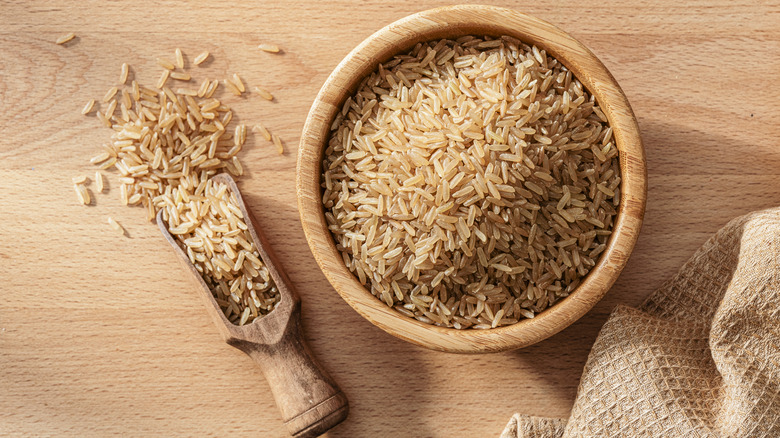
Brown rice is a whole-grain rice that consists of the fibrous outer layer, the germ, a middle layer, the bran, and a starchy center or endosperm. Unlike white rice, which has had the two outer parts of the grain removed while processing, brown rice is supposed to be nutritionally superior to white rice as it retains its fiber, minerals, and vitamins. The higher levels of fiber make it a good choice of grain for your gut health as well as helping to lower cholesterol, blood pressure, and blood sugar levels.
Because it is a whole grain, it takes longer to cook, and while its chewy texture and nutty taste may take some getting used to, many people prefer it to white rice. Its high fiber content helps keep you full longer, which is great since your desire to snack will be minimized. It is also a better choice for those with Type II diabetes as it prevents blood sugar spikes.
Cooking it isn't any more difficult than regular white rice, but the method will differ, so always check instructions first. Brown rice works well in many different types of dishes, from curries to stir-fries, and it can almost always be used as a substitute for white rice (albeit with a slightly different taste profile).
Sticky rice
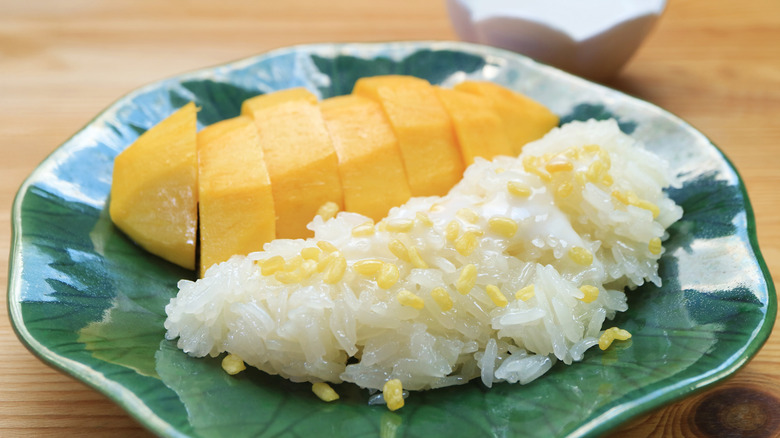
Sticky rice, or glutinous or sweet rice, is a short-grained variety of rice that has high levels of the starch, amylopectin. It is this starch that gives it its highly sticky nature. Used primarily in Thai and other Asian cuisines, it lends itself beautifully to both sweet and savory dishes. You can find it in the popular Thai dessert mango sticky rice, used in Thai cuisine as a side dish, or in certain dim sum dishes like lo mai gai. It is also available in an unpolished form that is either black or purple in color. The black variety is used to make desserts and turns purplish when cooked.
Sticky rice requires a different approach to cooking. It is usually steamed and is served as part of a meal, with diners molding small pieces with their fingers and dipping it while eating. Rinsing the rice of excess starch will help prevent it from clumping into a solid mass. To cook the rice evenly, it should be flipped during the steaming process.
Steamed sticky rice has a distinct flavor that is sweet and floral with a chewy texture that makes it an ideal accompaniment to rich meat dishes. It's great as a filling for dumplings or to make rice cakes, known as mochi in Japan. It can also be fried, making crispy rice patties reminiscent of Italian arancini.
Arborio rice
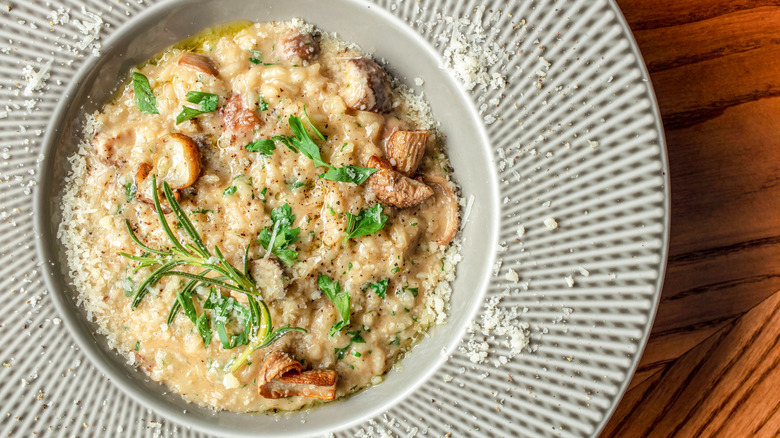
A variety of short-grain rice that was originally cultivated in Italy, it is named for its town of origin, Arborio, in the Po Valley. Today, it is also grown in the United States, mainly in California and Texas. It is the choice of rice used to make the classical version of risotto. The rice grains are short and plump with a pearly-white exterior, and the "super fino" type (the longest grain size) is the most popular.
Arborio rice has a high amylopectin starch content due to the lower level of milling it undergoes. This starch is released while cooking which gives the rice its distinctive creamy and chewy texture. For this reason, this type of rice is never rinsed in water, as this would remove the starch. That hallmark creaminess will be missing. However, risotto isn't the only dish arborio rice is used for. Any recipe that calls for creamy rice will benefit from the use of arborio.
Cooking arborio rice calls for a different approach than regular white rice. Since the creaminess that is required can only come when the starch is released, it has to be cooked slowly, with a little bit of hot liquid added periodically. Its ability to absorb liquid without turning into mush is quite high, so don't worry about overcooking. Lastly, it should be served hot, lest the starch begin to congeal and you are left with an unappealing, gluey mess.
Red rice
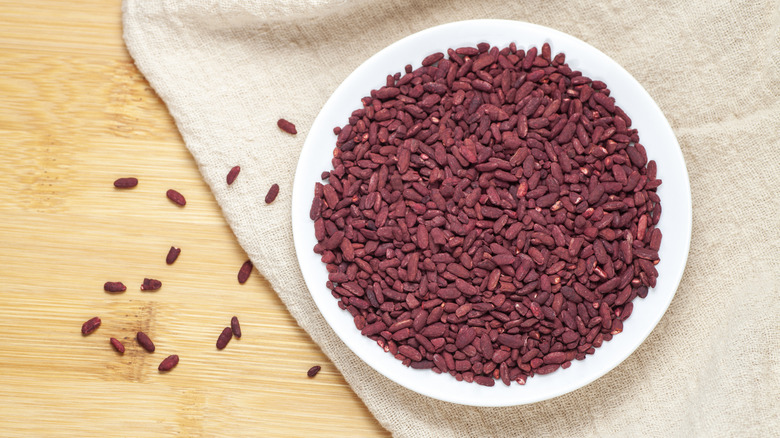
The distinctive color of red rice is due to the presence of proanthocyanidin, a natural antioxidant. It is traditionally cultivated in regions of Asia, including India, Sri Lanka, and China, as well as in France, Brazil, and the United States.
This strain of rice is reputed to be a nutritional powerhouse, containing minerals like zinc and iron, vitamins, proteins, and high levels of antioxidants and polyphenols. These nutrients are believed to be beneficial in controlling blood sugar and blood pressure levels among other health benefits. Studies have also shown that proanthocyanidin-rich red rice extract has anti-inflammatory properties and could be beneficial for medicinal use.
Red rice is used in a whole bunch of local recipes in Asia. In Sri Lanka, it is used to make rice soup, pudding, salad, idlis, appams, and more. It pairs well with lamb, beef or goat meat. The rice is chewy with a nutty flavor. It is usually cooked after rinsing to remove excess starch. Some cooks prefer to soak it for about 30 minutes before cooking, as it enhances the texture. After cooking, it's best to let the rice rest for 10 to 15 minutes while covered. This helps it to absorb moisture and get that fluffy texture.
Black rice
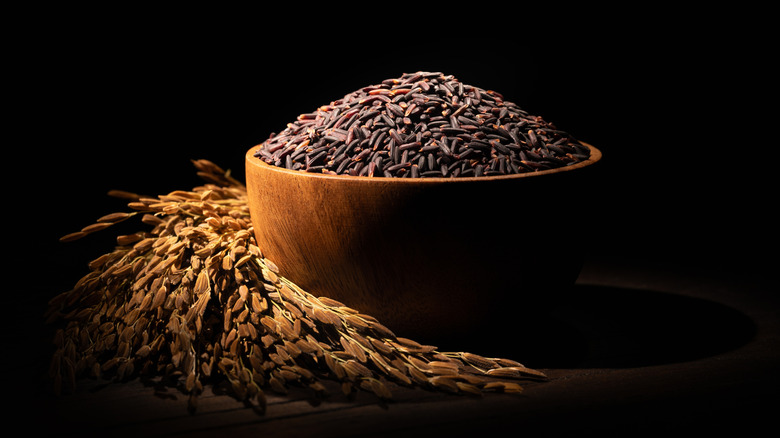
Another very healthy strain of rice is black rice, also known as forbidden rice. It is a rich source of nutrients containing high levels of vitamins, amino acids, minerals, and bioactive compounds. The flavonoids and phenolic compounds it contains provide a range of health benefits, including controlling blood sugar levels, reducing inflammation, and offering protection against coronary heart disease and more. The bran is responsible for the color and is a rich source of fiber.
There are almost 200 varieties of black rice grown globally, with China accounting for over 60% of production. It is also grown widely in India, Indonesia, Sri Lanka, and Thailand. It is usually sold as three different varieties: the black sticky type used in Thailand, the black japonica rice that's good for rice salads, and the Chinese black rice usually used to make porridge.
The type of black rice will determine the cooking style. Black sticky rice should be steamed, while non-sticky varieties can be soaked and then rinsed, similar to brown rice. You can choose the method of cooking, using either an electric rice cooker, the pasta method, or the stovetop absorption method. Use it to make a salad, risotto, porridge, or a black rice paella. It pairs well with chicken and beef, making it a useful and healthy addition to your pantry.
Jasmine rice
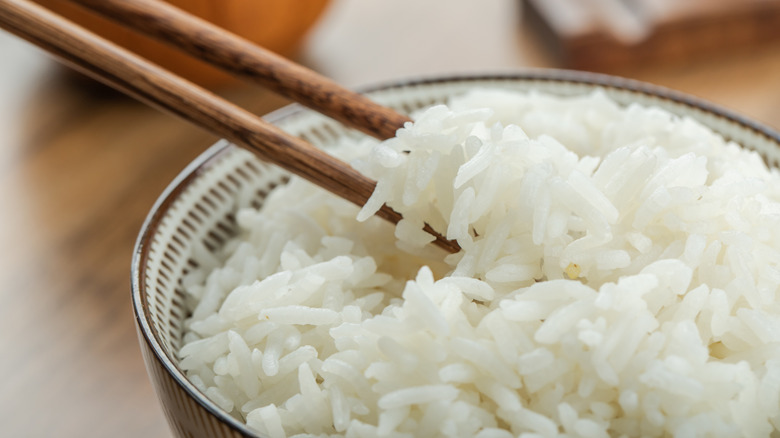
Jasmine rice was developed in Thailand in the 1950s. A staple in that country, it happens to be one of Thailand's largest exports. Its popularity worldwide can be attributed to its distinctive aroma that is similar to the pandan plant. Its name derives from its color that is similar to the jasmine flower, not its aroma.
Jasmine rice is available as both a white or brown type and is a long-grain variety. The brown jasmine variety is a whole grain type with a higher fiber and nutrient content, while white jasmine has a softer texture when cooked. Jasmine rice also comes in other colors including black, purple, and red. However, there are some health risks associated with jasmine rice, including the colored varieties. It has a relatively high glycemic index and this includes the brown variety, making it unsuitable for those with Type II diabetes. Arsenic levels are another area of concern, which is why it's important to wash it thoroughly before cooking.
This type of rice pairs best with Thai curries, stir-fries, or grilled meats and makes for a surprisingly awesome fried rice. It also works well in desserts, from the famous Thai mango sticky rice to the more humble rice pudding.
Wild rice
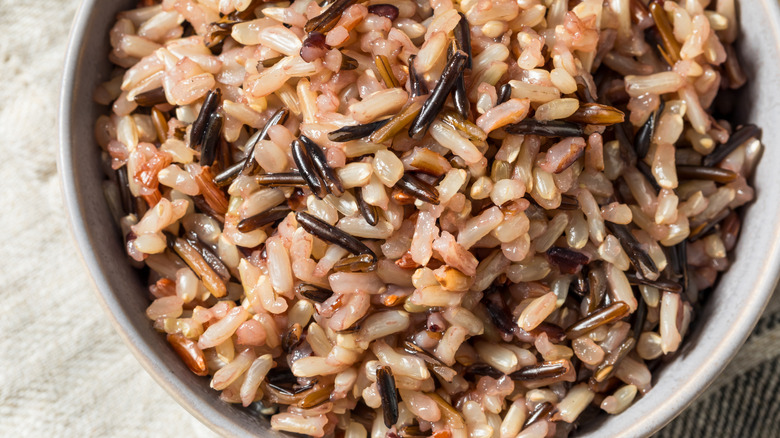
The wild rice sold in the United States is neither wild nor rice. It is an aquatic grass that belongs to the genus Zizania, entirely different from the genus Oryzae that regular rice belongs to. However, since it's known as and even eaten like regular rice, it deserves a mention in this list. It is farmed in parts of California and Minnesota, and after processing the black and brown kernels are what's cooked. The wild, wild versions are light to dark brown in color and have a milder flavor.
Wild rice is rich in nutrients, providing a healthy mix of protein and fiber. It is rich in micronutrients such as manganese that help maintain a healthy metabolism. Low in calories, it's good for diabetics and those struggling with weight issues. It's good for the heart, and being gluten-free, is suitable for those suffering from celiac disease and gluten-sensitivity.
The grain has a nutty, toasted flavor when cooked and a chewy texture that makes it well-suited to casseroles. It pairs well with fall ingredients, which is why it appears on menus during Thanksgiving. Wild rice salads go well with mushrooms, cranberries, and pickled apples, while the grain can be used in any dish that requires a hearty wholesome bite.
Carolina Gold
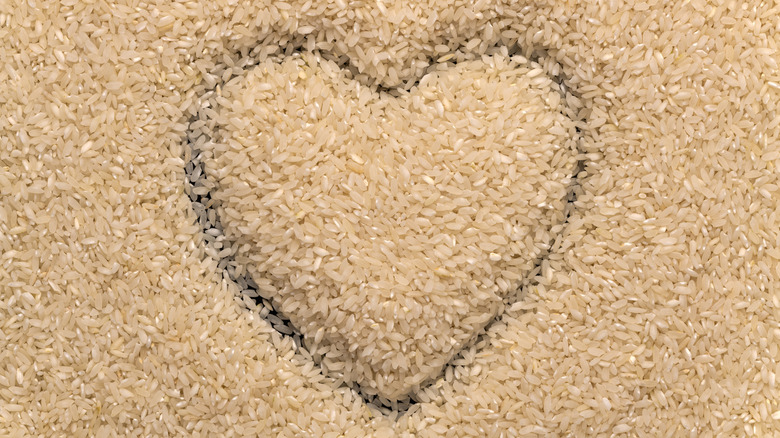
Carolina Gold rice has a fascinating history that dates back to the 17th century. It was first brought to Charleston from Madagascar and has been enjoying a revival of sorts since the turn of the 21st century. The grain is very aromatic with floral and nutty notes, while the texture is chewy with a slight flavor of hazelnut.
Since Carolina Gold is a minimally processed rice, it is recommended that the grain be rinsed thoroughly before cooking. This needs to be repeated until the water runs clear and usually takes four to five rinses. In case you want your rice creamy, say while making a risotto, avoid rinsing too much.
In Charleston, the center of the revival, one preferred manner of cooking is rice middlins or grits. These broken pieces of rice are an ingredient that is leftover from the milling process. Dishes like crab fried rice, shrimp with middlins, and seafood pilaf are some of the more popular dishes using Carolina Gold, but the grain can also be used to cook any rice-based dish. It pairs well with seafood, chicken, and meats, and is a good choice for making paella and risotto.
Basmati rice
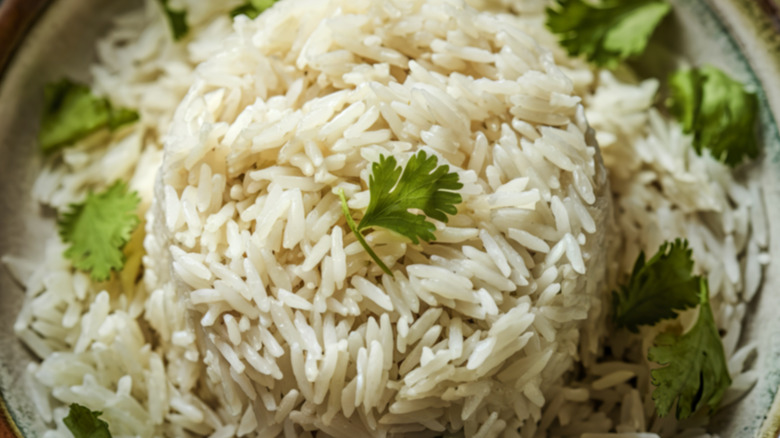
Basmati rice is an aromatic grain that comes from the foothills of the Himalayas in India and Pakistan. It's a staple of many Indian dishes and is enjoyed globally, with India accounting for the majority of the global supply. There are two varieties of basmati rice: white and brown. The difference lies in their processing, with the white variety being the more processed. Both have a distinctive aroma and taste, which accounts for their popularity the world over.
Both varieties of rice have several benefits. Surprisingly, even white basmati has a lower glycemic index compared to other white rice varieties, making this a better choice for diabetics in small amounts. Higher amounts of soluble fiber mean that it helps with digestion by adding bulk. Nutritionally, the profile for both varieties is similar to their regular counterparts.
The correct water-to-rice ratio is essential for cooking basmati rice so it doesn't clump together. The popular ratio recommended is 1 ½ cups of water per cup of rice. While it is the preferred choice for Indian dishes, basmati also goes well with other cuisines. Biryanis, pilafs, and stir-frys are all best made with basmati, as long as you're looking for that fluffy texture with separate individual grains.
Bomba rice
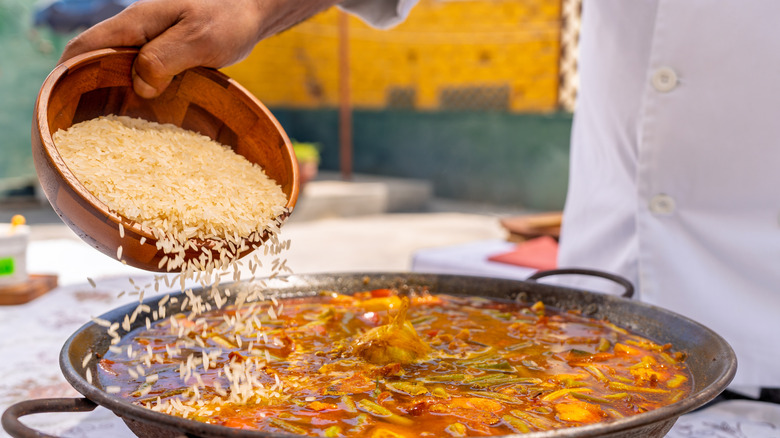
Also known as Valencia rice, Bomba is a short grain variety that is almost round in shape. Compared to other varieties of rice, Bomba can absorb a lot more water, about three times its volume, while retaining its shape and firmness. It expands to almost three times the length of the raw grain when cooked, and absorbs flavors more easily. For this reason, Bomba remains a popular choice in Spain for making paella.
Bomba isn't widely available in the United States, but it can be purchased online and at gourmet grocery stores that stock Spanish and Latin foods. Due to its absorbent nature, it takes longer to cook. It is more expensive than other types of rice owing to its limited cultivation area, but that cost is well worth it for chefs who are striving to make authentic paella and other Spanish dishes. Apart from its ability to absorb and concentrate flavors, an advantage this grain has over other varieties is its ability to be used in other dishes including risotto, pilaf, and casserole.
Bomba is nutritionally similar to other types of rice, with plenty of complex carbohydrates. But combined with meat and seafood in a dish like paella, it can contribute to a balanced diet provided it is eaten in moderation.
Matta rice
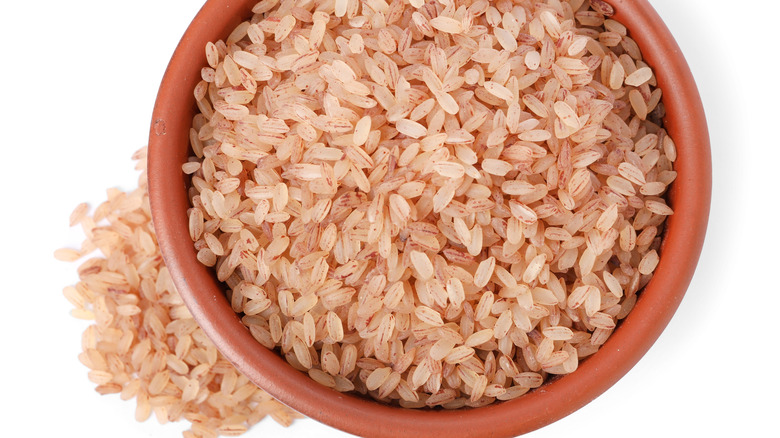
Matta rice, also known as Pallakad rice or Kerala red rice, is a special variety of rice grown mostly in the state of Kerala, along the south-western coast of India. It is sometimes referred to as red rice because of its distinctive red hue and it is usually not polished like white rice. It is popular in South India and in Sri Lanka and has a robust and earthy flavor that pairs well with chicken and other meats.
Its red color comes from anthocyanins, an antioxidant with anti-inflammatory properties. It also has a higher fiber content and lower glycemic index than white rice, making it a healthy addition to the diets of diabetics. The lower cholesterol and saturated fats are beneficial to cardiac health and its higher calcium content contributes to bone health. With high vitamin and mineral content, matta rice is a nutritious grain to consider for your pantry.
Matta rice should be properly rinsed and cleaned before cooking. It requires a longer period of time to cook as well as extra water. It is available in the U.S. through online stores like Amazon, as well as specialty Indian and Asian grocery stores. Some large retailers also carry it.
Sushi rice
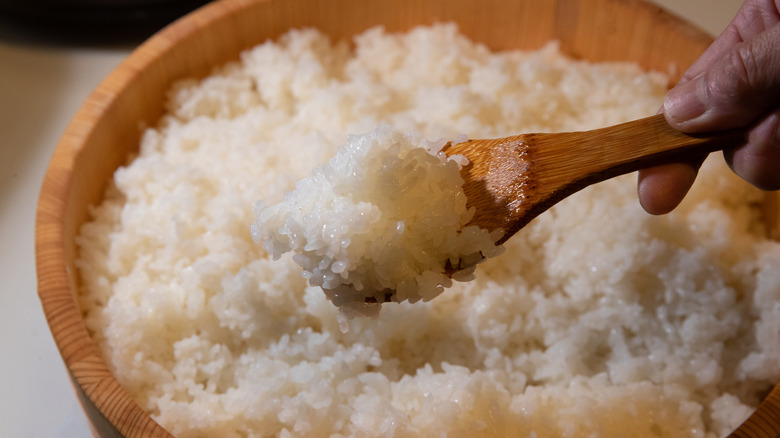
Sushi rice is very different from the regular long-grained variety. It forms the heart of every sushi roll, keeping it compact while still feeling light on the tongue. Its texture is balanced, soft but not too mushy, and firm but not dry. The rice that is the preferred choice of sushi chefs is the short and medium grain of the japonica variety that is grown primarily in Japan and in California in the United States.
This type of rice is well-suited for making sushi rolls mainly because of the starch content that allows the rice to stick together. This makes it easy to make the rolls that envelop the slices of raw fish. Often this rice is polished with a pearly white finish, but brown versions are also available.
Cooking sushi rice at home might seem like a relatively straightforward process, but it takes practice to perfect the art. The rice needs to be seasoned first. For this, you will need unseasoned rice vinegar, sea salt, and sugar. The seasoning brings a mild tanginess and sweetness that helps to enhance the taste of fish and vegetables. It takes a lot of practice to get the seasoning balance right. Once you have perfected this, you can use it to make not only sushi rolls and nigiri, but also as a substitute for plain white rice in many dishes.