

Never Ask For This Condiment At A Traditional Italian Restaurant
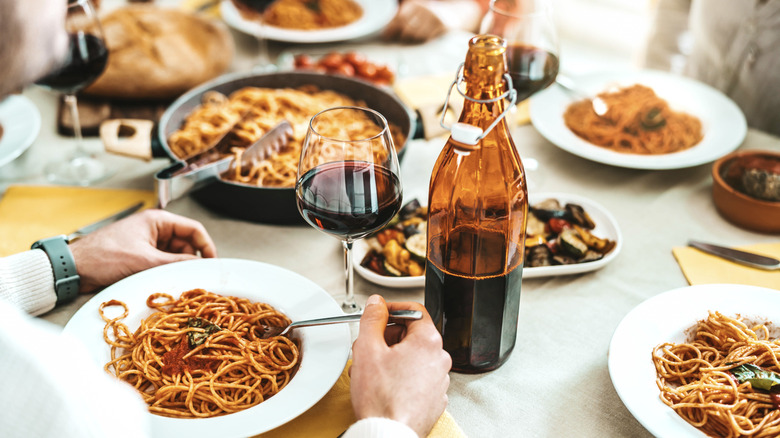
From crispy Neapolitan pizza to perfectly sauced pasta, Italian food is one of the most popular cuisines in the world for good reason. However, whether you're dining at an osteria or a trattoria (there is a difference), it's best to avoid asking for one of America's most popular condiments: ketchup. While some would argue that ketchup belongs on everything, it's not appropriate to request the sweet, tomato-based condiment in a traditional Italian restaurant, according to Lisa Lotts, owner and publisher of the recipe blog Garlic & Zest. "If the Italian restaurant in question is serving burgers, hot dogs, or fries, sure, ask for ketchup," she advised. "Otherwise, don't be a dolt."
While some ketchup lovers may argue that tomato pastes and sauces are frequently used in traditional Italian cuisine, Lotts emphasized that ketchup, while not distasteful, is not Italian. "It actually derives from Asian cuisine (from fermented fish sauce)," she explained. "It was later refined with sugar for Western palates." Given this historical and cultural context, "Ketchup and traditional tomato or pomodoro sauces are as alike as Parmigiano Reggiano and Cheez Whiz."
Generally speaking, asking for a squirt of ketchup at a great Italian restaurant is a major faux pas, but there is one (often extremely fastidious) type of customer that may get a pass. "When you're out to eat with kids, you don't need drama," Lotts advised. "Just give them what they want and let the other diners enjoy their meals."
How to boost Italian flavors without ketchup
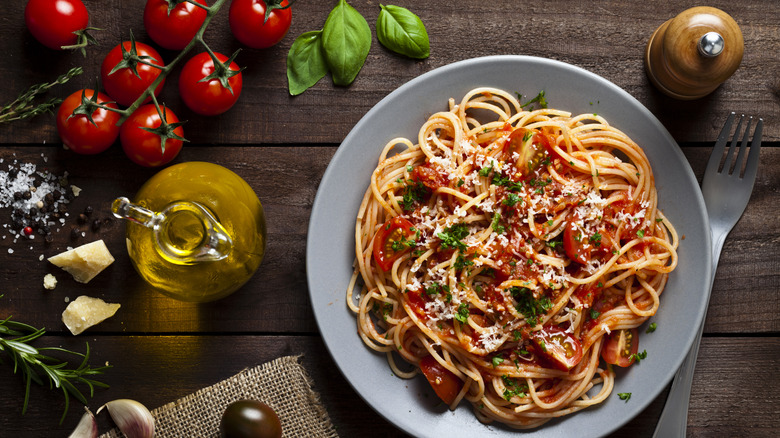
If you're craving a little extra pizzazz in an Italian meal, there are plenty of more traditional condiments you can use to zhuzh up your food. "Adding a swirl of good fruity olive oil, fresh herbs, fresh cracked pepper, or fresh-grated Parmesan cheese will perk up any Italian dish and add a beautiful visual garnish," Lisa Lotts suggested. Olive oil pairs nicely with hot dishes, she emphasized, as it becomes aromatic and fruity when mixed with the warm food. A sprinkle of herbs will amplify flavors, cracked pepper brings a spicy tingle, and freshly grated Parmesan cheese adds a rich layer of umami depth.
Ketchup itself is nowhere to be found in Italian cuisine, but ketchup's longtime partner in crime, fried potatoes, certainly are. "Patate fritte are hand-cut fried potatoes served with a sprinkle of salt," Lotts explained. While these fried spuds look very similar to french fries, they're not typically served with ketchup or any other adornment, according to Lotts. Another classically condiment-free Italian tater dish is crocchette di patate, breaded and fried potato croquettes seasoned with parsley and, optionally, cheese. "They're perfect as is, crispy outside, creamy and lush inside," Lotts said. While these potato-based Italian plates may have you tempted to reach for that red plastic bottle, Lotts' advice is simple and firm: "Don't mess with perfection." If you're looking for other ways to step up your Italian dining game, learn how to eat spaghetti like a true Italian.