

11 Old-School Kitchen Tools That Hardly Anyone Uses Anymore
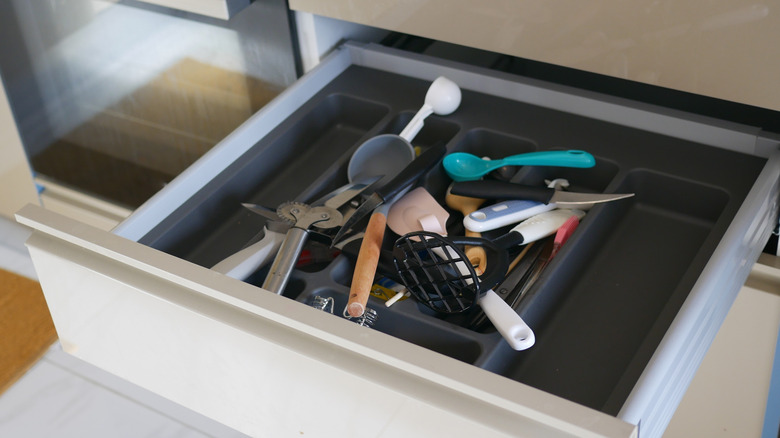
You may have many cherished memories with grandparents or older relatives that involve cooking or baking. You may even have memories where they taught you specific recipes in the kitchen, perhaps recipes that were popular within your family unit. Within those memories, you may recollect your family member using cooking utensils that wouldn't be necessarily found in your own kitchen today, especially if they were from the '70s.
These kitchen gadgets, though iconic to the memory of some, unfortunately have often faded from popularity in the current day. Though they may still be found in the back of some cluttered kitchen junk drawers, many have been replaced or enhanced by modern technology. This is, of course, in spite of any vehement claims of your family members that these old-school items work far better than any updated version ever could. Whatever the case, while reminiscing about these old-school kitchen items, you may find they bring back memories of not only the older generation but also of the foods you enjoyed with them during the times you spent together.
Mandoline slicer
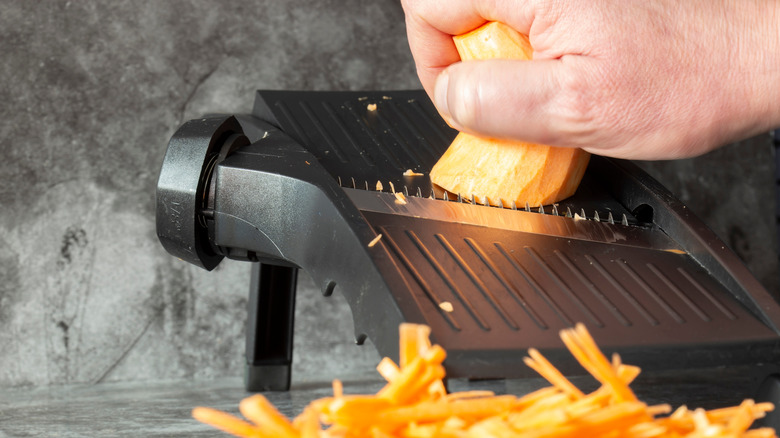
There is a legend from long ago that suggests this cooking tool was invented by the same individual who invented the guillotine, Joseph Guillotin. Though this is likely just an imaginative tale, if it is true, perhaps it makes more sense why those who have had run-ins with the mandoline gadget mention how it seems to be out for blood. The product is so notorious for injury that we included it in a list of food-related injuries that happen more often than you think.
You see, the mandolin slicer is a tool that can shred foods into pieces and slice impressively thin pieces of different foods. It's praised for how consistently uniform the cuts produced by it are, and for the speed at which it is used. The downside of the slicer is that if you let your guard down, it may also slice off more than you bargained for.
Today, many mention that food processors come with slicer attachments, which can be used instead of this product. A knife is also an easy tool to swap this out for. Sure, there are ways to minimize the chances of being injured by this product by wearing cut-resistant gloves and the plastic guard. But consumers these days appear to be opting for less anxiety-inducing kitchen items. As one Redditor so eloquently wrote, "there's no need to lose a finger over Sunday dinner".
Salad spinner
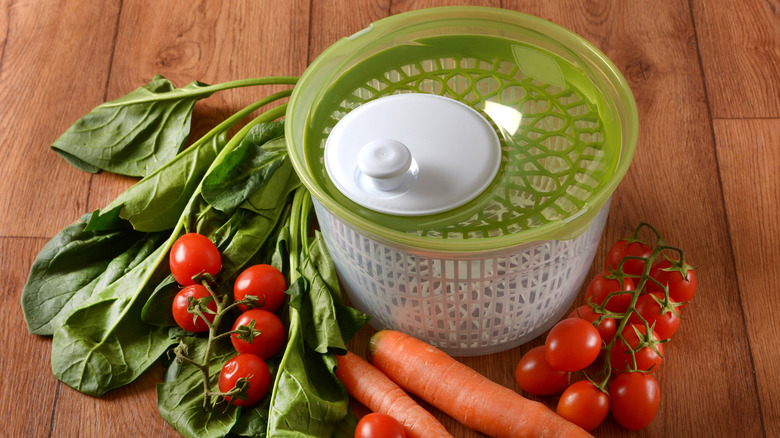
First patented in the U.S. in 1973, it wasn't long until the salad spinner became an important item in the kitchens of many. The peak of the salad spinner craze was around the late 1970s, when healthy eating became a focus in the media. During this period of time, it seemed everyone was dedicated to keeping their lettuce leaves crisp and dry, a result that the salad spinner shone for. Unfortunately, though this craze ended several years ago, leaving many to forego the salad spinner.
Despite the features that it shone for, the salad spinner is a fairly bulky item. It eats up cupboard space, often being shoved to the back for lack of use in households that do own one. Some also find the amount of thorough washing and drying required to prevent any unwanted green fuzzy friends a bit of a pain. Often, they are mentioned online in reference to nostalgic childhood memories or the hesitancy for donating the item or throwing it out, mainly due to emotional attachment. These days, many individuals wash and dry lettuce using towels or by placing the leaves into a strainer in the sink, letting the water seep through the holes. Some even get creative with the process, swearing by methods like popping the leaves in a mesh bag and swinging it around outside until the leaves have dried.
Hand-held egg beater mixer
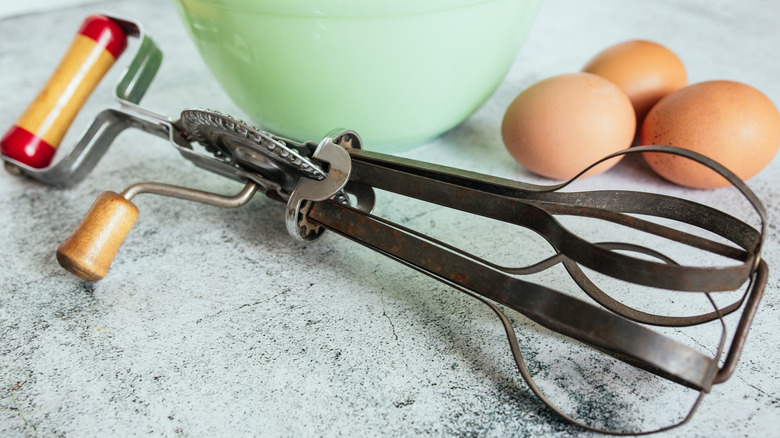
This tool, which had a crank for users to push the beaters around manually, was first produced in the 1850s, though the design largely evolved through the years. Even in the year of 1856, when it was first patented in the U.S., over 1,000 other patents for the eggbeater were requested at the same time. Based on this alone, it's clear that from its inception, people knew they were on to something.
The manual eggbeater requires two hands to use; one to hold the top and position it, while the other moved the crank. To provide some insight into the amount of effort it takes to use it, it's certainly more than the smooth sailing experience of the more recent electric variety. At the time of its invention, it was mainly used for frothing egg whites for meringue, mixing frosting, batters, and, naturally, eggs.
In present day, manual eggbeaters have fallen out of popularity. Households now likely head to the utensil drawer for a fork when they need to whisk foods. If an individual needs to mix thick mixtures such as cookie dough, an electric mixer is a more common go-to for a less labor-intensive process. Even those who do own a manual eggbeater often hang it up as an ornamental decoration rather than a kitchen gadget.
Orange peeler
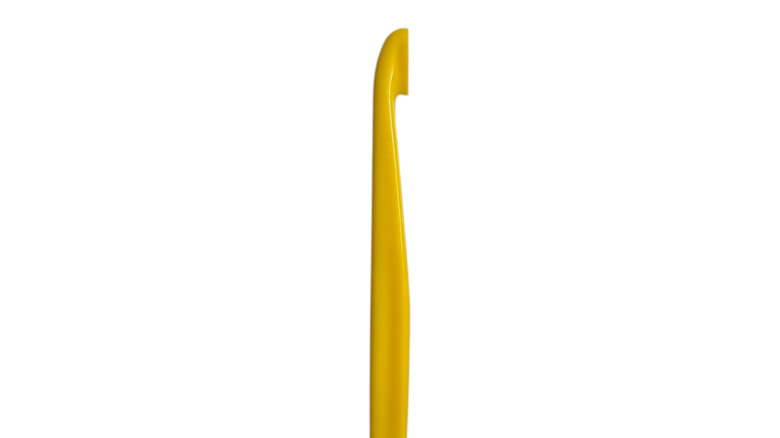
This little fella, coined the orange peeler, was a specific tool meant make the peeling process of citrus items more seamless. It has been given away as a free gift from the company to those hosting and attending Tupperware parties for many years, giving many people nostalgic vibes when they find one in the wild today. To use this gadget, the pointed V end of the head needed to be inserted into the fruit, cutting the skin. The bottom end could then be pushed between peel and fruit, easily pulling them away from each other. Though there is some debate about when the company first came out with it, many guesses land on the '60s and '70s.
The citrus peeler is a kitchen gadget that seems to have been lost through the generations. Some have posted about finding one in their relatives' belongings, unsure of the use for it until those who encountered them in their youth popped up with an answer. Today, social media is chock-full of different peeling tricks that seem almost too good to be true. With hacks around that involve more common kitchen items like knives for peeling citrus, it's easy to see why the need for them is minimal.
Cookie Jar
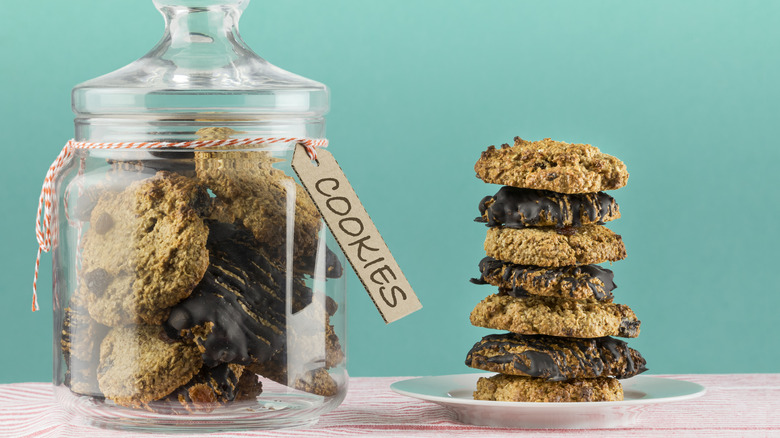
Cookie jars come in many different shapes and sizes, from the plain glass cylinder options to the more ornate ceramic choices. The point of them is as simple as can be, to hold cookies, trapping in freshness. They first became a popular household item in the 1920s, as an inexpensive decoration item for households. The period during which they became a hot commodity was during the 1950s to 1990s in the U.S. It was during this time that households were baking more goods, and so naturally needed a place to store them. The fact that they were often sold in eclectic colors and shapes was just a bonus.
Sadly, as delightful as many of their designs remain, the cookie jar has declined in popularity since then. Unless you happen to be a cookie jar collector, in which case there may be more cookie jars in your house than you know what to do with. Instead of using this well-known product, most people are opting to use Ziploc bags to store their baked goods, or even Tupperware containers.
Foley fork
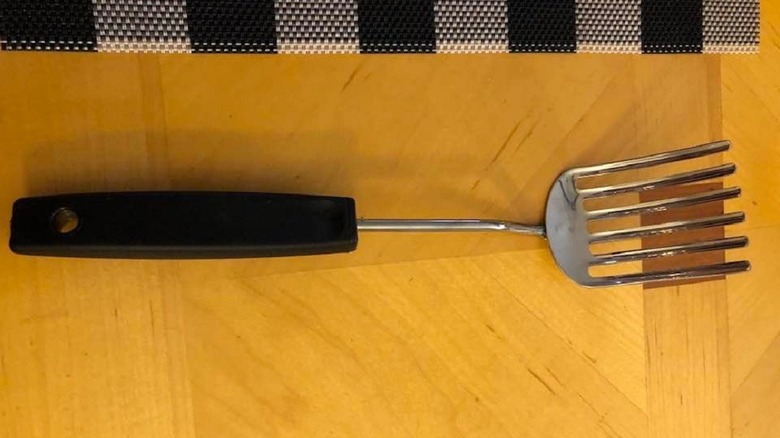
If you consider yourself a Julia Child aficionado, then you might already be familiar with her love of certain revolutionary kitchen tools, such as food processors. The Foley fork, though, was also an item that many former fans of her show "The French Chef" mention seeing her use it often while cooking. The original Foley Fork was created after a man named Walter Ringer purchased Foley Manufacturing Co., a business creating saw tools in 1926. The company then expanded, building a flour mill and venturing into crafting kitchen gadgets. The Foley fork itself was one of their top selling products, cresting the top of the list beside a one-handed flour sifter.
Many years later, in 1986, the company merged with Belsaw Machinery. After the merger, cooking utensils were no longer produced by the company, marking the downswing of the Foley fork. Though there are various recreations available today, the consensus seems to be that the original is missed. There are even mentions of some folks frequenting antique shops and markets in search of them.
You would be hard-pressed to find a Foley fork in the kitchen drawers of most households these days, with the scarcity of the product alone. Though there are several mentions of this gadget being useful for blending ingredients, batter, sauces, and even mashing potatoes, the majority of households have moved on to forks and whisks.
Hot dog zapper
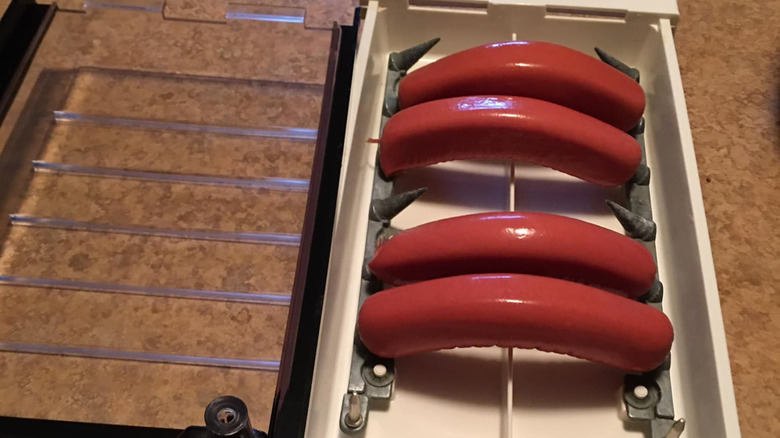
If you've ever wondered what would happen if you were to electrocute a hot dog, the early 1970s has the answer for you. It was during this time that the popular Presto Hotdogger was invented, a small appliance that was meant to serve all your hot dog needs. Hot dogs were placed inside the device with the ends pushed into the electrodes, which then used electricity to zap your hot dogs once they were placed back in the protective casing. This method could cook your wieners in under two minutes, the shining star appliance for all your hot dog cravings.
Many remember this device fondly, while others mention that the dogs had an unpleasant burned smell and taste that bothered them. Despite where you end up on the spectrum with your feelings about this device, the item was eventually taken off the market due to safety concerns and lack of demand. Nowadays, with the vast array of more delicious ways to cook a hot dog, folks use just about any other multi-use appliance for their franks. With the stove top, grill, or even air fryer at your fingertips, there's no need to have a dedicated hot dog cooker taking up counterspace.
Flour sifter
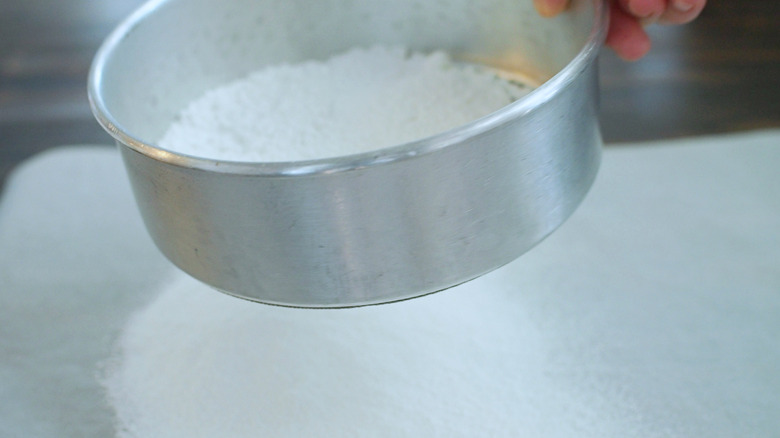
Many years ago, the flour sifter was a baker's best friend. It was a trusty companion to ensure they could separate out any unwanted additions, such as seeds or even bugs, from their flour. This is no longer the case in today's baking world. Over the years, as the health and safety requirements rose along with the quality of the flour produced, this step has been mostly phased out of the baking world. The only times that sifting flour may still be helpful are when baking items such as angel food cake, where the desired texture is lighter. This is because the process of sifting adds air back into the powder.
As the need for sifting flour has declined, so too has the need for a flour sifter in the kitchen. There are still recipes that will instruct you to sift the flour, but for the most part, the step is optional. Even if you do opt to sift the flour, you can still make it happen without a specialized sifter. A wire mesh strainer will work just fine for this or even whisking the flour in a bowl. With the many other devices typically found in the kitchen these days, there just isn't the need to take up precious cabinet space with this item any longer.
Toast rack
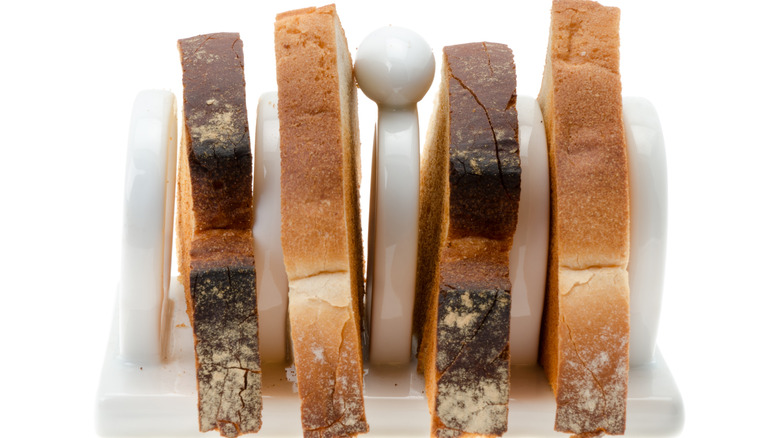
The toast rack, or as it was also called at first, the toast machine, was an invention that many believe first appeared in the late 1700s in the United Kingdom. The item typically could hold five to seven pieces of toast, depending on the size, featuring a separator between each slice slot. The idea is that the dividers separating the slices of toast allow the heat to escape, which keeps the bread from mixing with water vapor and turning soggy. The base at the bottom is intended to collect pesky crumb droppings from the offending slices, helping to maintain a clean table. Some of them feature a handle on the top, often in the shape of a ring, so the rack can be handed around the breakfast table with ease.
Unless you regularly have a large group of friends over for breakfast, or a gaggle of toast devourers in your family, the need for a stand is pretty minimal. Some who have used the toast rack mention that the toast is too cold when the rack is used, as all the heat is allowed to escape, a downside to using the rack. When seen at antique markets or thrift stores, some aren't even aware what this product is meant to be used for. One Redditor, for example, believed it to be "good for [holding] tacos," until he brought it home and realized its true purpose. It's far more common these days in the U.S. to simply toast the specific number of pieces you would like and pop them on your plate, completely avoiding the use of the toast rack.
Jell-O Molds
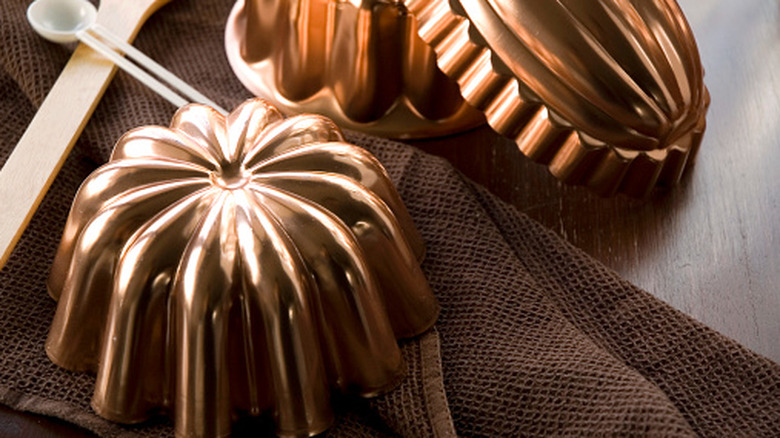
There was a time in the history of the U.S. when popping random foods into Jell-O seemed to be the solution to every meal. It was during the early 20th century that recipes that might scare away some people today were born, including salad-flavored Jell-O, and pig Jell-O (which included the use of four fresh ham hocks). Everyone seemed to be bringing the newest Jell-O dish to dinner parties or jumping on the newest recipe trend. To create these Jell-O salads, households required molds to shape this creative and wiggly dish. Hence, the Jell-O molds became a must-have for households looking to partake during this time.
Thankfully, to the relief of many, the craze of the Jell-O salad has long since ended. As this trend has gone out of style, so too have the Jell-O molds of the time period. With less Jell-O being served, there isn't the need for the elaborate mold collections that household kitchens would display proudly during the hype. Not only this, but Jell-O molds were considered a sign of status during the peak of the craze, whereas nowadays, the molds no longer hold the same standing.
Wall-mounted can opener
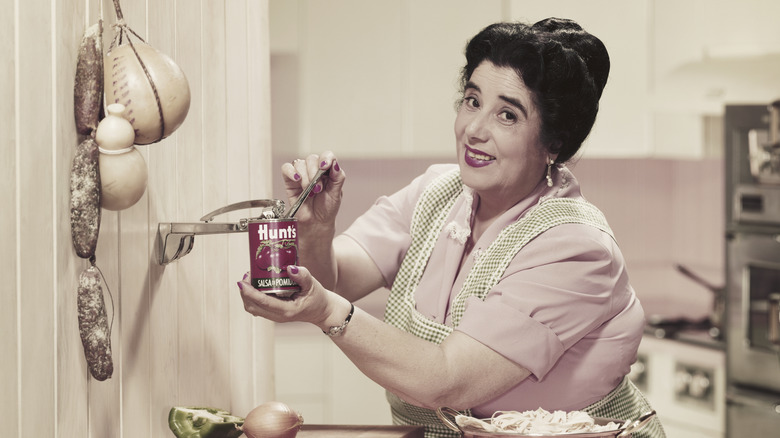
Depending on your level of can opener knowledge, you might know a few facts about them, such as how to remove rust from a stubborn can opener. What you might not know about can openers, though, is that there was a time period where people didn't grab a handheld opener out of the kitchen drawer as you might these days. Instead, many households had a can opener that was attached to the wall or underside of the kitchen cabinet that they would use. These wall-mounted can openers would sometimes have a hinge on them, allowing them to be swung flat against the wall for easy storage. The process for using this type of opener really isn't much different from using a handheld opener today. The can would be attached to the opener, which would then hold the can in place. As users cranked a handle around, the blade would cut through the top of the can, effectively opening the can.
In this day and age, these wall-mounted can opener variations have largely gone out of style, outside of some vintage or RV kitchens. The simplicity of a handheld can opener, which is kept safely tucked inside the kitchen drawer, is hard to beat, not to mention that it saves kitchen space. Some who remember using them also mention that the wall-mounted versions were also hard to clean, with the cutting wheel becoming grimy after use. Not to mention, these days you can opt for an electric can opener and save yourself some elbow grease.