

13 Things You Might Want To Toss From Your Fridge And Freezer
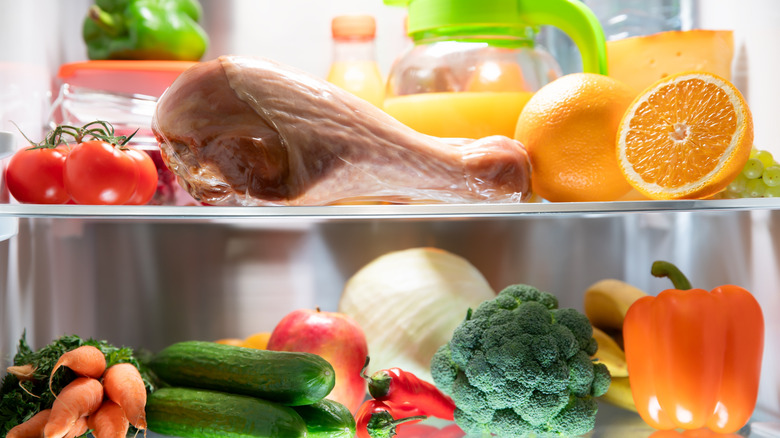
Most of us don't have a fridge that would be worthy of the fridgescaping trend on social media. We're doing our best, tossing groceries and leftovers into the fridge and freezer in a somewhat organized way — or at least organized enough for us to know more or less where things are when we need them. We're not really thinking about aesthetics. However, even if you don't care how your fridge and freezer look, you may still want to care about ensuring that everything contained within is safe to eat at a later date.
If you look hard enough, chances are likely that you can find a few forgotten items in either space. Maybe it's a bag of spinach that you swore you'd eat on Monday, but you ordered pizza instead and now the spinach is a bag of brown slime. Maybe it's a condiment you purchased a year ago because you needed one tablespoon of it for a recipe, and you haven't touched it since.
Whatever the case, some of these items need to go because either they're simply not safe to eat anymore, or even if they are safe, they're not really going to be enjoyable to consume. Here are the things you might want to toss from your fridge and freezer, right now.
Open cans
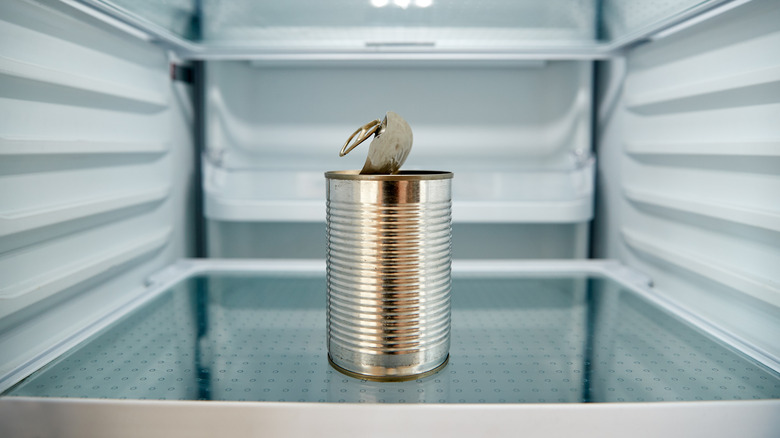
Let's say that you open a can of tomato paste and, of course, you're not going to use the entire can (because who ever does?). So you take what you need and then pop that open can into the fridge, thinking you'll use the rest later. Or, maybe you opened a can of mandarin oranges, pulled out a few to sprinkle over a salad, and then decided you'd keep the rest for a future snack.
No matter what it is, open cans don't belong in your fridge. For one, if you're dealing with an acidic ingredient like tomatoes, then the acid can cause metal to leach out of the can and into your food. If the can was made with BPA, that might also leach into your foods. Plus, an uncovered, open can is just going to expose the food inside to potential bacteria in the air, which could lead to foodborne illnesses.
As such, if you have any open cans of food sitting in your fridge, because you "think" you'll "probably" use them at a later date, go ahead and toss them. Even if they're still safe to consume, the quality and flavor have likely deteriorated.
Open pasta sauce
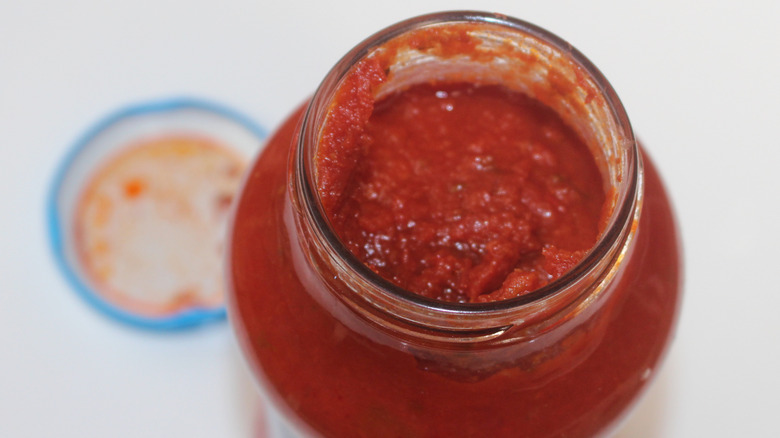
So you know that you shouldn't keep an open can of food in the fridge — but what about open jars? If there's one kind of open jar that you're likely keeping in the fridge, that also might be a little bit sus, it's probably a jar of pasta sauce.
If you're only making enough pasta for one, or even two, you probably don't need the entire jar, so you just twist that lid right back on top and put the jar in the fridge. However, jarred pasta sauce — specifically tomato-based pasta sauce — only lasts up to a week in the fridge. While, yes, it can last a very, very long time in the pantry, unopened, once you open it up and expose it to the air, it begins to deteriorate.
Luckily, there's good news. You don't have to completely toss that pasta sauce — you can actually freeze leftover sauce. Just put the sauce in a new container and let it hang out in the freezer for up to six months.
Certain condiments
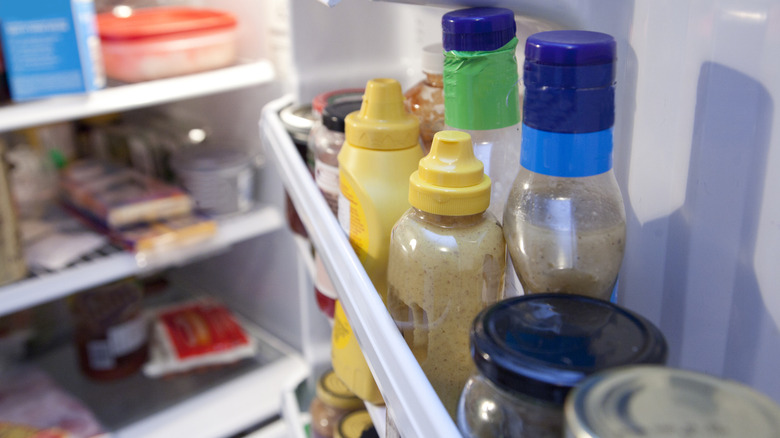
Yes, there are certain condiments that definitely seem to last forever, especially if you keep them in the fridge versus in the pantry or on the countertop. However, some condiments may need to be thrown out if they've been lingering in your fridge for too long.
Once opened, Mayonnaise, Miracle Whip, and barbecue sauce in particular can only really last a few months (three to four max) before they begin to decline in quality, even when stored in the fridge. Hot sauce and ketchup can last a bit longer, closer to six months, while soy sauce and mustard can potentially last up to a year in the fridge, after opening.
Of course, regardless of the length of time a condiment has spent in your fridge, if you're seeing certain things, you should throw it out immediately. If there are any signs of mold, toss it. If the color, smell, or texture seem off to you, go ahead and chuck those condiments in the bin.
Baking soda
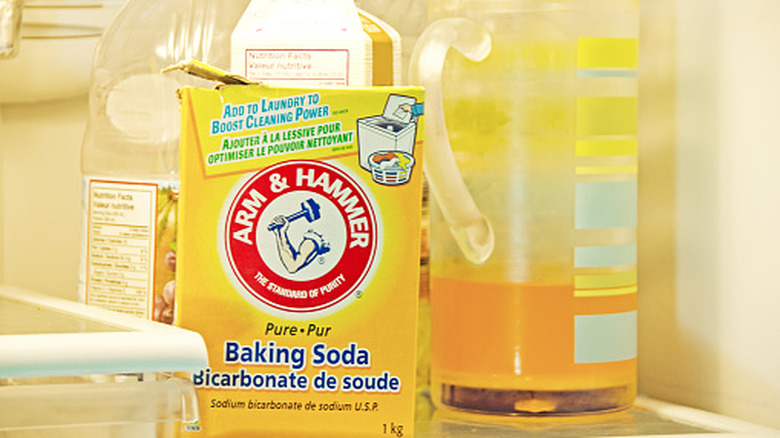
If you don't currently have an open box or dish of baking soda sitting in your fridge, what are you doing? This long-known hack helps your fridge smell better, cleaner, and it all comes down to simple science.
While the popular theory is that baking soda absorbs the bad smells in your fridge, that's not really what happens. Instead, whenever you leave an open box of baking soda in your fridge, as the fridge's air circulates, so do minuscule baking soda molecules. Those molecules are attracted to the smelly molecules in the fridge, and when they find them, they neutralize them. That's because baking soda is a base, while all food is, in relative comparison, an acid.
However, that doesn't mean you can just leave a box of baking soda in your fridge indefinitely and it will still work to keep the stink at bay. While, previously, boxes of baking soda might've instructed you to replace them every three months, now, Arm & Hammer suggests tossing your fridge baking soda every 30 days and replacing it with a new box for greater odor absorption.
Open broth
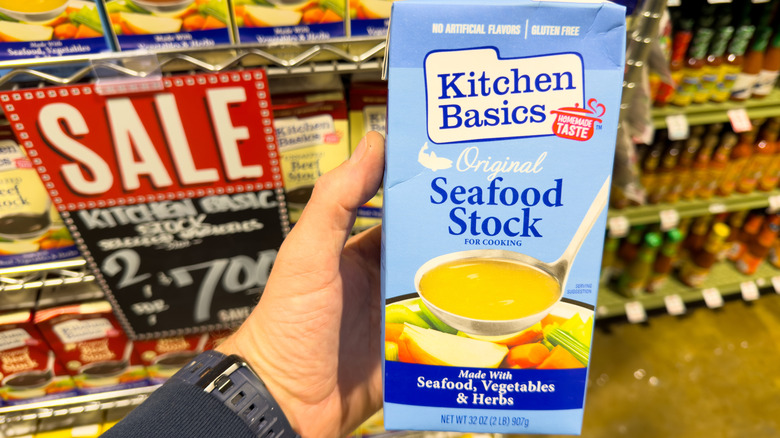
Much as is the case with many canned foods or jarred pasta sauce, if you have a box of broth on your hands, there are lots of instances wherein you might not use it all, and you think you'll just stow it in the fridge for later. You might even think that doing so is safer than putting an open can in the fridge, because the broth box at least has a spout that you can close.
However, it's important to note that an open box of broth really only stays good in the fridge for about five days, even when it's covered. You shouldn't keep it around to cook next week's soup or to add to next week's risotto. You can, though, put the broth in the freezer if you want to keep it on hand longer. Pour the broth from the box it came in into a freezer-safe bag, or into ice cube trays for easy portioning, and then freeze it for up to three months.
Soft cheeses
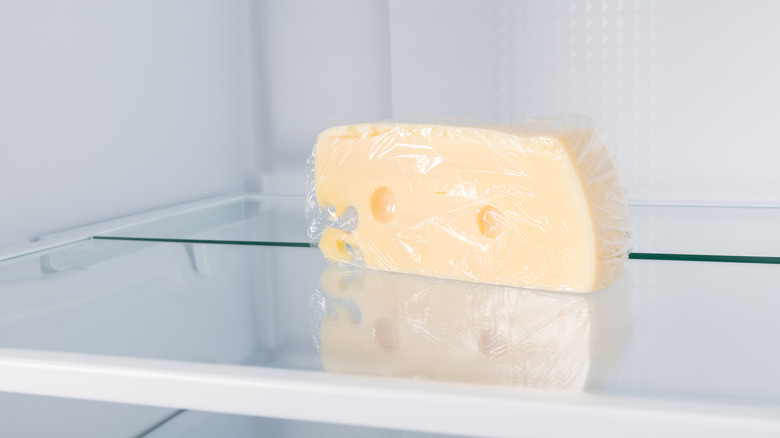
Some cheese will last up to a month in the fridge — great news if you have a chunk of aged gouda or cheddar leftover from a charcuterie board that you want to snack on at a later date. However, soft cheeses have a much shorter shelf life. Most of them will only last about a week in the fridge, and even then, those soft cheeses, like ricotta or feta, are going to deteriorate in quality the more time that passes. Plus, this week-long shelf life is also going to depend on your storage. Don't just put that blue cheese on a plate and place it in the fridge. Wrap up your soft cheeses in foil or ideally cheese paper, and then store them in an airtight container.
Accordingly, if you have a soft cheese that hasn't been properly stored, or that is more than a week old, go ahead and throw it out now. Additionally, consider throwing it out if you notice any signs of spoilage. These might include a weird flavor or mold in high-moisture cheeses.
Leftovers
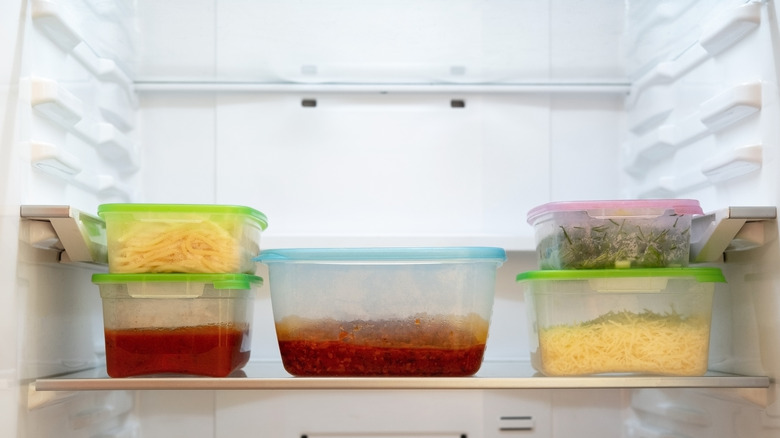
Some individuals keep leftovers on hand for a shockingly long time, not really following any hard rules (such as, if it's been in the fridge five days, toss it, for example). Instead, they simply keep an eye out for any spoilage and, if there's no sign the leftovers have gone bad, they eat them without question. However, this can be a risky move and leave you exposed to potential food poisoning.
The USDA recommends only keeping leftovers in the fridge for three to four days, or frozen for three to four months. That means, if you cooked a casserole on Monday and wanted to keep the leftovers on hand for the rest of the week, you really should throw them out once Friday rolls around. So, if you currently have any lingering leftovers in your fridge or freezer, consider throwing them away.
Of course, the safety of your leftovers depends not just on how long they've been in the fridge or freezer, but also your preparations and storage. If the leftovers sat out on the counter or stove for more than two hours, they're automatically considered a danger. Not storing leftovers in sealed or airtight containers likewise can result in bacteria growth and overall quality decline.
Smelly ice
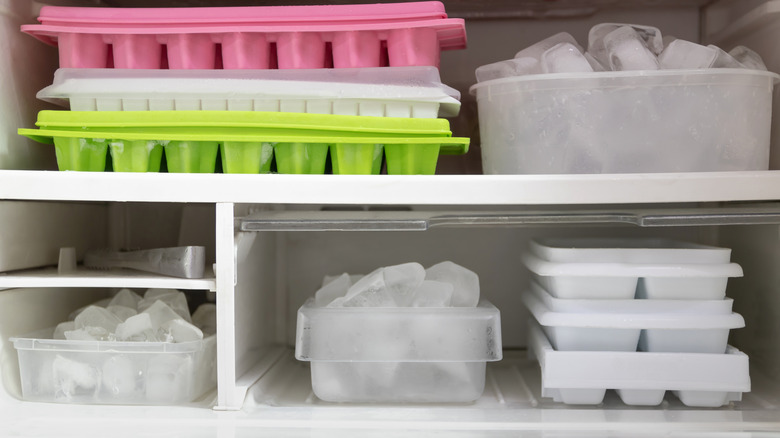
Ice? Go bad? Surely you must jest. But, no, really, ice can go bad and if you have noticeably smelly ice in your freezer, go ahead and toss it. Why would you subject yourself to nasty ice when it's basically free and so easy to make?
Beyond just tossing any smelly ice in the freezer, though, also go ahead and fix whatever is causing the odor in the first place. Oftentimes, the reason you have smelly ice lurks in the freezer. Ice will absorb both odors and flavors from other food in your freezer, so if you have something in there that's not sealed, it's going to infuse your ice with its essence. Additionally, keep in mind that your fridge and freezer share air circulation, which means that unsealed food in the fridge is going to impact the ice in the freezer, too. As such, always make sure anything you place in either space is thoroughly sealed and contained.
While you have your head poked in the freezer to hunt down whatever's infusing your ice, consider giving your ice maker a quick clean, too. Warm water and dish soap will do the job, and if you're still worried about odors, rub the freezer and fridge surfaces with white vinegar, which will neutralize any lingering nasty smells.
Freezer-burnt food

While freezer-burnt food isn't necessarily unsafe to eat — the freezer burn is just a reaction caused by air coming into contact with the food's surface — it does really negatively impact food's quality. The food will be both drier and less tasty. If it's possible to do so, you can cut the freezer-burnt portions off the item and continue storing the rest of the unaffected food in the freezer. However, if this isn't possible, you probably want to throw the food out.
Not sure if you have freezer-burnt food on your hands? Freezer-burnt food typically will exhibit discoloration (such as gray or brown spots) and may be covered in patches of ice crystals.
Luckily, there is a way to prevent freezer burn. It all comes down to proper storage. Since air exposure is what causes freezer burning, your goal is to keep the air away from your food as much as possible. Use plastic wrap, freezer bags, and air-tight leftover containers any time you store something in the freezer. Better yet, consider using a vacuum sealer that literally sucks all the air away from your food.
Most foods frozen for over 6 months
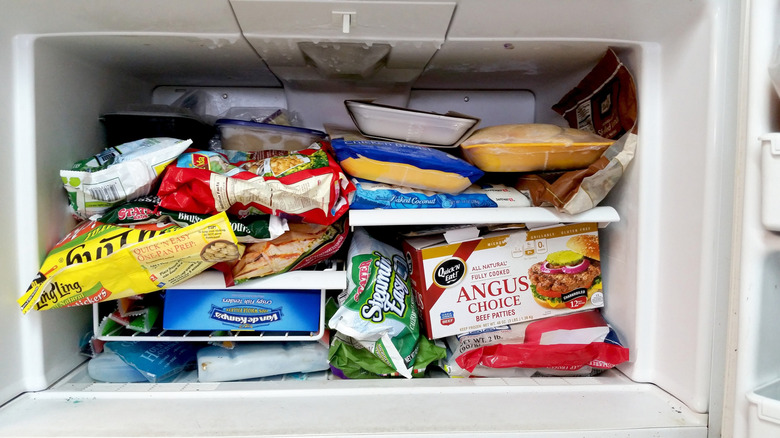
Yes, you can keep a lot of foods in your freezer for an extensive amount of time, but in general, most foods in there are going to go bad by the six-month mark, if not sooner. For example, foods that are all going to go bad in the freezer by the time six months passes? Leftover casseroles, soups, bacon, pork chops, ground beef, ice cream, cheese, and bread, just to name a few. So, if you know you have food that's been in the fridge for six months, seriously think about tossing it.
Additionally, there are some foods that you just shouldn't freeze, period, so if these items are in your freezer at the moment, remove them immediately: salads (both green salads and those made with pasta, eggs, or meat like chicken or tuna), hard-cooked eggs, homemade eggnog, custard pies, cooked pasta or rice, sour cream, previously fried foods, and gelatin. These foods are notoriously hard to freeze, and just aren't going to be the same upon thawing.
Coffee beans

Some people think that storing them in the fridge or freezer will help coffee beans last longer. But while you can store your coffee beans in either space, doing so can mess with your coffee's aroma and flavor, depending on the exact conditions. Coffee beans absorb ambient moisture in their surroundings, so if there's already some sort of funky smell — or even just a normal food smell — in your fridge or freezer, the coffee beans will absorb that as well, ultimately negatively influencing the beans.
If your coffee beans haven't been stored in the fridge or freezer correctly — like if you just have been keeping them in a paper bag — you should probably go ahead and toss them. Then, the next time that you do want to store coffee beans in your fridge or freezer, just take some precautions. Vacuum seal the beans in small portions before placing them in the fridge or freezer. Otherwise, store your coffee beans in the pantry, keeping them away from light, temperature fluctuations, and oxygen exposure; this way, they'll stay fine without cooling or freezing for approximately a month.
Crystallized ice cream
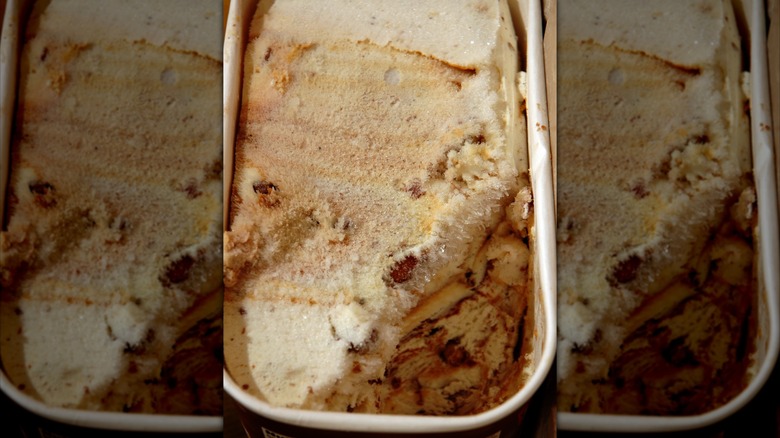
Ice cream can last a really long time — up to a year under the right conditions — but there's one sign that you should throw away a carton of ice cream: crystallization. While modern preservatives and stabilizers make most store-bought ice cream capable of holding up to freezer conditions for months upon months, if the ice cream has grown a thick layer of ice crystals all along the top, it's not going to be very good to eat any longer, even if it is technically safe. The flavor and texture are going to be less than tasty.
But what if you absolutely always run into crystallized, freezer-burnt ice cream, even if you've just left it in the freezer for a mere few weeks after opening? How can you experience that supposed year's worth of longevity?
For one, try not to leave your ice cream in unfrozen conditions more than is necessary. Get it into the freezer as soon as possible after you get it home and don't leave it sitting out whenever you indulge. Then, every time you do take a serving from the carton, cover the remaining ice cream with a layer of wax paper or cling wrap.
Perishable items after a power outage
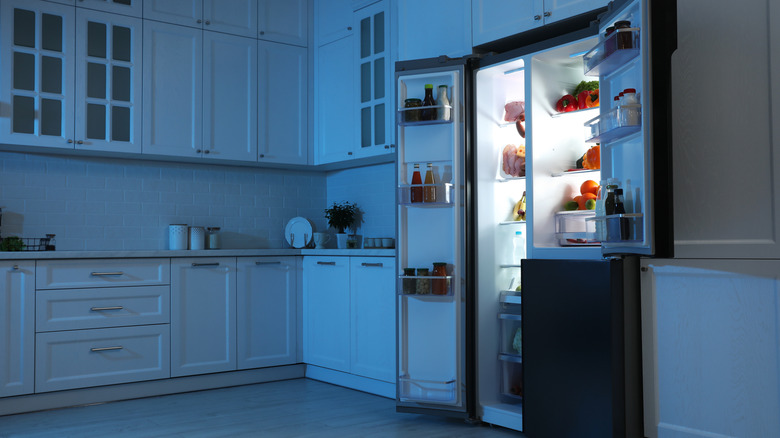
So you lost power. It's a big inconvenience, but it could also be a big safety hazard if you don't even give a second thought to what's in your fridge and freezer. Turns out, if your appliances aren't running, you only have a very short amount of time before all your perishable food goes bad.
Once the power goes out, your fridge will keep items cold enough for just four hours, after which certain foods need to be tossed. The freezer, meanwhile, will stay cold enough to keep your food safe for 24 to 48 hours, depending on how full the freezer is. A fuller freezer stays colder longer, so if it's totally full, it'll keep food safe for about 48 hours (just don't open it, as that'll raise the temperature!). If it's half full, it'll keep food safe for about 24 hours.
If this amount of time has passed, it's time to grab your trash bag and start tossing. Throw out all leftovers, as well as all meats (cooked or uncooked), soft and shredded cheeses, dairy, soy and nut milks, eggs, cut fruit, creamy condiments, spaghetti sauce, mayonnaise, and fish and oyster sauce. Refrigerated breads like cookie dough or biscuits need to go, as do pasta salad, pre-washed greens, and tofu. However, you can keep any regular bread, raw vegetables, herbs, hard cheese, or butter.