

15 Breakfast Dishes From Around The World To Switch Things Up

If your mornings have started to feel like a decidedly non-gourmet version of "Groundhog Day", waking up to the same boring breakfast on loop, you're not alone. Nothing personal to that bowl of cereal, but it's time to say BUH-BYE to the bran flakes. And that Pop Tart hastily grabbed on your way out the door? It's just not poppin' no more. Breakfast is considered the most important meal, setting the entire tone for our day, so bland beginnings and monotonous mornings just aren't going to cut it anymore.
We think it's time to switch things up, and in a grand way. Around the world, mornings look very different. Suffice to say, your Fruity Pebbles are the foreign aliens on these morning menus. While many of these breakfasts are everyday staples where they originate from, they may well be new to you.
The best part? You don't need a passport to try them. You just need a little willingness to step off the treadmill, stop reaching for that same cold breakfast pastry on repeat, and open your mind to completely different morning meals. In plain speak, let breakfast be exciting again. These 11 global morning dishes offer you the delicious, eclectic reset you need.
Full English (United Kingdom)
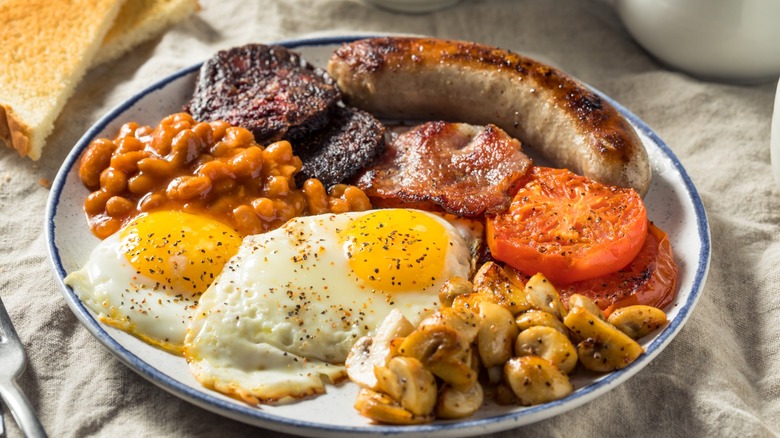
If your idea of breakfast caps off at cold cereal, the Full English is here to rock your world. The Brits know how to do breakfast, and this iconic U.K. morning plate is clearly meant to be eaten while sat down proper (the adjective for most British things).
Often called a "fry-up," the Full English is nothing if not hearty (Rick Steves named it the best way to save money on breakfast abroad). Traditionally, a Full English includes sausages, back bacon, eggs, tomatoes, mushrooms, baked beans, and fried bread – some add black pudding, but it's definitely an acquired taste. This is not your average American toasted bread, but bread that's been properly fried in butter, oil, or lard until crisp and golden.
The bacon is different, too. Back bacon cooks up more similarly to ham versus the crisp strips the U.S. serves. Eggs are usually sunny-side up, with yolks just waiting to send their delicious juice surging across everything. Clearly, the Full English is not to be rushed, so pour yourself a proper cup of tea, and full-y enjoy this U.K. breakfast.
Burek (Serbia)
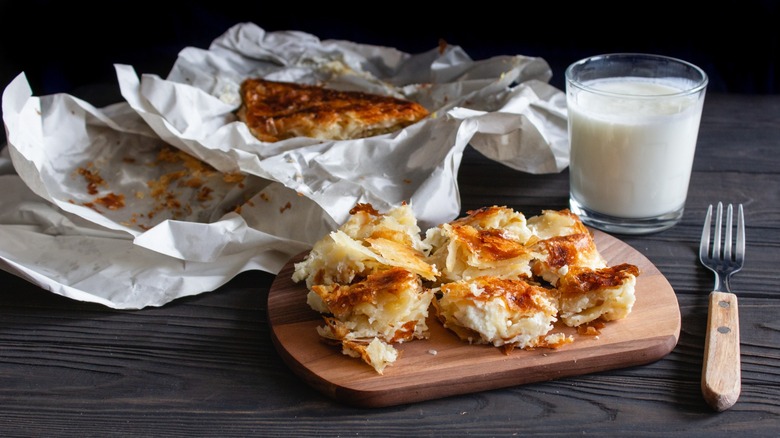
In Serbia, breakfast means burek. In fact, this beloved layered pastry is so essential to daily life that entire bakeries exist solely to make it. No need to even say "burek," as they already know what you (and everyone else) came for. Burek consists of thin sheets of dough layered with fillings like cheese, minced meat, or greens like spinach. Sometimes, it's baked plain.
It's eaten warm and almost always paired with yogurt. Like American PB&J, this combination is so standard, ordering one without the other somehow feels incomplete. While burek has roots in Turkish cuisine, it's become distinctly local in the Balkans.
While not strictly limited to the morning meal, burek is assuredly the go-to breakfast of Serbians. The Serbian city of Niš even has a festival held solely to celebrate the burek. Looking for even more reason to give burek a go while shaking up your morning routine? Lonely Planet ranked burek among the best street foods in the world.
Churros con Chocolate (Spain)
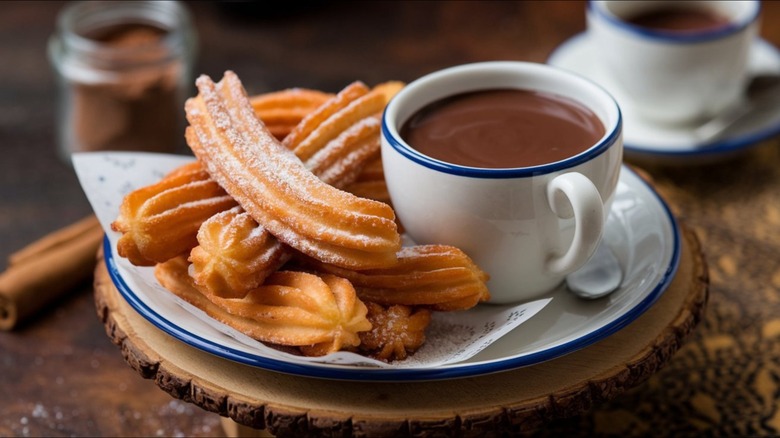
Who says you can't enjoy a decadent fried pastry with a side of chocolate for breakfast? Definitely not Spain. In Spain, churros con chocolate is a common breakfast pairing crisp fried dough and thick drinking chocolate. It is made from thin, cylindrical-shaped dough that's piped into hot oil, then fried until just this side of crunchy before being rolled in sugar. On their own, churros are incredibly satisfying. But the real magic happens when chocolate is thrown into the mix.
Spanish hot chocolate is not a beverage in the usual sense. It's a far richer, more dense affair, meant for dipping your churros, and often subtly laced with comforting spices (think cinnamon or star anise).
Churros con chocolate has been part of Spanish food culture for more than a century, and its popularity has only grown as travelers have fallen in love with the dish en route. We can't blame them, because once you've dipped a churro into a cup of thick Spanish chocolate, it's hard not to say "qué maravilla!" and wonder why this isn't breakfast everywhere.
Kaya Toast (Singapore/Malaysia)
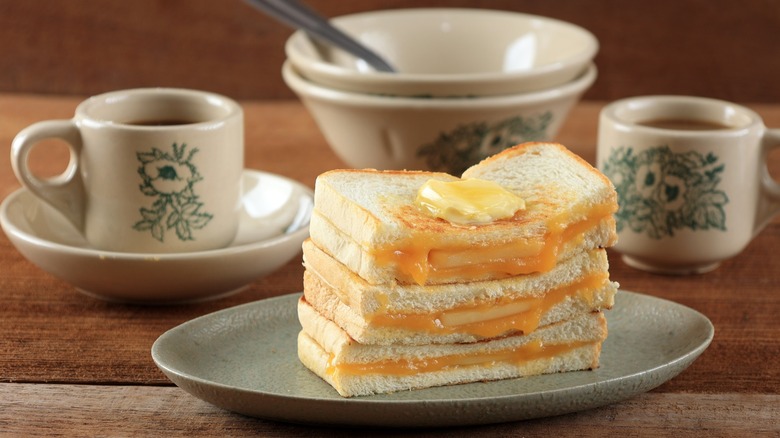
Move over boring toast and butter, kaya toast has crashed on the scene to shake things up. A unique breakfast pick found in kopitiams (coffee houses) across Singapore and Malaysia, kaya toast is an everyday mainstay that matches sweet coconut jam, cold butter, and toasted bread with something truly unexpected, yet surprisingly incredible. We are talking about soft-boiled eggs, which are traditionally seasoned with soy sauce and white pepper.
The toast itself? Nothing fancy here. Just simple toasted white bread. It's what's tucked inside that bread (kaya jam) that makes this Malaysian breakfast sing. The jam is made from coconut milk, eggs, and sugar, which explains why it tastes almost custard-like.
And you can't forget to add the proverbial cherry on top of this recipe: generous slabs of butter (the real kind, none of that I-Can't-Believe-It's-Not-Butter funny business). One last thing: the incredible edible soft-boiled egg on the side, which isn't always a must, but is considered the classic way to go — and a wonderful makeshift dip for your magic toast.
Hagelslag (Netherlands)
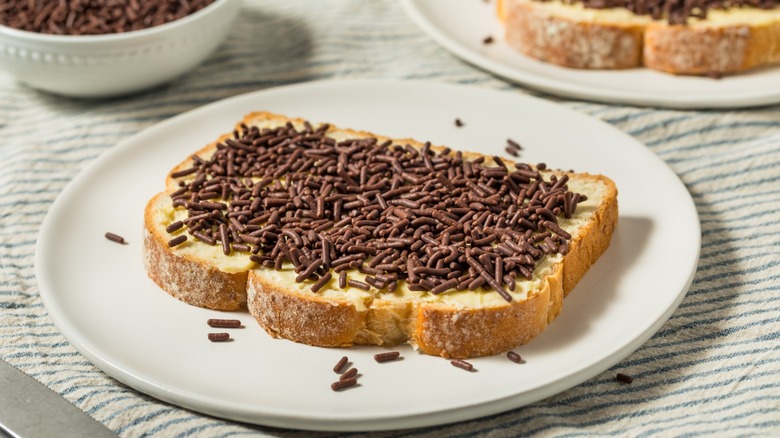
In the Netherlands, breakfast often consists of chocolate sprinkles, and not one local finds it one bit sus. Known as hagelslag (the actual name for what the sprinkles are called), this Netherlands breakfast mainstay is incredibly simple, made only of these thick chocolate sprinkles scattered generously over buttered bread. It's eaten by kids, adults, and grandparents alike every day — no holiday or special occasion required for this sweet treat.
The recipe is simple, but the ingredients are key. The butter is a make-or-break scenario — it's not optional, and it should be the real deal. And the sprinkles? These are not your typical American candied dots. These have more girth and weight to them ... mini-slivers would be better monikers, perhaps. Heavy-handed, in this case, is not only allowed, it's advised. Go. To. Town.
As for the bread? Don't be among those who mistake it as a type of toast (the bread itself is never crisped, just served soft beneath the slathering of butter and sprinkles). One fun fact? The name hagelslag translates loosely to "hailstorm," which is a yet another confirmation that a timid dusting of sprinkles on this breakfast bread simply will not suffice.
Maritozzi (Italy)

Is whipped cream even allowed at breakfast? While some may cluck their tongue at the idea, as the saying goes, "When in Rome..." the answer will always be an enthusiastic "sì!" in Italy! This unequivocal approval makes perfect sense, as it's the city's specialty, and a must-try comfort food in Italy. We, of course, are talking about the country's beloved maritozzi.
These soft, lightly sweet brioche buns are split open and filled to bursting with fresh whipped cream. There is nothing neat about these Italian pastries, but no one seems to mind. In fact, there's something incredible about biting into one, only to have its sweetness spill out the sides. And if it's dusted with powdered sugar (as they often are), that magic dust is known to make its way to your nose, your clothes, everywhere (again, no one cares). Pretty sure they're all too busy enjoying their breakfast.
Now, we love a good backstory, and maritozzi has one that's actually about love. Their name comes from "marito," which means husband, and these pastries were once given as engagement gifts, sometimes with rings hidden inside. Today, while placing an order for maritozzi won't land you any jewelry, it will bless you with a morning bun any Romans would highly recommend.
Kahvalti (Turkey)
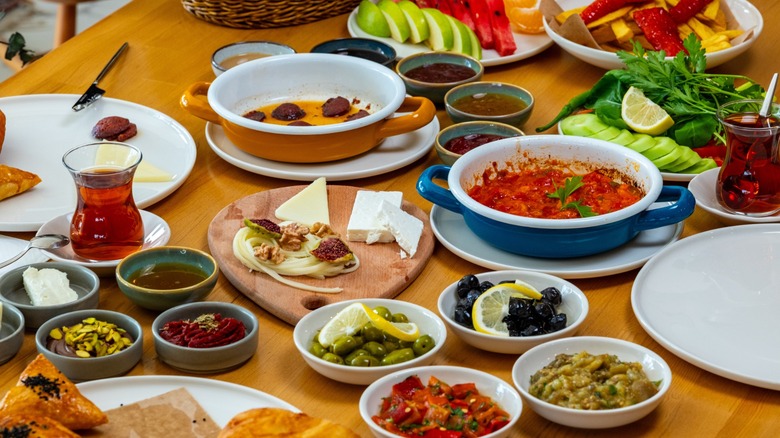
Let's talk Turkish kahvaltı. Less a single dish as it is a collection of assorted small dishes, kahvaltı (translated as "before coffee") is the breakfast spread Turkey starts the day savoring and sharing. Kahvaltı isn't a single dish. Instead of one plate, the table fills with small dishes meant to be shared, mixed, and revisited.
Cheese is central to this Turkish spread. Oftentimes several kinds of the dairy will present, ranging from salty beyaz peynir to harder regional cheeses and soft, mild varieties. Bread is the fundamental foundation of it all, with simit (sesame-coated rings) being a common choice. Olives, tomatoes, cucumbers, jams, honey, and egg variations are also expected ingredients, including a delicious Turkish scrambled eggs iteration called menemen.
There are also sweet touches that can be looked forward to, such as tahini with molasses, fruit preserves, hazelnut spreads, and more. Tea is the given here, which flows freely, is served black, and is available (and enjoyed) in near endless amounts. Fun fact? In the capital city of Istanbul, entire streets are dedicated to breakfast cafes serving kahvaltı all day.
Hafragrautur (Iceland)
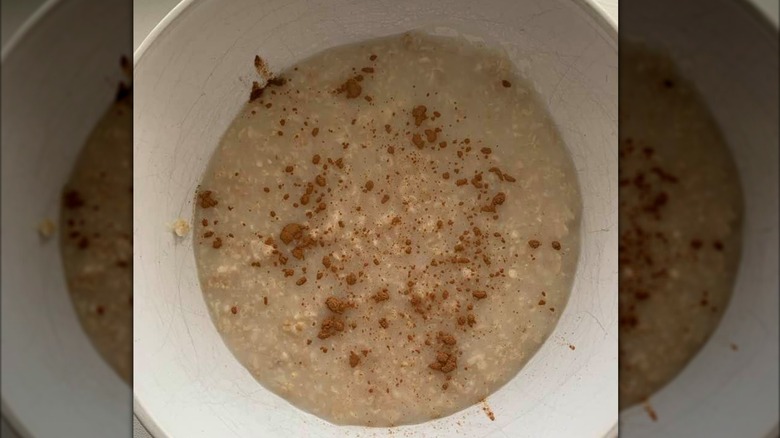
Hafragrautur is kind of like the Icelandic version of American oatmeal, cooked thick with water or milk, served warm, and topped with things like butter, brown sugar, raisins, or nuts. True to the Icelandic spirit, this is food built for function. The oats are filling and hearty, a reliable morning meal to fuel Icelanders at sunrise and keep them going through cold mornings, while lasting them well into long arctic days.
Hafragrautur often appears alongside another iconic Icelandic staple, skyr, which is thicker than Greek yogurt. Other common pairings include bread with butter, or even a spoonful of cod liver oil, often added for some extra vitamin D in a country where sunlight can be scarce.
There's something comforting about this national favorite. While it is definitely not fancy, hafragrautur does perfectly reflect Icelandic practicality and a nation that values nourishment and sustenance over all. While this pick doesn't necessarily reinvent the breakfast wheel, that cod liver oil is definitely a departure from your normal Quaker instant oats.
Fry Jacks (Belize)
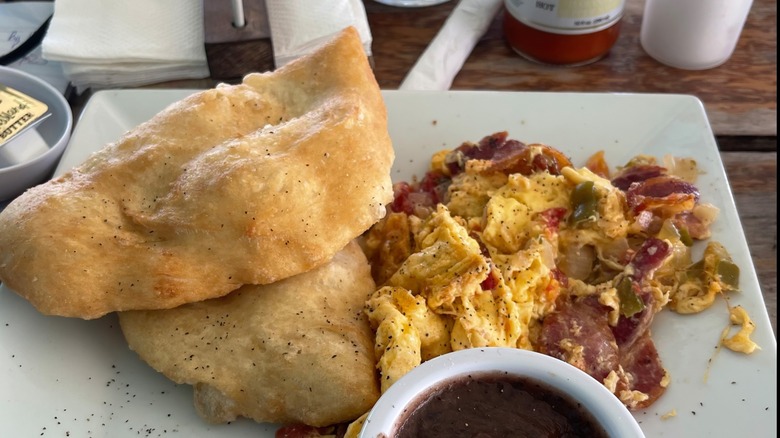
Forget your everyday American short stack of pancakes. Fry jacks are a Belizean breakfast mainstay more than worthy of adopting for your morning routine. Made from basic dough cut into triangles and deep-fried until puffed up and golden. These "jacks" are crisp on the outside and soft inside, and often hollow enough to stuff. Most often served alongside refried beans, eggs, cheese (sometimes fish or chicken), the protocol here is easy peasy.
Simply tear one of these fried pockets open, fill it up with your preferred favorites, and eat it while it's still warm. The closest things for comparison are perhaps beignets or sopapillas, but these little beauties are usually savory when served at breakfast. While sweet iterations do exist, Belizean morning meals tend to lean toward the salty side.
You will see fry jacks everywhere in Belize, from home kitchens to cafes, and no breakfast here really feels complete without them. Fry jacks will make an excellent switch up to get you out of your breakfast rut. Just be warned, once you've had fry jacks fresh and piping hot, that standby cereal starts to lose its shine real fast.
Popara (Bulgaria)
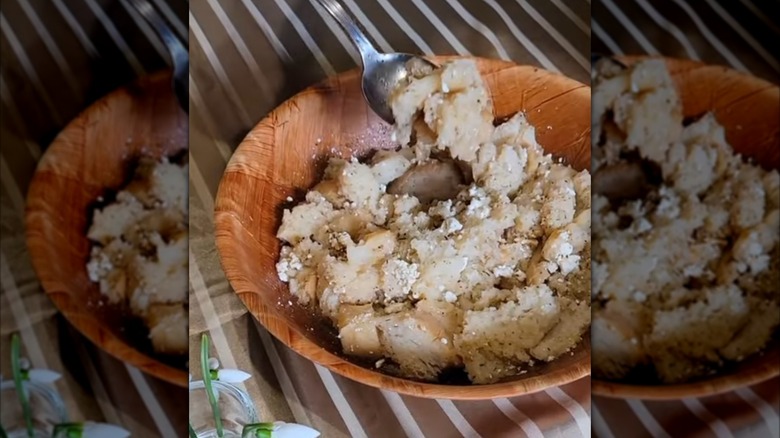
Known across Bulgaria and the wider Balkans as "poor man's meal," popara is built from what's already in the kitchen: day-old bread, warm milk or tea, butter, sugar, and sometimes cheese. The essence of popara is frugality.
Here, stale, leftover bread is torn into pieces and softened with hot liquid, before melted butter and sugar are added. In many homes, kajmak (Balkan clotted cream-like cheese), feta-style sirene, or another cheese is also included. Versions vary, with some leaning sweet, others savory. Every household does popara a little differently, and each will assure theirs is the right way, naturally.
For many Bulgarians, popara is a breakfast tied to memory — childhood mornings, grandparents' kitchens, simpler days gone by. It is comforting, and sentimental, which explains why it has become such a beloved Balkan staple. The texture is another selling point (porridge-like, with the occasional chewy piece of bread that somehow becomes the best bite in the bowl). For those who like bread pudding for dessert, this Bulgarian bread mash just might be the breakfast version to elevate your morning meals.
Vegemite on Toast (Australia)
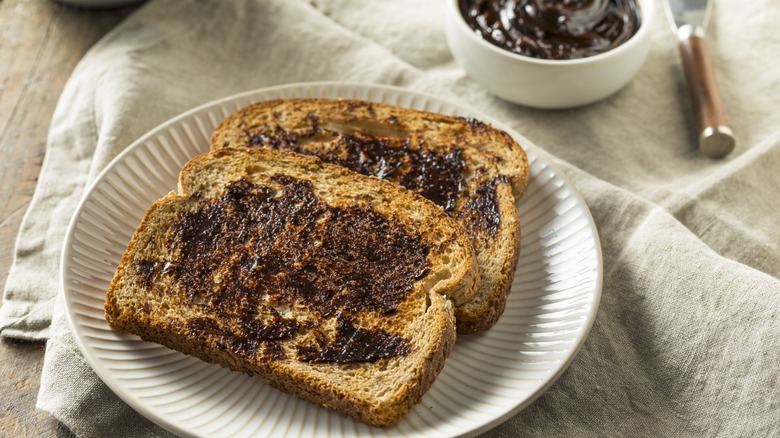
Australians don't just eat Vegemite on toast, they grow up with it woven into everyday, even ingrained into their cultural identity. Found in the vast majority of pantries in Oz, this dark, salty spread has been fueling Aussie mornings for generations, inspiring a fierce loyalty along the way. Like Marmite, Vegemite may not be your cup of tea, but no Aussie will stand for its national spread to be blasphemed.
Vegemite was created in the early 1920s using leftover brewer's yeast, developed as a vitamin-rich spread packed with B vitamins. Its appearance is almost black, and its flavor is famously salty. This is not a sweet spread, so expecting jam is one rude awakening waiting to happen. The proper way to eat it matters. Toast the bread until hot. Slather on real butter generously, then let it melt. Then comes the Vegemite, applied thinly, never too thick. Some people do not "respect" the ratio, and slather it on like they would any spread ... only to cough and sputter when that Vegemite kick hits.
For Australians, this breakfast is a given, often paired with strong coffee. It's so beloved, many travelers even pack jars to bring a taste of home with them, wherever they go.
Brioche con Gelato (Italy)
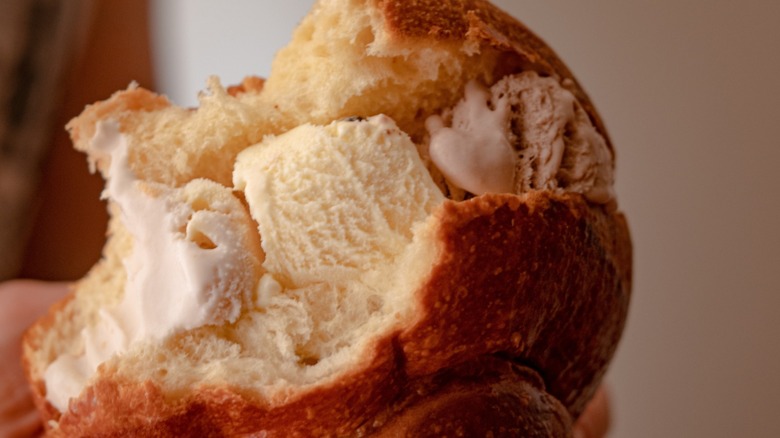
Italians have long been proponents of "la dolce vita" (the sweet life), and this is definitely true in Sicily, where breakfast doesn't shy away from joy. Exhibit A? Brioche con gelato. Ice cream for breakfast is something Italian locals have long been relying on to start their days with cold, creamy, indulgence.
The foundation is a soft, slightly sweet brioche bun, which is split open and stuffed with scoops of gelato. Pistachio, hazelnut, and stracciatella are classic choices, and pistachio, in particular, has achieved top billing as the star in Sicily. Sometimes whipped cream or chopped nuts join the party, and in some cases, granita is served instead or alongside as an icy, refreshing alternative.
People eat their brioche con gelato breakfast with a spoon or like a sandwich, often standing at a cafe counter, espresso in hand. You'll find it everywhere in Sicily, no one batting an eye. This tradition dates back to the 1800s, and may sound "too much" ... until you're enjoying your own brioche breakfast, smile wider than a mile as your morning melts into afternoon, right alongside your ice cream.
Pastéis de Nata (Portugal)
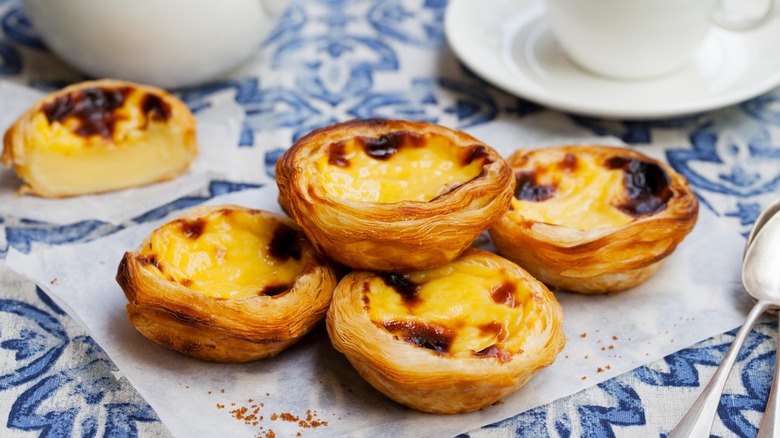
Few breakfasts are as synonymous with a country as Portugal's pastéis de nata. Small egg-based custard tarts known for their flaky puff pastry shells, creamy egg filling, and lightly caramelized top, these national favorites are what many Portuguese residents wake up to on any given day.
The origins of this delicacy trace back to monasteries, where egg yolks and sugar were abundant and the word "waste" was not in the vocabulary. Eventually, when monasteries closed in the 1820s, the recipe that had been birthed from excess found its way to a nearby Lisbon pastry shop, where it's been closely guarded ever since.
These tarts are best eaten warm, often with a coffee, sometimes dusted with cinnamon. And while their taste is worthy of celebrating, pastéis de nata remain an everyday breakfast food, gracing pretty much every kitchen table and pastry counter shelf in Portugal. They're grabbed en route to the office, savored at cafes, and enjoyed without ceremony, save for the enthusiastic smile (and maybe deep, satisfied sigh) that will surely follow that first rich bite.
Pan con Tomate (Spain)
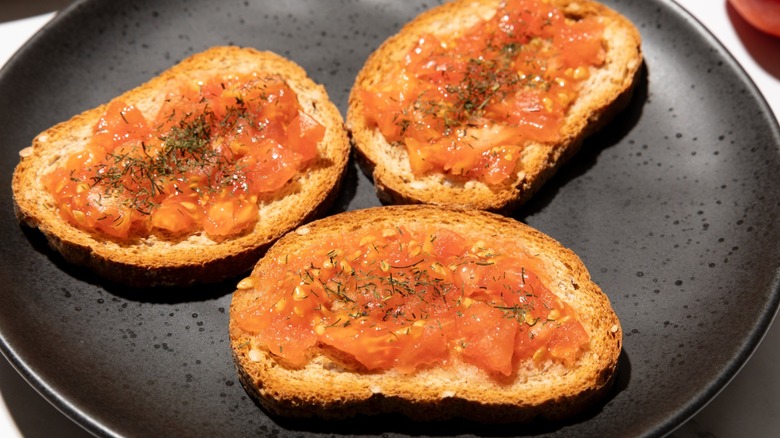
In a nation known for its love of tapas, it comes as no surprise that pan con tomate is beloved across Spain as a go-to breakfast staple. This humble toast shows up everywhere, from hotel breakfast spreads to neighborhood cafes, and of course, Spanish home kitchens.
The key to this recipe is good bread — something hearty such as ciabatta — toasted then rubbed with a clove of garlic (just enough to leave its mark, but not too much to drown out the other flavor notes). Another vital ingredient you must absolutely nail to make this recipe a success? Tomato. It must be ripe and juicy, and the recipe calls for it to be either grated or rubbed directly onto the toast. This way, the pulp is able to soak into every crevice.
Finish with a sprinkle of salt and drizzle of high-quality olive oil. Simple. Stellar. That's all (double-entendre most definitely intended).
Ackee and Saltfish (Jamaica)
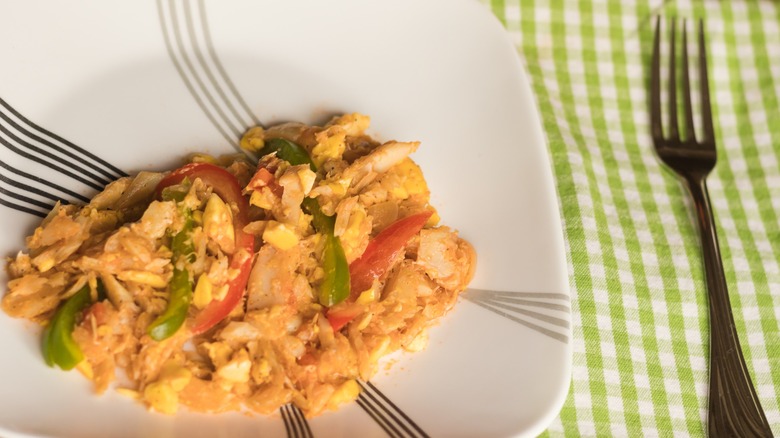
Frequently called the country's "breakfast of champions," ackee and saltfish is a dish deeply tied to Jamaica. At first glance, ackee can be misleading. When cooked, the fruit turns soft and yellow, making it uncanny in its resemblance to the beloved American staple, scrambled eggs. But the similarities ends there, as the taste itself is vastly different.
Traditionally served for breakfast, ackee and saltfish is often matched with plantains, breadfruit, or bread. Since ackee is known to have a milder flavor that absorbs whatever it's cooked alongside, saltfish and seasonings chosen to include in the sauté are allowed to shine.
The pairing itself has a rich historical significance, ackee being native to West Africa and arriving in Jamaica during the 1700s, while saltfish originated in Northern Europe and Canada. The meeting of the duo came via the transatlantic slave trade, and the dish that emerged became a relied upon mainstay for survival. This explains why, for many Jamaicans, this dish carries a strong emotional and sentimental tie.