

11 Old-School Condiments You Won't Find Gen Z Using

It sometimes feels like non-Gen Z-ers can't write about Gen Z without awkwardly throwing in slang terms like rizz, bussin', drip, sus, or cheugy — or without patronizing their digitally driven, self-aware, entrepreneurial, and inclusive attitudes. But the Zoomers are a pretty remarkable bunch. Besides being the first age group to be born fully into a digital existence, they are the most ethnically diverse of any America generation, ever. They also seem to be more astute than previous generations when it comes to social awareness, personal values, and mental health. It's a demographic that is shaping the world we all live in, redefining our society's future, and carrying us toward unseen advancements in the coming decades. This all leads to the big question on everybody's minds: What does this mean for condiments?
Just like with everything else, the citizens of Gen Z have their own ideas regarding what goes on food, and they have no problem disregarding, augmenting, or reinventing even long-established sauces, dressings, and gravies. And why shouldn't that be embraced? It just means more Marmite for the rest of us. (Yay?) Here's the current status of that increasingly obsolete condiment, along with 10 others Gen Z doesn't think slaps.
Ketchup
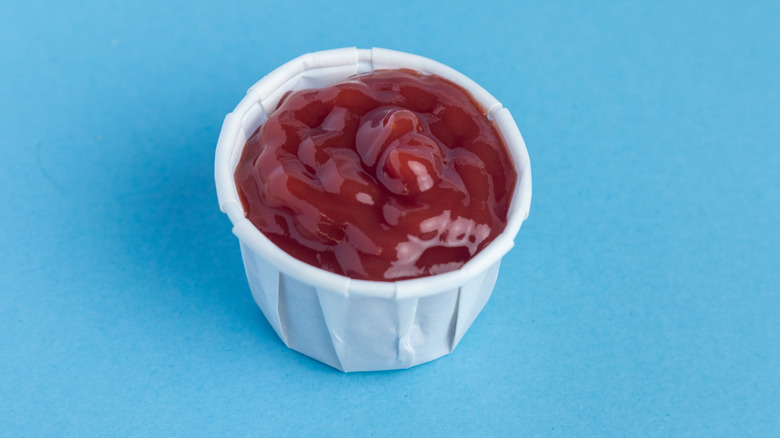
Yeah, we're starting with a biggie: ketchup, long considered the king of the condiments, even in years when it's outsold by others. (Salsa, ranch dressing, and mayo have all achieved the feat.) Its status as fries' bestie makes the sweet, squirty tomato concoction a part of the American way of life. (And yes, ketchup in the U.S. tastes different than in other parts of the world.) With the rise of Gen Z's gastronomic influence, though, is ketchup — of all things — facing an existential crisis?
The answer is sort of, but not exactly. Ketchup as a main condiment won't likely disappear, but Gen Z-ers across the pond are portending troubling things for the staple sauce. Many consider it outdated, and not nutritious. This is part of a broader global movement, lead by Gen Z but not exclusive to them, toward healthier, lower-calorie meals — something ketchup is, admittedly, not very conducive to, what with its high amounts of added sugar, and sodium.
Another ominous sign for ketchup is the younger generation's insatiable yearn for spice. As reflected by social media trends, Gen Z is all about BYO sauce, and what they're carrying around is not Heinz 57. It's hot sauce, chili oil, or even gochujang. Zoomers desire a "swicy" (sweet and spicy) culinary experience, and ketchup only fits half of that formula. This may be why we're seeing huge corporations, like Kraft Heinz, churning out spicy ketchup products. They see the writing on the wall, and that it's written in ketchup.
Ranch dressing
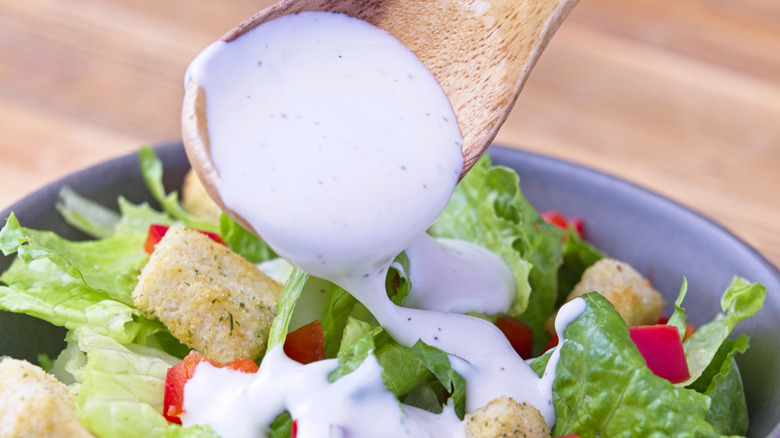
Ranch dressing was invented in the 1950s by a plumber from Nebraska living in Alaska (how has that not become a nursery rhyme?) and, ever since, it's risen in popularity. It went from being just one of a bunch of salad dressings to an all-conquering condiment, even surpassing ketchup in annual U.S. sales, totaling over a billion dollars. Those numbers speak for themselves, and they say that ranch is tops. But it sounds like Gen Z may be speaking a different language.
The younger generation is straight-up bored with the creamy, herbaceous condiment that older Americans love. In-depth studies have revealed that a sizable chunk of Zoomers are over the so-called overrated dressing. Whether it's made with buttermilk, mayonnaise, or a sour cream base mixed with a dried spice mix, basic ranch is missing the kick-you-in-your-mouth tastes that Gen Z craves — and gets via the likes of chipotle, sriracha, and wasabi.
There is hope for ranch yet, as the same studies also revealed Gen Z's openness to giving the condiment a go if the flavoring gets more experimental, and in line with their preferred flavor profile. This is indicated by a substantial increase in web searches for ranch varieties, and especially homemade, customized ranch dressing. Remember, it's the ones who adapt that survive.
Mustard

Must you topple all the monuments, Gen Z? Must you deface all the icons? Okay, maybe that's dramatic, but it seems that even the pantry pillar that is yellow mustard won't be unscathed by the changing winds of condiment consumption. And it would be an historic shift. Mustard has been a preferred condiment for literally thousands of years.
Ever since 1904, when French's came out with its famous yellow mustard, which was milder than the spicy European style brought over by 19th-century immigrants, its popularity in the U.S. has boomed. This coincided, naturally, with the rise of hot dogs, and its entwinement with the national pastime: baseball. From that point on, the sauce has been an All-American staple, with some loving it so much that they even put mustard on tacos. So, what happened?
The thing is, it's not just twenty-somethings who have lost enthusiasm for the yellow stuff. In recent surveys of Americans in general, mustard came second only to relish as the classic condiment that is most despised. Maybe there was always a stratum of eaters who disliked mustard. However, Gen Z is significantly exacerbating that attitude. Almost 40% of people between the ages of 18 and 24 reportedly hate mustard with a passion. Ouch. That revelation, along with Gen Z's undying love for all things pickled, means that mustard will probably soon surpass relish as the least-loved. Yellow? More like goodbye.
Mayonnaise

The only condiment ahead of ranch in the aforementioned, disfavoring data studies is one of the cornerstones of potato salad, tuna salad, and (for some) fruit salad. It's an ingredient of almost mythic proportions. (No, mayo is not a dairy product.) Cover your eyes, Hellman's — because, yes, it's good, old mayonnaise. Gen Z may not agree about the "good" part, but it would about "old." Mayo, as we know it, seems to be becoming a thing of the past at the hands of the insurgent youth.
How the mighty have fallen. It was only back in 2021 that mayonnaise claimed the throne as the top condiment in the United States. But Gen Z's craving for bold, exotic, and spicy flavors is leaving the glob of eggy fat that is mayonnaise in the cold. This is reflected in steady dips in sales for the classic version of the sandwich spread.
As is the case with its cousin, ranch, Gen Z does seem to be amenable to pivoting to flavor-enhanced mayo, versus abandoning the condiment altogether. You can see that some companies are onto this consumer trend, and thus launching flavored mayo products with gusto. Credit should be given where credit is due. Zoomers don't always cancel. Sometimes they just customize.
Brown sauce
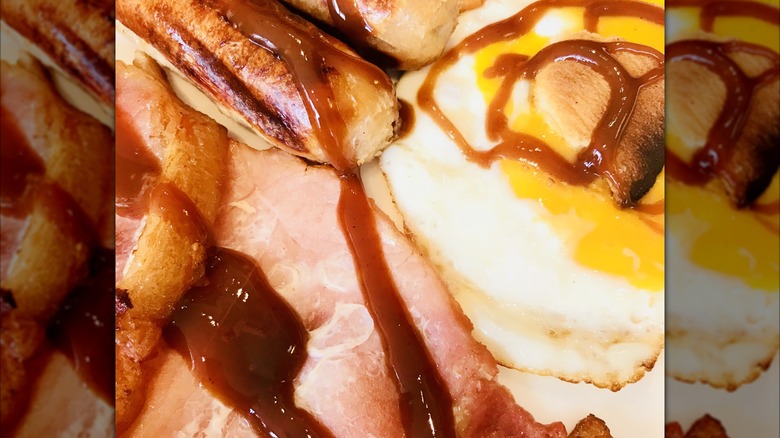
It's time to get British, brown, and saucy — not in a cheeky way, but in a very literal way. First concocted by a grocer in Nottinghamshire in 1870, English-style brown sauce (not to be confused with Chinese-style brown sauce) is a unique mixture of tomatoes, vinegar, molasses, dates, tamarind, and sugar. Its tangy sweetness, redolent of ketchup, is intended to complement savory foods like sausages, chips, and meat pies. HP is the dominant brown sauce brand in the UK —similar to Heinz in the U.S. — and the condiment is closely identified with Englishness, including the royal family. Queen Elizabeth II even released her own brand of brown sauce in 2022. It's practically stitched into the fabric of St. George's cross — but oh, how quickly those mainstays can become relics.
It seems that Gen Z is just not putting this stuff onto their bacon sandwiches like previous generations did. Nearly 30% of Brits aged 25 and younger feel brown sauce's time has passed. One reason for this dearth of appeal with the youth is the condiment's lack of a spicy kick, although it is vinegary. A reported 80% of Gen Z diners want some sort of heat in their flavorings. So, although the older folk are still keeping brown sauce ever-present in the UK, the condiment might have an uphill battle for relevancy moving forward.
Tartar sauce
It's interesting to see how the selections on this list are becoming less popular, even though the worldwide market for condiments is more lucrative than ever. It's not far-fetched to presume that this can be directly attributed to Gen Z's cravings, and habits. There's an obvious, enormous appetite for dressings, so there's certainly room for them all, right? And there must, at the very least, be room for the once-beloved tartar sauce? Well, not so fast.
Tartar sauce was created in France in the 1800s, not to accompany fish, but rather to enhance steak tartare (hence the name). Soon enough, the French realized that it went perfectly with a piece of fried cod, and the rest is history. But history is one thing, and now is another.
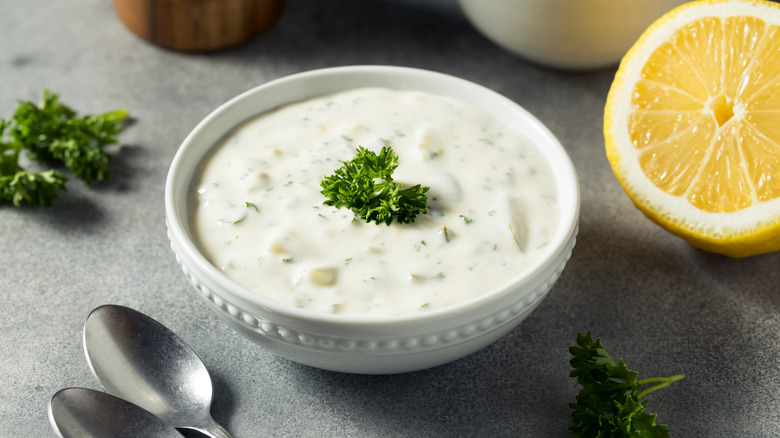
Because of tartar sauce's similarity to mayonnaise, and its lack of super-robust flavors, the pallid condiment is being left untouched in its little paper cup on the side, at least by eaters in their 20s. Gen Z diners are eschewing it for the likes of eel sauce, and Buffalo sauce, especially when compared to older age groups like Gen X. Maybe if Centennials start to realize that homemade tartar sauce is just three simple ingredients, some kitchen experimentation can happen, and the nostalgic condiment can be revived. Who knows? It may even slay.
Plain barbecue sauce
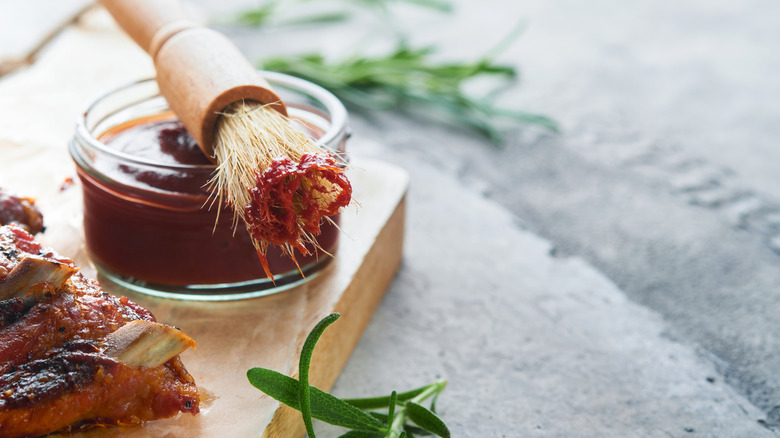
Sometimes, things need a remix; an infusion of new ideas. Sometimes, things have no choice but to change, or risk falling out of fashion — even out of favor. Gen Z's approach to food accompaniment is forcing big rethinks on even the most stalwart of condiments. Tastes change, palates change, and nothing may be spared —not even barbecue sauce.
Note that we're talking about the classic kind of barbecue sauce, the one made with traditional barbecue sauce ingredients: tomato, vinegar, brown sugar, and honey or molasses for sweetness. It's this variety that is, apparently, not very exciting for the younger set, who call it overtly sweet, with little to counteract that. Old-school, unaltered barbecue sauce is lacking in key elements that Gen Z-desires, like heat, and punch. This is why it is losing ground.
Zoomers have been too globalized in their tastes to settle for the goop that you get with Chicken McNuggets, or splattered onto a Texas-style burger. But the irony is that plain barbecue sauce has very international origins. The modern version is rooted in pepper- and vinegar-based recipes from Colonial days in the Caribbean, and on the American mainland, which were in turn spun off from a mix of African, European, and Native American preparation methods. If someone wants to make plain barbecue sauce trendy again, they should tell Gen Z that.
Marmite
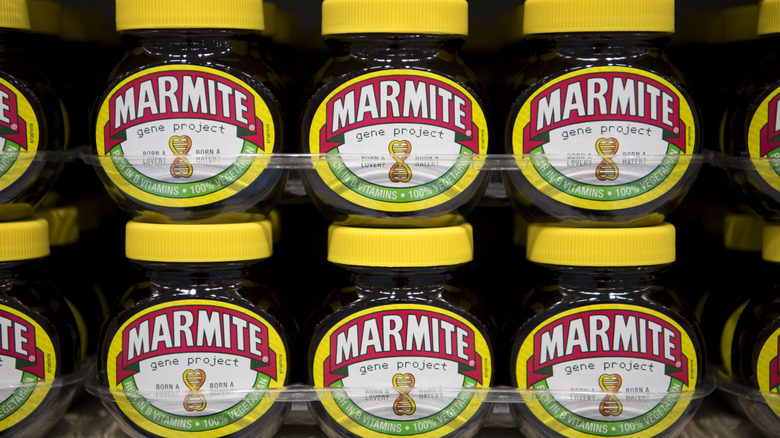
There is a singer in the UK whose album sales have only been exceeded by Elvis Presley, and The Beatles. He holds the record for most UK Top 20 hits, is the only person to ever have a UK number-one single in five different decades, and has been knighted for his services to music. His name? Cliff Richard. Never heard of him? Then you're probably American.
Sometimes, no matter how huge something is in England, it just can't break America. This is the case with Marmite, invented by a 19th-century German, of all people, using heavily concentrating brewer's yeast. Marmite is a paste that is sticky, salty, savory — and intensely so on all three counts. To say that Marmite is an acquired taste, even for Brits, is an understatement. Even the brand's slogan states, "You either love it or hate it."
Unfortunately, the new generation seems to being going with the latter sentiment. It turns out, this quintessentially English condiment hasn't even been tried by nearly half of UK Zoomers, and they don't seem to intend to do so any time soon. It's a trend that's so alarming to Big Marmite (a.k.a. the one company, Marmite) that it's prioritized marketing the product to its country's Gen Z-ers with kinetic, edgy, innuendo-filled commercials. Will that work? Only time will tell.
Peanut butter
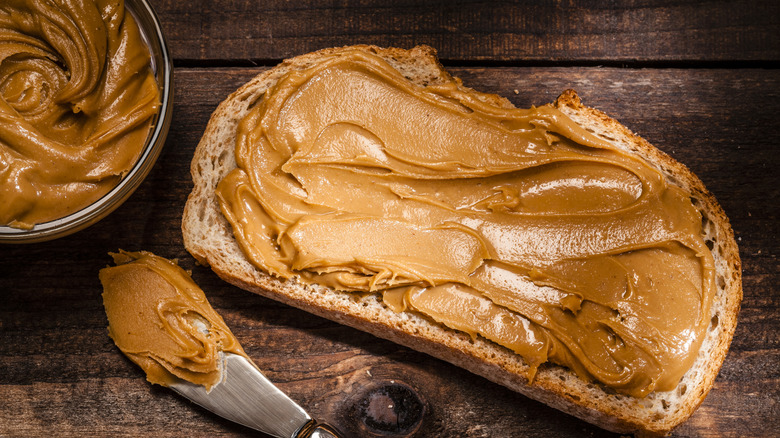
What? Say it isn't so — not peanut butter, surely. But yes, peanut butter is on the list of old-school condiments that Gen Z isn't using. Now, you might be wondering, don't these kids know about Reese's, or ants on a log, or that peanut butter's beloved by cutesy doggies licking cutesy spoons? Or that you can grill a PB & J to make for an outrageous munchie experience? And Skippy, the best brand of peanut butter out there. Think about poor, little Skippy. Sigh. Maybe all is truly lost.
Actually, the alarms shouldn't sound so loudly for jelly's best sandwich friend, as the picture's a bit rosier. It's not that Gen Z is rejecting peanut butter in the same way they are other condiments, but that there has been a noticeable drop in consumption. Compared to the millennial generation before, Zoomers are eating almost 20% less peanut butter on a weekly basis.
What's ironic is that Gen Z's admiration for the peanut itself is substantial. Almost ⅔ of the demo think that peanuts are a better sustainable protein than meat, eggs, or dairy products. The thing is, they seem to prefer eating peanuts in trail mix, protein bars, smoothies, or even sauces over its buttered form. The industry is so concerned with this trend that they're launching a Got Milk-like campaign for peanut butter. That one worked. Will this?
Marmalade
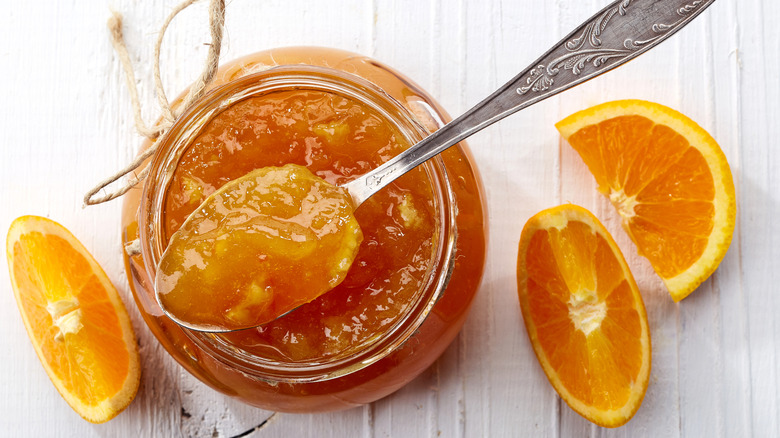
The beginnings of marmalade— a preserve made by boiling entire citrus fruits with sugar, and water — date all the way back to Roman times. It was later on that the Portuguese coined the term marmelada to refer to a jam made of quinces, but it was apparently the Scottish who really made it popular as a spread on toast, crackers, and the like. It has since evolved to be utilized in meat glazes, dressings, and marinades, not to mention in cocktails. It's a condiment that's versatile, tasty, and edifying. So, what's the problem here?
It seems to be that, in keeping with Gen Z's penchant to shy away from exclusively sweet flavors, marmalade has become marma-lame. The condiment is seeing a massive dip in interest among young people, to the extent that the under-28 demographic is responsible for only 1% of marmalade purchases. This also might be due to another Gen Z preference that marmalade often lacks: variety. Most marmalade is orange, because it was traditionally made with Seville oranges. What's more, because the fruit's skin, rind, and pulp make up the ingredients, it can have a distinctly bitter note that can taste almost medicinal. Since the only thing counteracting that bitterness is sweetness from sugar, Zoomers aren't exactly dying to dig in.
Cool Whip
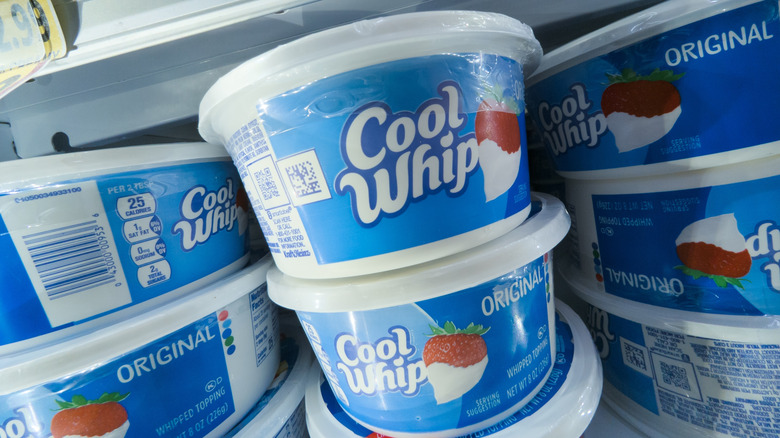
If millennials have some major conflicts with Gen Z regarding their food inclinations, you can imagine how different they must be from Baby Boomers. Boomer fare like casseroles, meatloaf, bologna sandwiches, and fish sticks can seem as foreign to Zoomers as cuneiform. Nowhere is this more apparent than when looking at old-fashioned Cool Whip.
Since its invention in 1966 at the hands of the same corporate food scientist who gave us Tang, and Pop Rocks, Cool Whip has filled a commercial purpose: General Foods wanted to create a shippable, frozen whipped cream product for consumers whose forearms were sore from having to do that whipping themselves. Cool Whip has since become a supermarket essential — and a surprisingly versatile one, especially if you know how to turn Cool Whip into ice cream.
Nowadays seems to be a nadir for the coolest of whips, however. Frozen whipped product sales are down by a substantial margin, and Cool Whip, the cream of that cream crop, has been cast aside by Gen Z, who either favor the legit whipped stuff, or dairy-free versions. It also doesn't help that more Americans are moving away from big, commercial food labels. Unfortunately for Cool Whip, commercial is in its DNA.