

12 Refrigerator Mistakes That Are Ruining Your Food
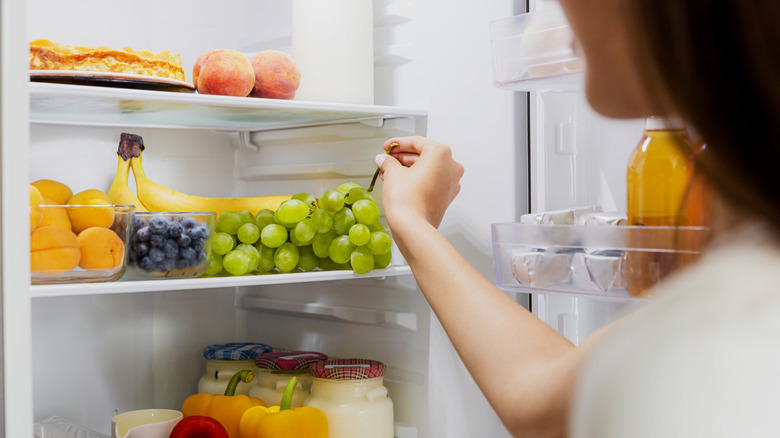
Returning from a supermarket run and tossing everything into your refrigerator is something most households do without much thought. You probably won't be aware of why your food is spoiling early or why your stomach seems a bit off until someone points out that you might be storing your food all wrong.
Your refrigerator is a complex piece of equipment, and it should come as no surprise that there is a right way and a wrong way to use it. Some mistakes, like not cleaning it regularly, might seem a bit obvious, yet it's easy to put them off. Other mistakes are not so obvious, such as storing milk or cheese in the door of the fridge, simply because it's convenient, even though it's the warmest and most temperature-unstable spot.
The good news is that it's never too late to fix these habits. All it takes is breaking a few old routines and inculcating new ones. Changing these habits will help you in many ways. Firstly, you will take better care of an expensive piece of equipment, helping it last longer. Plus, you will keep your food safer, minimizing the chances of being struck by food-borne illnesses and of course, stay fresher.
Overloading the fridge
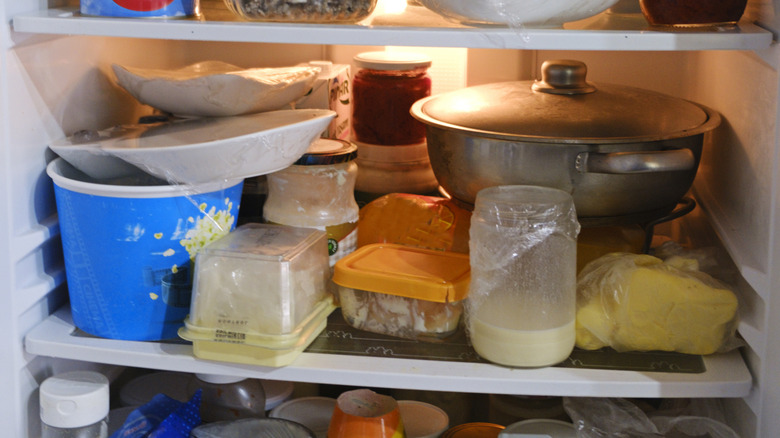
Refrigerators have different capacities, usually measured in terms of volume in liters. This denotes the internal space that is available for storage. Many folks assume that this means that the internal space can be crammed with food, and often end up squeezing packages into every nook and cranny. This leads to overloading the refrigerator, which is not good for numerous reasons.
Firstly, the overloading prevents cool air from circulating, resulting in hot spots in the refrigerator. This results in a fridge that doesn't cool the food sufficiently, even when the temperature settings are low. When temperatures rise above 40 degrees Fahrenheit, food can quickly become a breeding ground for bacteria, resulting in spoilage and increasing the risk of food poisoning if consumed. High-protein and moist foods are especially prone to bacterial growth.
The other consequence of overloading the fridge is that the compressor works overtime and your fridge may sound like it's struggling to cope. It may even stop working completely, and that will result in all your stored food going bad. Symptoms of an overloaded fridge include ice formation around the vents, items in the door feeling warmer than in the middle shelves, condensation forming, and a faint must smell in certain areas. In all of these cases, it would be best to remove some food items or repack them in smaller containers, or adjust the shelves to create more fridge space.
Storing food on the wrong shelves
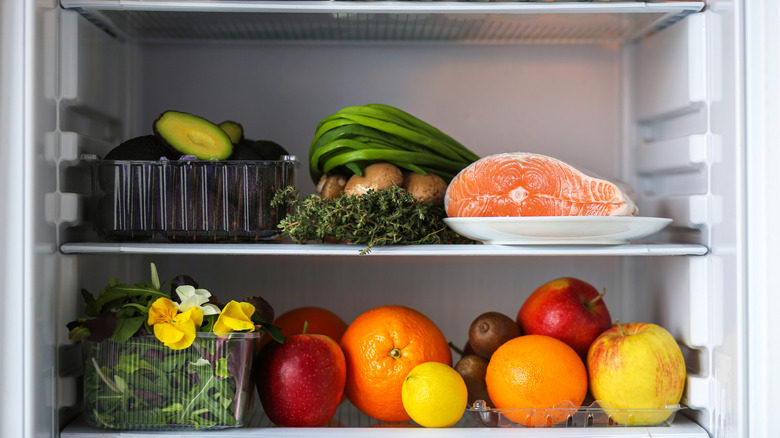
Storing food in your fridge can be a tricky affair, especially the part of knowing which foods to put where. The tendency is to put foods wherever there is vacant space, but this leads to problems such as food spoilage, cross-contamination, and food waste.
Here are a few dos and don'ts that you should follow. Uncooked meat, fish and poultry should never be stored in the top shelf as blood and other fluids can leak onto the lower shelves, resulting in cross-contamination. You really don't want juices that could contain bacteria such as E. coli and Salmonella dripping onto the greens meant for your salad, do you? Ensure that any uncooked meat or fish is stored on the bottom shelf and packed into water-tight containers. Keep that top shelf only for cooked foods that are ready to be eaten.
Another mistake to avoid is storing eggs and dairy products in the fridge door, as this zone can have temperature variations that will cause your dairy to spoil prematurely. You can place condiments and drinks in the door instead. So the next time you do a supermarket run, remember to stock your fridge the right way.
Not covering leftovers
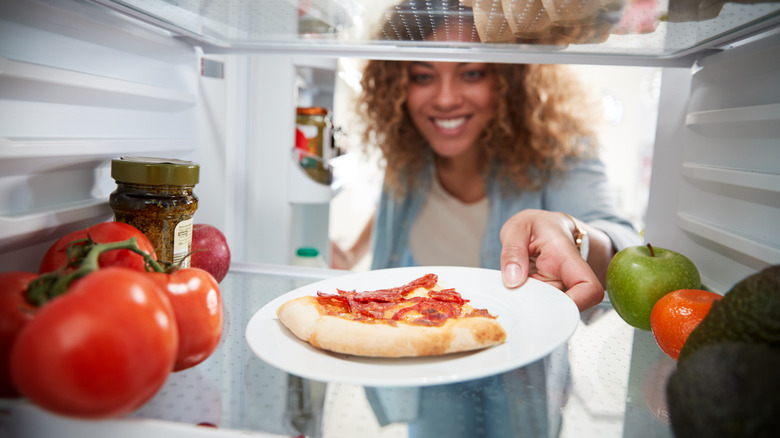
After a long day at work, clearing up at dinnertime can prove to be quite a chore. The easiest solution is to shove those leftovers into the fridge and be done with it. But this lazy attitude is a big mistake.
Uncovered food is prone to cross-contamination with uncooked foods such as raw meat. At best, this will lead to your leftovers spoiling or at worst, a quick trip to the ER due to food poisoning. Uncovered foods also tend to lose moisture and dry out. Your leftovers will not be as tasty as on the day before. Additionally, they can also absorb refrigerator odors. The last thing you want is for your leftover pasta to smell of fish or have an overpowering garlic scent.
Take the trouble to put your leftovers into an airtight container before popping them into the fridge. This will keep them fresh longer and you can enjoy them at a later date. The other thing with leftovers is keeping them out for over two hours at room temperature. This can increase the risk of foodborne illnesses, so pack them up the moment you're done.
Placing still-warm food in the fridge
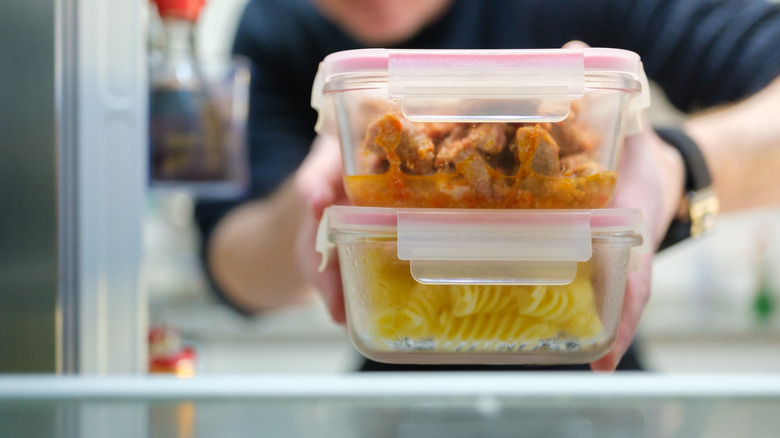
The US Department of Agriculture (USDA) notes that food should not be left outside for more than an hour at temperatures in excess of 90 degrees Fahrenheit, or two hours otherwise. This is because it can become a breeding ground for bacteria and make you sick. So what does one do with leftovers that are still warm? Pop them into the fridge?
The conventional wisdom is that food should not be too hot when put into the fridge. The reason behind this is its effect on the other foods in the fridge. Putting hot food next to cold food will increase the temperature of the cold food already in the fridge. Even smart appliances will take some time to regulate the temperature and get everything cold again. There is also the likelihood of condensation being formed inside the fridge in zones that should be moisture-free. You really don't need your salad leaves getting wet and spoiling.
So what is the solution if you have, for example, a hot pot of soup that will take longer than an hour to cool? Some suggested solutions are to make it into smaller portions or use shallower containers that will cool faster before putting them into the fridge. Alternatively, you can try cooling it down quickly with an ice bath. Either way, avoid putting steaming hot food into your refrigerator if you can. Leave it to cool for up to an hour before putting it into your fridge.
Not setting the right temperature
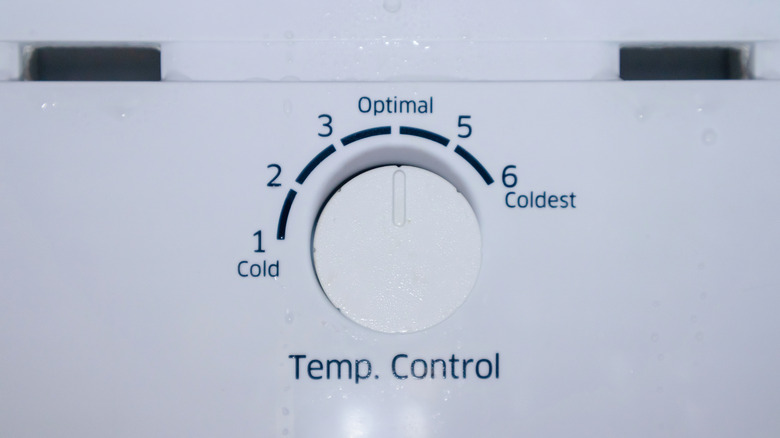
Modern refrigerators are complex pieces of equipment that help you to preserve your food for long periods without spoiling. They do this by having different temperature and humidity-regulated zones that serve different functions. Many of us don't even look at the temperature controls and erroneously leave them at the factory settings.
Manufacturers recommend keeping the thermostat set between 33 and 40 degrees Fahrenheit for the refrigerator section. In contrast, the freezer temperature should be set at zero degrees Fahrenheit or colder. At these temperatures, your drinks should stay chilled and your food shouldn't spoil early. You should keep in mind that the temperature doesn't stay uniform throughout the fridge, but can vary. Regions to the back of the refrigerator will be cooler, and since cold air settles down, so too will the bottom. The door tends to be the warmest, as it is exposed to outside temperatures every time the door is opened.
If your temperature settings are too high, then you may find that your food spoils, a dangerous situation that can lead to food poisoning. If the settings are too low, you may end up freezing fresh produce, ruining it. The manner in which you store your food will also affect the internal temperatures. A fridge that is not cooling properly is likely to be overloaded or in need of maintenance.
Using the refrigerator doors for perishable items
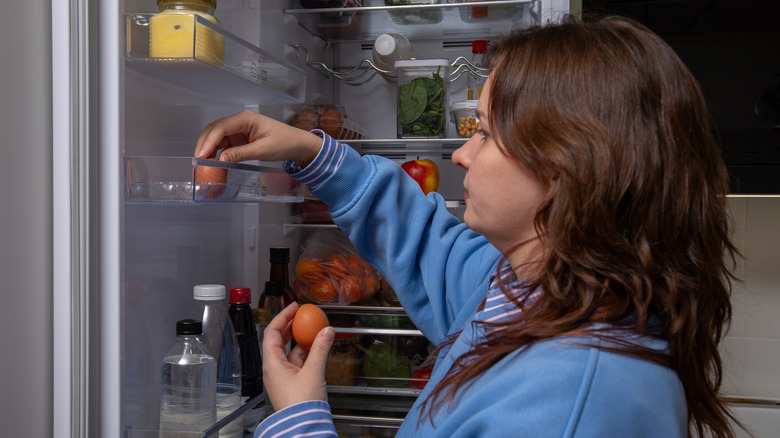
The door of your refrigerator with its many shelves seems like the most convenient place to store everyday items such as milk, eggs, and butter. It is also opened several times a day, each time exposing it to the warmer air outside. Due to this, the door of the refrigerator is usually the warmest zone in the fridge, experiencing temperature spikes with each opening.
The effect these temperature spikes can have on perishable items is huge. They will tend to spoil faster and can end up causing food-borne illnesses. Items such as milk, eggs, and dairy products are extremely sensitive to the minutest changes in temperature, along with items such as deli meats, raw meat, and poultry, they should all be kept at the back of the fridge where the temperatures are coolest and best regulated. Ideally, you should also avoid glass bottles in the door to prevent breakages. The USDA Food Safety and Inspection Service recommends storing leftovers at 40 degrees Fahrenheit or lower, as long as they're stored in the main compartment and not in the door.
Not storing your vegetables properly
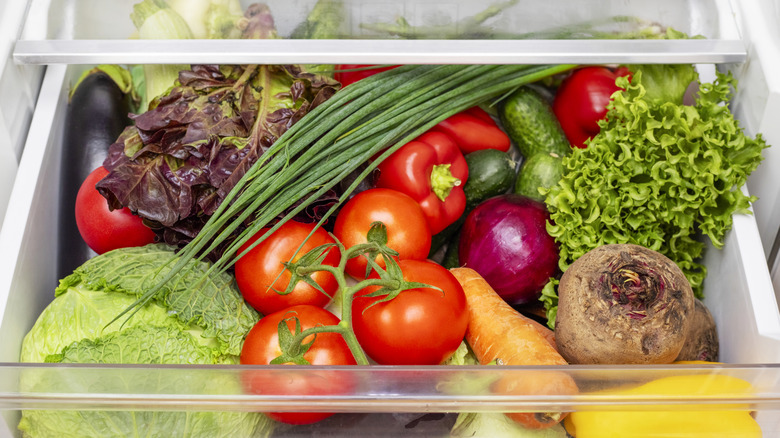
A common habit many people have is to throw all the fresh produce directly into the designated vegetable drawer of your refrigerator. Veggies, herbs, salads, it doesn't matter. They all get the same treatment, often remaining in their original supermarket packaging. But not all vegetables are created equal, at least from the storage point of view.
The first mistake is in keeping them in their original packaging. This prevents air circulation and can make the more delicate veggies, such as herbs, spoil quicker. While items like carrots or beets can be left in their original packaging, mushrooms shouldn't. They should be repackaged in a paper bag for storage.
Leafy vegetables such as spinach and kale should be dried completely before being put away in a separate container. Since moisture on your greens can lead to bacteria spoiling the party, it is better not to rinse them prior to storage. If you have a compartment with humidity controls, then this is the right storage area for your leafy greens. Lastly, do not store fruit along with your veggies but keep them apart. Delicate fruit like berries have a tendency to get moldy. Rinse them in vinegar to remove any traces of bacteria and spores before storing them. Dry them properly, and they will stay good for a longer period.
Storing canned food
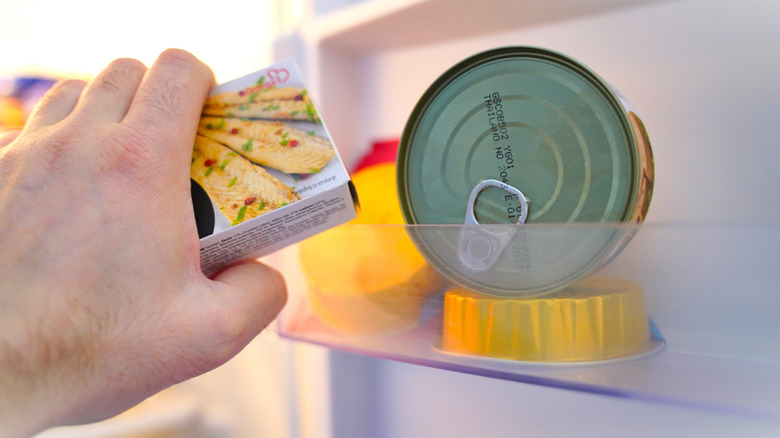
The problem with storing foods in their original cans in the refrigerator is that it can affect the quality and flavor of the food. This happens because air is introduced once the can is opened and reacts with the metal. Your food may develop a tinny taste which can be quite unpleasant, and it will begin to lose its flavor.
The USDA cautions that while it is safe to store the food in its original opened can, for the sake of quality and flavor, you should transfer the food to another food-grade glass or plastic container. This will prevent the food from further reactions with the metal and help to preserve its original flavor. Depending on the food, it could last for a few days or up to a week — labeling your containers with the dates can help you keep track.
Unopened canned foods usually have shelf lives of many months or even longer, but storing them at high temperatures can cause them to go bad, so it's best to keep them in the pantry. A good practice to follow is to keep rotating the stock: Use the oldest cans first and replace them periodically with fresh stock. With a little effort, you can have your refrigerator and pantry better organized, helping you to eat healthier and minimizing waste.
Storing herbs in a bag
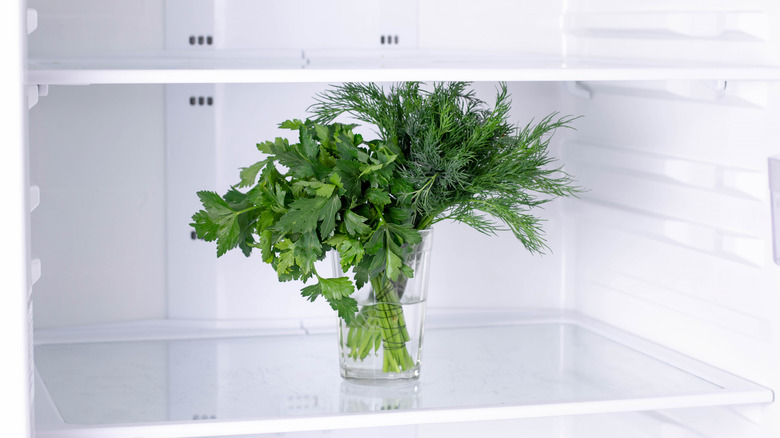
Herbs are delicate things and require plenty of TLC if they are to survive for long in your fridge. Putting them in a plastic bag and dumping them in a fridge drawer is a surefire way of killing them off faster — at best, after a couple of weeks, they will look ragged and will not make any significant contribution to your dish. At worst, they will look like some blackened leaves unfit for human consumption.
You should begin with washing them carefully. Using your salad spinner with cold water for this purpose is a good idea. Once washed, they can be spread on a paper towel and gently patted down to remove excess moisture. Next, the more hardy varieties can be rolled in a damp paper towel and put away in a ziplock bag.
The more delicate herbs are a different matter. They should be put in a mason jar with an inch of water at the bottom. Seal the jar with an overturned plastic bag and store in the refrigerator. You can store your herbs safely in this manner for up to three weeks, and they will still retain all those qualities that make them essential to cooking delicious meals.
Not cleaning the refrigerator regularly
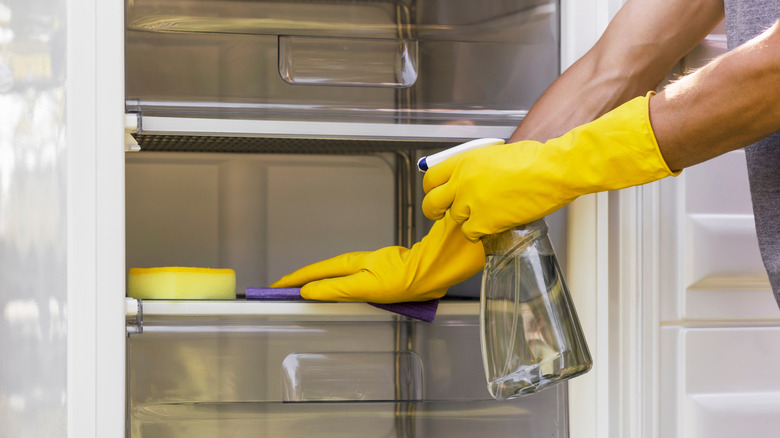
Keeping your fridge clean is extremely important from a food hygiene perspective. While this may seem like a no-brainer, we do understand that keeping it clean regularly can prove to be a difficult and time-consuming task. Small mistakes made while cleaning could end up contaminating certain areas, causing unpleasant odors and food to go bad. In addition to this, a dirty fridge may experience a degradation in its cooling performance.
Guidelines published by the U.S. Department of Energy suggest that you remove all food from the fridge before starting the cleaning process. After taking stock and discarding anything that has gone bad, start cleaning by using a mild cleaner — ideally a non-abrasive type that degreases and can help to destroy any mold or mildew. After wiping all the surfaces in the interior, rinse them with a damp cloth. Cover all the surfaces, including the shelves and the inside of the drawers, and don't forget to clean all the containers, too.
Cleaning the inside will take care of the mold, mildew, and odors, but for the efficient functioning of the fridge, you also need to clean underneath it (eep!). Cleaning the condenser coils of the fridge will help with its temperature regulation and prevent food from freezing. The outer surfaces, including the door seals and handles, can be cleaned with a mix of dish soap and water and then wiped dry.
Placing certain fruits and vegetables together
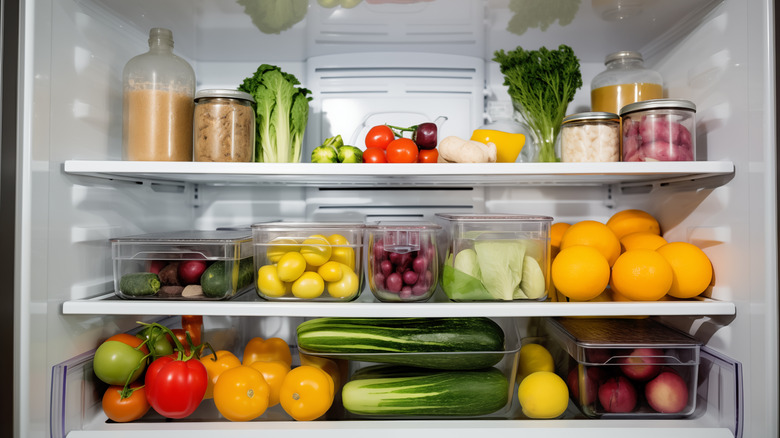
Some foods should never be stored together in the refrigerator, and two of these are certain fruits and vegetables. This rule is important if you want your fruit and veggies to last longer, retain their original flavors, and avoid cross-contamination. To understand why this is so, we need to learn about the characteristics of different items.
Certain fruits such as apples, pears, and avocados produce ethylene, a gas that can cause your greens to wilt and go soft. Items like onions and garlic that have a strong smell can transfer their odor onto your fruit. That's why it's best to keep them stored in separate containers. Bacterial cross-contamination can also occur when fruits and veggies are stored together. Mold can grow on fruit and affect your vegetables, too.
The ethylene gas from your apples or pears can also ruin your berries. Peaches, plums, and bananas are also ethylene producers and should be kept apart. Produce like mushrooms, berries, and herbs are very sensitive to moisture and dampness can make them spoil quickly. It is best to avoid putting them in with high-moisture veggies like cucumbers and tomatoes — which should be kept apart, too, due to the ethylene released by tomatoes. Understanding a bit more about your favorite fruit and vegetables means you can avoid these mistakes and help them last longer and taste fresher.
Do not place the following foods in the refrigerator
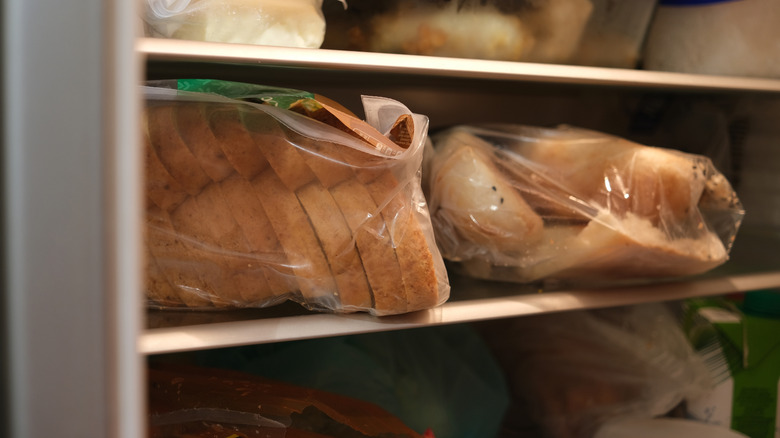
Not all foods belong in the fridge. Certain foods can be stored safely on the shelf of your pantry without the need to refrigerate them. For example, bananas should not be refrigerated because they need warm air to ripen and the warm air and light help to prevent decay. Coffee is best kept in an airtight container on a shelf so that it doesn't pick up odors of other food stored in the refrigerator. You wouldn't want your coffee smelling of garlic, would you? Tomatoes are next, as refrigerating them will affect their taste and texture. The same thing applies to honey. Store your honey in a cool dark place or your pantry instead. Fresh herbs such as rosemary, basil, and thyme will dry out and lose flavor if refrigerated, and the same thing happens to bread.
Oil will solidify at lower temperatures and should be left on the pantry or countertop. Unripe avocados will not ripen in the fridge and lastly, uncut onions, potatoes, and garlic should all stay out of the fridge. Just like you will never find fruit like watermelons or cantaloupes in the cold section of a supermarket, take the hint and keep them on your pantry shelf.
As a general rule, note how supermarkets store and display fresh produce and follow the same rules. Grocery stores are usually very savvy at minimizing waste and keeping produce fresh.