

The Countries With The Cheapest (And Most Expensive) McDonald's Prices
It's no secret that McDonald's prices have been surging in recent years. If you're struggling to stomach the ever-changing cost of McDonald's in the United States, you might find some solace in the fast food chain's international prices. According to the Big Mac Index, a price index that monitors the average price of McDonald's signature burger in over 70 countries across the globe, the country with the cheapest McDonald's prices in 2025 is Taiwan, where a Big Mac costs the equivalent of $2.38. It's one of seven nations that offer the chain's signature cheeseburger for less than $3, alongside Indonesia, India, the Philippines, Ukraine, South Africa, and Egypt. Notably, 10 of the 15 cheapest countries in which to buy a Big Mac are located in Asia.
If these enviable McDonald's prices have you feeling salty, keep in mind that it could be worse. The world's most expensive Big Macs are found in Switzerland, where the classic burger will set you back a whopping $7.99, nearly 40% more than what you'll pay in the U.S. The chocolate-loving Alpine country is followed by Argentina, Uruguay, Norway, and Costa Rica. The United States falls in sixth place, with an average Big Mac price of $5.79. It's worth noting that the Big Mac Index is based on average costs, but McDonald's prices can vary widely within a country — for example, one of the most expensive McDonald's in the U.S., in Darien, Connecticut, charges over $10 for one Big Mac.
The history of the McDonald's Big Mac Index
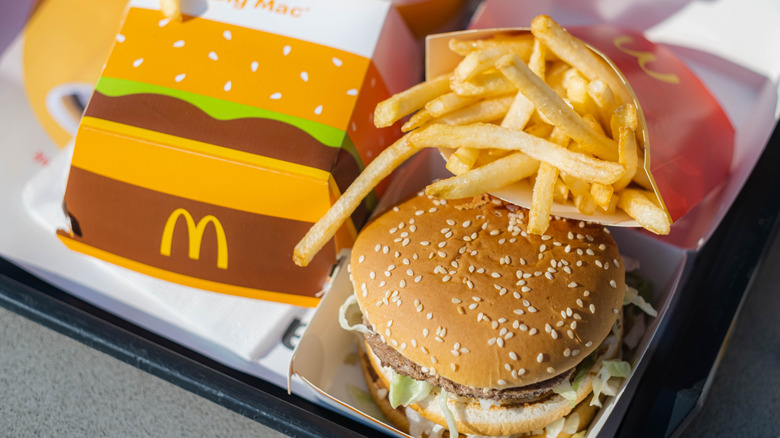
The Big Mac Index was created by The Economist in 1986, when a Big Mac cost just $1.60 in America. Although the burger-based price index comes with the convenient bonus of revealing where in the world to buy the cheapest McDonald's fare, its true purpose is to measure purchasing power around the globe. By comparing the actual exchange rate and the difference in Big Mac prices, the index measures whether a currency is under- or overvalued against the U.S. dollar. Basically, if a Big Mac costs less than in the U.S. when the country's currency is converted to U.S. dollars, it means the currency is undervalued against the dollar. So, according to the 2025 Big Mac Index, the Taiwanese dollar is nearly 60% undervalued against the U.S. dollar, while the Swiss Franc is some 38% overvalued.
Of course, the Big Mac Index is meant more as a fun way to explain exchange rates and purchasing power than as an official economic indicator. It doesn't account for factors like local ingredient costs, cultural market differences, and taxes and tariffs (unfortunately for American Big Mac lovers, beef and cheese are some of the foods most likely to be impacted by tariffs). Now that you know where in the world you can get the most Big Mac for your buck, check out these unique McDonald's dishes around the globe.