

The Biggest Mistakes People Make With Cutting Boards
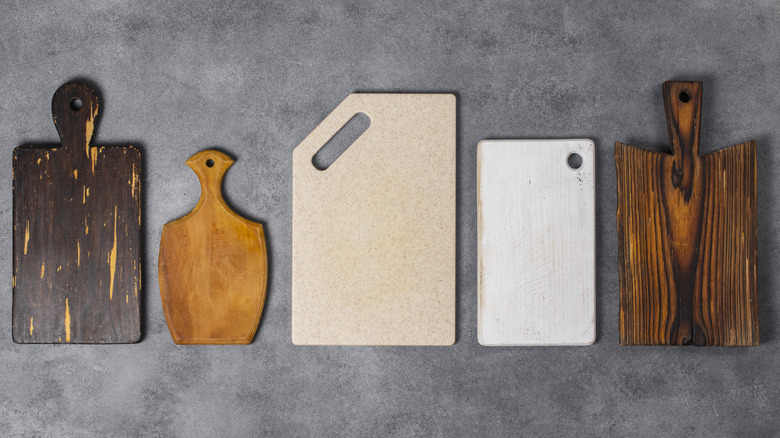
One of the most basic tools in every modern kitchen has to be the humble cutting board. It has been a cooking essential for centuries, evolving from the carved stone surfaces used by the Romans and Greeks, to the wooden chopping boards that became commonplace in the Middle Ages. Today, cutting boards come in many avatars, made from a variety of materials, including different woods and plastics.
Commonplace as they are, there are many ways in which cutting boards are misused, mainly because home cooks do not know better. From using the same board for different foods to choosing ones that look good but are impractical, neglecting basic hygiene, and not sanitizing your board — the list of mistakes made is a long one. Many of these errors stem from ignorance, but some arise from a more casual approach to kitchen work. These blunders can have grave consequences that include serious health risks, including the risk of injury. Rectifying these mistakes thankfully is not difficult but more a matter of forming new and healthier habits that will stand you in good stead going forward. Not remedying them may run the risk of a quick trip to the ER, so pay heed.
Not swapping boards for different uses
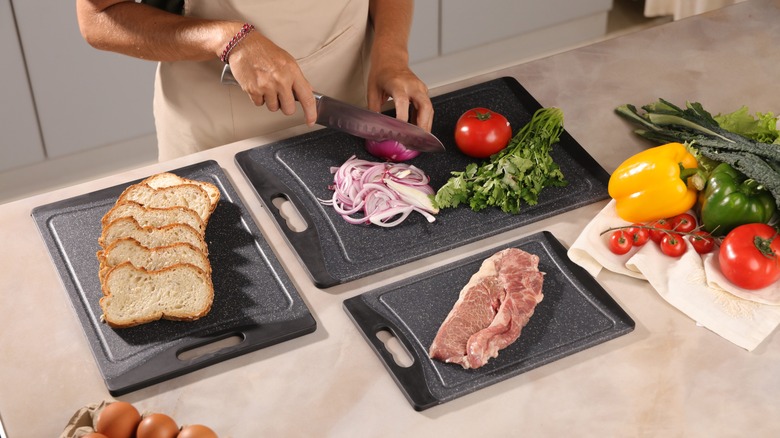
One of the cardinal rules that many people break, is to use the same board to cut all types of foods. Meats, vegetables, nuts, and fruits are all chopped on the same board. But not all cutting boards are made equal, and that different types of boards are better suited (and safer) for different types of foods.
Take the case of cutting meats. Raw meat, poultry, and fish can harbor bacteria like salmonella and E. coli, which in turn can make you very sick. Using the same board to also cut your veggies could happen in a hurry but is a surefire way to ensure that the bacteria from the meat's juices contaminate the veggies. This can prove to be very dangerous, especially if you are planning on serving raw veggies, as in a salad. Cross-contamination can also occur while using the same board for cutting food types containing allergens for example, nuts or gluten. Keeping a separate board for cutting meat and other foods with allergens is one of the first rules of basic kitchen hygiene. One of the easiest ways to do this is to use color-coded boards to keep track of which board is being used for which food type.
Not seasoning your wooden board
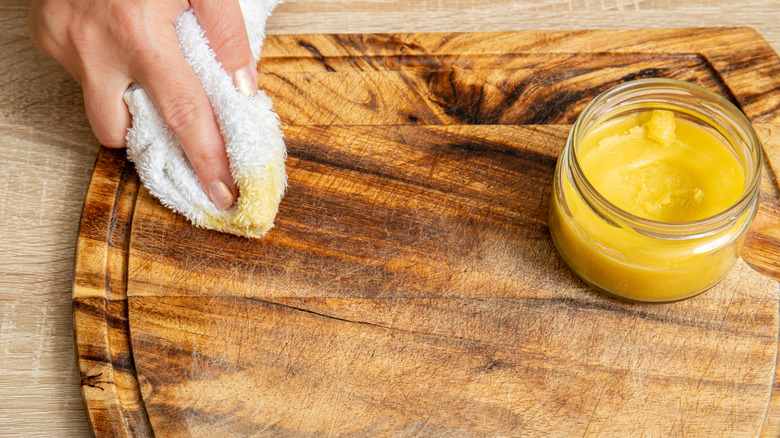
The wooden chopping board, like any other kitchen tool, is used, washed, dried, and put away — the process being repeated again and again. However, most folks don't realize that wooden boards are a different kettle of fish as compared to plastic or stainless steel boards. Wood is reacts to water and heat, and the quickest way to ruin a wooden board is to not season it.
Seasoning is important because every time you scrub and wash your board, the wood loses a little bit of moisture. Eventually, an unseasoned board will begin to feel rough and develop cracks. Cracks are a dangerous thing on wood as they become nooks and crannies where moisture, odors, and bacteria thrive. An easy way to prevent this is with a little bit of food-safe oil.
Just as your moisturizer protects your skin and keeps it supple, so will applying a mineral oil such as linseed oil, refined coconut oil, or any board-safe cream will help to protect your board and keep it healthy. Do not use olive oil or vegetable oil as they are liable to oxidize and turn rancid, leaving an unpleasant odor. Just apply the oil with a soft cloth and leave it to get absorbed overnight. Repeat the process if the wood looks dry. Doing this periodically will help to lengthen the lifespan of your board.
Using a glass board
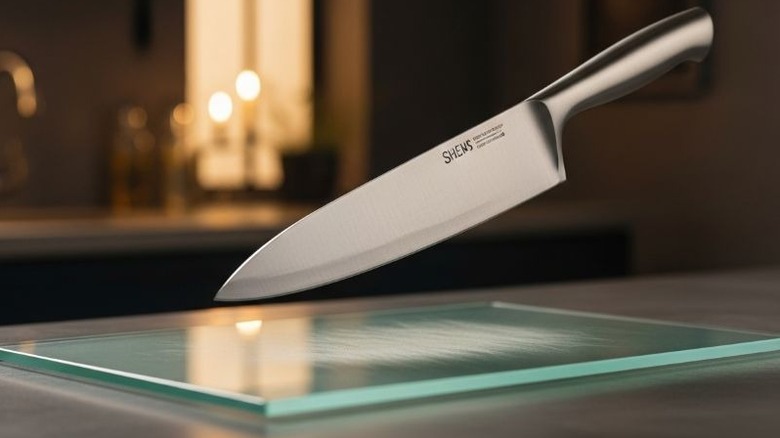
Glass cutting boards are shiny, minimalist, easy to clean, and make for an attractive prop on your kitchen counter-top. But a glass board is probably the worst thing you could buy for your kitchen. Glass can chip or break and you run the risk of glass bits getting into your food. Additionally, glass gets extremely slippery when wet, and you risk cutting yourself.
But the main reason why glass cutting boards are to be avoided comes from the damage they do to knives. The edge of a blade is designed to glide into a surface with a bit of give. Wood fibers move slightly under the pressure of a knife. Even plastic surfaces flex a bit. But glass is a rigid surface that is unyielding. Using a glass cutting board is akin to slamming your expensive chef's knife against a granite countertop. The result? An expensive knife that has had its edge blunted and its lifespan cut short.
So while glass doesn't absorb stains and smells, wood or a high-quality plastic board is a much safer option. It is much easier to control your chopping movements on these types of boards and they are much kinder to your knives. The bottom line is clear. Avoid glass cutting boards in favor of wooden or plastic ones.
Not sanitizing your board properly
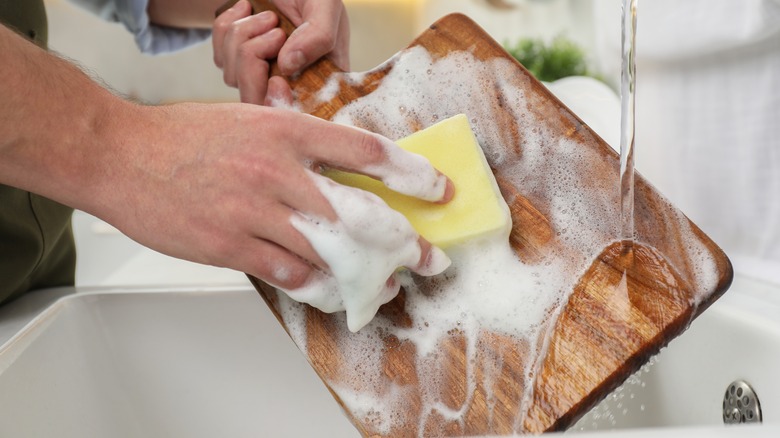
Most home cooks remain in denial about this one simple fact. Rinsing your board under the tap isn't good enough from a food safety perspective. Rinsing under water does not count as cleaning, let alone sanitizing. Cutting boards have a habit of collecting bacteria quicker than dish cloths collect smells. The grooves your knives leave in the cutting board become receptacles for food particles and microbes to settle into. Unless you clean and sanitize your board after every use, you are allowing bacteria to breed and thrive in the cuts and cracks of your board.
A good cleansing routine isn't complicated. You can start with the basics, using hot, soapy water to give your board a good scrub. Make sure that you scrub over those scratched areas really well. Sanitizing comes next, and the process you follow will depend on the type of board you use. Plastic and acrylic boards can be tossed into the dishwasher, where the high heat is very effective in killing the bacteria. Wooden boards require a different approach. Spraying them with vinegar or using a diluted version of a Mr. Clean-type solution will do the trick. In case your board has been used to cut meat, sanitize it carefully by leaving the solution on for a few minutes before rinsing.
Storing your cutting board when wet or soaking it in water
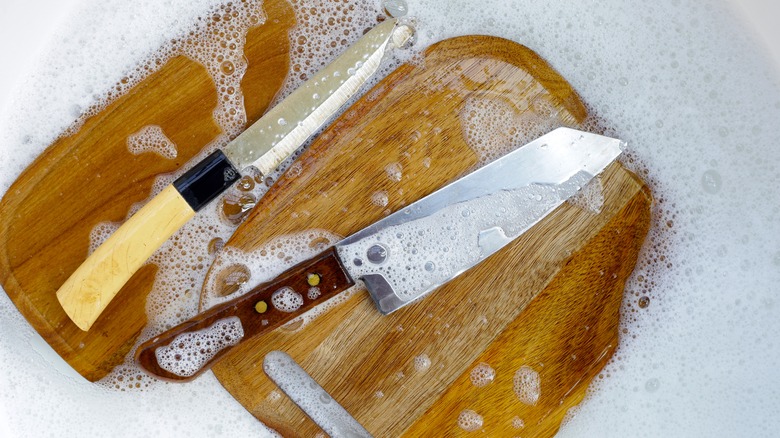
Leaving a wooden cutting board soaking in water or putting it away while it is still damp is just asking for trouble. Wooden boards are made up of densely packed fibers that are like sponges. They soak up water, which makes the fibers swell, soften, and begin to warp. In general, the longer a board is wet, the more likely it is to develop cracks, warp, grow mold, or just fall apart.
For this reason, after cleaning and sanitizing your board, you must dry it. Use a clean cloth or kitchen paper to pat both sides dry. The next step is to air-dry it. Leaving it lying down isn't a good idea because moisture could get trapped underneath. Putting it out in the sun is best avoided as it could dry out the board. The correct way would be to store it upright in a place where air can circulate easily.
Fungus thrives in those dark, wet spaces and once it takes hold, is a devil to get rid of. This is because the spores take root deep in the wood grain. Even cleaning the tiniest amount of fungus requires sanitizing the board in a diluted bleach solution before it is safe to use again. And while plastic boards don't get moldy, wet ones will allow bacteria to thrive. So make sure you dry them thoroughly as well.
Using blunt or old knives on your cutting board
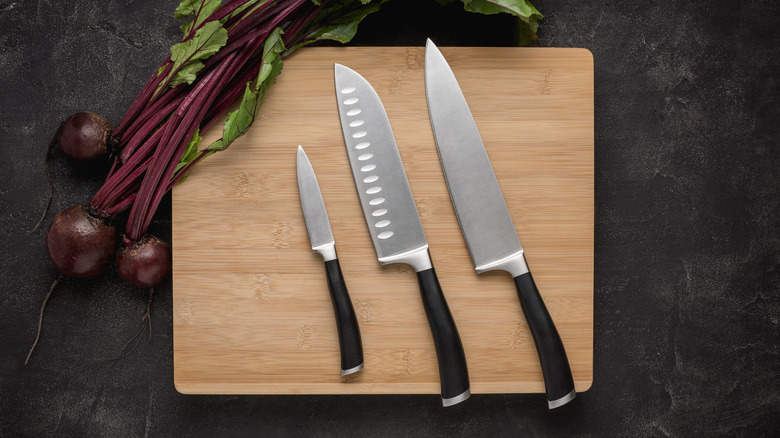
Many home cooks make the mistake of assuming that deep marks on a chopping board mean that it is of poor quality. But that isn't necessarily the case. Most times, the culprit is a dull knife, which makes you saw back and forth or press down harder while cutting. The extra force you use is what actually causes those scratches and gouges in your board.
A sharp knife will leave a clean, shallow score line which is normal. With a wooden board or one made from good-quality plastic, these score lines are completely harmless. But the deeper lines and gouges left by a blunt blade can become a breeding ground for bacteria or for mold to take hold. Cleaning out these breeding grounds can prove to be a task and a half.
Another bad habit with many home cooks is scraping the surface of your board with the sharp edge of your knife. You will just end up ruining the edge of your blade. Scraping tends to bend the edge microscopically and blunts it while also scraping off tiny bits of the board. With wooden boards, you end up with lose fibers and you get micro-plastics with plastic ones. All of this unnecessary wear can be avoided by keeping your blades honed and using the correct motion, like a gentle, rocking action. Use the back of the blade if you need to scrape food off the board.
Using a board that is too small
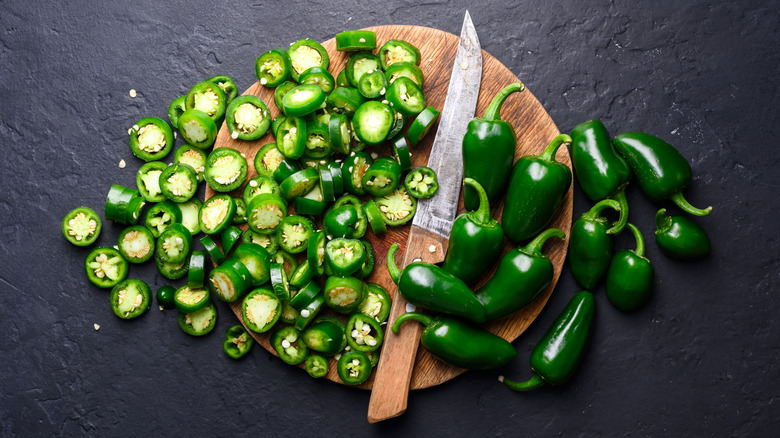
A simple fact of kitchen life is that a larger cutting board makes things a lot easier. The smaller the board, the more chaos that ensues. You see a cute, little cutting board and are immediately enamored. But the moment you start using it, you find that it is impractical, best left for taking Insta-worthy shots. Tiny boards may look adorable, but they are also an accident waiting to happen.
A board that is too small will have everything spilling over the side, no matter how careful you are. You spend more time chasing ingredients all over the counter than cooking. The workspace is cramped, and your ability to maneuver your knife is affected. A handy test to check if your board is appropriately sized, is to place your chef's knife diagonally across the board. If the tip and handle protrudes over the edges, then your board is too small. A properly sized board will give you place to chop the ingredients on one side, and pile all the chopped pieces on the other, with enough surface area for the knife to move naturally.
Think practical when it comes to choosing a board. A size of around 16 x 12 inches is a good choice for everyday cooking. It will give you a comfortable space to work in, and your cuts will be that much neater and your fingers safer for it.
Not using a board with wells

A board without wells is quite a messy proposition. You're busy cutting tomatoes and before you know it, you have tomato juice leaking all over the counter. This is where a simple feature like a cutting board groove can prove to be a lifesaver.
A cutting board with wells isn't just a fancy feature needed only by professionals. It is a practical one that can save you from a lot of grief by collecting all the liquids released by your chopped ingredients. It is basic spill management. Think of slicing anything juicy, such as fruit. The juices will collect in the grooves rather than spreading across the table and leaving you with a cleanup job. It isn't just the juicy stuff. Even veggies will release some water, as will that chicken you are carving. Without those wells, the liquid is going to get everywhere.
People tend to avoid grooved boards because of the perception that they will get a smaller chopping area. But the reality is that those tiny grooves do a world of good and are well worth the slight reduction in workable space. There is still enough room, with the added benefit of a barrier against potential bacteria-laden liquids spreading across and contaminating the kitchen counter. If you are using flat boards, try one with grooves, and use it in rotation with your other boards to see the difference.
Using an old or damaged cutting board
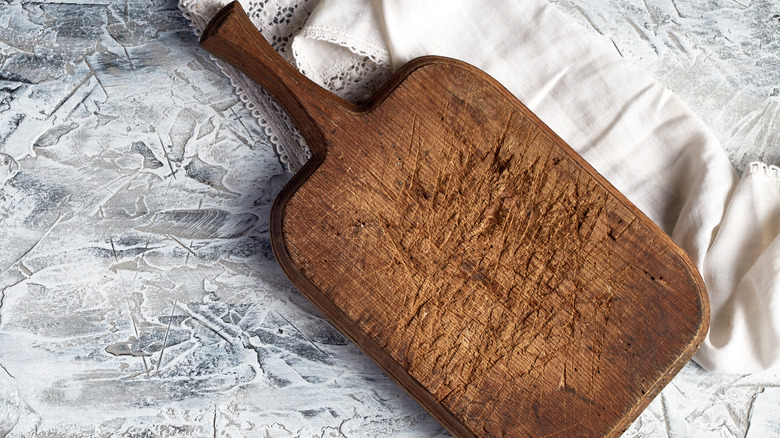
For many home cooks, their favorite cutting board is like a favorite pair of jeans, something that they refuse to let go of. But beyond a certain point, that kind of sentiment can turn into a health hazard. That deeply scarred cutting board that is taking on the appearance of an antique, weathered piece of furniture, is actually a breeding ground for all types of bacteria. The appearance of grooves on your cutting board is a sign that its days are numbered. Each groove becomes a trap for moisture, food particles, and microbes that flourish beyond the ability of your sponge to reach. More vigorous scrubbing will not help, since it'll just scar and pit the surface even more.
With wooden boards there is a possibility of revival. Light wear and tear can be sandpapered over, followed by a thorough cleaning and seasoning. But the advent of cracks or warping signals the end and you should just dump your board. A warped board, in particular, is a dangerous one. It can cause your knife to slip and controlling your knife becomes a difficult task. Remember that boards have a useful lifespan, with plastic ones having a shorter one than wooden ones. Once the signs appear, it makes sense to bid adieu rather to cling on due to some misplaced sentiment.
Not securing your board when cutting
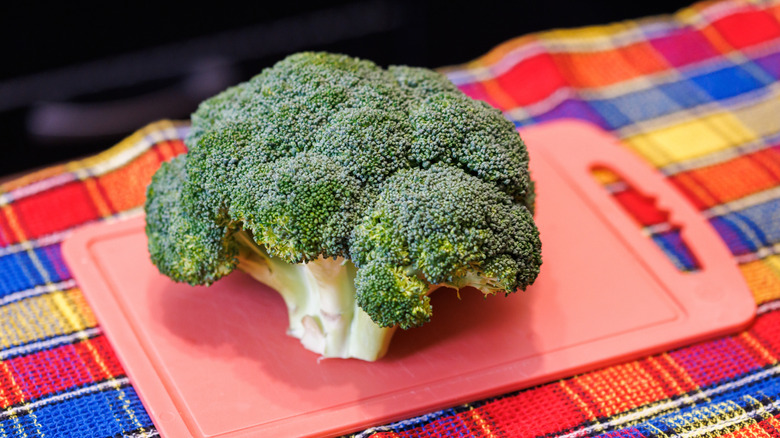
Chopping on a board that is not fixed and slides around on the platform is like begging for a trip to the ER. Even the most experienced of pros will have a tough time managing a workspace that keeps shifting under their knife. A sliding board isn't just an inconvenience, it is a major safety hazard that can turn your workspace into a disaster zone.
To avoid having your board slide from under your knife, take a few seconds to stabilize it before getting to work. Place a damp paper towel that has been wrung out and place it flat on the counter. Place your cutting board on top and you are set. The friction will keep your board in place. Alternatively, use a kitchen towel or a silicone mat under the board to eliminate any movement.
Some boards come with rubber feet or grips that serve the same purpose. Even if your board doesn't have them, you can easily retrofit them with stick-on or screw-in options. The trick is to ensure that your board sits evenly and remains immobile on the counter. Securing your board isn't some chef-only secret but a common sense technique they teach you in Culinary 101. A steady board makes for easier, quicker, and more precise cutting without compromising on safety. Those five extra seconds you take to prep your workplace will help safeguard your fingers as well as your sanity.
Popping your wooden board in the dishwasher
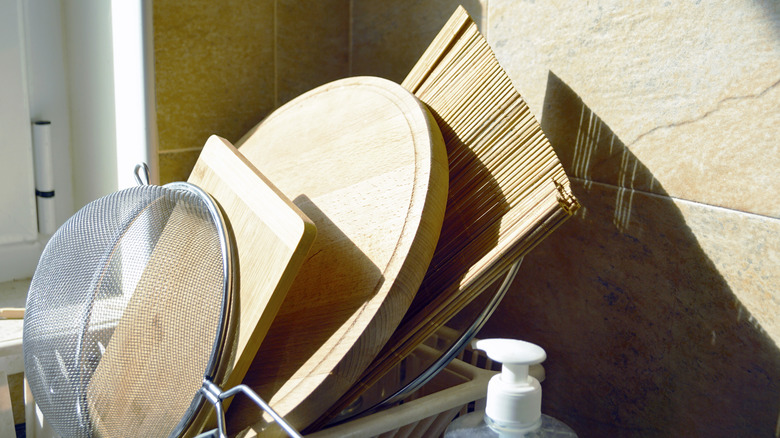
Using your dishwasher to clean your wooden cutting board may seem like an automatic choice, but it is something that is best avoided. The two are not made for each other. You are tossing wood into a high temperature, wet environment along with strong detergent, all of which are a threat to the material. What you will get is a board that is prematurely cracked and warped, without the natural oils that keep it protected.
Unlike plastic boards that can withstand the rigors of a dishwasher, wooden boards require gentler handling. They should be handwashed with warm and soapy water, with special attention paid to the nicks and grooves where food particles may hide. Once washed, rinse and dry the board by placing it upright in a place where air can circulate. This will keep moisture from accumulating and becoming a breeding ground for bacteria.
The key to maintaining a wooden cutting board is keeping it sanitized. To this end, it is best to use a quaternary ammonium-based sanitizer or a vinegar solution to kill the bacteria without harming the wood. These are better than the chlorine-based sanitizers which are not very effective on wooden surfaces. In addition, don't forget to sanitize the tools you use to scrub it. The sponges, brushes, and cloths used to clean the board all need to be sanitized, too.
Not using plastic cutting boards correctly
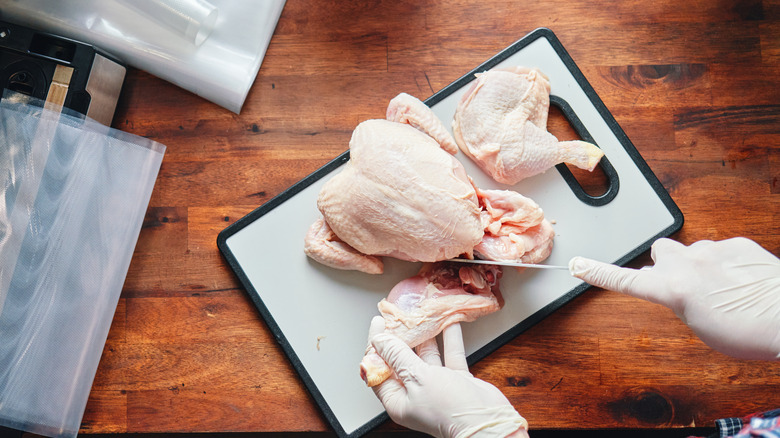
The convenience offered by plastic cutting boards cannot be overstated. Lightweight, easy to scrub, and even dishwasher safe, they make life just that much easier in the kitchen. But without understanding their quirks and learning how best to use them, you run the risk of compromising on both food safety and your long-term health. Just wiping it down with a bleach solution or popping it in the microwave isn't nearly good enough.
The problem arises from the innumerable cuts in the plastic left by your cutting, slicing, and chopping. The deeper cuts in the plastic leave crevices where bacteria can hide and proliferate, beyond the reach of regular cleaning agents. Heavily used plastic boards can harbor pathogens longer than wooden boards, and improper usage can turn them in to a health hazard.
Another concern is microplastics. Research shows that cutting on polypropylene or polyethylene boards releases millions of microplastic particles into the food you eat. The figures are scary. One person can consume over 80 million microplastic particles in a year just from using plastic cutting boards in the kitchen. Proper usage of a plastic board also demands using different boards for different foods so as to reduce cross-contamination. The easiest way to do this is to use color-coded ones for different foods.