

11 Ingredients That Will Take Your Thanksgiving Turkey To The Next Level
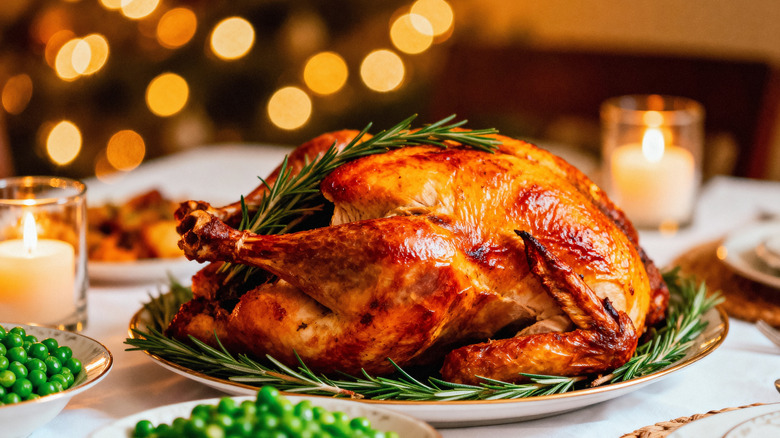
You know your way around a classic holiday turkey. You know how to thaw turkey in advance and then cook it to golden perfection. You've got the whole Thanksgiving routine — baking all those side dishes and pies on top of the turkey in the oven — down to an art. But now that you've mastered the basics, you want something a little more. You want to take your normal, basic turkey to the next level. You know there's nothing necessarily wrong with the turkey you've got, but what if you could make it a little better? A bit more exciting?
To find out what you should add to your turkey this season, we went to the pros, because, of course, when it comes to something as serious as the Thanksgiving turkey, you don't want to take advice from just anyone. We spoke with Rachel Ballinger, creator of My Everyday Ordinary Life and author of the "My Everyday Ordinary Life Cookbook;" Chef Manny Barella, as seen on "Top Chef;" Chef Luis Rodríguez Camacho, executive chef at The Grove Resort and Water Park Orlando; Chef Basil Dean of Margaritaville Beach Resort Nassau; and Chef Nicholas Miller of La Concha Key West, Autograph Collection. Here's what they had to say.
Garlic
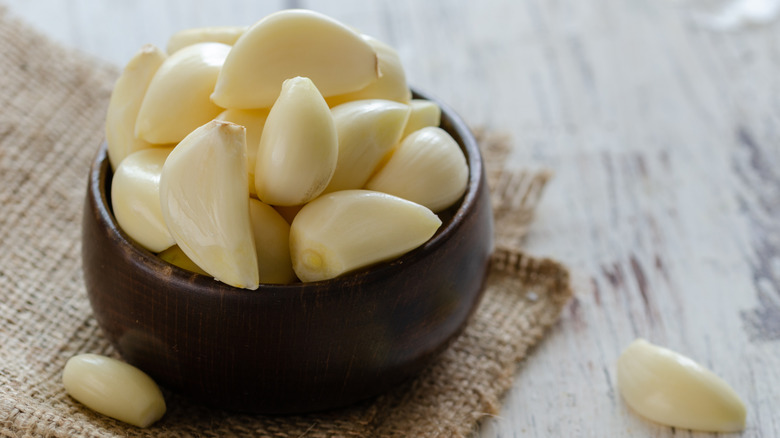
Many of our experts mentioned garlic as one of the ingredients they'd recommend you add to your Thanksgiving turkey this year. As Chef Luis Rodríguez Camacho said, garlic can make for a deep, savory flavor, and you can mix it with olive oil and rub it directly into and beneath the turkey's skin. Similarly, Chef Nicholas Miller said, "Garlic adds savory depth. Mash it into softened butter with citrus zest and spread it beneath the skin."
Just make sure you're buying the best garlic for your holiday bird. Now is not the time to skimp. To ensure you're picking the freshest, best bulb possible, look for intact skin and a firm feel. And while, yes, garlic begins to smell once you start working with it, when it's just sitting in the produce aisle, it should only have a very mild scent. A strong aroma is a sign of something gone wrong.
If you're doing your Thanksgiving grocery shopping in advance, you can keep your fresh garlic fresher, longer, by storing it in a garlic keeper. No garlic keeper? Store the garlic away from light but not in the fridge. Putting your whole garlic bulb in the fridge can lead to the garlic going bad faster than normal.
Olive oil
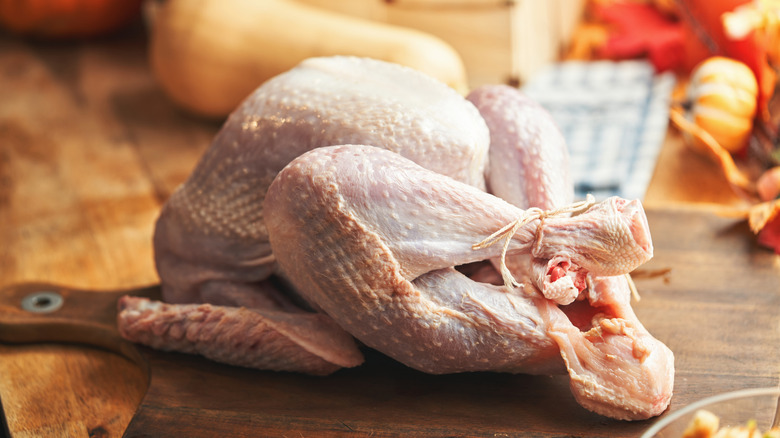
Even if you don't use garlic mixed with olive oil on your turkey, like Chef Luis Rodríguez Camacho suggested, using some olive oil is still a good idea. Your turkey needs a bit of fat in order for you to achieve that crispy, golden skin that everyone is aiming for. Oftentimes, we reach for butter to do this, but olive oil also works and, in some cases, people prefer it. In one Reddit thread debating the pros and cons of butter vs. olive oil for your turkey, a commenter noted that, while butter might bring the flavor, olive oil is easier to apply to the turkey uniformly (versus trying to get an all-even coat of butter all across the bird).
When applying olive oil to your turkey, Camacho just advised that you pat the turkey dry before actually rubbing the oil on. This is a good tip overall, whether you use oil or another fat on your turkey's exterior. All that moisture from the turkey thawing from its frozen state can prevent the skin from properly crisping — and no one wants a floppy, soggy piece of turkey skin.
Apples
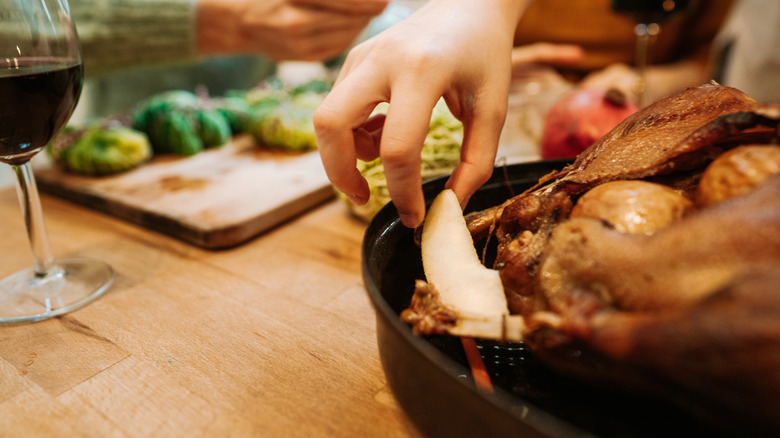
Some home cooks don't stuff their turkey at all and that's fine. You do you. Others stuff their turkey with the typical stuffing. However, if you've never thought about throwing some apple up in there, now might just be the year to try it out. It's what Chef Manny Barella does, alongside oranges, onions, and celery (as well as fresh herbs, which we'll get to in a minute).
But how do you incorporate apples into your Thanksgiving turkey and what variety of apples should you choose? This was a tip offered up by Chef Chris Scott of the Institute of Culinary Education, in an interview with Mashed, and he specifically recommended opting for a Granny Smith apple. He also said that you don't even need to chop the apple up — literally just tuck the apple (or apples) inside the bird and you're good to go. As Scott said, "When you put apples inside the turkey, the steam, vapor, and flavor from roasting the apples is being concentrated inside the turkey and being absorbed into the turkey meat."
The only thing to remember is, if you do put whole apples in your turkey, you should toss them after the turkey is done. Even though the turkey itself has finished cooking and is safe to eat, the apples may have some "innards" on them that you probably don't want to consume, according to Scott.
Peppers
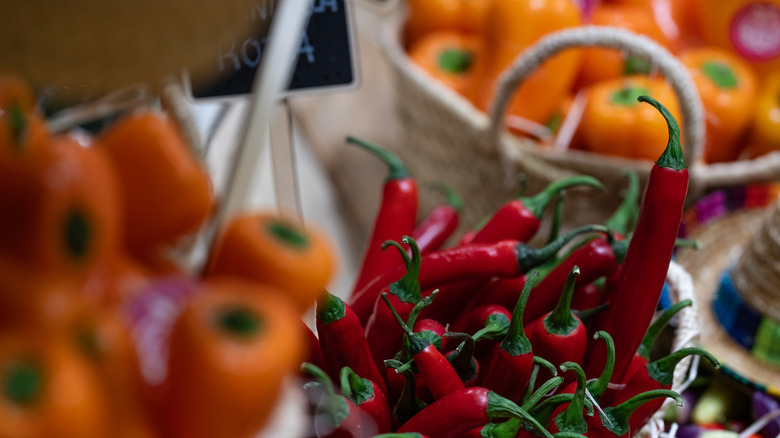
In addition to garlic and olive oil, Chef Luis Rodríguez Camacho recommends peppers as an ingredient to take your Thanksgiving turkey to the next level. He described, "Peppers bring another layer of flavor: Cook them with onions and a little tomato to create a criollo-style sauce that's delicious spooned over carved turkey."
Not familiar with "criollo"? Chef Luis's recommendation is most similar to salsa criolla, which is a South American-style salsa that combines peppers, onion, tomato, and garlic. However, there's also mojo criollo. Mojo criollo is a citrus and garlic marinade popular in Caribbean and Latin American cooking. You can actually buy bottles of mojo criollo from the brand Goya, but it's not difficult at all to make your own either, with just sour orange juice, onion, oregano, and garlic. Interestingly enough, while different from salsa criollo, mojo criollo combines a lot of the other flavors that our experts recommended adding to your turkey, so you really couldn't go wrong with either choice, if you decide to add them into your Thanksgiving feast.
Lime
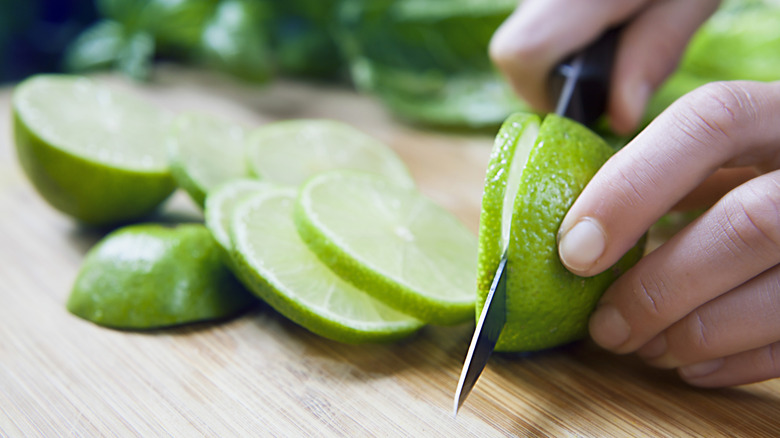
Then, there's the lime, which Chef Luis Rodríguez Camacho said you can add to a pepper-based sauce. However, overall, lime can enhance your turkey and Thanksgiving meal period, even if you don't make a sauce for serving. As Camacho noted, the lime "adds brightness and balances the richness of the bird and the sweetness of traditional Thanksgiving sides."
Beyond using a squeeze of lime juice in your turkey-adjacent sauce, home cooks on Reddit also report great success stuffing their turkeys with lime slices in place of lemon or orange slices (which are more traditional), explaining that the lime's pine notes complement rosemary and similar herbs well. One chef on Reddit did, though, caution that if you decide to stuff your turkey with limes, that you peel the limes first, as cooking them in a turkey over multiple hours can cause the bitterness of the peels to leech out into your meal.
Love these peppery, citrus-forward flavors? Take things a step further as you repurpose your Thanksgiving leftovers. Camacho said, if you make a pepper-based, criollo-inspired sauce, you can then cook your leftover turkey in it, on the stovetop, before serving the turkey and sauce over mofongo.
Guava
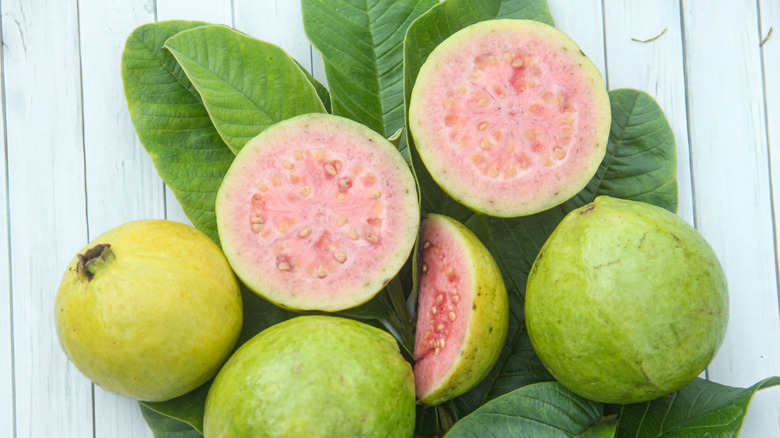
Guava might not be the first thing that you think to put on your turkey, but it may be what your turkey's been missing all along. According to Chef Basil Dean, "Guava preserves make a beautiful glaze, bringing tropical sweetness and a glossy finish. Brush a thin layer [onto the turkey] toward the end of roasting to keep the sugars from burning."
Again, while it might not be the standard tradition for everyone, adding guava to your turkey isn't completely out of the norm for many families, particularly if you have Caribbean or Latin roots. Families from Venezuela and Cuba name it as a go-to addition to their Thanksgiving meals, whether they're creating a glaze and adding it straight to the turkey or incorporating it into their cranberry sauce. (Even Bobby Flay has a recipe for cranberry guava sauce, or "relish" as he calls it.)
As Dean says, you don't want to put the guava glaze onto your turkey too early in the cooking process, if you choose to add it. The glaze can easily burn and leave you with a nasty-tasting turkey. Instead, aim to apply it just 20 to 30 minutes before the turkey is due to come out of the oven.
Old Sour
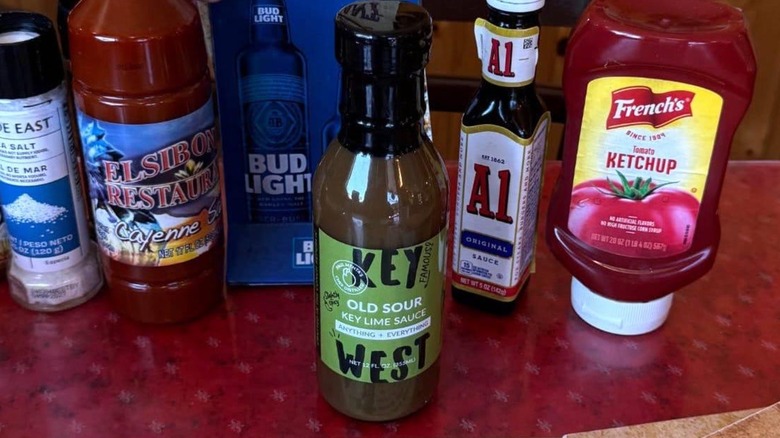
Out of all the ingredients on this list, this one might be the most unfamiliar to the majority of readers. So what is it? Old Sour is a Caribbean condiment with ties to both the Bahamas and Key West. It's a mix of citrus juice, peppers, and salt. You can order some online or make some at home (it's really not difficult) and, with these flavors, it falls in line well with some of the other ingredients that our experts recommend you use to amp up your Thanksgiving turkey.
You're not going to want to add this directly to your turkey, though. Instead, according to Chef Basil Dean, you should incorporate it into your gravy. He said, "Old Sour, a Bahamian lime-based condiment, adds a sharp, salty finish [to your turkey]. Stir a little into the gravy just before serving, tasting before adding more salt." If you combine the Old Sour with the aforementioned guava, some goat pepper (which he said can lend some "fruity heat" to your bird), and some fresh herbs, he continued, you're going to get a turkey that's just the right blend of "heat, sweetness, herbs, and acidity."
Sour orange
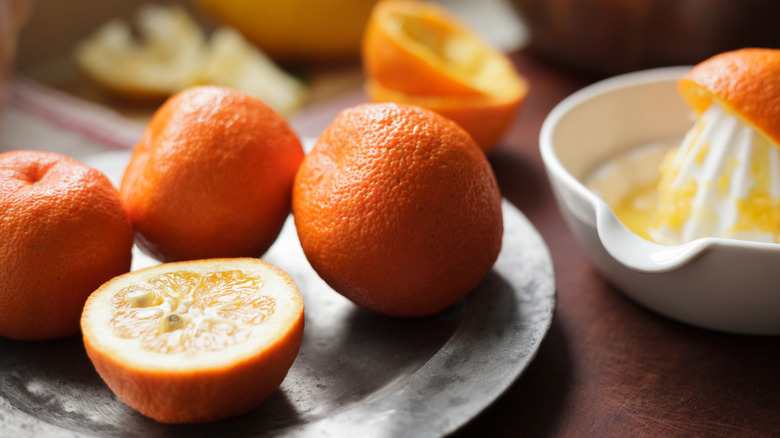
Sour oranges, also sometimes called bitter or Seville oranges, aren't your typical bag-of-oranges that you find in your Walmart produce section. Instead, these oranges may be a bit more difficult to track down. They're not ideal for eating just as is. You're not going to be peeling them into quarters and sucking the juice down before eating all the pulp. These oranges are best when they're used in broader dishes — like in or on your turkey.
Chef Nicholas Miller says that "sour orange brings [a] bright, tangy flavor associated with mojo and balances the richness of the turkey." He does, though, recognize that not all home cooks are going to be able to get their hands on some sour oranges, and so, "if you can't find [them], a combination of orange and lime juice is a practical substitute."
If, though, you do get your hands on some sour oranges, you may find that you have more on your hands than what your turkey requires. In that case, you can use them in other places. Discussing the topic on Reddit, home cooks noted that sour oranges are great for baking, infusing spirits, making duck à l'orange, and creating orange curd or candied peels.
White wine

If you're an avid home cook, you're probably no stranger to keeping a bottle of wine around just for use in cooking, but you might not pull it out on Thanksgiving unless you're stealing a nip or two just to take off the stress (no judgement). You might, though, want to incorporate it into your plans this year, beyond just taking a cheeky sip. According to Chef Manny Barella, it's part of his big secret to a truly juicy turkey.
"My grandfather, who was from Spain, taught my grandmother how to prepare turkey this way, and it's been our family tradition ever since," Barella explained. "We start by brining the turkey for 24 hours in a mixture of brown sugar, salt, and water. Before cooking, I combine equal parts white wine and melted butter and inject the mixture into the turkey as much as possible, until it's completely plump — almost like a balloon [...] The white wine and melted butter mixture is my secret to a perfectly juicy turkey. As it cooks, all those flavorful juices collect in the pan, which I then use to make the gravy. Injecting the turkey this way keeps the meat incredibly moist, tender, and full of flavor."
So make a quick trip to the wine store before you start cooking your Thanksgiving feast. Just don't plan on using that same wine for drinking during dinner. According to a sommelier, the best wine to pair with your Thanksgiving turkey is actually rosé.
Fresh herbs
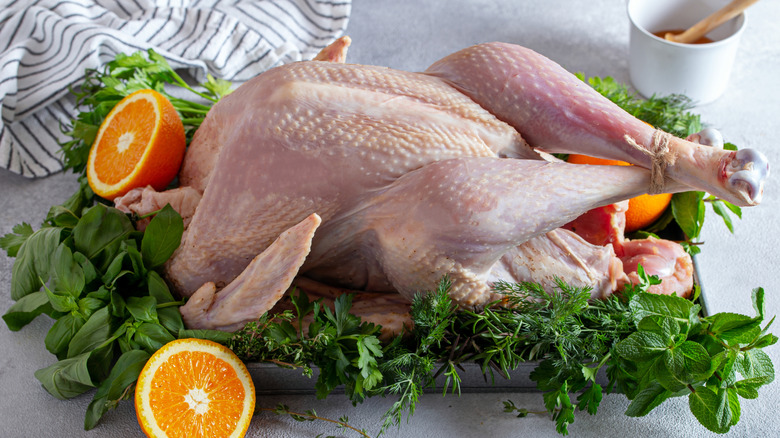
Multiple experts that we spoke to mentioned the importance of fresh herbs to your turkey. Yes, it's definitely easier to just use the dried herbs in the pantry, but you're here because you want to take your turkey to the next level, right?
According to Rachel Ballinger, if you're using butter as your fat of choice for crisping up your turkey skin, you'll want to mix your fresh herbs with that butter before rubbing the turkey down. She recommended fresh-chopped sage, rosemary, and thyme. Meanwhile, Chef Nicholas Miller recommended fresh oregano for "an aromatic, slightly peppery note."
Even if you don't rub your turkey all over with a mixture of fat and herbs, you can still tuck some into your turkey's cavity. For instance, Chef Manny Barella likewise recommended sage, thyme, and rosemary for this purpose. There are many fresh herbs that pair well with turkey overall. If you don't have the above on hand, you can also consider flat-leaf parsley, marjoram, and/or bay leaves.
Cumin
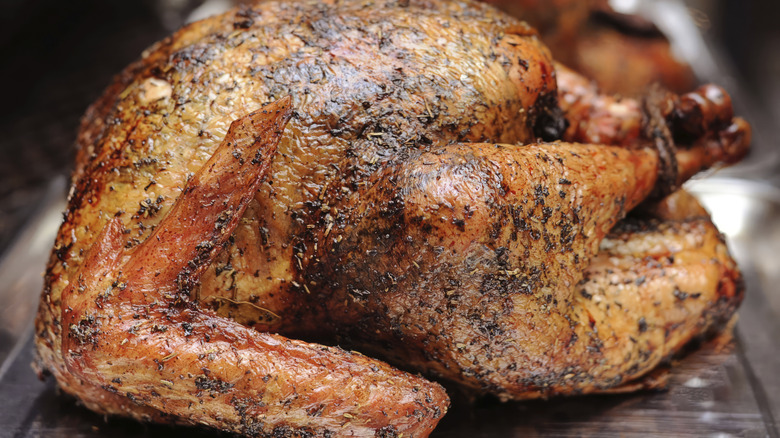
You might associate cumin with chili, Middle Eastern dishes, Mexican recipes, etc., but don't overlook it when it comes to your turkey. It doesn't fit into the very traditional lineup of herbs and spices that some may use for their Thanksgiving fowl, but Chef Nicholas Miller said that the cumin can add "earthy warmth without overpowering the bird." However, he did note that, if you add cumin to your turkey's seasoning, you will want to use a light hand, "so the other flavors still shine." If you take his other tips and also add sour orange, garlic, and fresh oregano to your Thanksgiving turkey, he said, you'll "get familiar Thanksgiving comfort with a lively Cuban-inspired flavor profile."
Even better? Once you're tired of Thanksgiving leftovers (hard to imagine, but it happens), around day three or four, you can turn that cumin-rubbed turkey breast into Thanksgiving nachos, combining the shredded turkey with chipotles, fire-roasted tomatoes, adobo sauce, and other ingredients, before piling it onto some chips alongside some salsa, cranberry pickled onions, cilantro, and crema.
Static Media owns and operates The Takeout and Mashed.