

The Most Memorable Mamas (And Papas) In Food And Drink History
We may receive a commission on purchases made from links.
We have a few affectionate names for mothers, but perhaps the one that hits home the most is good ol' "mama." And, the idea of a home-cooked meal can bring to mind our own mamas (or grandmamas), and the ways they add their special touches to perfect our favorite dishes. Oftentimes, someone's mama makes something so good, it needs to be shared beyond mama's own household. Some of these mamas opened their own restaurants, while others turned their secret recipes into retail products. Sometimes, there's not even a real mama behind the name at all, but still, the made-up motherly moniker seems to help evoke a sense of the comforts of home.
While there are plenty of memorable mamas, let's not forget about the proud papas out there who made their mark, too. We pay tribute to the most memorable of both, by honoring the mamas and the papas who truly made a name for themselves.
Mama Celeste
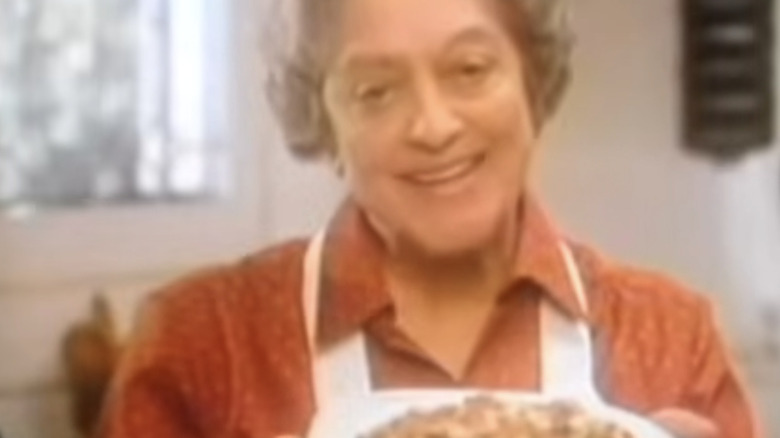
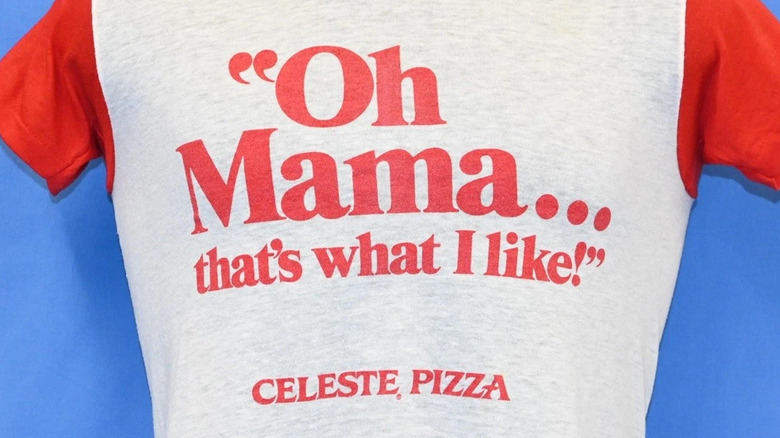
Celeste Lizio, who grew up in Naples, Italy, began cooking with her mother before age 8. She and her husband Anthony settled in Chicago, and ran a grocery store, before buying a small tavern in 1937. Initially called Kedzie Beer Garden, it was later changed to Celeste's. The popularity of her Italian dishes led the family to branch out into frozen foods, which they sold to other Italian restaurants.
In 1960, the Lizios began selling frozen foods for retail, including pizzas. Nine years later, Quaker Oats bought their operation, but kept Celeste on as a consultant and spokeswoman in TV and print ads into the '80s. Celeste passed away in 1988, but the pizza carrying her name would be a familiar sight in grocery stores and home freezers for decades. Sadly, all things must come to an end, and in 2026, the brand's owner Conagra confirmed that this beloved frozen pizza brand would officially be discontinued.
Mamma Leone's
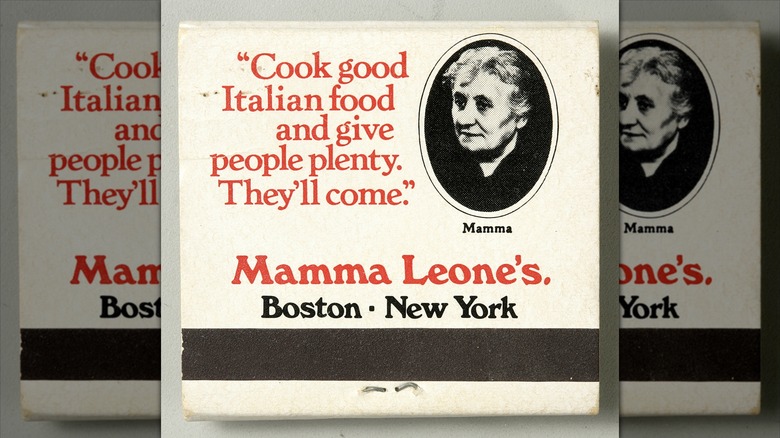
Luisa Leone, also known as Mother Leone, began her restaurant in the family's New York City apartment living room. The operation eventually blossomed into Leone's, a very large and popular establishment, at 239 West 48th Street. According to the New York Times, the restaurant at one point featured 11 dining rooms and 1,250 seats, and served almost 700,000 meals a year to the likes of Will Rogers, Elizabeth Taylor, and Joe Namath, who dined there after winning Super Bowl III.
After Luisa Leone passed away in 1944, the restaurant was renamed Mamma Leone's in her memory. "She liked the rustle and bustle of this place," said her son Gene, in her obituary. It stayed in the family's hands until Restaurant Associates took over in 1959. Mamma Leone's moved to its final resting place on 44th Street in the Milford Plaza Hotel, in 1988, before closing its doors for good, six years later.
Mama Sbarro
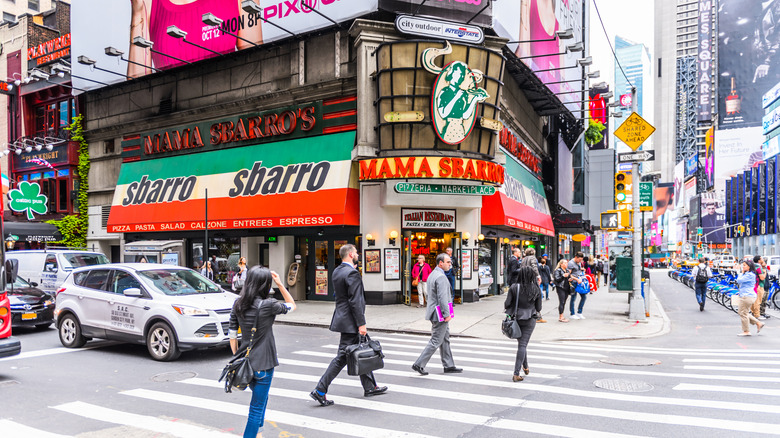
Long before Sbarro was a ubiquitous mall food court staple back in the '80s and '90s, it was a legitimate mom-and-pop salumeria in Bensonhurst, Brooklyn, that opened in 1956. Gennaro and Carmela Sbarro operated the shop, which eventually branched out into hot Italian classics like lasagna and pizza. The popularity of these dishes led to a giant franchise, with the first mall location opening in 1970.
While the business boomed, Carmela still ruled the roost at the original location, even churning out 3,000 cheesecakes a week during the '90s. She proudly told the New York Daily News in 1991, "I liked to be called mama." Mama Sbarro's nickname was also used in marketing and advertising, and even became the name of one of Sbarro's sit-down dining concepts. Mama Sbarro passed away in 2012, but her name lived on, adorning the facade of its flagship Times Square location, which had a good run from 1996 until it closed 2019.
Mama Ninfa
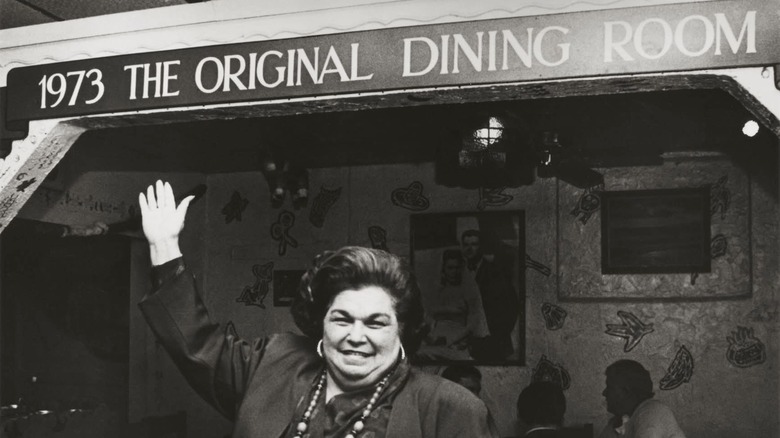
Ninfa Laurenzo was a struggling single mother of five trying to keep the family business afloat, but that changed when she added a small restaurant to her tortilla factory in 1973, drawing in Houstonians of all walks of life to try her Mexican dishes. She's often credited with introducing her most renowned dish to the U.S. dining scene: tacos al carbon, made with grilled skirt steak wrapped in tortillas. Her fans included George H. W. Bush and Chili's founder Larry Lavine, who added a similar fajitas dish to his restaurant's menu, helping to popularize it nationwide.
Mama Ninfa and her children expanded the business to 50 locations, and at one point even branched out into other dining concepts. She passed away in 2001, but her legacy still lives on. Her daughter, Phyllis Laurenzo Mandola, told the Houston Chronicle in 2014, "The whole city called her Mama. She was Mama to everyone, even people older than her."
Mama Sita's
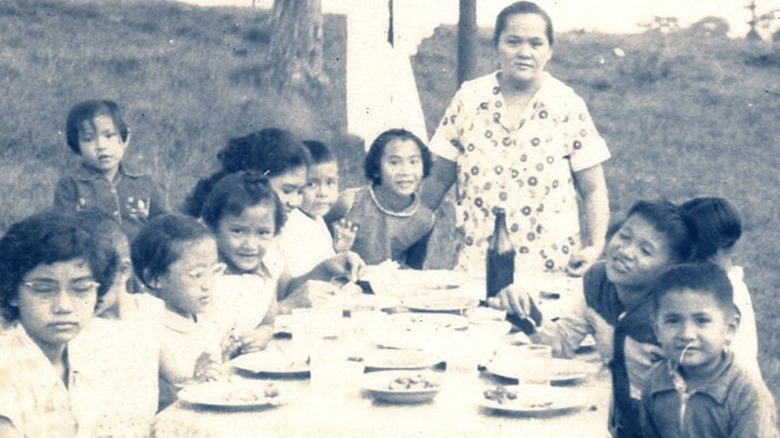
Teresita Reyes was the daughter of a chef known as the "Grand Dame of Philippine Cuisine," but she made a culinary name for herself. During a fateful 1973 trip to the U.S., she was aghast to see fellow Filipinos indulging in American fare such as burgers and hot dogs. She decided to help spread the flavors and ingredients of her homeland around the world. Her daughter, Clarita Reyes-Lapus, recalled to Gulf News that Teresita once said, "We must make condiments from the Philippines that provide nourishment and help people remember the country.
Teresita partnered with her biologist son-in-law Bart Lapus to form the Marigold Manufacturing Corporation in 1980 to produce sauces and mixes for sale, with its primary brand named in her honor — Mama Sita. It went on to become a global brand, with best-selling items including its kaldereta mix, sinigang sa bayabas, and oyster and palabok sauces.
Mama Mary's
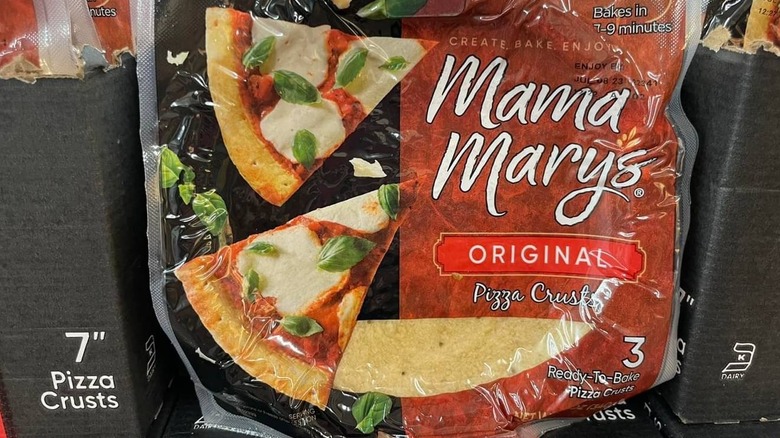
Spartan Foods of America, Inc. introduced Mama Mary's Gourmet Pizza Crusts in 1990, which quickly became a hit with consumers. Within a few years, Mama Mary's ready-to-bake products could be found at grocery stores in 38 states, and budding home pizzaiolas got creative with a popular recipe contest. Dorothy B. Harris' one for a Caesar salad pie prompted Good Housekeeping Magazine to dub it the recipe of the '90s. By the end of that decade, the Mama Mary's brand had expanded its reach to refrigerated homestyle pancakes.
In 2015, Spartan and Mama Mary's were acquired by B&G Foods, Inc. In a statement, CEO Robert C. Cantwell noted, "The Mama Mary's brand complements very well our existing portfolio of brands, including our Don Pepino pizza sauce." Today, the core product remains crust, as well as branded sauces and pepperoni, sold at over 20,000 supermarkets across North America.
Mama Mancini's
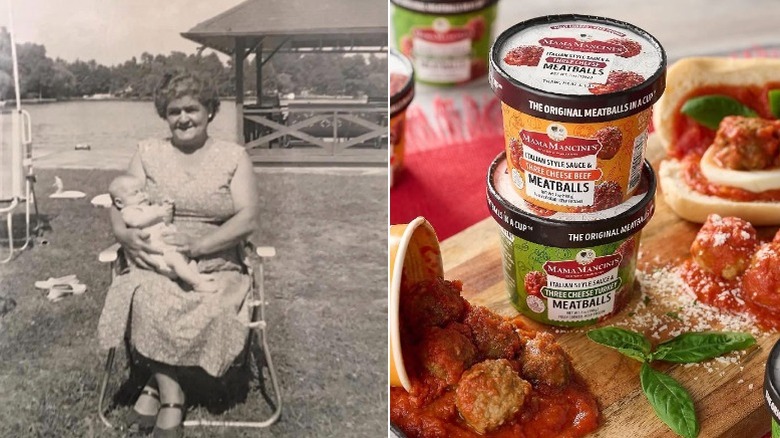
Anna Mancini emigrated from Italy and settled in Bay Ridge, Brooklyn, in 1921. She was a fixture in the kitchen, and the aroma of her meatballs lured her grandson Daniel into a love of cooking, too. At 15, Daniel asked her to teach him her recipes. He recalled to the Wall Street Journal in 2010, "I just felt that if I didn't learn all the recipes, they'd be gone."
After a long career in the garment industry, Daniel Mancini decided in 2008 to get rolling with a second act centered on meatballs, made with real ingredients. In honor of his nonna, he named the company Mama Mancini's. In 2023, after expanding its holdings, products, and services, the business renamed its parent company Mama's Creations, Inc. Today, Mama Mancini's image and legacy are carried on in the product that, as its website states, comes "from Anna's heart to my heart to your table."
MaMa Rosa's
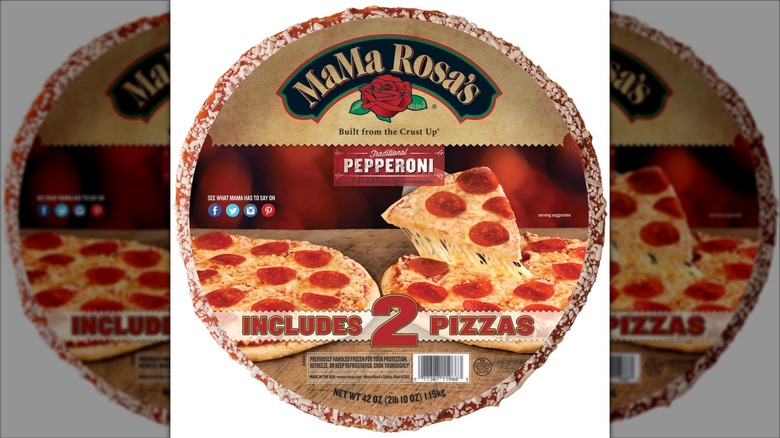
There's little clarity on when MaMa Rosa's pizzas started making the rounds, with frozen ones under that name being sold as early as 1959. The refrigerated one, stylized as MaMa Rosa's, came to be in 1979, thanks to restaurateur-turned-manufacturer Gilardi's Pizza. It would become the nation's best-selling refrigerated pizza brand, and at one point had a sub-label called Mama Angelina's.
In 2017, frozen food giant Schwan acquired MaMa Rosa's Pizza, Better Baked Foods, and Drayton Foods to increase its pizza holdings. MaMa Rosa's was forced into retirement in 2021, and the company noted in a statement: "Because of the prolonged impact of COVID-19 and our continued focus on the production of our most popular items, we made the difficult but critical decision at the end of last year to discontinue items made under the MaMa Rosa label." Shortly thereafter, despondent fans united behind a Change.org petition in support of MaMa's return.
Mama Dip's
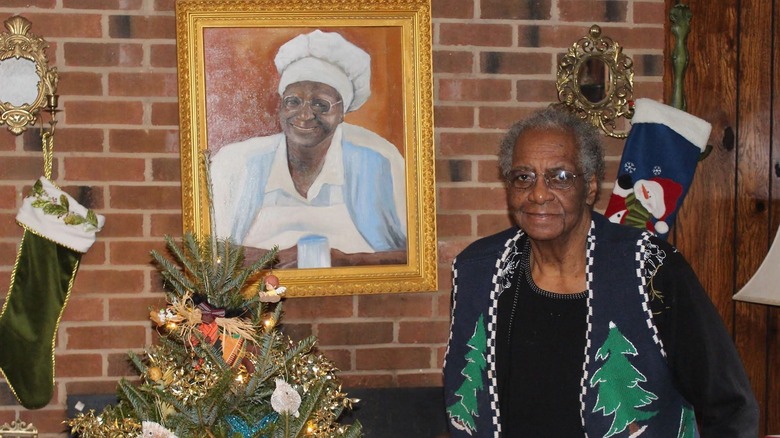
Mildred Council discovered she had a knack for cooking at age 9, at first nourishing her family, and later, everyone else, at Mama Dips, her own Chapel Hill restaurant that opened in 1976. The name was derived from two nicknames bestowed upon her. The "Dip" came from her ability as a child to reach into a rain barrel with her long arms and dip out water. The "Mama" part came later from her children and customers, who used it as an affectionate moniker for the chef.
Mama Dip's name adorned cookbooks, barbecue sauces, and cornbread and pancake mixes. Council passed away in 2018, and her family carried on her legacy with the restaurant until 2025, when the family announced in an Instagram post that it was closing its doors after 49 years of. Historians Marcie and William Ferris noted in a tribute in Southern Cultures, "The seeds Mama Dip planted and sowed grew roots that extend across Chapel Hill, a city where food and story will forever be associated with her powerful culinary voice."
Mama Cozzi's
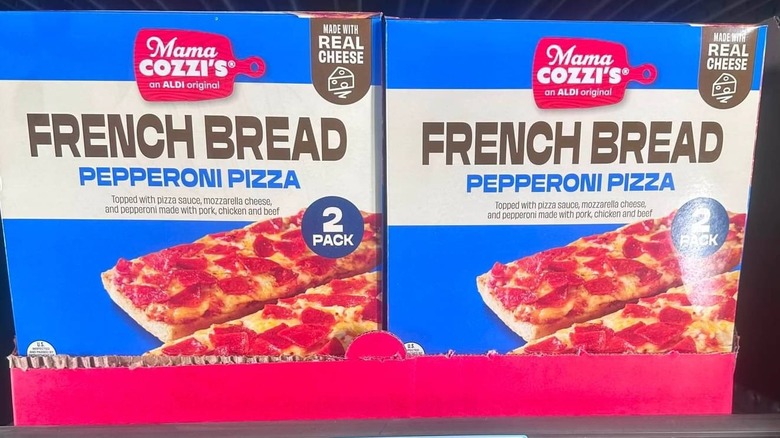
If you're strolling down the frozen food aisles of an ALDI, you've probably already made eye contact with Mama Cozzi. She has been the supermarket chain's name for pizza since 1990, when Mama Cozzi's was marketed as a lower-priced alternative to a Tombstone Pizza.
Like most of the private label brands on its shelves, ALDI had someone else actually make the pizzas. Mama Cozzi's real mother (manufacturer) — Nation Pizza — was revealed to the public in 2015 due to a recall. By 2017, Mama Cozzi's official name got a culinary upgrade when it was formally changed to Mama Cozzi's Pizza Kitchen. Today, her good name appears on all kinds of products. Most revolve around standard frozen pizzas, but she can also be seen on speciality ones like stuffed crust, rising crust, deep dish, breakfast pizza, and even Halloween-friendly pizzas shaped like ghosts. Mama's line also includes calzones, bread sticks, and sliced pepperoni.
Mama Rosie's
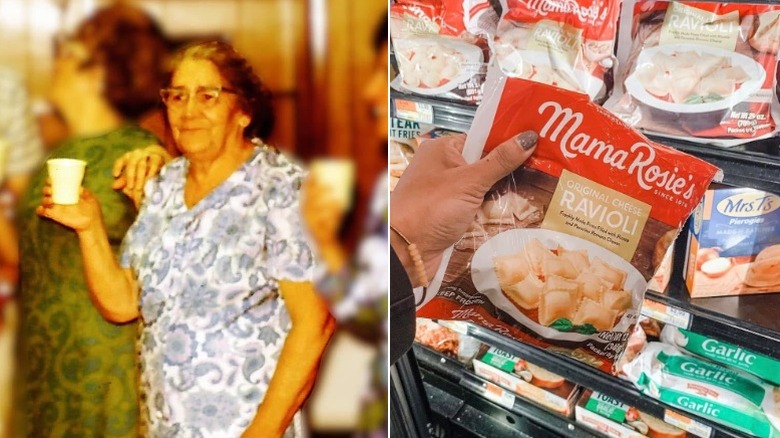
A bad batch of store-bought ravioli in 1976 led one family to fill a void in the Italian food market. Rosina Cammarata Sardo was so fed up with the available options, that she inspired her children to take her recipes and turn them into a full-fledged pasta business. When naming the company, the family went right to the source. Her son Charles Sardo told The Boston Globe in 2001, "Most of these businesses," he said, "they make up people. [But] Mama Rosie was a real person."
Rosina passed away in 1991 at the age of 94, but her recipes and spirit remained very much alive at the company, with her portrait hanging at the company's headquarters. In a 2023 Mother's Day Instagram post, the company called her "a true matriarch who embodied motherly love and care, especially in her kitchen — where she welcomed everyone with open arms and a home-cooked meal. Her warm smile and delicious food brought people together and created cherished memories."
A&W's Papa and Mama Burger
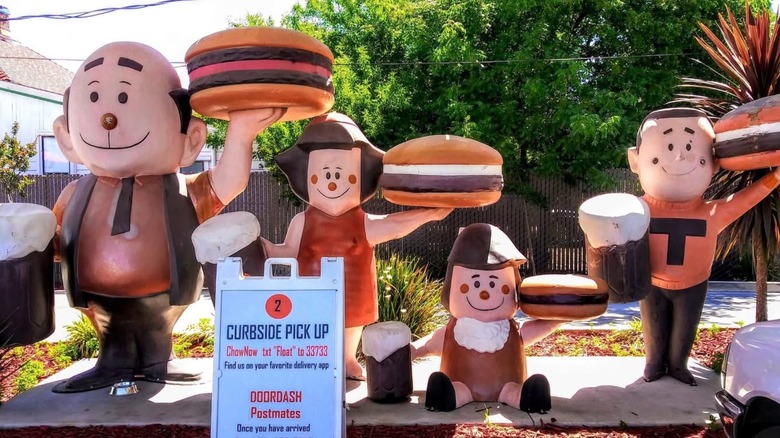
A&W Root Beer traces its origin to a 1919 roadside stand, and got into the franchising game in 1925. Its most well-known mascot, Rooty the Great Root Bear, was born in 1974, but there was a whole clan representing the restaurant chain starting in 1960 — the Burger Family. Each member of the family, Papa, Mama, Grandpa, Teen, and Baby represented a different size or variety of burger.
Stores were even decked out with large statues of the family, but they started to fade from view once the spotlight shifted to Rooty. The statues have since become collector's items, and have been displayed as public art in Hillsboro, Oregon, and with a lone Papa residing at the New York State Museum in Albany. Today, the Papa Burger still holds a place on U.S. menus, while the entire family still holds court on Canadian ones.
Papa Johns
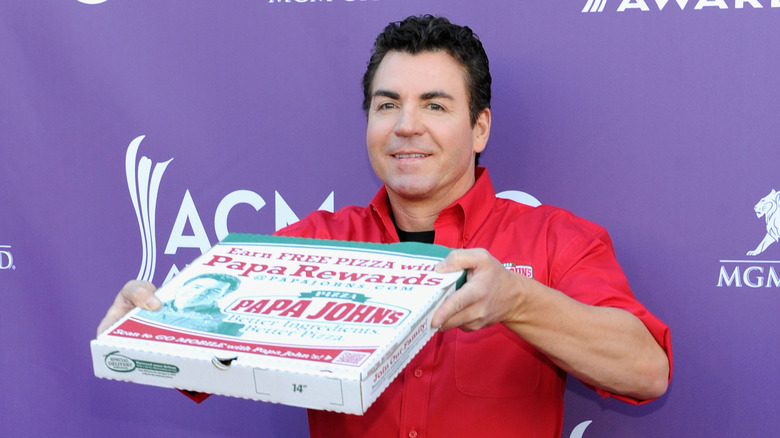
In college, John Schnatter had designs on opening his own pizza place, with recipes and a business plan at the ready. What he didn't have was a brand, and got help from a marketing major at Ball State, who came up with the name and logo for Papa John's. In 1984, he started making pizzas at his father's bar, which served as the impetus for his eventual namesake giant chain.
In 2015, Schnatter was the commencement speaker at Ball State's graduation and revealed that he was never able to find the person from Chicago who came up with the name and logo, but that he had promised him free pizza for life. Even if he did ever come forward, it's not clear the bargain would be fulfilled, after Schnatter used a racial epithet in 2018 and was forced out of the company. In 2021, the chain lost the apostrophe in its name, prompting Schnatter to say, "they can't have Papa Johns without Papa John" (via Fox2now).
Papa Gino's
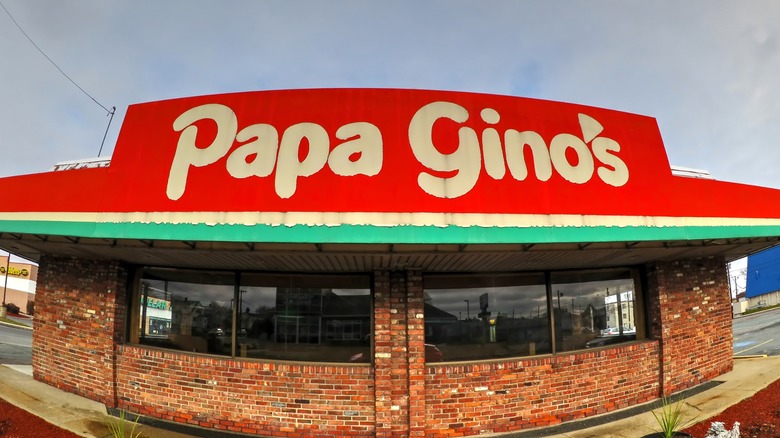
Mike and Helen Valerio emigrated from Italy, and along with his brother Gino, set up a pizza shop called Piece o' Pizza in east Boston, Massachusetts back in 1961. When the chain started franchising, the name didn't exactly stick, and it needed a new one. Inspiration came in the oddest form — when the chain was ordering tables from the Formica Co. The Valerios had requested that the company manufacture tables that looked like red and white checkered tablecloths seen in traditional Italian restaurants. The specialized order arrived with the label "Papa Gino" written on it. The name was catchy enough for the Valerios to possessively rename the business Papa Gino's in 1968. For the record, it had no connection with the other Gino's, a burger chain named after former NFL star Gino Marchetti.
Papa Gino's would expand into malls, neighboring New England states, and even New York and Florida, with over 300 locations at its height. The chain filed for bankruptcy in 2018, and as of 2026, has 78 locations in operation.
Papa Murphy's
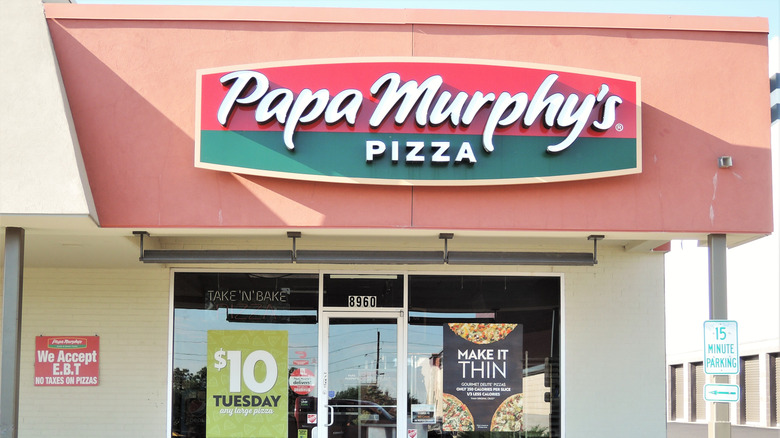
Pizza delivery became a big business in the '80s, as did the "take-and-bake" concept. Customers would buy a pizza kit in a store and do the work themselves at home, saving a few dollars in the process. One of the fastest rising chains was Papa Aldo's, with its chef-kissing mascot first hitting the scene in Hillsboro, Oregon, thanks to owners John Gundle, Gary Purdy and Joe Spieker, back in 1981. Three years later, and a bit further south in Petaluma, California, Bob Graham launched Murphy's Pizza and also found success in the take-and-bake model.
In 1988, Terry Collins acquired a controlling interest in Murphy's Pizza, then Aldo's Pizza two years later. In 1995, the two chains merged to form Papa Murphy's. With over 1,000 locations it remains the biggest take-and-bake chain, and in 2024 it was ranked as the sixth-largest pizza chain overall in the United States.
Papa's Pilar
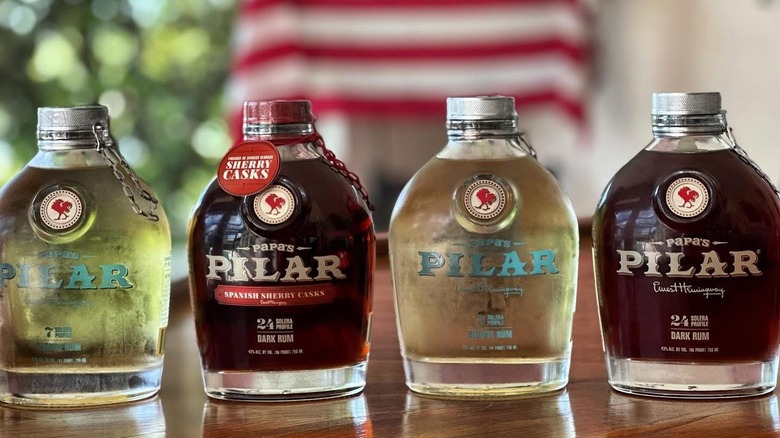
Ernest Hemingway led quite the adventurous, globe-trotting life and enjoyed a cocktail called Death in the Afternoon, as well as dry martinis, and rum drinks. Hemingway died in 1961, but his libation-loving spirit lives on in Key West bar haunts, and, since 2013, via Papa's Pilar, a rum that carries a combo of both his nickname, and the one of his beloved fishing boat.
The line of rums, bottled in the shape of a World War II canteen complete with a screw top closure modeled after the traditional ones, was developed and licensed in partnership with the Hemingway family. In 2013, Carter Nance, executive vice president, told The Miami Herald, "We created the brand name and the brand story and then ensured that the rum was delivered on it." She added, "We made the product fit. The idea is that if you bake the brand into the product, it's a more compelling story."
Papa Romano's
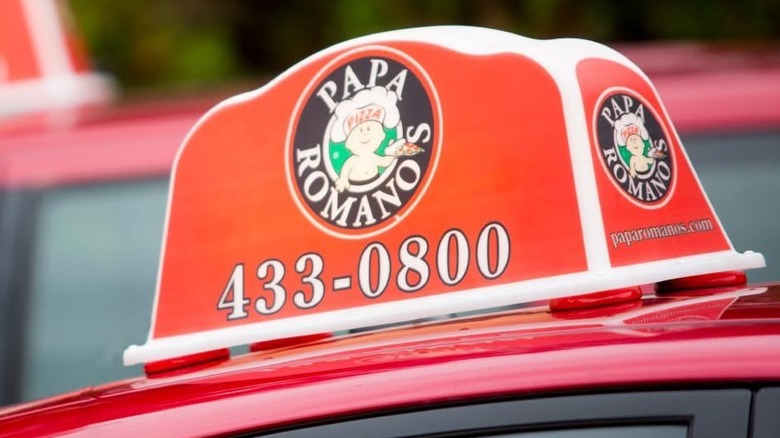
Michigan is a surprising bastion of famed pizza makers, with Domino's, Little Caesars, Hungry Howie's, and Papa Romano's all hailing from The Great Lake State. If you're searching for whom the real Papa is, the latter's website spins a mighty yarn about a Sicilian baker with six little bambinos, who after spreading their "mama's" sauce on his baked goods he became a pizzaiola, claiming to invent pizza itself. He was apparently convinced to leave home, and bring his goods in America.
In reality, the father of Papa Romano's was Ronald Hancock, who opened the first location in 1970 in Southfield, Michigan. Within a decade, he had four restaurants, and was poking fun at rivals, hanging posters that claimed its pizzas were a bigger value. In February 2007, Casey Askar purchased the chain from Hancock and merged its operations with Mr. Pita restaurants, which still runs it, with over a dozen locations in Michigan.
Honorable mention: Pappy Van Winkle
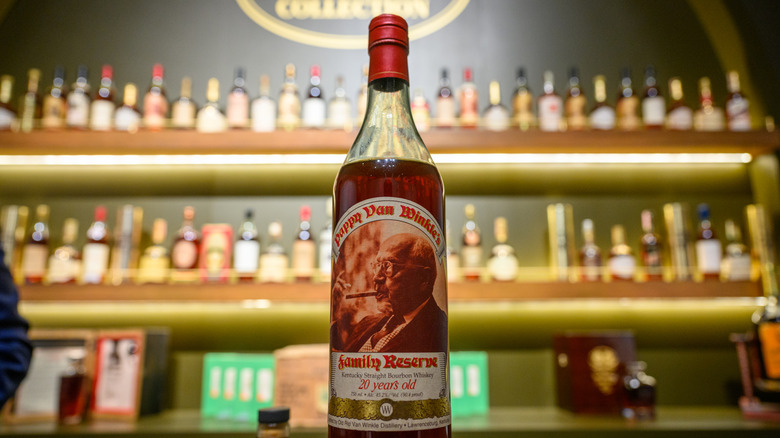
One of the most popular and pricey names in bourbon, Pappy Van Winkle takes its moniker from Julian P. Van Winkle, Sr., who was affectionately known as "Pappy." A liquor salesman turned distiller, his Stitzel-Weller Distillery had a long run, producing such brands as Old Fitzgerald and Cabin Still, even beyond his passing in 1965.
When the distillery and its brands were sold in 1972, Pappy's heirs resurrected the one pre-Prohibition brand they had the rights to: Old Rip Van Winkle. In the mid-1990s, the aged products in the catalog were renamed for Pappy. In 2002, the Van Winkles and Buffalo Trace entered into an agreement where the latter distillery was entrusted with following the recipes, production, and aging processes of the family brand, and continues to do so to this day.