

15 Food Court Treats Everyone Was Eating At The Mall In The '90s
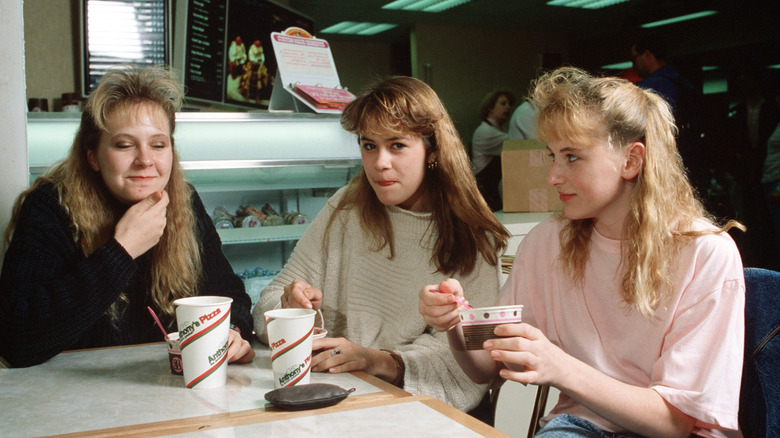
One of America's favorite pastimes is shopping — and for a period, the ultimate place to do so was at the mall. Developer James W. Rouse and the Rouse Company helped to pioneer modern indoor shopping malls in the 1960s, and expanded their footprint across the country in the following decades. The Rouse Company looked to keep customers around the mall for longer periods while they were on their shopping trips, and thus, created a centralized location for them to take a break and grab a bite to eat. Rouse's communications director told Shopping Centers Today in 2004, "Jim Rouse wanted to create what he saw as community picnics."
The idea of these so-called fast food clusters caught on, and had fun names to match, like Pic Nic at New Jersey's Paramus Park Mall. By the 1980s, these central eating spaces earned the name we all know today — the food court. It became the place where mall rat teens flocked for an afterschool hang, and for families to congregate for dinner. With so many options, there was something to suit everyone's tastes.
By the 1990s, mall food courts had perhaps hit their zenith in terms of selection, sales, and scrumptiousness. The treats from that era helped shape appetites well into the following century, even as people started to abandon malls and do their shopping online. So, let's rev up the food memory time machine and revisit the mall of the '90s, as we eat and sip our way through the food court.
Burgers
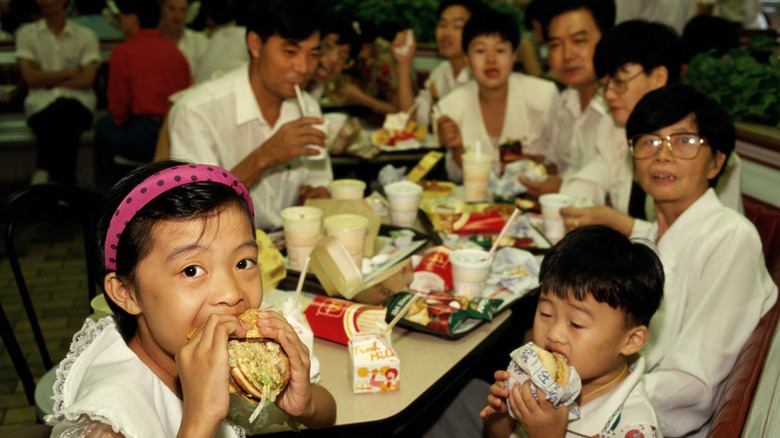
While there were plenty of other vittles vended at food courts in the 1990s, shoppers often went for an American classic to satisfy their hunger — the hamburger. During this era, familiar names of burger joints included McDonald's, Burger King, Wendy's, and Carl's Jr. and its eastern U.S. equivalent Hardee's. Simliar to a shopping mall experience in the 1990s, these chain burger joints offered the same core menu at every location with items that were consistent in flavor, no matter which one you visited.
Beyond the national chains, some regional favorites included Jacksonville, Florida-based Flamers Charburgers and its sister company, Flamers Grill, along with Roy Rogers in the D.C. area. Johnny Rockets, which not only served up burgers, but a lot of nostalgia too — with its 1950's diner-style vibe — got into the food court burger game, too.
Super-sizing menu items was also taking hold in the '90s, popularized by McDonald's, with multiple burger patties always at the ready to be stacked. But the marketing trend was eventually phased out, as consumers started to become more leery, as thoughts of health concerns came along with super-sizing.
Cheesesteaks
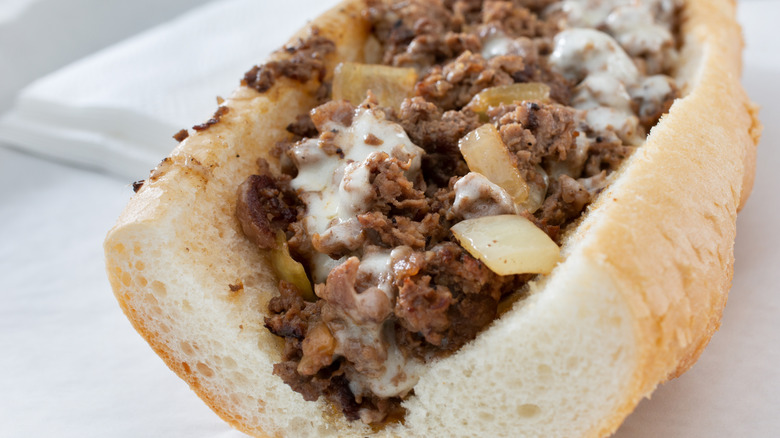
While totally a sandwich, cheesesteaks are so singularly delicious, some think they deserve to be treated as their own category. Philadelphia is known for the best, but that doesn't mean you couldn't get a darn good one at your nearest mall food court. For those in nearby South Jersey, there was the aptly named Philly Steak & Gyro, which was still winning local awards for its subs at the end of the '90s.
The Steak Escape got its start in Columbus, Ohio, and by 1993, had expanded to 90 locations nationwide. Over a decade later, the company wanted to shake its food court image and tried its hand at a restaurant concept, Steak Escape Grille. Another Ohio-born and bred cheesesteak spot was the Great Steak & Potato Company. It's still aiming for the same greatness today, but has since dropped "& Potato Company" from its name. Also a common sight back in the food court heyday was Charley's Steakery, which began franchising in 1991, and has since ditched its apostrophe, but not its mojo, as Charleys Cheesesteaks.
Fried chicken
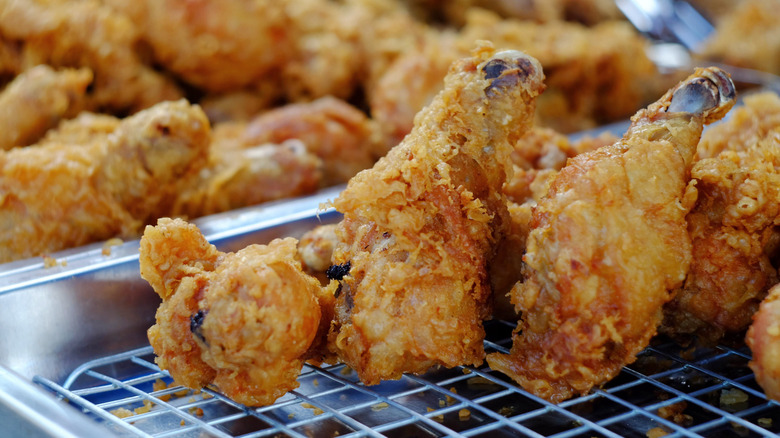
The 1990s saw a particular explosion of places where poultry was battered, fried, and enjoyed in its many forms. Maryland restaurant owner John Roach told The Washington Post in 1994, "I think chicken will become the fast food of the 1990s." He wasn't wrong. If you were at a mall food court during this era, there were plenty of chicken options from which to choose. Some of those were common grabs, like McNuggets from McDonald's, tenders from Burger King, or whatever the Colonel was serving at Kentucky Fried Chicken, which renamed itself to just the acronym KFC in 1991.
Georgia-based Chick-fil-A became a steady presence in malls in the '90s, opening its first location in the food court of Atlanta's Greenbrier Mall in 1967. The chicken sandwich was in such high demand, the company began to expand into food courts of a different sort — on college campuses, opening at Georgia Tech in 1991 — except on Sundays, of course.
Cinnamon rolls and buns
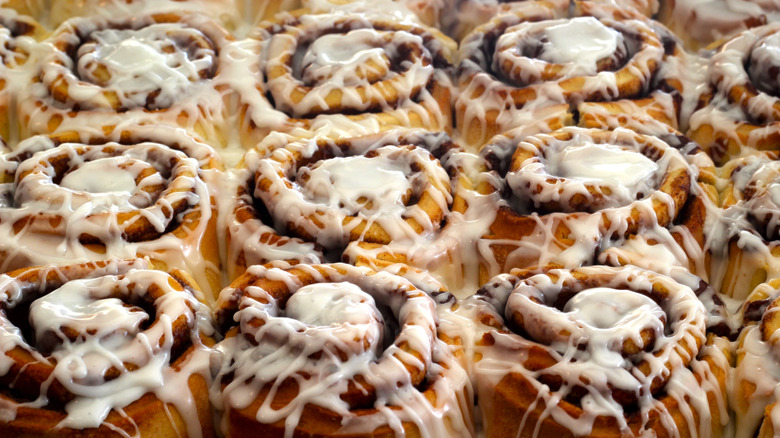
The cinnamon roll started making some serious dough at malls in the mid-80s, when T.J. Cinnamons Bakery arrived on the scene. The original location didn't have a ventilation system, which led to the sweet cinnamon and buttery aroma becoming the signature-scented siren call to lure in customers for time immemorial.
In these glory days of the food court, most of us probably recognize Mrs. Fields of cookie fame, but there was another baker making a name for herself — Mrs. Gayle Powell, who, with her husband Dick, founded Mrs. Powell's Delicious Cinnamon Rolls. Los Angeles Times reporter Leonard Reed perfectly summed up the beauty of a Mrs. Powell's treat in 1993, describing it as "a culinary acre of dough and sugar capable of sending any metabolism reeling with pleasure before pushing it over the great glycemic cliff and into an abyss of carbo stultification."
Rich Komen and his son, Greg, were interested in franchising both T.J. Cinnamons and Mrs. Powell's, but when neither worked out, they blazed their own path. The two ended up creating quite the behemoth of the business — Cinnabon, which often drew the longest lines in the mall in the mall rat heyday.
Cookies
Before cinnamon rolls were deliciously permeating the mall air with their alluring aromas, hot and fresh cookies solely owned that role. The most obvious and beloved name in the crumbly game was Mrs. Fields. The brand, with its standout red design, was omnipresent in the '80s; and by 1993, it had 780 locations in operation, many of which could be found within stalls in the food courts of malls.
While Mrs. Fields had plenty of fans, that didn't mean there wasn't room for even more cookie peddlers, including rivals The Original Cookie Company and The Great American Cookie Co., with the latter best known for its famous Original Cookie Cake. Founder Michael Coles told The Los Angeles Times in 1993, "One of the reasons we became so successful is that we had to keep up with her," referring to Mrs. Fields. In 1996, Capricorn Holdings acquired both Mrs. Fields and The Original Cookie Company, and two years later, The Great American Cookie Co. joined their combined cookie party.
Free samples on a stick
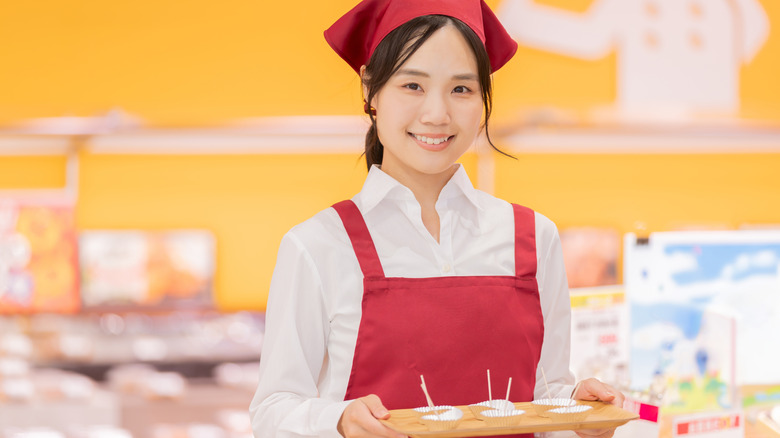
One of the most beautiful aspects of the mall food court was the ability to sample so many cuisines in one place. In some cases, the word sample was actually a literal option, as a food stall often tried to lure in new customers with a small taste of what they had to offer. One of the more welcome sights in a food court, then or now, is an employee holding a tray of small strips of saucy chicken — bourbon, sesame, orange, teriyaki, and more — speared on a toothpick. If one was lucky, the food court would have multiple samples going at the same time; and if one tried them all, they could pass for a full snack.
Generous vendors included Panda Express, and Sarku Japan, which even cites the practice on its website's history section: "To introduce our food to people that had never tried teriyaki before, we offered free samples of our best-selling Chicken Teriyaki to customers in the food court and inevitably customers were hooked."
However, sometimes, free samples come at a cost. Take, for example, the case of innocent mall bystander Catherine Brown, who unsuccessfully sued Chick-fil-A in 1994 after she slipped and fell on a sample served on a toothpick.
Fries and baked potatoes
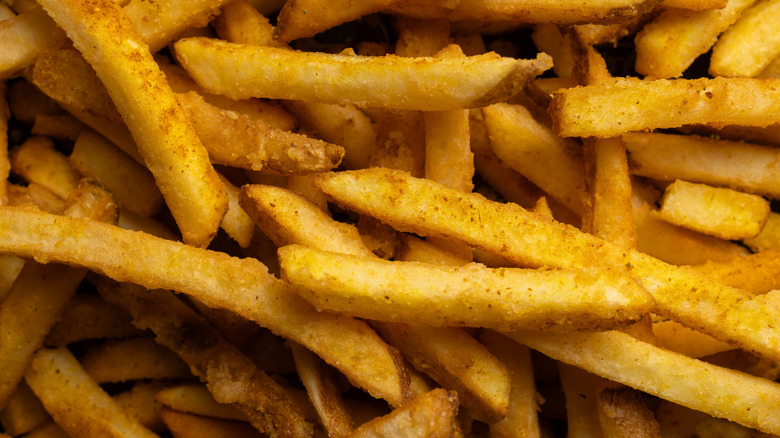
While there were plenty of burger spots offering their forever partner, fries — in the 90s, food courts also featured standalone ventures that specialized in just fried tubers, and in some cases, baked potatoes. As for the former, we're not just talking normal old fries, but the kind one gets when at the beach, thick-cut and cooked up in peanut oil. That spirit was captured by Boardwalk Fries, which, by the dawn of that' decade, already had 73 locations, and by other outlets like Chippy's Fresh French Fries and Great Steak & Fry.
Today, baked potatoes don't seem to be in vogue, but in the '90s, customers ate ones that came fully loaded with cheese, sour cream, and anything else one could imagine. One of the best names in the potato game was 1 Potato 2. No disrespect, though, to other fully-baked operators like Tater Junction and The Great Baked Potato Company.
Frozen yogurt aka froyo
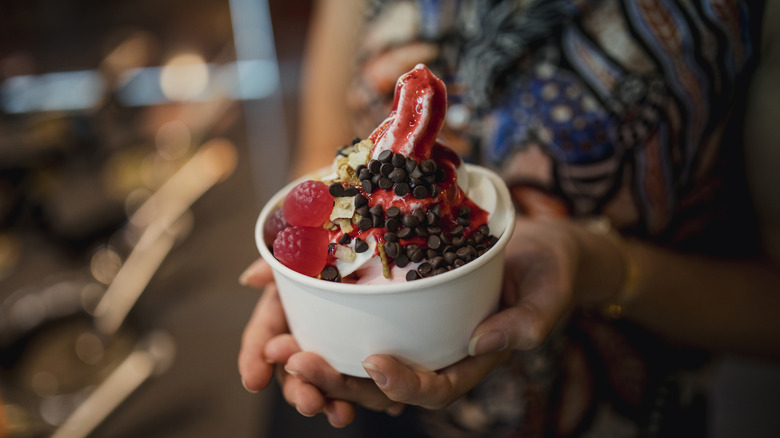
Before the era where we sampled and served frozen yogurt for ourselves, employees used to do all the work for us, crafting beautiful spirals in cones, or in cups, with a handy spoon at the ready. From 1985 to 1990, the number of froyo outlets increased from 3,000 to an estimated 11,000, according to a Washington Post report. One of the big appeals, then and now, was that it seemed like a healthy alternative to ice cream, offering low- to no-fat options to cap a off a meal, or even enjoy as a midday snack.
There were so many players in the froyo game, and if you went to a mall in the '90s, you probably indulged at one of these places. There was Everything Yogurt, which shouldn't be confused with I Can't Believe It's Yogurt, whose very name forced the rival chain This Can't Be Yogurt to change its own name, and became better known as TCBY. Lest we forget about two stalwarts that sported umlauts in their names to pass as exotically foreign pleasures — Freshëns and Yogen Früz.
Hot dogs and corn dogs
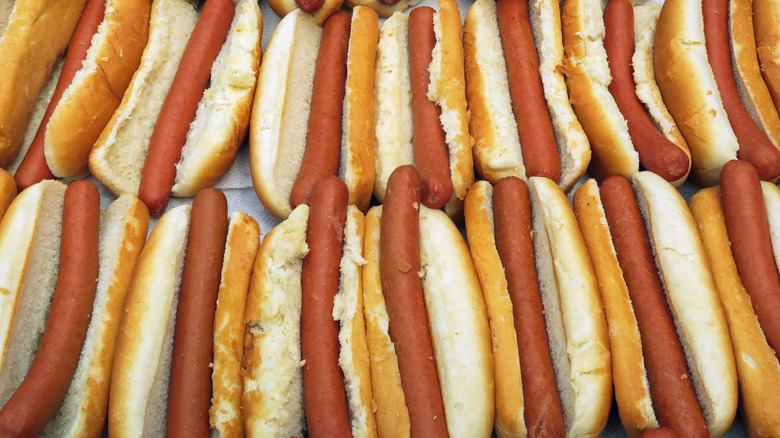
While hamburgers had big, splashy name brands occupying malls, that wasn't the case for the totally tubular hot dog. One of the rising players on the scene also happened to be one of the original pioneer purveyors of the hot dog — Nathan's Famous. The company's president, Wayne Norbitz, told the Los Angeles Times in 1994, "Hot dogs are the one fast food segment where there is no recognized national brand leader," adding, "We aim to become that." Other known names applying for the same job were root beer brewers A&W, which had a concept called A&W Hot Dogs & More, and Oscar Mayer with its Hot Dog Construction Co., which featured a toppings bar. Other weiner winners found in food courts included spots like The Great Hot Dog Experience and Frank 'n Stein.
Shoppers often had their hands full, and dealing with a full dog could be a challenge. That's where the even handier option of the corn dog came in. Chains like Famous Corn Dog, Corn Dog 7, and Hot Dog on a Stick stuck by their core product, and by 1994, the latter company was selling 9 million of them a year.
Soft pretzels
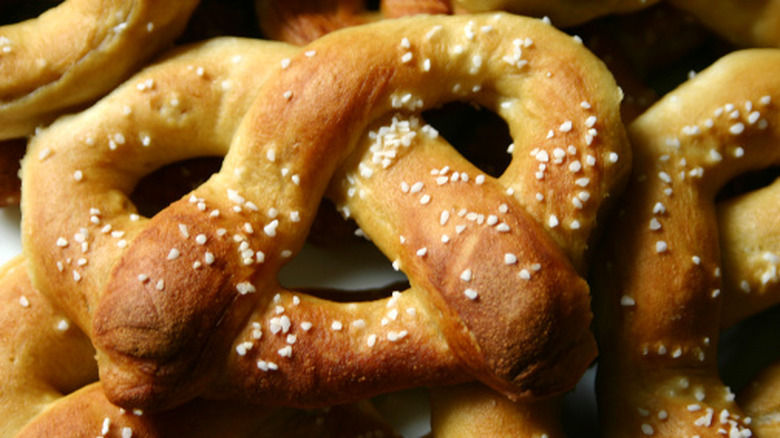
Some treats go hard, but one of the best mall options goes super soft, is best served hot, and comes in a most twisted shape. "Pretzels are an impulse item, and sales depend on heavy foot traffic, which is found in large shopping malls," Pretzelmaker marketing vice president Kelly Hansen told Salt Lake City, Utah's Deseret News in 1994. The company would know, as it took in $12.5 million in sales that year, thanks to the beauty of soft pretzels' ability to be sold anywhere within the mall, including at small carts or kiosks. Pretzelmaker, along with Pretzel Time and Hot Sam's, eventually were all acquired by Mrs. Fields' Holding Company.
While today, Auntie Anne's today has almost 1,400 stores in the U.S., back in the '90s, it was doing very robust business with just 240 locations by 1994. Rival Wetzel's Pretzels was born that same year, and by 1996, it had begun its push into malls, with over 400 locations still standing in 2026.
Ice cream
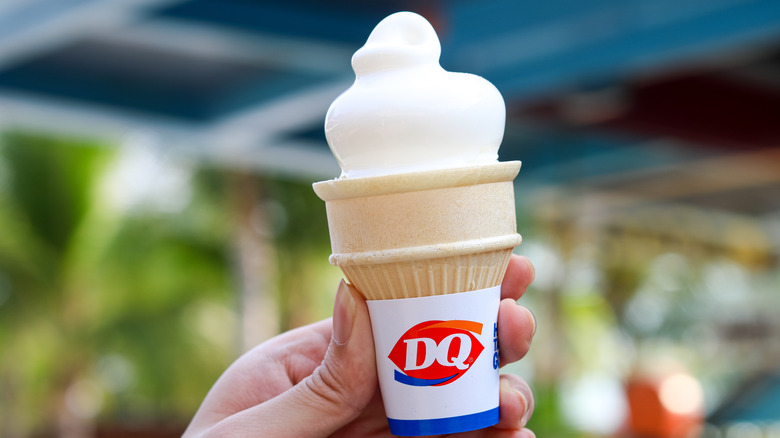
While froyo was stealing much of the attention, as well as many customers, that didn't mean eaters were fully turning their backs on one of the best desserts ever — ice cream. The options and operators seemed endless. There were the big-timers like Häagen-Dazs and Dairy Queen, and other widely known names like Bressler's Ice Cream, who once proudly let it be known in its name that had two more flavors than Baskin Robbins' 31. Old-school ice cream parlors like Swenson's eschewed its usual sit down model to be more mall-user friendly with takeout-only versions.
Marble Slab Creamery, which opened in Houston, Texas in the '80s, was a pioneer of pounding and mixing ice cream with all kinds of toppings, right before the very eyes of its ogling customers. In the '90s, it was joined in competition at malls by the emerging franchise Cold Stone Creamery, which opened its first shop in 1988.
A slice of Sbarro pizza
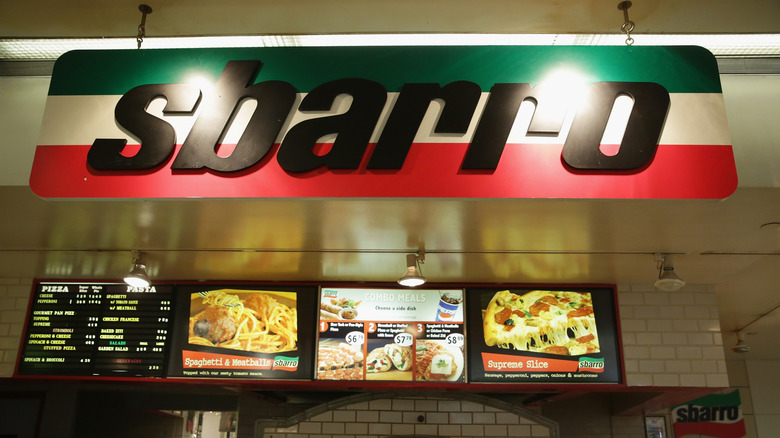
Sure, there have been many providers of pizza in malls, but there was only one true king of the food court — Sbarro pizza. It's hard to believe that this mammoth chain started as a mom-and-pop grocery store in Brooklyn back in 1956. It didn't even initially sell pizza, but once it did and sales took off, expansion did, too. The burgeoning chain opened its first mall location at Brooklyn's Kings Plaza in 1970, which is still in operation.
In the ensuing decades, customers from across the country descended upon that old school logo of the family name in front of a stretched Italian flag, for a fresh taste of an oven-reheated New York slice. By the end of 1995, the chain had mushroomed to 771 locations, with 524 of them classified as food court operations. Anthony Missano, president of business development, told PMQ Magazine in 2005, "It's always been our niche to be there as a place to grab a bite to eat while you're busy doing whatever you are doing. Our idea is to bring our product closer to where people live."
Smoothies, slushies, and sweet drinks
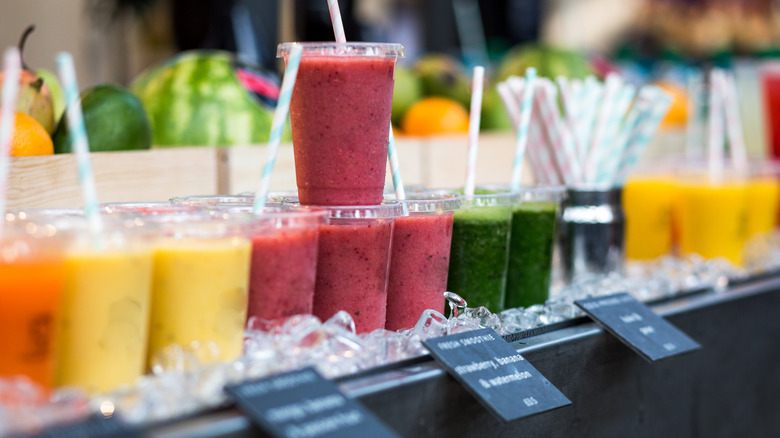
Just as froyo seemed like a healthy treat, fruity smoothies and juice joints were working a similar sugary magic on consumers. One of the bigger names on the scene in the food court was Orange Julius, continuing to sling its titular drink, even after being acquired by Dairy Queen in 1987. Another emerging player was Juice Club, which redubbed itself Jamba Juice in 1997. Everything Yogurt split its physical food court footprint in two, and created a second business, Bananas, to reside right next door and solely to sell frosty fruit drinks, resulting in an increase in sales. Other names of note from that super-smooth era included Surf City Squeeze, Planet Smoothie, and Mr. Smoothie.
While Slurpees held court at 7-Eleven stores, the one slushy drink that reigned supreme in the food court was the red or blue ICEE, which was often sold in conjunction with other treats, like cookies. Another sugary staple was freshly squeezed lemonade, which was a perfect libation to wash down the salty fare from food court regulars Chick-fil-A, Steak Escape, and Hot Dog On A Stick.
Subs, sandwiches, and wraps
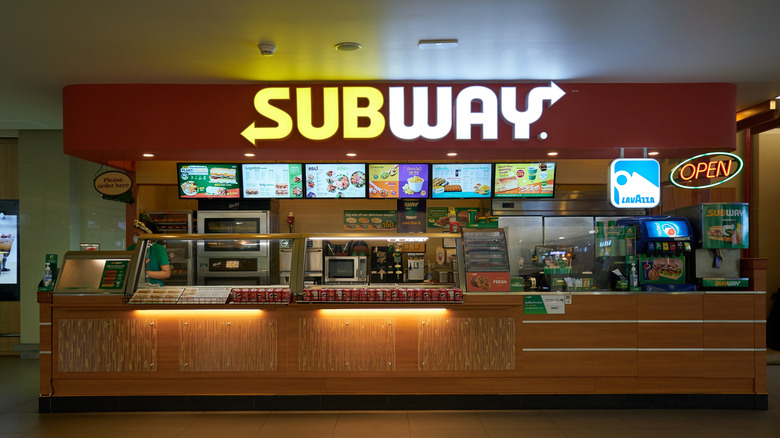
If the Earl of Sandwich had been transported to the 1990s, he probably would have been very pleased with all the available options of handheld creations bookended with bread. That was the decade when Subway started branching out from standard storefronts, and began selling its footlongs in non-traditional locations such as malls. The shop's rivals at the time, Blimpie and Quiznos, were also making headway in food courts. Arby's was also a perennial favorite, as well as regional shops like Sam's Subs, Port of Subs, Jerry's Subs and Pizza, and Ranch One.
Gyros, served in pita, was part of one of the greater bread trends of the decade — wraps. One chain brought together those two words — and Gyro Wrapwas born. "No one can really find my product anywhere else," franchise owner Paul Kim told the Austin American-Statesman in 1991. "My place is becoming a 'destination location.' People are coming to the mall just to get a Greek sandwich at Gyro Wrap." The chain expanded its offerings a year later, and changed its name to Great Wraps, which still boasts locations in the U.S. today.
Tacos
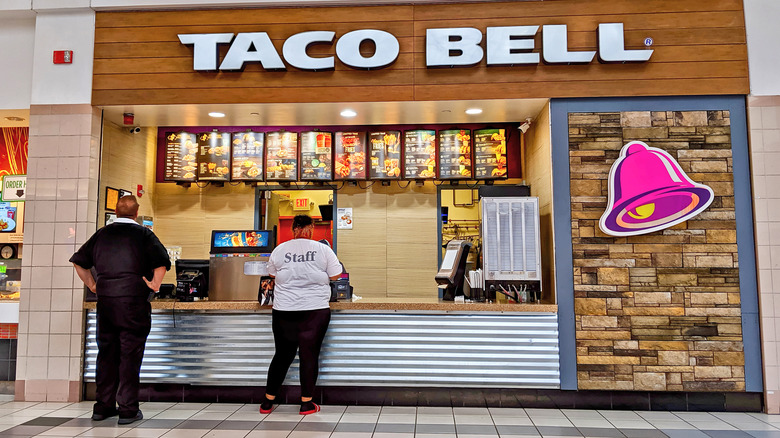
Mexican food was continuing to make big inroads into American appetites in the '90s, and it seemed that every mall had at least one food court occupant with the word "taco" in its name. There were the likes of Taco John's, Taco Time, Taco Casa, The Taco Maker, and of course the one that had fans constantly making runs for the border, Taco Bell. Tacos were a popular food item, as they were quick and easy to eat for shoppers on the go, and were usually inexpensive.
In 1991, Taco Bell opened its first stripped-down version of itself, known as Taco Bell Express, which was perfectly suited for the food court set. The concept also helped to expand the franchise into places that had previously been Taco Bell deserts. This iteration of the chain saw its peak in the 1990s, going hand-in-hand with the golden age of the shopping mall and food court.