

Häagen-Dazs And 16 Other Brands That Used Umlauts To Sound Foreign (When They're Not)
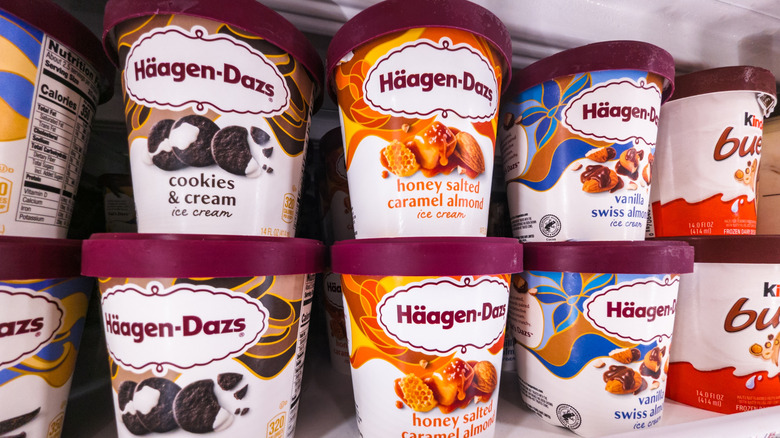
The United States, United Kingdom, and Canada have done an excellent job of exporting name brand products abroad thanks to the widespread use of the English language across the globe. However, in some cases, brands hailing from these countries have borrowed foreign words, alphabetical letters, and diacritical marks to help exude an air of Euro-sophistication which helps the product stand out from other like-minded products on the shelf. One of the most eye-catching diacritical marks is the double-dotted umlaut, which sit atop vöwëls to change their sound in länguages as diverse as German, Norwegian, Swedish, Finnish, Turkish, and Hungarian.
This infamous borrowing of umlauts to make a name for oneself may have been kicked off by the Brontë clan when the famous sister writers' father, Patrick, changed the family name from Brunty in 1802. That tradition has been carried on with bands like Blue Öyster Cult, Motörhead, and Mötley Crüe; and in the world of food, by Häagen-Dazs. The faux-Danish ice cream actually hails from the Bronx, but it set off a subgenre of brand names that have used umlauts to sound foreign when they're not. Let's examine how and why Häagen-Dazs and those who followed in its föötstëps came up with its name brands that are all but guaranteed to raise a smile Ü.
Häagen-Dazs (1960)
Polish immigrant Reuben Mattus grew up selling ice cream bars in Brooklyn and later got a job in an ice cream factory. Despite having a management position for years, Mattus wanted to make something of his own. In 1960, alongside his wife Rose, he started making a premium ice cream which he labeled with a European-sounding name that meant nothing – Häagen-Dazs.
Rueben Mattus explained to The New York Daily News in 1981, "Denmark is a dairy country and most people feel good about Denmark. I had to get a Danish name that people would take a second look at." He added, "I found out later that the Germans use the umlaut, not the Danes, but I left it anyway." The rest is umlaut history, but we're still enjoying all of the delicious Häagen-Dazs flavors to this day.
Frusen Glädjé (1980)
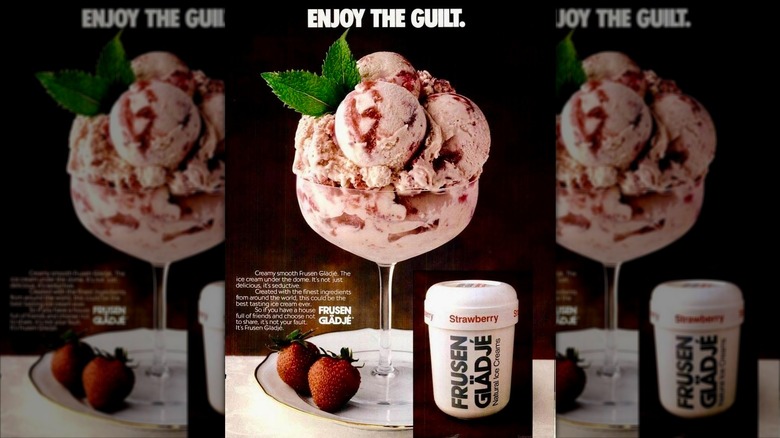
A former distributor for Häagen-Dasz, Richard Smith was rebuffed when he asked to sell it in bulk. In response (via UPI), he said, "[I'll] start my own premium brand with a funny sounding name." That brand with a funny sounding name became Frusen Glädjé ("frozen delight" in Swedish), which launched in 1979. The brand's packaging implied it was from a Swedish recipe, parts of the marketing were written in Swedish, it sported a map of the region on the containers, and on paper it was even headquartered in Malmo, Sweden; but the product itself was wholly American, and manufactured in exotic Pennsylvania.
Häagen-Dasz sued Frusen Glädjé in 1980, alleging that the product was trying to infringe on its Scandinavian-themed marketing, including the use of an umlaut in its name. The judge denied the suit, stating that copying grammar patterns is not a basis for infringement.
In 1985, Smith sold Frusen Glädjé to Kraft, who apparently sold the license to Unilever in 1993. However, by 2000, Unilever claimed it never acquired the brand and the product has since disappeared from grocery store shelves.
Freshëns (1985)
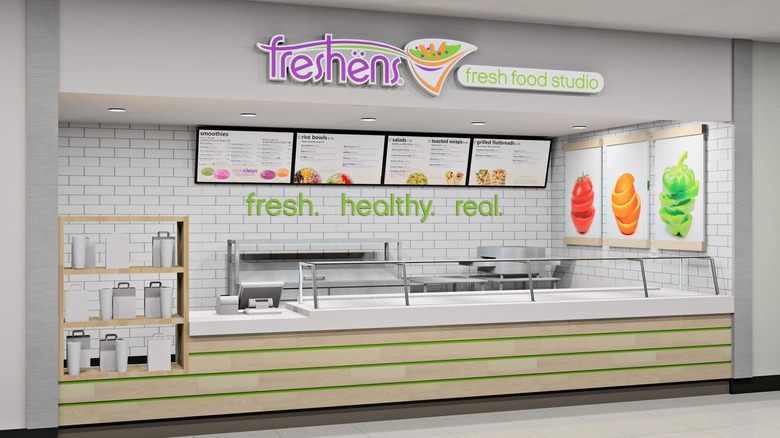
After finding success with a pizza chain, father and son Richard and John Stern turned their attention to frozen yogurt by opening Freshëns in Georgia in 1985. Franchising soon followed, and the soft-serve yogurt store has proved to be quite the success.
While many '80s yogurt chains faded away, Freshëns stayed relevant by diversifying its menu. With over 250 locations, today's menu features flatbreads, salads, bowls, and smoothies, with the latter at one point in time being stylized as "Smoöthie."
Yogen Früz (1986)
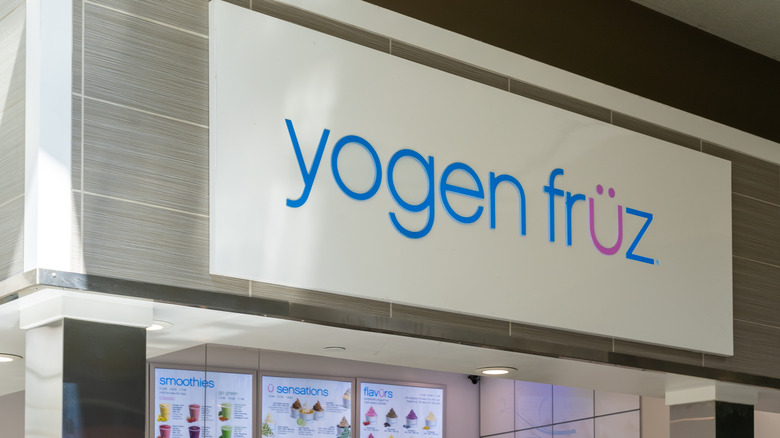
Canadian brothers Michael and Aaron Serruya became enamored with American old school mall chain TCBY ("The Country's Best Yougurt"), but alas, the company wouldn't let them franchise it in their own country. Instead, the two founded Yogen Früz in 1986. The name, like Häagen-Dasz before it, was completely made up and means nothing.
Today, the company explains its name as so: "The name Yogen implies yogurt, of course, and Früz calls forth 'frozen', 'fruit' and 'fresh', all of which play a part in the Yogen Früz concept." With over 1,300 locations spread over 40 countries currently, the brand is still wearing its umlaut proudly.
Cröónchy Stars (1988)
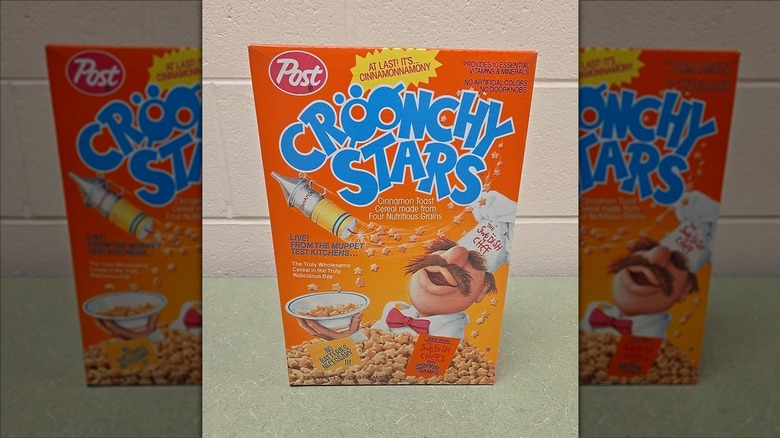
When one thinks of The Muppets and food, the one character that comes to mind is the messy kitchen expert — the Swedish Chef. Although it's largely forgotten to time, the Swedish Chef once had his own cereal. While names like Oople-Sauceys, Croonchy Poofs, and Moopettes were considered, this Post Cereal was briefly known as Stoopid Fläkes; complete with diacritical marks to harken to the chef's Swedish bona fides.
It was ultimately released in 1988 as a cinnamony cereal called Cröónchy Stars, which, as it stated on its irreverent box, contained no artificial colors and no doorknobs. Sadly, the joke was over for this cereal by the early '90s.
Gü (2003)
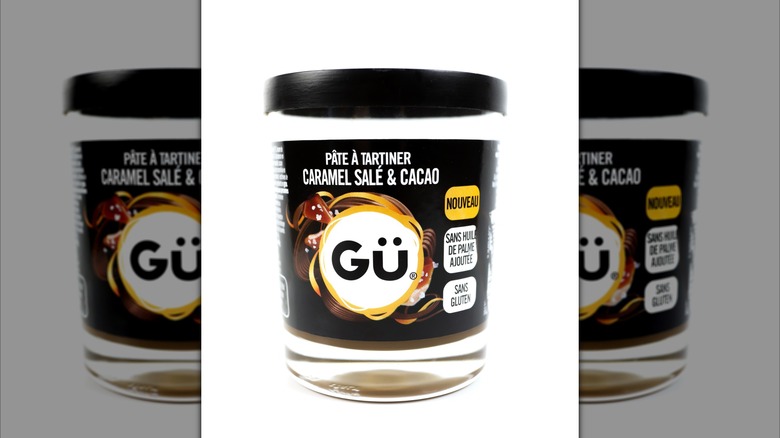
James Averdieck launched the chocolate pudding company Gü in 2003. The name and branding was drummed up by Perry Haydn Taylor, founder of Big Fish, who, according to The Brandgym, tricked Averdieck into thinking that a Scandinavian dessert company named Gü was headed to the United Kingdom. When he showed him the mocked-up packaging, Averdieck was understandably disappointed, after which Taylor revealed the name and branding was actually his for the taking. A clever sales trick, to say the least. Today, on the company's website, it spells out the reasoning for the name: "Those two tiny dots over the ü emphasize the 'oooooh-iness' in our name, so it's pronounced 'G-oo'."
Pür (2010)
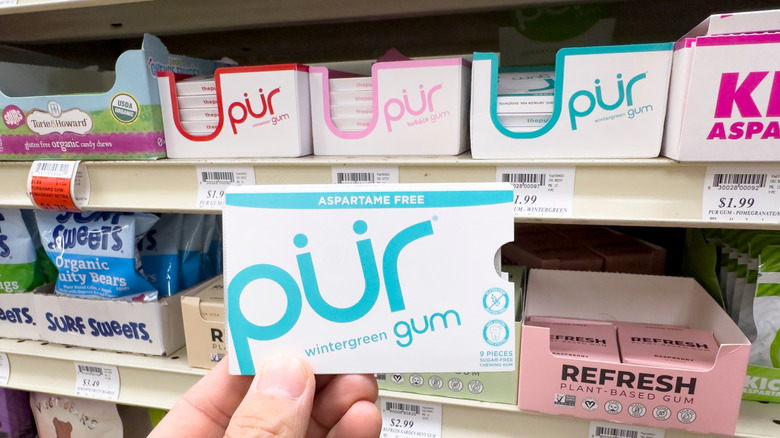
Jay Klein launched an aspartame-free gum in 2010 called Pür after discovering the public avoided most gum due to concerns over artificial ingredients. In a statement provided to The Takeout, Klein revealed, "Consumers could take a quick glance at the brands on shelf, and know this one was PUR'e'."
As for the umlaut, Klein noted it brings two things to the table: "the international flair, as it is one of the more recognizable accents on letters around the world, and the two dots over the U complete the happy face, which we love putting on consumers' faces when they have realized they found a great tasting and high quality alternative to the conventional artificially sweetened gums on the market."
iÖGO (2012)
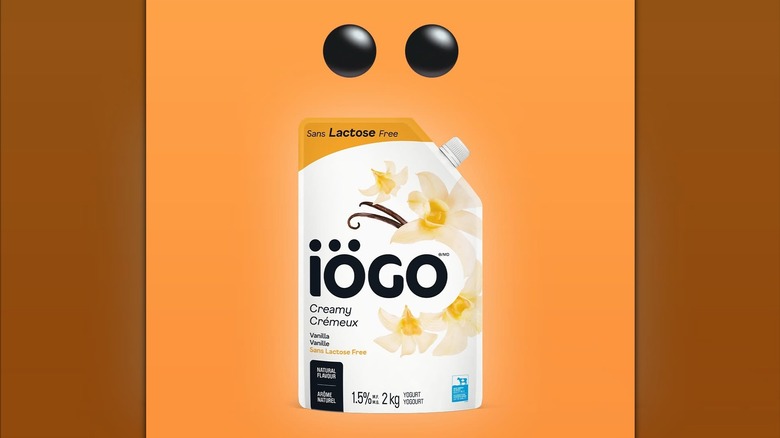
Ultima Foods was once Canada's leading producer of yogurts, but after losing the right to sell Yoplait in 2012 it managed to launch its own brand that same year. More than 1,000 names were considered, but the name iÖGO won out in the end.
Claude Larin, vice president of brand strategy at DentsuBos (Ultima Foods' marketing partner), explained the rollout challenges to Strategy in 2013, "The dots made it look Scandinavian, but it was trying to be Canadian." That was a problem. "We said, 'Okay, let's work with these dots that are problematic and make a brand that's so recognizable that people forget it looks Scandinavian.'" The brand also has a kid-oriented product on shelves called "iÖGO nanö."
Brüeprint Brewing Company (2014)
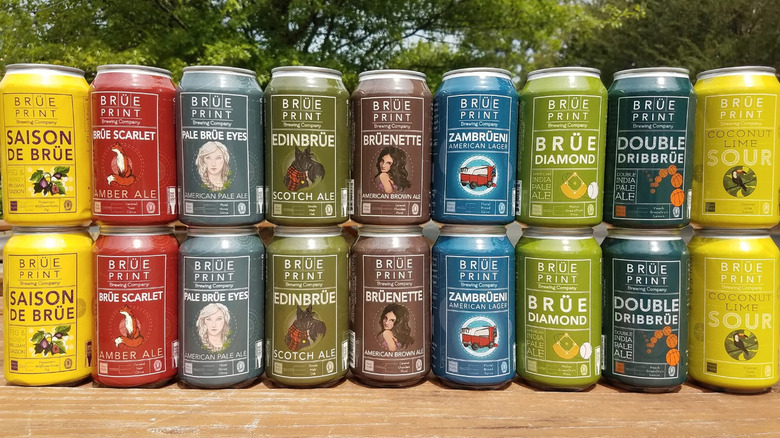
Eric Wagner opened Brüeprint Brewing Company in Apex, North Carolina in 2014. The company borrowed the "ü" from its name to make a clever logo that looked like a smiley face hovering over a fingerprint.
The brewery has crafted pilsners, ales, lagers, and IPAs; many of which include a "ü" in the name, like Brüenette, Double Dribbrüe, and Edinbrüe. By 2020, it was the 13th largest brewery in North Carolina's Triangle region, pumping out 1,800 barrels annually. The taps ran dry in 2025, when Brüeprint Brewing filed for bankruptcy.
NÜTRL (2016)

NÜTRL (pronounced "neutral") brought something "nü" to the vodka seltzer genre in 2016, but things shifted into high gear in terms of availability when the brand was acquired by the centuries-old beermaker Anheuser-Busch in 2021. In 2023, the brand rolled out its first-ever national campaign, playing up its umlaut bona fides by hiring comedian Chloe Fineman to play a fictional vodka seltzer sommelier named Günter, who advertised the drink as: "NÜTRL. The One with the Umlaut."
Füd Vitamin Energy (2017)
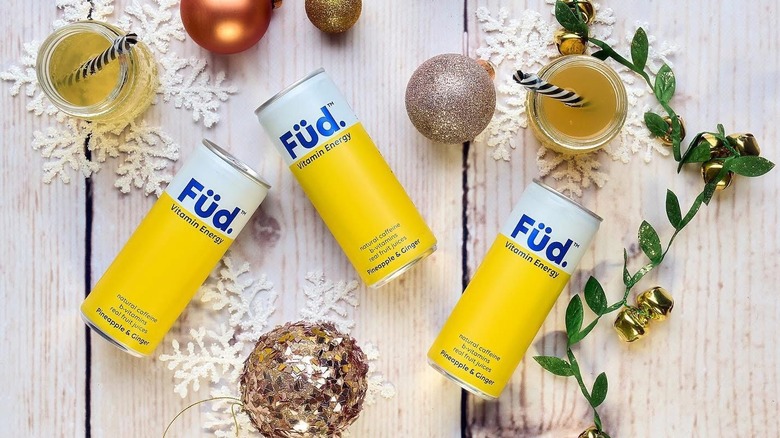
Philip Udeh struggled with chronic fatigue due to sickle cell anemia and was dissatisfied with all the sugary energy drinks on the market. With the help of others, Udeh came up with a healthier alternative — Brain Füd (as in "food"), which launched in 2017. In 2020, the brand was renamed to Füd Vitamin Energy, hoping to make customers feel "güd."
Füd started selling its drinks nationwide in the United Kingdom, and in 2021 it became available in the United States. The brand has been quiet since then, having stopped posting to social media in mid-2022.
TÖST (2017)
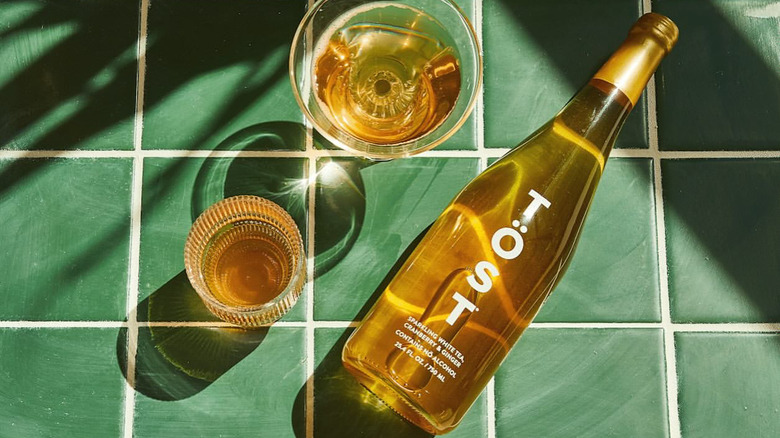
TÖST launched in Manchester, Vermont in 2017, looking to bring an elevated line of beverages to the burgeoning non-alcoholic market. In an interview with Taste Radio, CEO and founder Brooks Addington revealed, "The name is unique, 'TÖST,' and it's a play on toast, which is an international sign of hospitality, raising a glass and having a toast." The brand is well known for its rosé and sangria, as well as its distinctive bottle with its name running down its spine vertically. During dry January, 2025, TÖST made its products more portable with the introduction of canned beverages.
Trü Frü (2017)
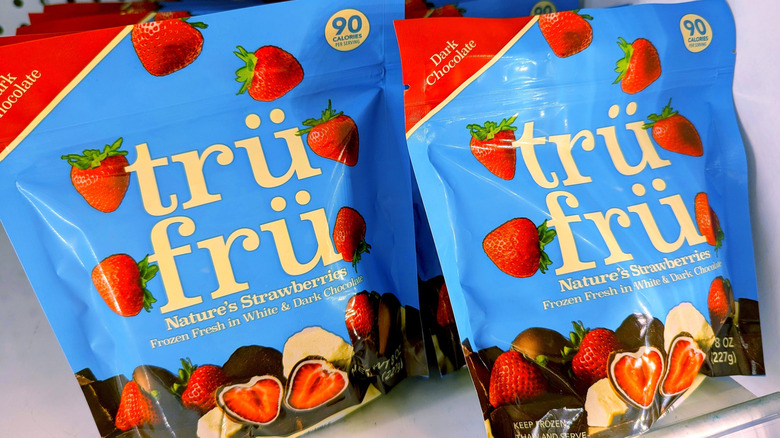
When Trü Frü and its chocolate-covered fruit products entered the market in 2017, its branding didn't have an umlaut in sight. Co-founder Taz Murray explained to Retail War Games, "The 'Tru Fru' [logo] that we had before was in cursive. You couldn't really read it very good." He added, "We wanted a brand block — so the brand meant something." In 2020, a packaging redesign came about, including the logo getting a fresh coat of umlauts. Many rebrands have sunk a product before, but the new look helped to actually grow the business.
Ging-ë-lems (2017)
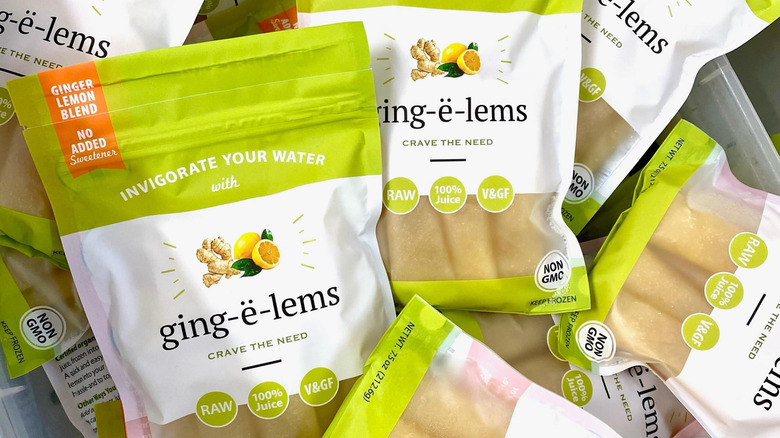
In 2017, Yurika Young launched Ging-ë-lems, a frozen juice blend, which created a portmanteau of the two key elements mentioned in its name — ginger and lemon. In a statement provided to The Takeout, Young explained that after she came up with the cure she needed an easy name to remember them by. With help from her son, she landed on "ging-e-lems," but it wasn't quite right yet. "I played with the spelling and realized phonetically, I needed an umlaut to make the ee sound." She also added that the "ë" makes a sound and looks similar to the word "and" in many of the Romantic languages, like the "y" in Spanish.
Grüvi (2019)
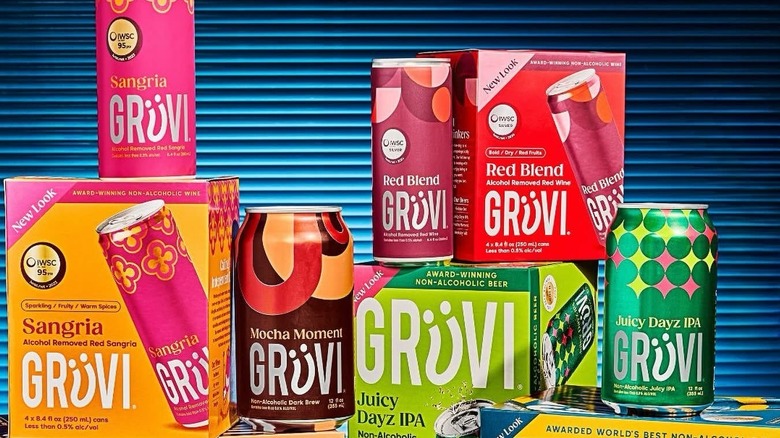
Drugs and alcohol don't exactly mix well, so Niki Sawni and sister Anika set up an alcohol-free line of beverages to pair with weed. The Canadian siblings' came up with the non-alcoholic craft beer and wine brand Grüvi ("groovy") in Colorado, and launched (naturally) on 4/20 in 2019.
As for that magical umlaut, Niki Sawni explained to the Restaurant Leadership Podcast in 2024, that the word "Groovy" could not be trademarked, and they "ended on GRU with an umlaut VI and just bringing that, like you know, inherent feeling that that word brings to the brand."
Ö Hydration (2023)
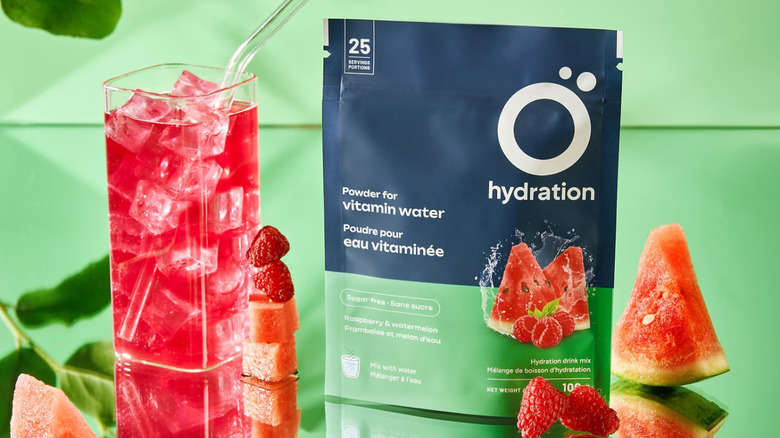
Cassandra Pichette wasn't a fan of drinking water. After giving flavor enhancers a go, she liked the idea but was dismayed with all their artificial additives. This led her to create Ö Hydration in 2023, a line of sugar-free powders and drinks containing electrolytes, antioxidants, and 100% natural fruity flavors.
The brand's "Ö" is a play on the French word for water, "eau." In a statement to The Takeout, Pichette revealed why she added the umlaut: "It gives the brand a distinctive feel while still tying back to the original idea of water and simplicity." She added, "Ö Hydration is both a nod to my French roots and a deliberate branding choice: minimal, memorable, and entirely centered around one essential idea: drink more water and love it, one mission, two components, like the two dots on the Ö! Ö Hydration is not only our trademark but our pride!"
Grüns (2023)
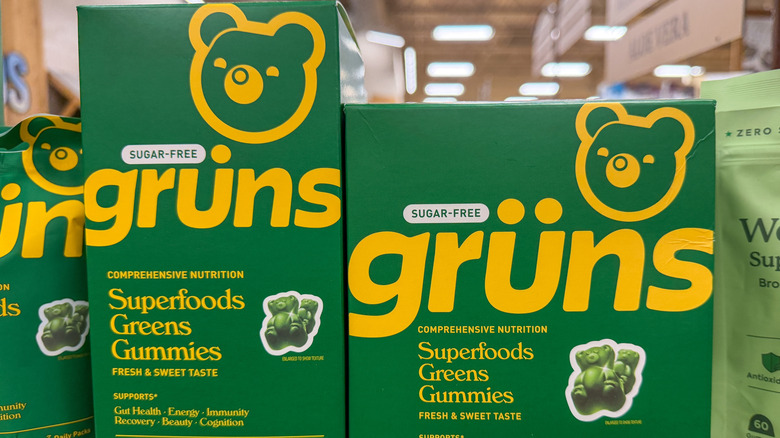
Chad Janis was a private equity investor who wasn't fond of the chalky greens powder supplements he was taking. So in 2023, he made a brand of his own in gummy form under the name Grüns, which is German for "greens." Success came rapidly, and offshoot products under the brand Ü Snacks followed, like Nütrops, Jüced, and Immün.
Janis explained to Inc. in 2026, "This 'ü' personifies our brand in many ways: It's fun. It looks like a smiley face. It's happy. People see it, and they go, oh, Grüns, the one with the two dots on top. We've leveraged that across all our brand names and stuck with it."