

The Canned Soup Mistake Too Many People Are Still Making — And It's Killing All The Flavor
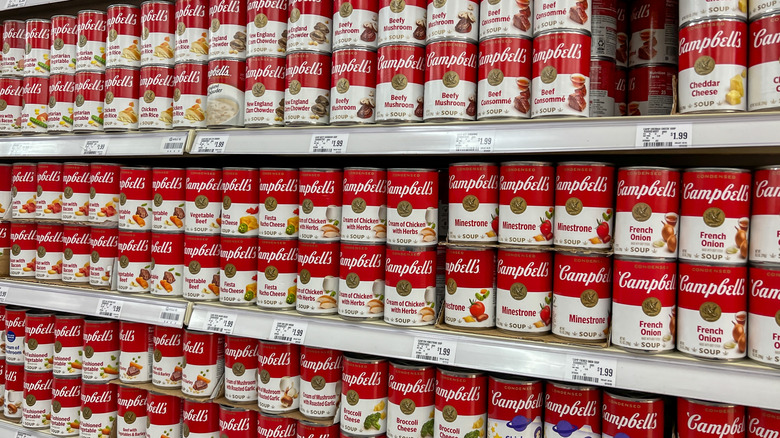
Though handy, affordable, and long-lasting, store-bought canned soups can vary in taste and quality (especially tomato soup). However, when it comes to canned soup's flavor, it might not be the product's fault when it falls short of your expectations. Instead, you might be making a major mistake by heating the soup in the microwave, which can have a greater negative impact on your meal than you'd expect.
We spoke to Carrie Barnard, the founder of Eating on a Dime, who knows a thing or two about getting the most out of your canned soup. According to Barnard, microwaving your soup is a common mistake people should stop making to improve their at-home dining experience. "Microwaves tend to heat food less evenly than stovetops, and this uneven heating can affect the flavour and texture of the soup," Barnard begins. " ... The deeply savory flavour of many broths often requires higher temperatures and even cooking to fully shine through. Uneven heating can make the soup taste blander and thinner."
Now, it's important to note that uneven cooking isn't a microwave-exclusive issue, as even sheet pan dinners baked in the oven can cook unevenly if you aren't careful. However, because canned soups often feature key ingredients that come in different sizes and textures — namely vegetables, meats, noodles, and, of course, broth — the inconsistency can be especially damaging to your overall meal.
The best ways to heat up canned soup evenly
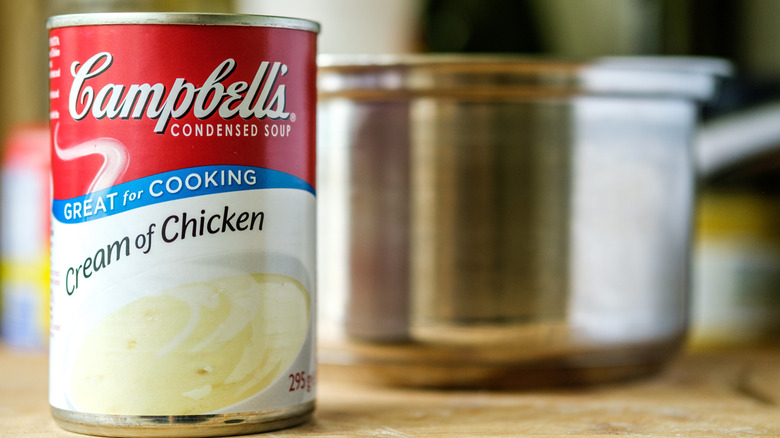
Now, because the microwave isn't ideal for heating up canned soup, the best alternative to the quick and easy heating method is clearly heating it on a stovetop. According to Carrie Barnard, the stovetop is not only the strongest choice due to how evenly it cooks the soup, but also because of how much control it gives you over its heat and consistency. "By manually stirring the soup, you can ensure that it is heating through evenly and reaching a pleasant, uniform temperature," Barnard says. "You can also use a tasting spoon to test the soup's flair and temperature as you cook it ... Microwaves do not give you this level of control ... "
This control over your soup's heat is especially useful, as being able to bring it to a high temperature can be great for its flavor overall. "Underheating soup often results in a thinner taste, as it doesn't provide the broth with enough heat to release the umami compounds that give soup their flavor," Barnard adds.
Nevertheless, if you have no choice but to microwave your soup, it's important to find ways to ensure it heats evenly. Your best bet is to stir your food regularly as it heats up to ensure it cooks evenly. To do this effectively in the microwave, Barnard recommends cooking your soup for short intervals and stirring every time it stops. Barnard explains that this "gives you the opportunity to test its temperature."