

Get The Hands-Down Best Flavor From Sauteed Cabbage With This Store-Bought Seasoning
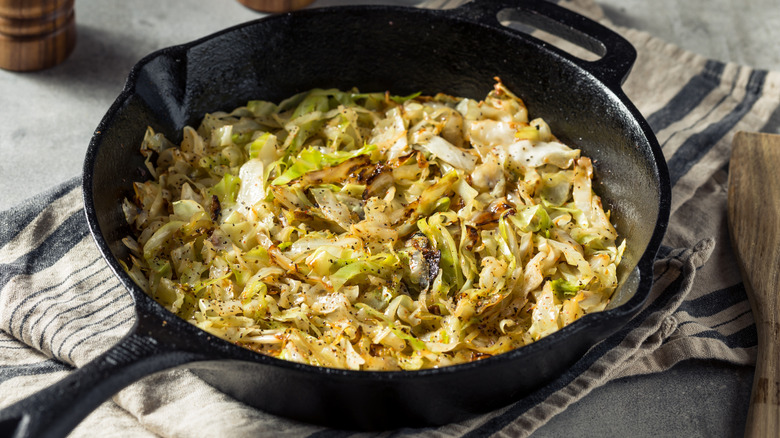
We are in the year of the cabbage, according to Vogue. Suddenly, just a few months ago, a vegetable that has more often been called underrated, boring, and toot-inducing has been labelled fashionable. Did we fall into an alternate universe created by a critical mass of TikTok health influencers, or is this downtrodden green finally getting the recognition it has always deserved? I'm in the second camp. Not only is cabbage a great vegetable for bulking up other dishes, it can also be the star of the show if you treat it right. From fully-fermented, better-than-store-bought kimchi to mind-blowing brined coleslaw, there are many home-cooking techniques that elevate the humble cabbage, though some are easier than others. One of the best and simplest relies on a single store-bought seasoning; lemon pepper and cabbage are an unforgettable match.
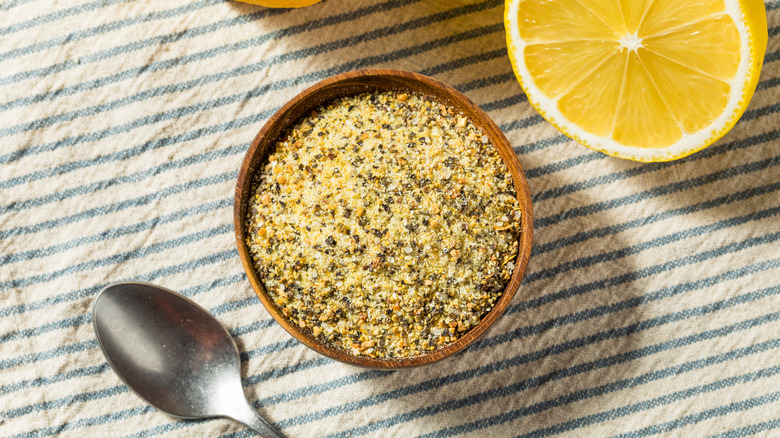
Best known as a wings flavor with Atlanta chicken shop roots, lemon pepper is more versatile than people realize. It works just as well with vegetables as meat, and its zingy flavor also gives a lift to non-meat proteins like tofu. With cabbage, lemon pepper just makes sense! The main ingredients of the seasoning blend are black pepper, lemon, and salt; all of which are often added to sauteed cabbage anyway because savory and citrus flavors help bring out its natural sweetness. By using a jar of premixed seasoning you know you've already got a great ratio of the three so you won't have to constantly adjust while cooking.
How to upgrade cabbage with a dash of lemon pepper
With so many kinds of cabbage to choose from, the confusion about how to cook it kind of makes sense. The truth is, almost all styles of cabbage work well with lemon pepper, from the pretty, lace-leafed savoy to the plain and hardy Dutch white to the delicate Napa cabbage. Even red cabbage would marry well with the spice blend, although its natural peppery flavor might mask some of the seasoning.
Cooking times and best practices do vary across cabbage varietals. If you're sauteing the vegetable, remember that tougher cabbages with thicker leaves will need to be cut finer and cooked for longer than their thin-leafed cousins. On the other end of the scale, particularly delicate cabbages like bok choy really only need five minutes in the pan.
Generally, you should add the lemon pepper seasoning toward the end since cabbage shrinks a lot while cooking and it's hard to tell how much you're going to end up with at the start. Just wait until the cabbage is wilting, then sprinkle on the seasoning, stir, and give it a taste. Cabbage types vary in flavor and so do seasoning blends, so this is a real eyeballing and tasting as you go kind of dish. Red pepper and fresh garlic add an extra layer of flavor to this dish, so add them alongside the lemon pepper if you want a little more oomph. Once you're comfortable with the basics, you could also experiment with Cajun seasoning, paprika, or cayenne. Remember, one of the reasons cabbage is low-key such a great ingredient is its versatility.