

How To Salt, Sugar, And Spin Your Cabbage For 10X Better Coleslaw
We may receive a commission on purchases made from links.
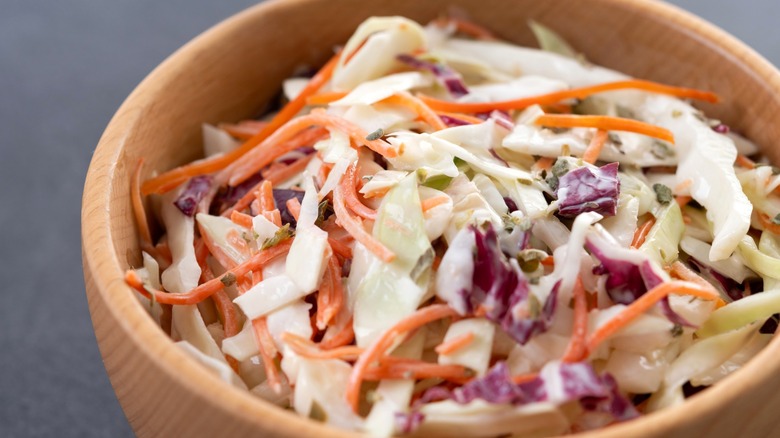
While there are plenty of barbecue side dishes that will please a crowd, nothing compares to a quality coleslaw. The slightly tangy, crunchy bite is just what you need to cut through the richness of fall-off-the-bone ribs or other meaty fare. But it instantly goes from delightful to dreadful when it's watery. No one has ever requested coleslaw soup, and with good reason. Unfortunately, it's fairly common for it to be runny. However, you can prevent that repulsive outcome by following a few simple steps that will make your coleslaw 10x better.
First, it's important to understand why coleslaw becomes watery. Cabbage, be it red, savoy, or the best type of cabbage to use for coleslaw, green, contains a significant amount of moisture. That liquid is slowly released into the dressing over time, thinning it out and creating that soupy runoff. The key is to draw that moisture out before the dish is dressed, and the optimal way to do that is a dry brine consisting of salt and sugar.
Don't be shy with either of those ingredients. Once your cabbage and other veggies are sliced (best done with a quality mandoline slicer you can buy online), combine them in a bowl with a cup of sugar and ½ cup of salt – this works for a whole head of cabbage, though you can adjust the ratio up or down as necessary. After five minutes, give the veggies a good rinse and transfer them to a salad spinner to dry them off. Now you have cured, dry cabbage that will remain crisp once dressed without expelling excess moisture as it sits.
How brining cabbage for coleslaw works
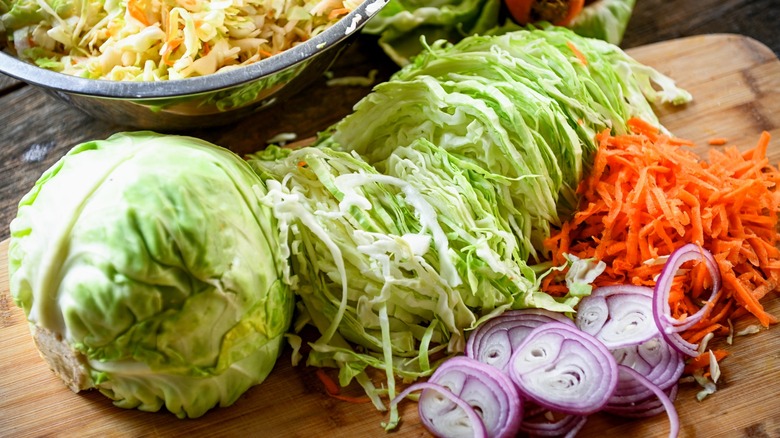
Simply salting cabbage first is a simple trick that prevents runny coleslaw, but the sugar isn't there just for show. Like salt, it draws moisture from food, but it also benefits the mix by balancing the salinity a dry brine will impart to the veg, even in just five minutes. That timeframe is essential. You might assume that letting the veggies sit longer would make them even drier and crispier, but it doesn't actually work out that way. Letting the mix sit for 30 minutes or so won't necessarily result in anything terrible happening to the cabbage, but it doesn't do much good either, ultimately amounting to a waste of time.
Rinsing the veggies is crucial to prevent overly salty coleslaw, but they need to be dried off well — this is where the salad spinner comes in. Squeezing the cabbage dry is an option but not a fantastic one. The veg will be dry, but its structural integrity will be compromised. It will be wilted and less crispy, and with coleslaw, the texture is equally as important as flavor.
A salad spinner gets the job done without sabotaging the texture of the cabbage. You don't need anything super fancy — this SUSTEAS salad spinner from Amazon will do just fine and will only set you back about $32 (and it comes with features that make shredding your coleslaw veggies easier). You can fan the cabbage out on a dry surface and absorb the water with paper towels if a salad spinner isn't within reach, but having one makes the process much faster.