

13 Foods Steelworkers Ate In The 19th And 20th Century
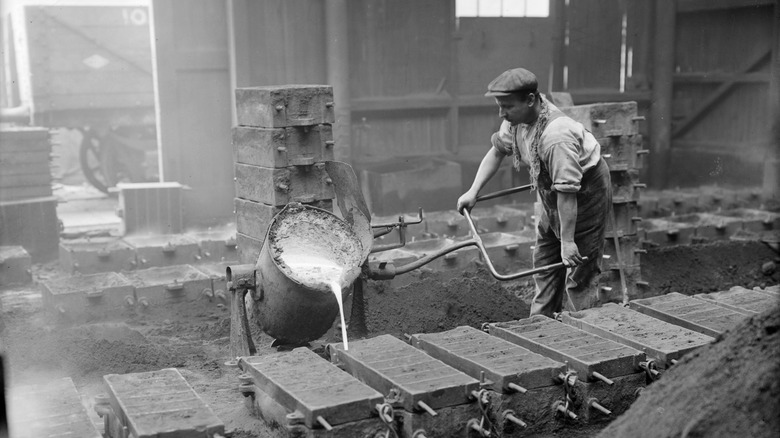
Steel played a vital role in world history. It influenced the Industrial Revolution and the development of new forms of transportation. It built landmark bridges. It produced household names like Carnegie and JP Morgan. It fueled world wars.
Behind all this metal were the steelworkers, those who toiled in tough and dangerous conditions, 12 hours at a time, often without a break, in order to fuel America's progress. In 1890, they would be paid an average of $500 per year for their labor. Many were immigrants, and most suffered tough working conditions.
We're taking a look into the lunch pails of the average steelworker, to get a glimpse at what kind of foods may have fueled their determination and hard work effort. Experts who provided their insights into the matter include Amy Regan, curator at Heritage Johnstown; Barney Terrell, curator of collections and archivist at Rivers of Steel; Jonathan Cambouris, museum administrator at the Youngstown Historical Center of Industry & Labor; and Brett Reigh, archivist at the Pennsylvania Historical and Museum Commission.
Haluski
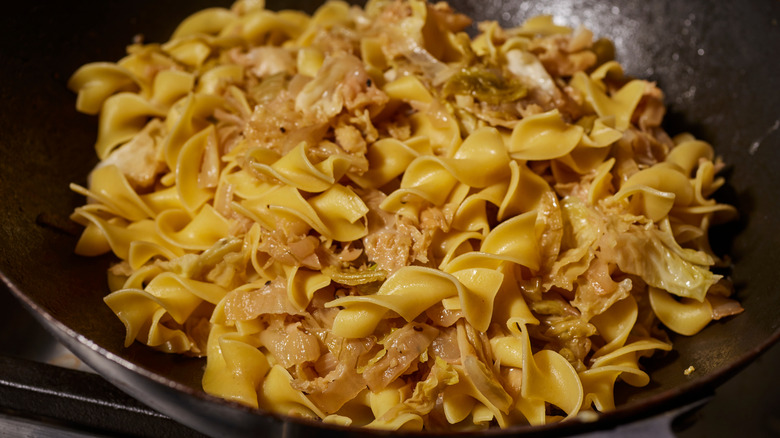
It's no surprise that haluski would've been a staple on steelworker families' tables. At its most basic, it's noodles and cabbage, but the exact form this dish takes often differs, depending on the maker. The shredded green cabbage could be paired with egg noodles, other pasta, or gnocchi. Bacon or another meat, butter, and onion could be added in for good measure. It's a simple food, but a filling (and cheap!) one, and that's why it's known as a "hunky" food — at least in Pittsburgh, a steel hub that welcomed scores of immigrants and their foods during the industry's heyday. (The word "hunky" is derived from a slur, but has since been somewhat reclaimed, and now refers to the rib-sticking types of foods that often fed the region's steelworkers.)
In nearby Johnstown, Pennsylvania, Heritage Johnstown's Curator Amy Regan said foods like haluski are still enjoyed in the area today, thanks to the multiple waves of immigrants who flooded the region to work at what would become the Bethlehem Steel Company. The Slavic influence remains incredibly strong there, she said, especially when it comes to food.
Pierogies
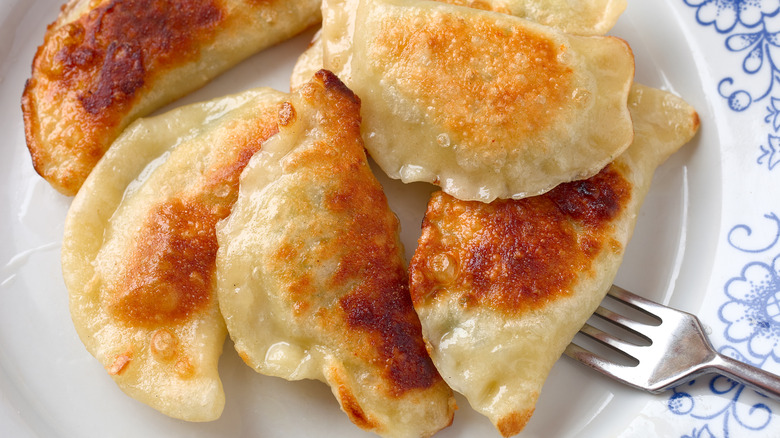
Another Slavic food that curator Amy Regan pointed out as a part of many steelworkers' diets? The humble pierogi. It's easy to find a pierogi — the dumplings with their savory fillings of cheese and potatoes, piping hot — throughout much of Pennsylvania, particularly the western side of the state, with its steel mill heritage.
Ohio, though, holds a special spot in its heart for the pierogi, too. There, in the 1920s, it's said that the first pierogi in Northwest Ohio was sold. A Cleveland tavern owner served the food to the local steelworkers, and that was that. The dumpling had found its place in regional, multi-state culinary tradition.
Of course, the pierogi itself goes back much further than this time period in American history. It was finding its way into Polish records in the 1600s. There's even a patron saint of the pierogi: Saint Hyacinth, who is said to have either fed a starving town with pierogies, or to have ended a famine in a starving town, after which the townspeople thanked the saint with a pierogi meal.
Halupki
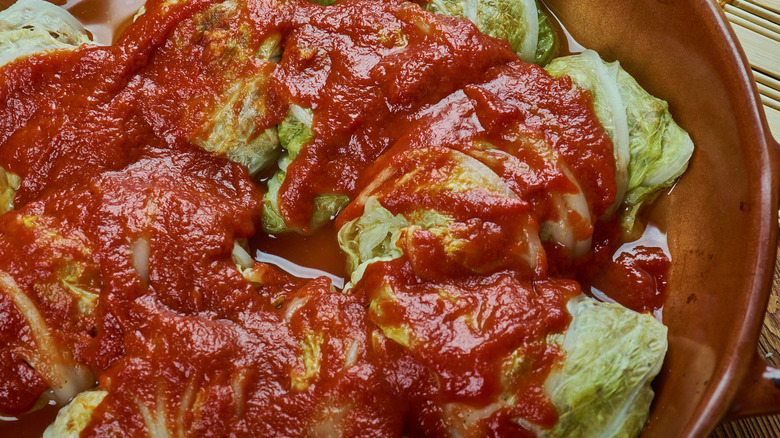
Don't mix up haluski and halupki. While they may be similar, they're absolutely not the same. While the former is cabbage and noodles, halupki is what you may know as stuffed cabbage rolls. Cabbage leaves are tucked around meat and rice, cooked low and slow, and covered in a tomato-based sauce. This is another historically Slavic comfort food that curator Amy Regan said came to Pennsylvania steel mill towns with the steelworker,s and then stuck around for good — and it's also one that crossed state lines, finding a place both in Pennsylvania and Ohio.
In Ohio, it's definitely known that halupki and pierogies alike were being served to the steelworkers constructing the Innerbelt Bridge in the mid-1900s, with many finding their fix at Sokolowski's University Inn, in Cleveland. The Polish eatery closed in just recent history, but was for a long while the oldest family-owned restaurant in the city. Up until 2020, the cafeteria-style business was still churning out the halupki by the hundreds.
A shot and a beer
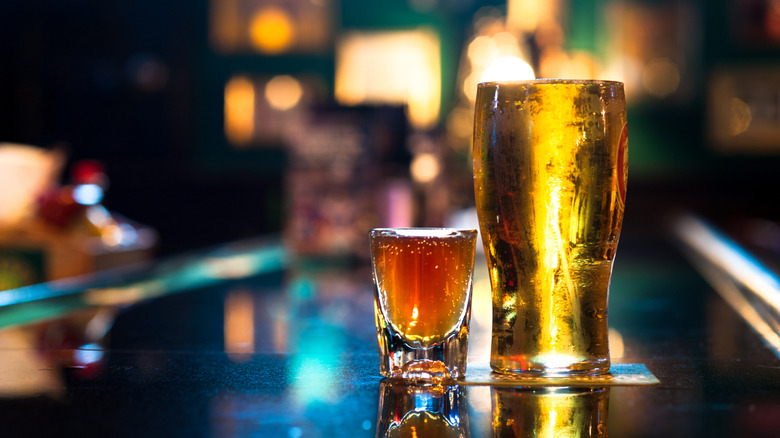
This combo is probably not all that foreign to those who've imbibed their fair share, and it was a favorite with steelworkers as well — and why not? After a 12-hour day working at the mill, you probably needed a little something to take the edge off.
At Rivers of Steel, which oversees several related historic sites and provides programming and education related to southwestern Pennsylvania's iron and steel-making industry, curator and archivist Barney Terrell said, "The region's steel and mining culture was ... associated with the long tradition of the 'shot and a beer' tavern. Steelmaking generated tremendous amounts of dust, and at shift changes, local bars often had drinks waiting for workers as they arrived. In Pittsburgh, the classic pairing was Imperial Whiskey and Iron City Beer, known locally as the 'Imp and Iron.'"
The tradition stretched into other parts of the region that focused on coal and coke production. The belief was that the combo could help you rid yourself of all that dust and grime from a long day of manual, industrial labor.
Cookies
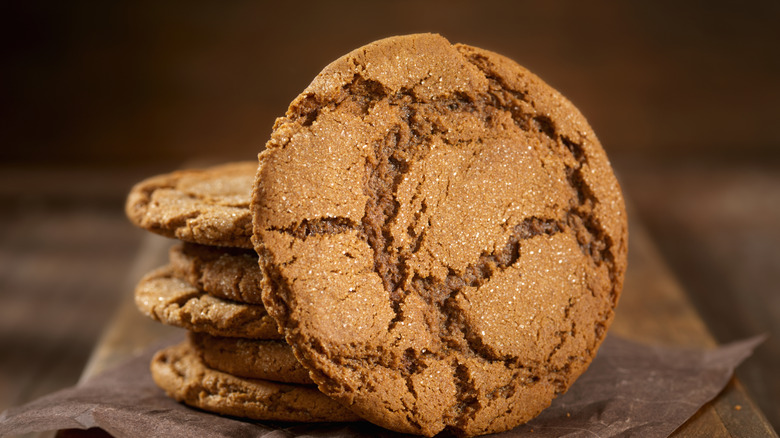
For those steelworkers who maybe didn't choose to indulge in that shot and a beer, they did have other options if they were in the need of a treat. However, the environment had to be considered. According to Barney Terrell, and as alluded above, you weren't guaranteed a meal break during your shift, at least not until sometime around the 1930s and 1940s, when formal meal breaks became more common. Workers had to eat whenever they had a chance, which meant that handheld, portable foods were key — and what makes for a more portable sweet treat than a homemade cookie?
Museum Administrator Jonathan Cambouris likewise pointed to homemade cookies as a favorite, alongside other sweets, and said it wasn't uncommon for steelworkers to share such items amongst themselves. This tradition is thus connected to what's known as the cookie table, which still makes an appearance in former steel cities. It was not only popular among immigrant communities in Cambouris' Youngstown, Ohio, but also in western Pennsylvania, around Pittsburgh. The tradition, most commonly associated with weddings, is simple: family members work together to amass a humongous towering table of all kinds of cultural cookies — for sharing as the main dessert highlight of the event, and to take home later.
Horseradish
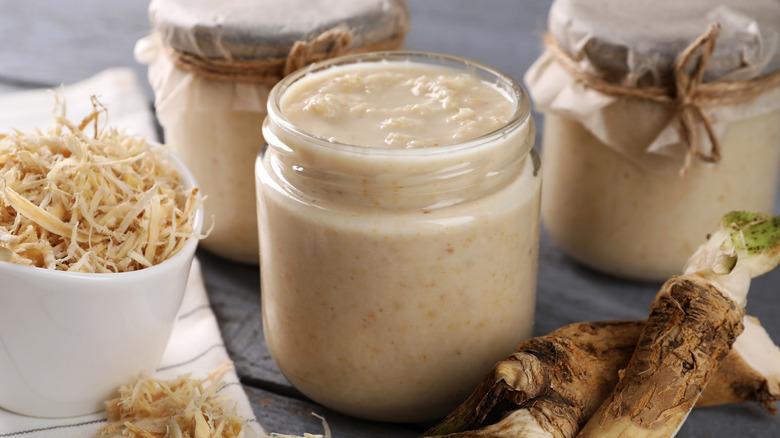
Ever taken an accidentally giant bite of horseradish or wasabi and practically felt your soul leave your body by way of your sinuses? While it might feel unpleasant to some, that sensation was more or less what steelworkers were looking for, when they chowed down on some horseradish.
As Barney Terrell explained, "During the 19th century, horseradish was especially popular because graphite dust from steelmaking often coated workers' mouths and dulled their sense of taste. Strong, spicy foods helped cut through this effect."
In fact, around the same time that steel was gaining traction in Pittsburgh, a current household name was getting his start selling, among other things, horseradish. We're talking about H.J. Heinz, of course, who founded the same Heinz company that today makes, most notably, ketchup. Horseradish, though, was Heinz's very first product, marketed as "pure and superior" in 1869. Heinz grew the horseradish himself, used a family recipe, and bottled the grated product in clear bottles. The ketchup didn't come into the picture until 1876.
Pretzels
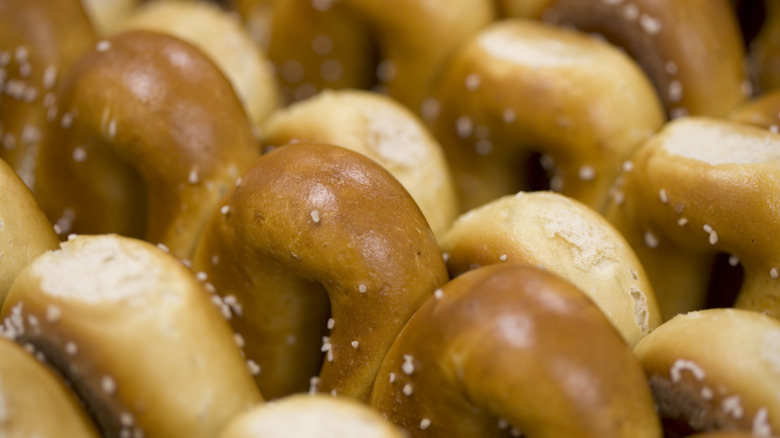
Pretzels have long been a part of Pennsylvania culture. They showed up in the pre-Pennsylvania colony in the 1700s. The hard pretzel was invented in the state in the mid-1800s. Even in modern times, an estimated 80% of the country's pretzels are made in Pennsylvania. So, it's no wonder that pretzels and Pennsylvania steelworkers would find a connection.
Barney Terrell said, "Pretzels ... became closely associated with Pittsburgh's industrial workforce. The Pretzel Shop on Pittsburgh's South Side, which has operated since 1927, became a popular destination for employees of Jones & Laughlin Steel and later LTV Steel."
However, the Pennsylvania pretzel is not without its controversy. In the early 1900s, pretzels were a common find at Pittsburgh saloons, which began offering free such snacks to those who bought a drink. As the country geared up toward Prohibition, the offering was seen as more or less immoral.
Additionally, continuously connected with the German immigrants who introduced them to the country, pretzels were eschewed during World War I. However, pretzel producers still managed to find their markets, such as the industrial workforce. After all, it is an easily portable, quick snack — perfect for taking on the job.
Cabbage soups
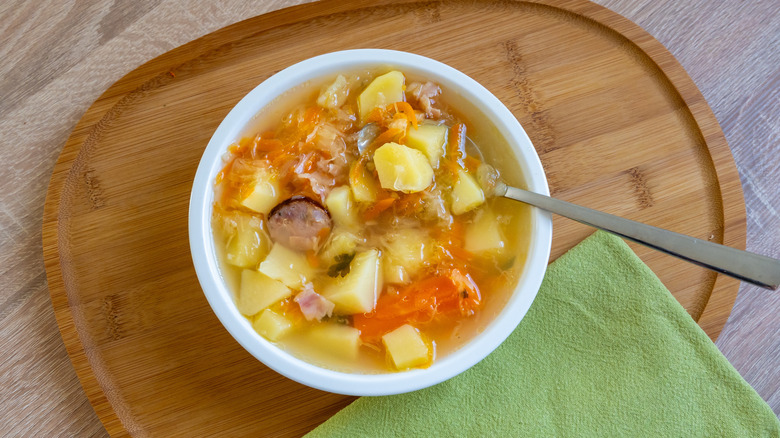
Are you noticing that cabbage is a bit of a theme with steelworker meals? Barney Terrell specifically pointed out cabbage-based soups including kapustnica and kapusniak, which were popular with Slovak and Ukrainian steelworkers.
The former is a winter favorite that offers both smoky and sour notes. It gets those sour notes because the soup doesn't incorporate raw cabbage; instead, it uses sauerkraut, combined with other ingredients such as mushrooms and pork. The latter is very similar, just with some small changes, such as possibly a different form of pork or the addition of potatoes. In order to keep things nice and portable, steelworkers would often pack their soup in a thermos, so it could be easily consumed from a cup.
Soup was also pretty cost-effective, too, especially as steelworker families began facing the Great Depression. In Youngstown, Ohio, museum administrator Jonathan Cambouris told us, "By the time of the Depression, Youngstown's families needed to stretch meals as far as possible. John Manning, for example, remembered meals of bread, tomatoes, [and] peppers, in addition to soup multiple times per day."
Manning's account of the Great Depression in Youngstown was logged by the Youngstown State University's Oral History Department. Manning's father was a puddler in a steel mill during the Depression, which more or less means he was responsible for stirring large quantities of molten iron, both a tiring and dangerous job. Puddlers made relatively good money, though, thanks to unionization.
City chicken
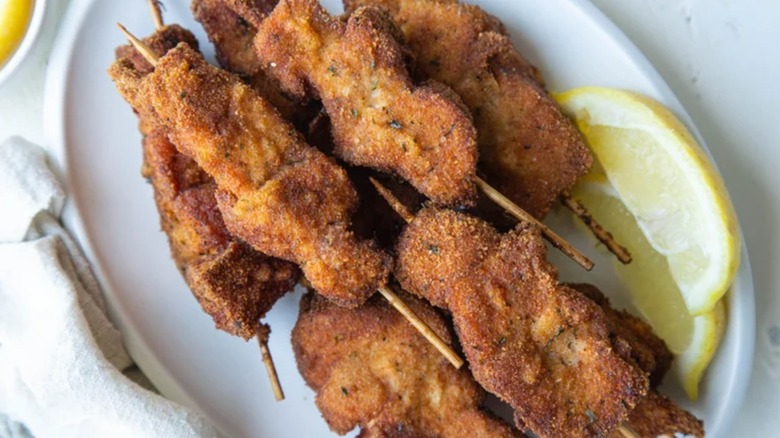
As immigrants brought their homelands' foods to U.S. steel centers, sometimes, those foods changed, from the name to the recipe itself, just depending on what ingredients were available. Take, for example, city chicken. It's not chicken. It's basically wiener schnitzel, as Barney Terrell explained, and it was popular among Pittsburghers during the 1920s and 1930s. (This was particularly true in the same Polish and Ukrainian immigrant communities that would've been supporting the steel industry, and not just in Pittsburgh either. As such, this dish was also found in other steel centers, such as Cleveland.)
Like much of the dishes popular with steelworker families, it was one born out of budget. While we may think of chicken as one of the cheapest — if not the cheapest — meats one can currently buy from the grocery store butcher section today, that wasn't the case in the early 1900s. Instead, chicken cost more than both pork and veal. Accordingly, enterprising home cooks would take either of the other two meats, cube it and bread it, stick it on a skewer, and bake or fry it, creating mock chicken that was then dubbed "city chicken."
Sandwiches
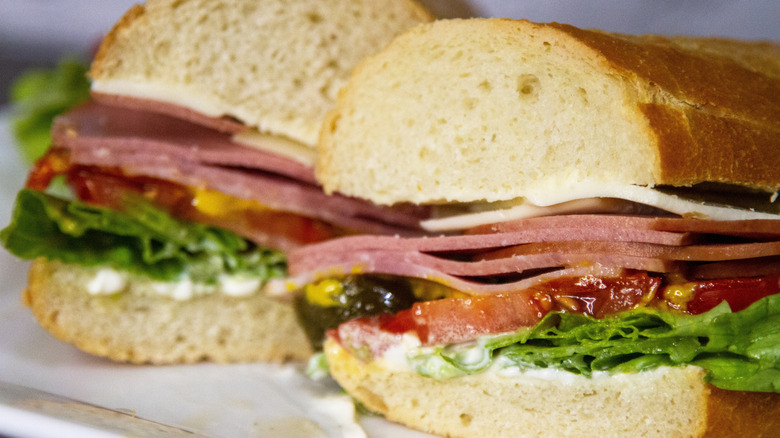
A lot of Pittsburgh's now-iconic foods can be connected to the steel industry, sandwiches being one of them — but, no, not that sandwich. Pittsburgh's most iconic sandwich is called, fittingly, the Pittsburgh sandwich and is credited to the Primanti Brothers restaurant; it features Italian bread piled high not with just meat and cheese, but also French fries and coleslaw — and while a lot of people like to think that the sandwich can be traced to steelworkers, that's just not the case.
Still, steelworkers ate their fair share of other sandwiches. "While sandwiches were the backbone of many millworkers' lunches, tastes varied," said Barney Terrell. "Contrary to popular belief, the famous Pittsburgh sandwich topped with french fries did not originate in the steel mills. The practice is generally credited to Primanti Brothers, which created the all-in-one sandwich for truck drivers and produce workers in Pittsburgh's Strip District. Steelworkers were more likely to carry hoagies, subs, or pepperoni rolls, the latter originating among West Virginia coal miners."
He added that, according to the Pittsburgh Survey of 1907, the average steelworker family in Homestead, Pennsylvania, spent $2.60 per week on food. Nearly $1.30 of that? Meat and bread.
Porketta sandwiches
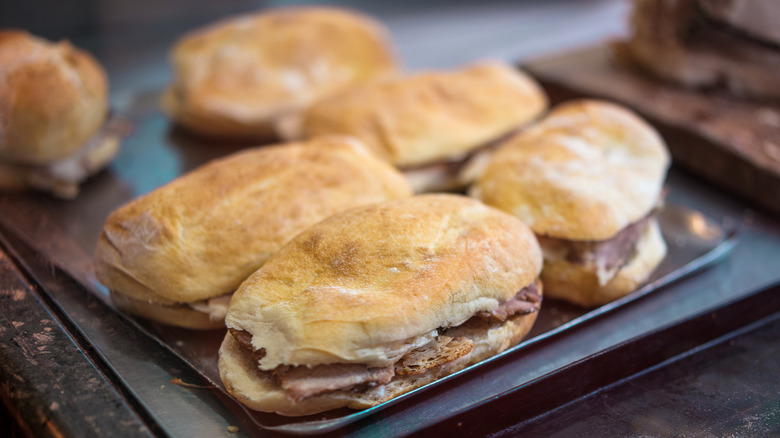
Porketta sandwiches deserve their own spot on this list, partially because of their geographic origins. So far, a lot of the steelworker foods we've covered have hailed from Pennsylvania or Ohio. However, there were plenty of other spots around the country that played their part in the beginnings of the steel industry as well — such as the Iron Range in Minnesota.
Long story short, in the early 1900s, U.S. Steel called upon Scandinavian immigrants in this part of the country to work within the industry. When the workers unionized, U.S. Steel pivoted and looked to new immigrants from Italy. These Italians brought with them Italian porchetta and, over time, cultures meshed and home cooks made do with the locally available ingredients, and that turned into porketta sandwiches.
A porketta sandwich is simple and sweet. Pork is roasted with plenty of fennel, garlic, and onions, and then shredded and served on a roll.
Homegrown produce
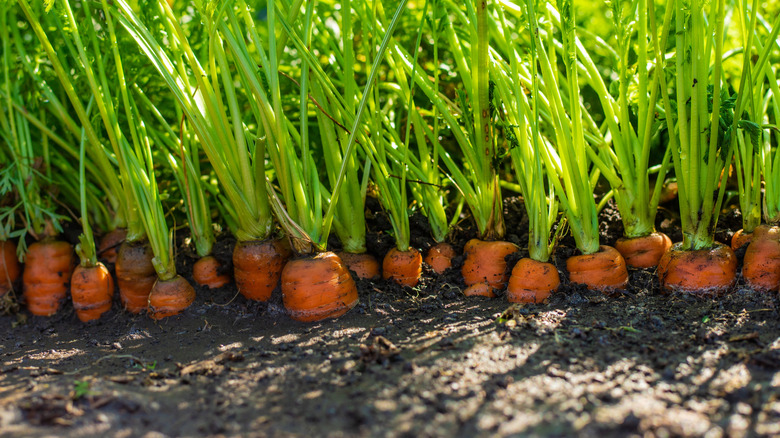
Reading about steel mills and urban hubs like Pittsburgh or Cleveland may convince you that every steelworker family was living in a tiny tenement with no green space to speak of. However, many families were able to grow their own produce.
As Barney Terrell told us, home gardens made fresh produce affordable, and they were a reliable source of food even when families were faced with layoffs, strikes, or similar economic woes. Families could then make that fresh produce last over the winter months through canning and pickling ingredients such as beets, beans, tomatoes, and cucumbers. The steel companies themselves even got in on the action.
Terrell said, "Recognizing the importance of self-sufficiency, U.S. Steel even offered courses on canning and pickling from the 1910s through the 1930s. The Duquesne Steel Works went a step further by sponsoring vegetable gardening competitions during the 1920s and awarding prizes for the best gardens. For many families, these gardens served as an essential supplement to household food supplies."
Nut rolls
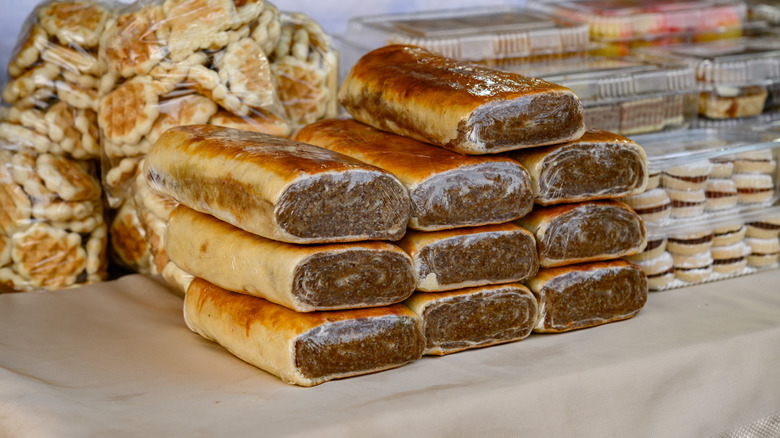
Nut rolls were a holiday tradition brought over by the Eastern Europeans who settled in Pittsburgh and the surrounding area in order to work — not just in the steel industry, but also as part of the broader industrial scene. The rolls can be traced to a wide swath of countries, and may be called different names depending on the location, but they all mostly fall in line with the same ingredients and flavor profile. You have a yeasted dough made with sour cream that's filled with walnuts and jelly. It's rolled up and baked, before slicing and enjoying.
Nut rolls are still frequently connected with church communities (which acted as a social hub for those early immigrants as they first settled into their respective Pennsylvania towns), and some say that a church is still the best place to buy one. Additionally, though not really a cookie, you can, in fact, still find nut rolls on a Pittsburgh cookie table.