

The Important Sourdough Rule You've Been Breaking This Entire Time — And Why You're Actually Right
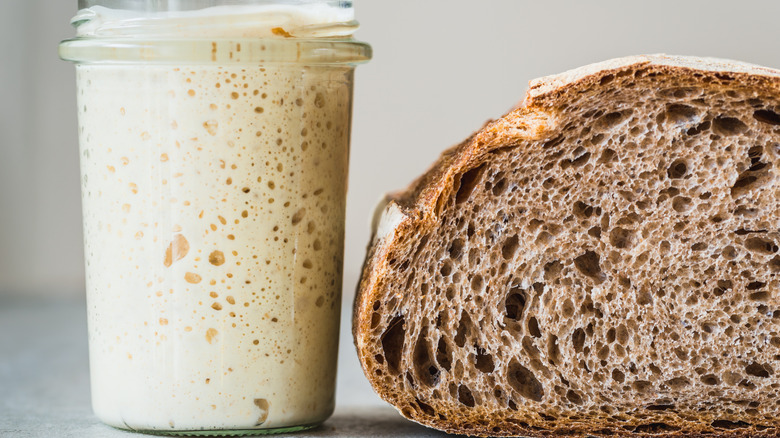
Rules are meant to be broken — sometimes — and waiting to use your sourdough starter at its exact peak is one rule home bakers can afford to break. This is the expert advice from Kate Freebairn, founder of The Pantry Mama and author of "Easy Sourdough On Any Schedule."
Some people drop everything they're doing the moment their starter is ripe and has reached its peak. This is when it's typically displaying strong fermentation activity, making it a reliable time to use it for leavening bread. While Freebairn acknowledges that using your starter at its peak is ideal, she also explains you can still use your starter successfully if it's just beginning to fall but is still bubbly, aerated, and clearly active. "For me, this comes back to one of the most important things I teach: Your sourdough starter is not the boss of you," says Freebairn.
She continues, "Understanding how your starter behaves gives you flexibility to make sourdough fit around your day rather than planning your whole day around a jar of flour and water." Changing how you feed your sourdough starter, putting it in the refrigerator to slow the fermentation process, and adjusting the amount of starter in a dough can all affect when the starter will be ready. Freebairn adds, " ... And learn to recognize a useful window of activity, rather than treating peak as a single minute that we must catch."
Missed peak? Your sourdough starter can still work
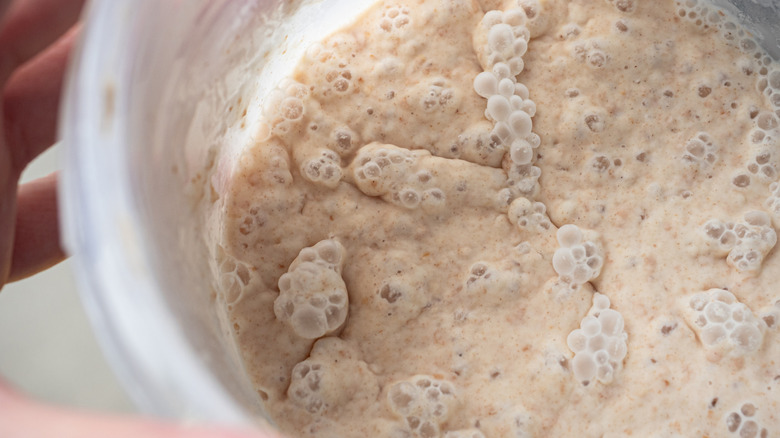
Don't relax just yet, though. Kate Freebairn warns that the further your starter moves past its peak, the more its leavening performance can change. "A starter that has only just begun to fall can still work very well, but your dough may ferment a little more slowly than it would with a starter used right at peak," she says. She also suggests that if that's the case, you can speed up the fermentation of your bread dough by increasing the amount of starter you add. Or, if you need sourdough fast, add a bit of commercial yeast to your bread dough.
All things considered, there are limits to how far past peak you should push your starter. Freebairn says, "A starter that has completely collapsed, become very acidic, and sat unfed for a long time is a different story." For a starter that's in these types of states, she recommends feeding it again before relying on it to raise bread.
If you're having trouble catching your starter within its prime time to use for bread, Freebairn suggests manipulating your feeding ratios in order to accommodate the window of time when you'll be able to use it. For a starter that takes longer to reach peak, Freebairn suggests a larger feeding ratio, such as 1:3:3 (one part starter, three parts flour, and three parts water) or 1:5:5. She also says a stiffer starter, such as a 1:3:2 feed, can also slow fermentation, giving you a wider window to use it.