

When You Need Sourdough Faster, Use This Speedy Ingredient
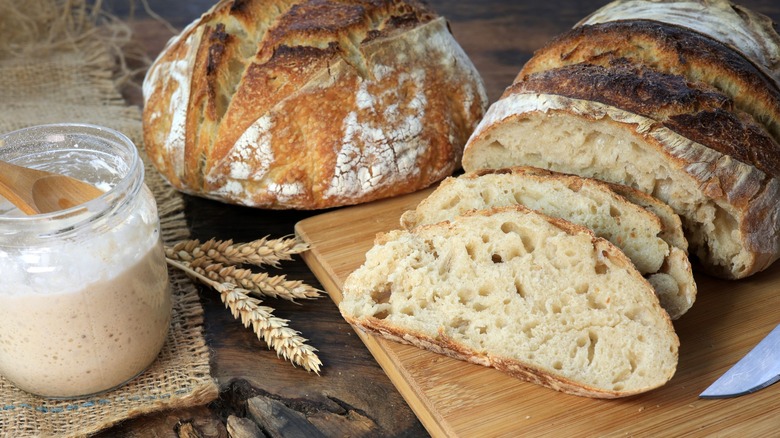
Baking a loaf of sourdough is about more than making bread that's easy to digest. There's a rustic charm in creating a chewy crumb with that exemplary sour tang using wild yeast found naturally all around us. But another crucial ingredient is patience. After waiting days or weeks for a sourdough starter made from scratch to show signs it's ready to use, the bread itself needs ample time to rise before baking. Thankfully, for folks who want to fill their home with the heavenly aroma of fresh-baked sourdough sooner, Hannah Dela Cruz, the founder of Make It Dough, mentioned a suitable shortcut.
The best-selling author of "Sourdough Every Day," a cookbook featuring 55 innovative ways to use sourdough starter and discard, says there's no shame in saving time by adding a store-bought product to assist with the leavening. "Using commercial yeast in sourdough bread speeds up fermentation, which can make the baking process much more manageable," she explains. "A naturally leavened sourdough loaf can take up to two days to complete, while adding commercial yeast can shorten the process to just a few hours."
It may even take "as little as 30 minutes" for the dough to rise, according to Cruz. The upside is this time-saving technique doesn't require any additional ingredients — folks can follow their go-to recipe as is. However, lactic acid bacteria will interact differently with sugars in the starch when using commercial yeast. This will modify the flavor and texture of the sourdough once it's baked, but not necessarily in an unpleasant way.
Commercial yeast alters the composition of sourdough
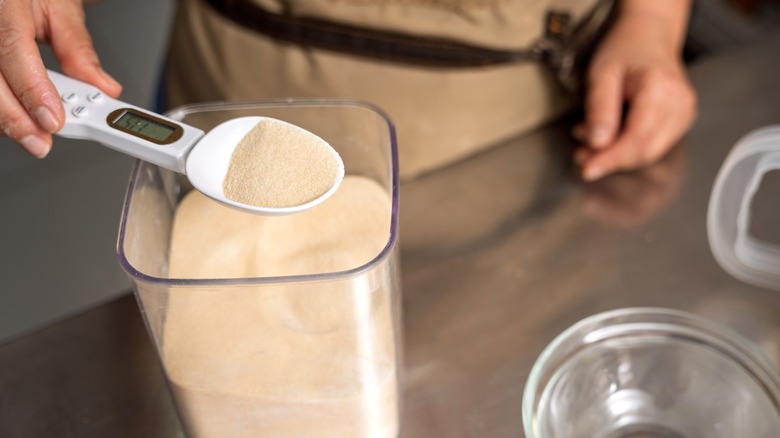
Having sourdough ready more quickly by taking a slight detour from the traditional method may be Hannah Dela Cruz-approved, but she admits the process isn't without its nuances. While commercial yeast can be used to speed up the process, faster isn't always better. "The tradeoff is that you lose some of the benefits of a long fermentation," she says. "Extended fermentation helps develop sourdough's flavor and texture, and it can also make some nutrients in the flour easier for the body to absorb."
One change you'll notice right away is that signature tang emblematic of sourdough will be subdued. Whether that's a good or bad thing lies in the eye of the beholder. Some folks purposely make a milder sourdough starter with potato flakes to achieve a similar result.
The bread's texture will likewise be altered. Using commercial yeast can create a more voluminous loaf, but it won't be quite as chewy as normal. The crumb will be more tender and the crust crispier. It's the price you pay for taking a shortcut. However, this alteration can be considered advantageous if you're baking a sourdough focaccia or baguette.
Even with the slight flavor and texture transformations, Cruz says you'll still walk away with a loaf of sourdough that beats store-bought bread. "Using sourdough discard with commercial yeast can still yield really delicious homemade bread," she insists. "Even though the yeast does most of the leavening, the discard can add more depth and complexity of flavor than a loaf made with flour, water, and commercial yeast alone."