

11 KFC Facts You'll Wish You Knew Sooner
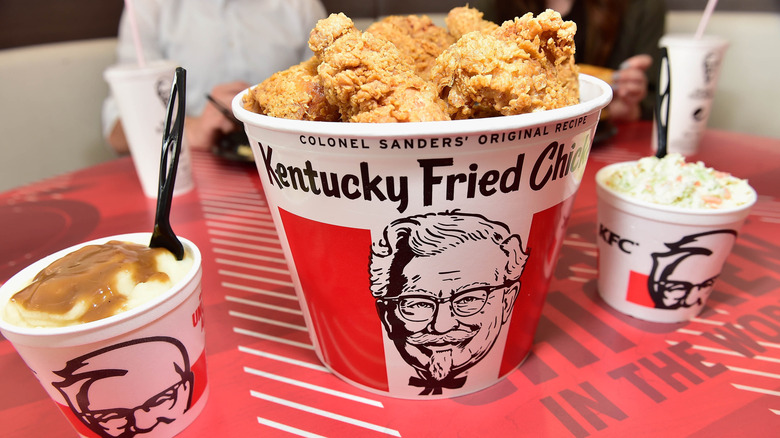
These days, everyone knows the iconic black-and-white portrait that graces the signage of KFC restaurants across the globe. What you may not be aware of, though, is the humble beginning of the man who started a fried chicken revolution. What originally started as one man feeding chicken dinners to hungry travelers at his service station has grown into more than 30,000 locations worldwide, with just over 3,700 found in the U.S. alone. Even though the chain's founder, Colonel Harland Sanders, passed away in 1980, his legacy continues to leave an imprint on chicken lovers around the world.
Now, even if you were aware of this humble beginning for the popular chicken restaurant, it may only scratch the surface of the chain's history. No, before you ask, we aren't going to reveal the 11 secret herbs and spices, a huge part of what makes KFC's chicken so delicious. That secret will likely remain until the end of time, though there have been many close calls to discovering the list. We are, however, going to reveal a few lesser-known facts about the restaurant, its food, and Mr. Sanders himself.
Colonel Harland Sanders was not actually a colonel
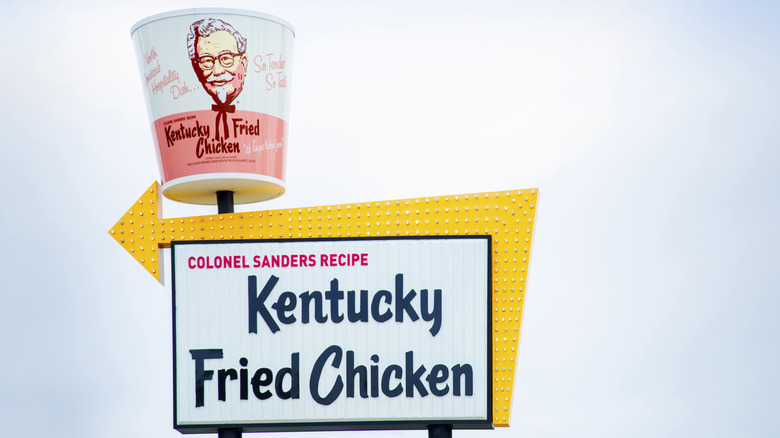
With the founder being widely known as a colonel, this little-known tidbit might cause you to do a bit of a double-take. The truth is that Harland Sanders was not a colonel in the military sense. Although he did serve in the U.S. Army, he was never given that official rank. Instead, it was bestowed upon him as an honorific title by the governor of Kentucky in 1935, a decision that gave rise to the figurehead we still know today as Colonel Sanders.
You see, the story of how the Colonel title became attached to Sanders' name dates back long before the world came to associate his face with chicken. It all started when Mr. Sanders began cooking for travelers in the back of his cramped service station. The travelers enjoyed these dinners, and word spread of his delicious chicken, leading to the birth of the Sanders Café in the late '30s. The food there eventually became so successful that the governor, Ruby Laffoon, gave Mr. Sanders the honorary colonel title for his contribution to Kentucky's culinary repertoire.
Now, even if this means that Sanders certainly didn't have any authority in the army, being given this title by the governor is still nothing to sniff at. A Kentucky Colonel is the highest title the governor of Kentucky can gift a citizen. With that in mind, this accomplishment is still notably impressive.
The name Kentucky Fried Chicken was not invented by Colonel Sanders
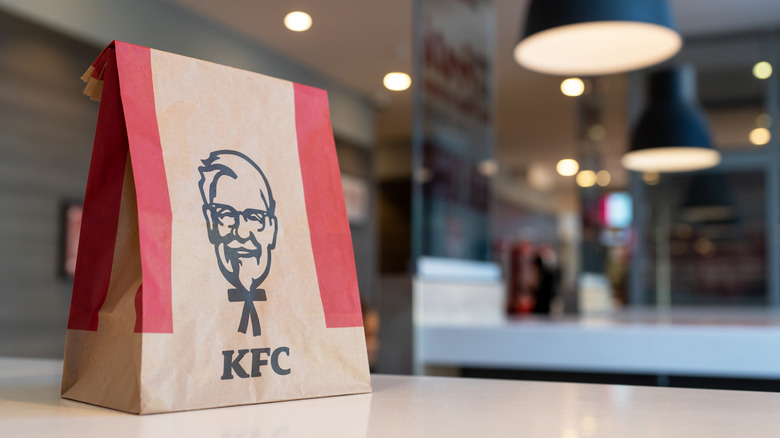
With Colonel Sanders' face plastered on every advertisement and chicken packaging item imaginable, it's understandable that you would assume he coined the name of the restaurant. But the name Kentucky Fried Chicken actually came from an unexpected source: a sign painter. You see, Sanders eventually decided to try his hand at franchising, a concept that was still newly emerging at the time. He eventually caught the eye of his first franchisee, Pete Harman, and the very first Kentucky Fried Chicken restaurant opened in Utah in 1952.
When Harman then decided he wanted to promote the restaurant with a sign, he hired a local painter named Rodney L. Anderson. Anderson, facing the dilemma of how to promote the chicken on the sign, coined the name Kentucky Fried Chicken. The name stuck, thanks to the fact that it ensured prospective customers wouldn't confuse the restaurant's chicken with the Southern-fried variety that was also common. This one moment created the name that would eventually become known worldwide.
There is a wild theory about why Kentucky Fried Chicken changed its name to KFC
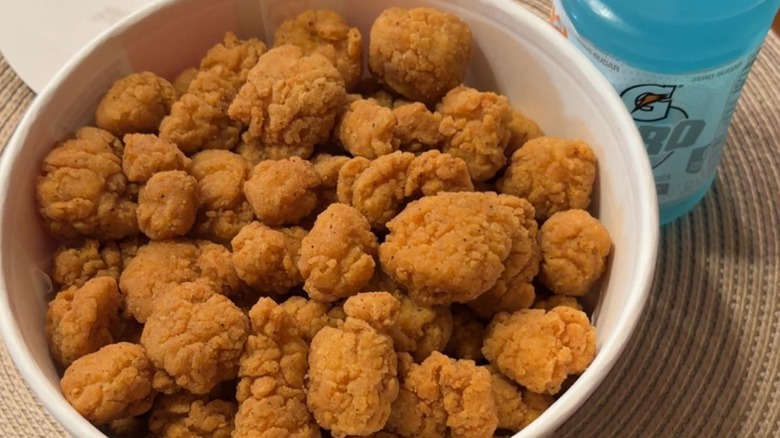
Sadly, despite the favorable view that the Colonel Sanders presumably had of the name Kentucky Fried Chicken, the full title has now gone by the wayside. In the year 1991, the iconic brand shortened its name to KFC. There are many theories as to why this change took place, but one of them is a bit more outlandish than the rest.
The wildest corners of the internet have suggested that the name change was put in place because of none other than mutant chickens. Yes, really. As the theory goes, mutated chickens caused the meat being used to no longer meet the definition of "chicken," which is why the name was then shortened to the acronym KFC. Now, before you get any ideas, KFC does not, we repeat, does not, actually use mutated chickens – this is one internet conspiracy without a kernel of truth. (And please be advised, dear reader, that if you decide to pop "KFC" and "mutated chickens" into the search bar, you will find several pictures that your eyes will, frankly, never be able to unsee.)
There are far more logical theories on why the company opted for this change. One common urban legend cites the fact that, in 1990, the state of Kentucky trademarked its name to tackle its debts. This meant that anyone who used the state's name had to pay fees. Another theory is that removing the word "fried" from the name created a healthier brand image, which it felt would appeal more to customers.
KFC loaded fries hack
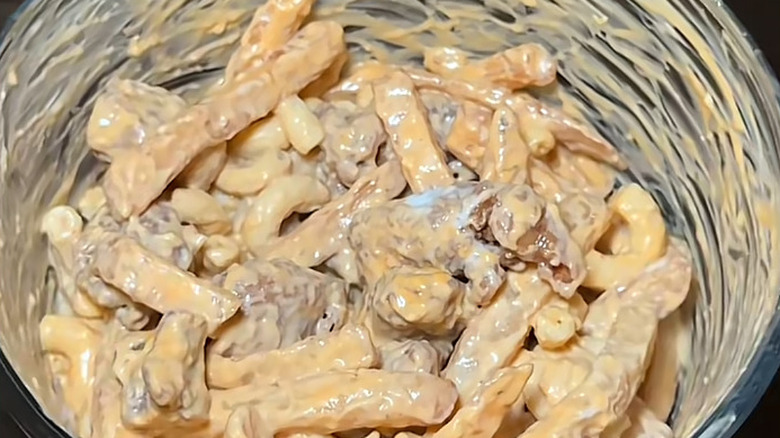
If all this talk about chicken has made your belly start to rumble, this one is for you. This food hack that's long circulated on the internet will fill you up in a jiffy. First, you will need to head to KFC and purchase fries, popcorn chicken or nuggets, mac and cheese, and gravy, then ask for both a buffalo sauce and a ranch packet. You will also need a container of some sort to mix these items in, such as a bowl with a lid, or even a KFC chicken box. Whatever you opt for, just keep in mind that it will need to hold up against cocktail-level shaking techniques.
Once you have all the ingredients, you are going to want to start out by pouring the fries and the chicken into the bottom of the container. Top this with the mac and cheese, gravy, and then finally the ranch and buffalo sauce, respectively. Some people add mashed potatoes or coleslaw to this mixture, or swap the sauces out for hot sauce or KFC sauce, so you can certainly make some swaps if these ingredients aren't catching your eye. Once the ingredients are added, you're going to want to add that lid and have your very own Outkast moment and shake it like a Polaroid picture. This might sound like an odd combination, but foodies on social media say it's a hack you won't want to ignore.
Colonel Sanders' nephew potentially leaked the secret recipe in 2016
One of the things that makes the KFC chicken so delicious is the secret recipe used for its chicken. The secret is tantalizing, creating a mystery that has been niggling customers since the start of the KFC empire. Understandably, with such a big secret, there have been many close calls over the years where the media has claimed that the 11 herbs and spices have finally been revealed. One of the most notable of these instances, though, came from an unexpected source: Sanders' own nephew, who accidentally shared a handwritten note stashed within an old album with a reporter.
As strange as this may sound, the goal of the article wasn't even to find the 11 herbs and spices in the secret recipe, per se. The reporter was covering Corbin, Kentucky, and presumably wanted to include the Sanders Cafe – which has now been restored and still stands as both a restaurant and a museum with KFC memorabilia to this day — in their piece.
The reporter reached out to Sanders' nephew, Joe Ledington, on their trip, presumably in the hopes of hearing some anecdotes about the local business. When Ledington appeared, he brought with him a photo album. On the back of the last will and testament written by Sanders' second wife, they found a handwritten list of herbs and spices that Ledington originally purported to be the original recipe, before later backtracking. Although this finding might sound pretty legitimate, KFC later stated that it was not accurate.
Colonel Sanders hated the KFC gravy
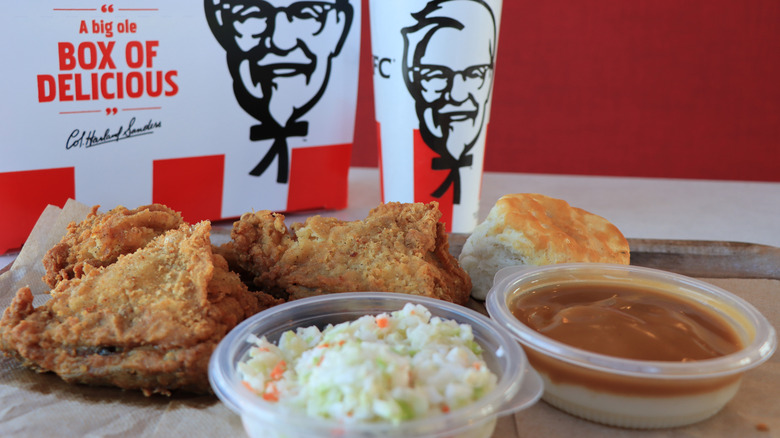
In 1964, Colonel Sanders made the decision to sell KFC to a group of investors. While he stayed on as a brand ambassador for the company, he certainly had some strong opinions on the changes made to KFC products. In fact, Colonel Sanders notably hated one popular KFC side and was quoted expressing some pretty negative opinions.
To clarify his rather extreme feelings on the subject, he was quoted as saying, "My God, that gravy is horrible. They buy tap water for 15 to 20 cents a thousand gallons, and then they mix it with flour and starch and end up with pure wallpaper paste" (via Justia). To make the situation even worse, Sanders went on to say, "There's no nutrition in it and they ought not to be allowed to sell it." This is certainly a blow to the KFC gravy lovers everywhere, who likely just released a collective gasp in horror.
Despite Colonel Sanders having such a low opinion of the gravy, it's clear that there is a dedicated following of the side dish. With countless copycat recipes attempting to recreate its flavor, as well as the launch of a gravy-scented candle several years ago over in the U.K. (yes, you read that right, gravy-scented), it's clear there are still countless fans worldwide.
Colonel Sanders was sued by KFC for his comments on its gravy
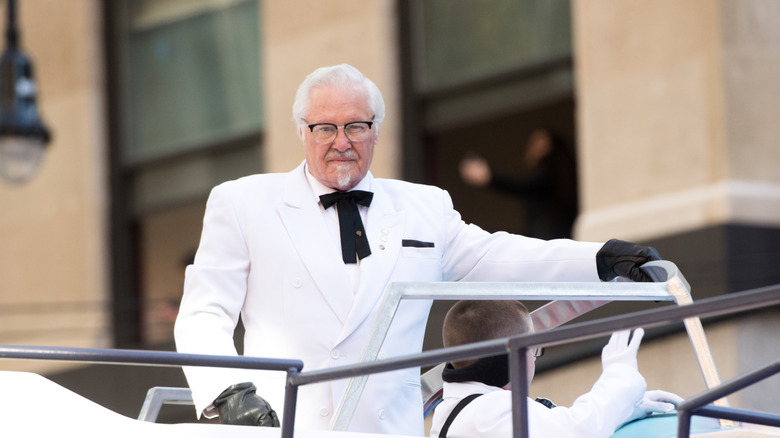
Sadly, we don't know the exact job description that accompanied Colonel Sanders' spokesperson role after selling KFC to a group of investors in the 1960s. However, it seems safe to assume the investor group expected Sanders to speak positively about the products sold at KFC, as well as the restaurant in general. You can then imagine how his comparing the taste of KFC gravy to that of wallpaper paste may not have landed well. It wasn't a glowing review, to say the least. As a matter of fact, Sanders was sued for making these opinions known.
The company accused Sanders of both defamation (false statements that may have hurt KFC's reputation) and libel (which, in a nutshell, is a written form of defamation). Although it certainly seemed the company had a compelling case based on Sanders' comments, the lawsuit was ultimately dismissed. While Sanders was clearly speaking about KFC in general in his comments, only one specific franchise sought legal action. But as the comments were not targeted towards that specific franchise location in any way, Sanders still managed to avoid legal ramifications.
One of the secrets of KFC chicken is using a pressure fryer
There is undoubtedly a lot of talk in the news, the marketing, and (as a result) this article about the trademark secret recipe behind KFC's popularity. But it's worth pointing out that its blend of herbs and spices isn't the only thing that makes KFC chicken different. Sanders used a pressure fryer for his chicken, a speedy alternative to the pan-frying technique that was popular at the time.
If you're wondering what the difference is between regular deep-fried chicken and this pressure-frying method, it turns out the results are quite different. Using the pressure fryer locks in the juices of the meat, leading to a more succulent bite of chicken. As it's sealed, it also reduces the risk of accidentally splattering oil everywhere.
While pressure frying still involves submerging the chicken in oil in the pressure fryer (as opposed to a traditional frying vat), this cooking method uses pressure to raise the water's boiling temperature. This is what leaves you with a juicy, pleasantly crisp piece of fried chicken cooked at rapid speed.
A couple claims to have found KFC's secret recipe in their basement
A recipe leak from Colonel Sanders' own nephew might be hard to beat as far as KFC recipe scandals go, but one Kentucky couple back in 1999 certainly came close. The pair had purchased their home from Sanders and his wife back in the 1970s and had even come to know the two well over the years. You can certainly imagine their surprise when they were sorting through some old boxes in their home and came across a date book with a handwritten list of 11 herbs and spices.
The couple, who considered selling the recipe at auction, decided to first contact KFC and confirm if it was real. You can certainly picture the panic running through the executive team when they received a call informing them their long-kept secret might have been sitting in someone's basement all these years. KFC responded by filing a lawsuit against the pair. Thankfully, it was later dropped when the list was eventually compared to the real KFC recipe. The company released a statement that it was not even close to the mysterious ingredients found in the true recipe, instead claiming it was most likely a stuffing recipe.
The restaurant's slogan was an impromptu creation
If you've ever wondered how KFC came up with the trademark slogan "it's finger lickin' good," you may have assumed there was some sort of professional tagline writer involved. Or perhaps you assumed that the Colonel himself came up with the slogan, what with his picture so often displayed next to it on signage and packaging. But the slogan that is so well known today was actually a KFC restaurant manager's response to a customer complaint about his perceived bad manners.
That is a lot to pack into one sentence, so let's start from the beginning. As the tale goes, this situation all started when a franchise owner from Phoenix, Arizona, began voicing TV commercials for KFC. Eventually, he was unable to continue due to health issues and asked the manager of his restaurant to do so in his place. The franchise owner would still contribute to the commercial by eating a plate of chicken in the background. When a viewer called in to complain that she could hear him licking his fingers, he responded to their complaint with what would eventually become the famous company slogan. The rest is history.
KFC stores its recipe in a vault
When it comes to keeping the secret of the 11 herbs and spices for that famous chicken, you could say that KFC goes to great lengths. Some would say it's potentially overkill. Not only does the chain keep its original recipe under lock and key, but they also lock it inside a well-protected vault at the KFC headquarters in Kentucky.
From cameras to motion sensors to thick concrete walls, this recipe is snug as a bug in a (possibly over) protected rug. That's right, if you were hoping to steal Colonel Sanders' recipe, you would essentially need James Bond-level security breach tactics. To add to the long list of safety measures, only two people at a time in the whole company are aware of the entire recipe.
Now, in case you're wondering if the recipe has ever left the vault and been brought out into the light of day, it has. There was a brief period in late 2008 and early 2009 when the recipe was moved so the vault could undergo renovations for additional layers of security. In true KFC fashion, it was inside a briefcase, which was then handcuffed to a security expert during the move. Though this level of security likely has you picturing some sort of melodramatic heist, it was reported that the move was smooth sailing without incident.