

12 Cheeses You Should Think Twice About Putting On A Pizza
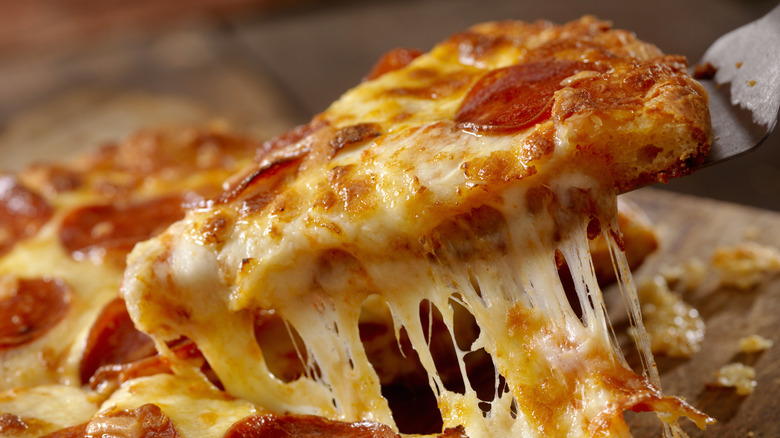
There are many different types of cheese you can slather on a pizza, although these days most people just go for your basic mozzarella or fontina. It's this layer of dairy goodness that forms the foundation of a great pie. Now, there are several qualities that make for a great base cheese, including the ability to melt into an even consistency, the ability to toast to a golden brown, and the ability to stretch into ribbons of delicious stringy goodness (as seen in the mouth-watering image shown above).
Unfortunately, not all cheeses meet those requirements, and some varieties that are wonderful in other areas (like taste!) fall short in these specific, yet crucial, pizza-focused factors. Sure, they still might make great pizza toppings (case in point: you're always only 12 cheese sticks away from making super duper stuffed-crust pizza, but you wouldn't use them as your base cheese), but they just fall a little short when you're expecting them to pull together the perfect pizza. Whether you're hosting a pizza party or (if you're like me) just keen to make a tasty pie to devour on the couch solo, here's our guide to cheeses you might want to think twice about piling up on your pizza dough.
1. Water-packed mozzarella
Now, you might be surprised to see mozzarella pop up on this list. It's not only one of the most popular pizza cheeses in the world, but a 2014 study in the Journal of Food Science declared it ideal for a pizza. The study, titled "Quantification of Pizza Baking Properties of Different Cheeses and Their Correlation with Cheese Functionality," found it performed well due to its particularly stretchy nature. This allowed it to bubble and brown better than other cheesy options. (Also, it's such a good and simple option that you only need two simple ingredients for homemade mozzarella cheese. No, really!)
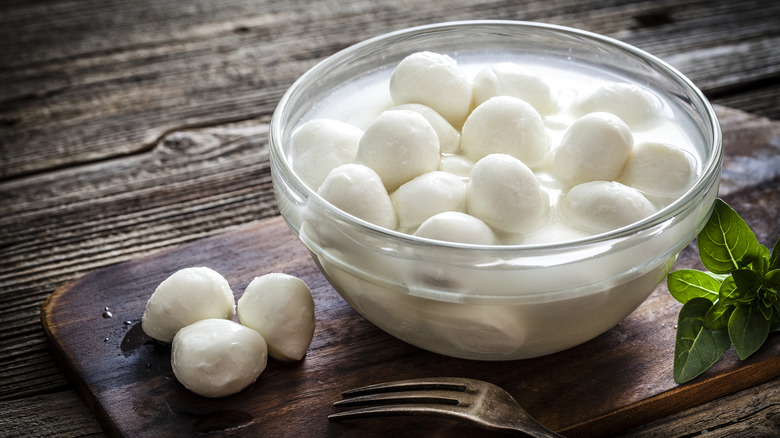
But that low-moisture description doesn't apply to all mozzarella. Fresh mozzarella is traditionally stored in a brine mixture for the sake of preservation. That watery brine helps keep the cheese moist, which can result in a soggy, lifeless pizza. That's why most pizzas are made with low-moisture shredded mozzarella, the kind you can find in any convenient grocery store cheese aisle.
But if you still want to use the fresh (and often best-tasting) kind of mozzarella, you can either squeeze out the moisture with cheesecloth or simply mix it in a blend with the low-moisture kind to soak up some of that moisture. Either way, you won't be disappointed.
2. Pre-grated Parmesan
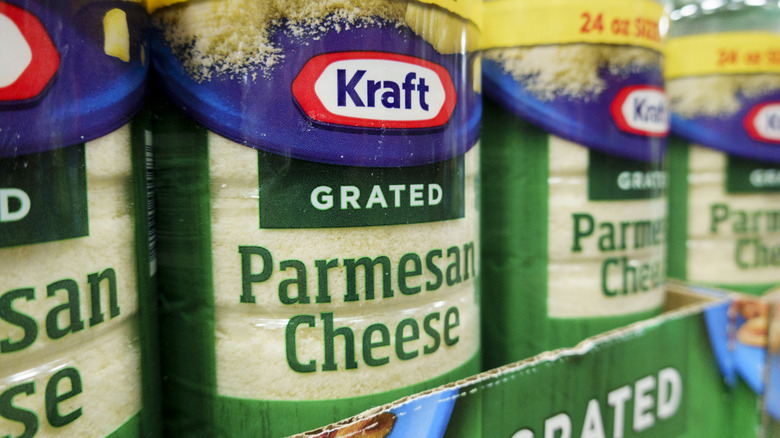
If you're looking to make a quick and easy pizza, what could be easier than using pre-grated Parmesan? After all, these kinds of ready-to-serve granular cheeses are easy to find, easy to pour, and the shelf-stabilized versions can last for around a year on a pantry shelf. In fact, they're so handy that you may not always take the time to check if the Parmesan you're buying is the real deal.
The problem is that to keep those particles of tiny cheese separate, pre-grated cheese brands use anti-caking agents such as a blend of potato starch and cellulose, a product often derived from wood pulp. And while they keep those cheesy particles from clumping, those agents can also prevent the cheese particles from melting properly, making it more likely to burn on a pizza. And we think you'll agree that a burned pizza is a bad pizza.
Now, those same anti-caking agents are often found in pre-shredded cheese like your favorite bagged mozzarella, but they don't affect the larger shredded pieces as much as the tiny pre-grated cheese particles. So, one of the best uses for these pre-grated Parmesan brands is to add a little dusting at the end of the cooking cycle, where they can brown up a little before serving without totally sabotaging your pizza.
3. Dry-aged Parmesan
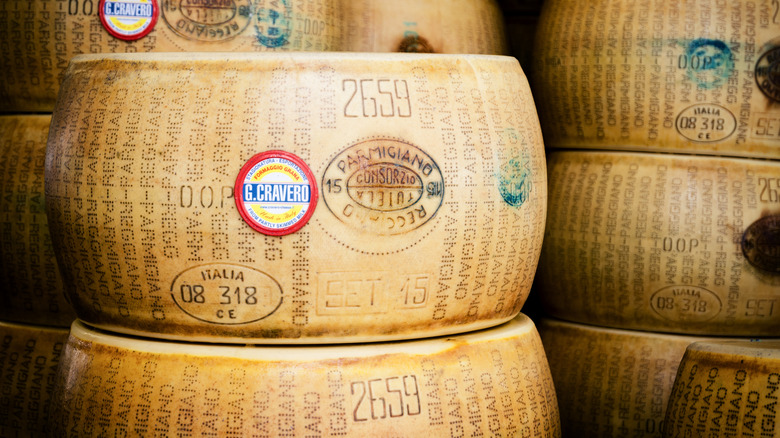
After reading the last entry, you might want to switch to an authentic, dry-aged Parmesan for your pizza instead of using something containing an ingredient derived from wood pulp. And we can't blame you — but the more authentic option can be a problem too. Once again, the issue is moisture. Aged hard cheeses like Parmesan don't have enough moisture to easily melt when heated. Instead, it can brown (and burn!) quickly, making it a bad addition to your pizza's base layer.
That's why it's often used as a finishing cheese in pizza restaurants, often served in a shaker that diners could add to a finished pizza, or in those little packets that clog up everyone's junk drawer before you throw them out years later. (Although those tend to be the pre-grated cheese brands we mentioned above.)
But dusting your pizza with Parmesan isn't the only way to add its unique umami flavor to your pie. Some recipes add a thin layer of aged Parmesan to the pizza dough, covering it with the other ingredients to prevent the cheese from burning as it toasts up to a nicely browned finish.
4. Cheddar
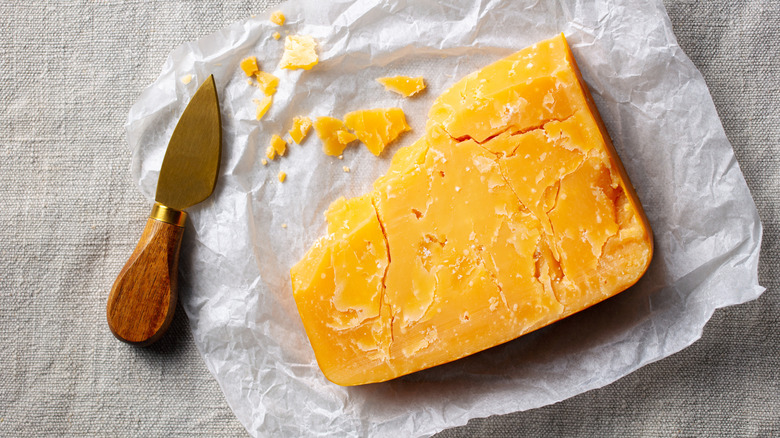
Its creamy, tangy taste has made cheddar one of the most popular cheeses in the world. In fact, a recent survey by Talker Research found that it was the single most popular cheese in the United States. So, why wouldn't you want to cover your pizza with it?
Well, one of the reasons mozzarella makes a great pizza cheese is that it's elastic, which means it can form large bubbles that pop and release their moisture into the oven. However, cheddar is less elastic than most pizza cheeses, which means it doesn't form the same bubbles. It doesn't help that cheddar also releases a lot of grease as it melts, which can only add to making your pizza a liquid-filled mess. Sure, that might be great on a Chicago deep dish pizza — which is basically a small tub filled with marinara sauce — but it's less great for a pizza you don't want to swim in.
But that doesn't mean you have to completely leave it out of your recipes entirely, as you can always blend it into your mozzarella to give it some bite. You just might want to make sure you're not overdoing it — especially if you want your pizza crust to be nice and dry. Instead, you just might want to save that cheddar for where it might do the most good, like a nice, gooey grilled cheese.
5. Ricotta
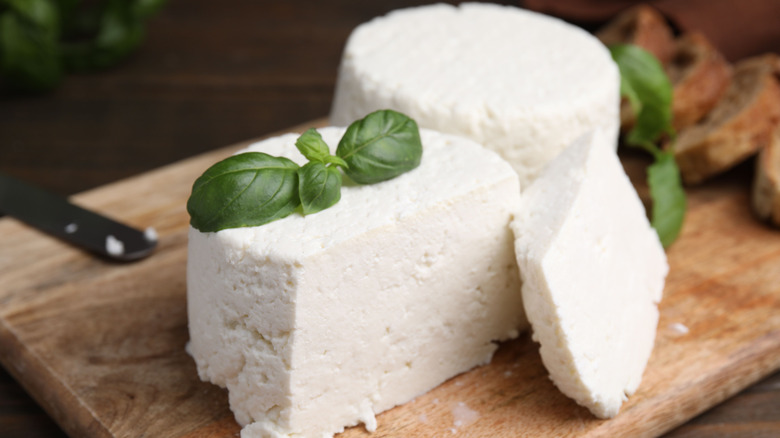
Ricotta is an Italian cheese made from whey, a watery byproduct of the cheesemaking process that contains milk proteins. (Basically, it's the juice that's squeezed out of other cheeses, like Parmesan or mozzarella.) This results in an extremely soft, spreadable cheese that blends easily into sauces, making them thicker and richer.
But all that moisture can be disastrous for a pizza, as this is another cheese that may result in a damp, soggy crust. However, there are pizza recipes that use it – like a New York white pizza — by blending it with other cheeses. Other recipes limit the moisture by removing the sauce, creating a white pizza topped with ricotta. Or you could simply add small dollops of ricotta as a pizza topping, which will give a pizza its mild, rich flavor without drenching it in extra moisture. Just make sure you don't add too much if you want a crisp, dry crust.
6. Processed American cheese
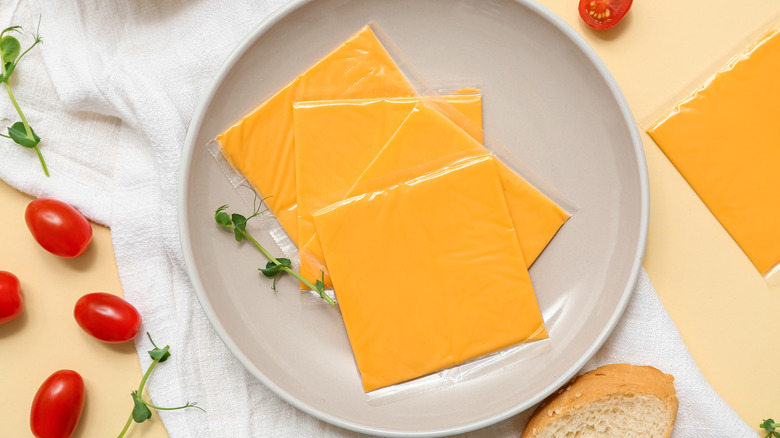
You'd think American cheese would be perfect to put on a pizza, as it melts perfectly without splitting. And isn't that what you want? Lovely, melted, goopy cheese? (If you're curious why that's the case, it's mainly because of American cheese's emulsifying agents, which are just one of the reasons why certain cheeses are better at melting than others.)
But the problem with using American cheese as your pizza base is that it tends to resist browning, which means it won't give that lovely baked cheese taste most of us are looking for in a pizza. However, there is one exception: Altoona-style pizza, a regional dish from Pennsylvania that features thick Sicilian-style dough covered in tomato sauce, salami, bell peppers, and yellow American cheese. (Apparently, the original recipe used Velveeta, but American has since become the standard.)
This version avoids the complaint that American cheese won't brown by simply ignoring it. And as you might imagine, it's a little divisive among online pizza fans, with one Reddit post in r/pizzacrimes earning comments such as "this is an open-face broiled cheeze-product sandwich, not pizza" and "I'd rather have no pizza."
7. Halloumi
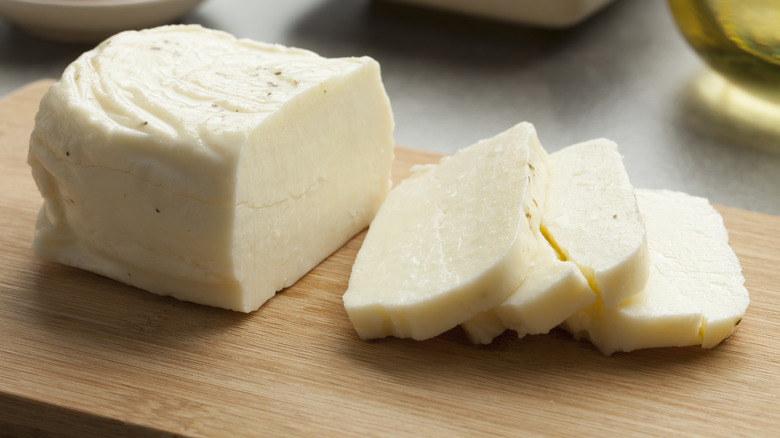
This salty cheese from Cyprus is typically made by boiling a mix of sheep and goat cheese curds in whey, which results in a semi-hard cheese with an extremely high melting temperature. Because of that, it's ideal for grilling or frying without changing shape. One of the most popular recipes is halloumi souvlaki, which grills up marinated halloumi cubes on skewers with vegetables. It's hard to imagine something like mozzarella holding up to that kind of heat; after all, there's a reason you don't see a lot of cheese on shish kabobs, right?
But as you might imagine, that doesn't make it great for pizzas, as it refuses to melt like traditional cheese. However, that doesn't mean it has no place on pizzas. It's the centerpiece of Cypriot pizza, a dish that serves grilled halloumi as a topping, which is popular enough that Papa Johns even launched its own version of it in the U.K. in 2024. So, feel free to top your pizza with it — just don't expect it to melt unless you're willing to risk burning your pizza.
8. Blue cheese
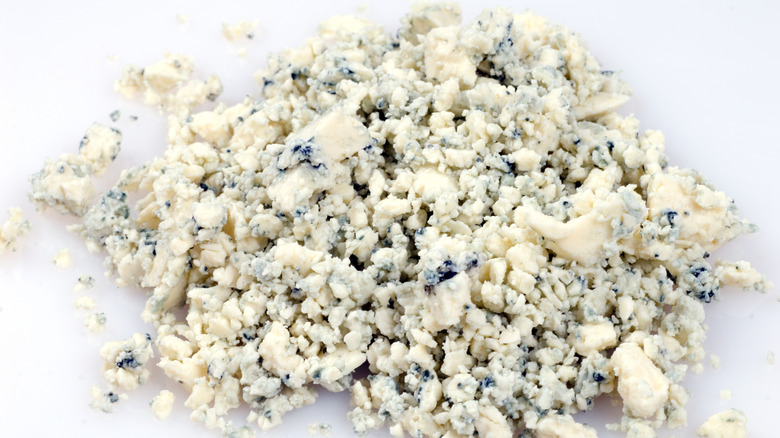
Blue cheese, with its distinctive, colorful, moldy, and sharp, funky taste, is probably the most divisive type of cheese on the market. Some people love it, while others hate it. But how does it fare on pizza?
Well, it definitely adds a lot of flavor to any pizza, which some find a little too intense. (There are entire Reddit threads full of posters variously declaring it to be the best and worst thing to find on a pizza.) But the biggest problem with adding blue cheese to a pizza is that it melts like butter. While that sounds delicious, it doesn't have the stretchability that you expect from a good base cheese.
Instead, we recommend mixing blue cheese with another more suitable cheese that can support a pizza while the blue cheese delivers its trademark sharpness and tang. Or you could always sprinkle it on as a topping, where it can melt into an almost-glaze without adding a ton of buttery liquid to your dough.
9. Panela
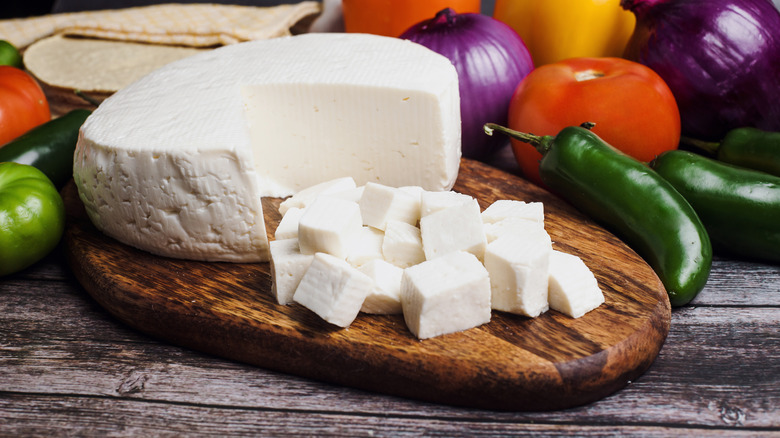
If you're not familiar with it, panela is a mild-flavored cow's milk cheese from Mexico with a firm texture known for squeaking when you bite into it. It's often served crumbled into salads or pan-seared as a snack (or as it's called in Spanish, a botana) on its own or wrapped in a tortilla.
Texture-wise, panela is similar to halloumi. However, panela is a basket cheese made by draining the whey from the curds in a mold — traditionally, some sort of basket (hence the name). Their similar consistencies mean panela will also hold its shape while being cooked at high temperatures, but it also won't melt.
Like halloumi, it can still be great on a pizza if you use it as a crumbled topping or just sear cubes of it into little, delicious, golden-brown bites. If you're looking for something with a stronger, saltier taste, might we recommend mixing some Cotija cheese in with your mozzarella? It's got a great tang that we can't recommend enough, and that you'll definitely remember.
10. Feta
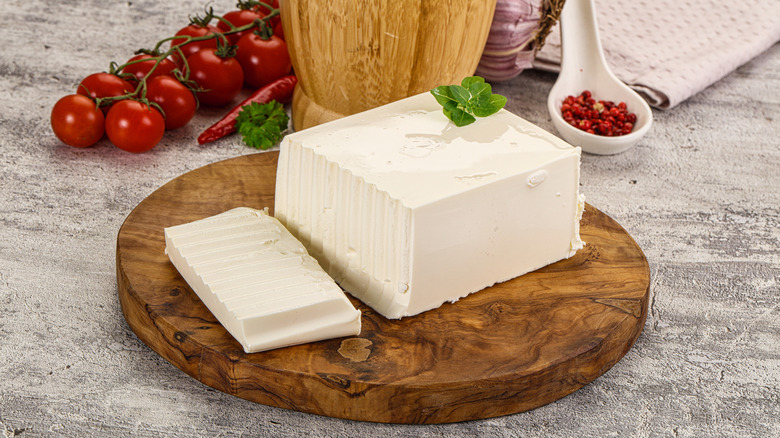
You probably know feta from encountering it cubed on a salad or crumbled on top of a pasta, where it typically adds a salty, sharp flavor to just about any meal. (Although, personally, we suggest you ditch the grocery store crumbles and eat better feta.)
However, the problem with putting feta on your pizza is that, as another brined cheese, it also provides a lot of extra moisture. And as we've mentioned before in this article, too much moisture is the mortal enemy of a crisp, well-browned pizza crust. Unfortunately, it's also another cheese that doesn't stretch well. But you can mix it with another cheese, such as low-moisture mozzarella, for a tasty blend. Or you could always crumble it and sprinkle it on top as another pizza topping.
We should point out that feta is a cheese that works especially well on a white pizza, where the lack of sauce can limit the moisture in your finished pie. And it certainly pairs well with your common pizza staples, such as olive oil, tomatoes, and actual olives. After all, there's a reason Greek pizza is so popular, right?
11. Pecorino Romano
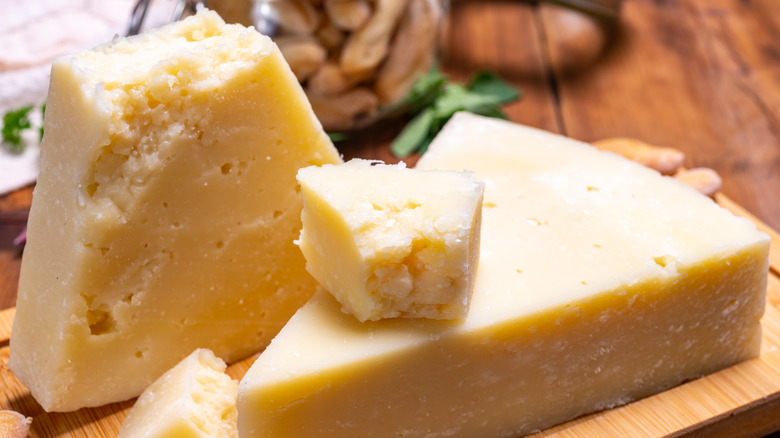
This one's a hard, granular Italian cheese originally made, as you could probably tell from the name, in Rome. It has a bold, sharp taste that's a little smokier than the similarly textured Parmesan cheese. While that sounds like it would be great on a pizza, Pecorino suffers from the same problem that aged Parmesan does: its low moisture and high protein help the cheese to brown much faster than other cheeses, which can often lead to it burning before the pizza crust is finished cooking. That's why it can even be tricky to mix Pecorino Romano with other cheeses, as it doesn't melt easily and combine well like other, more popular cheeses.
However, it can still be a great topping, especially when added right before or right after you're finished baking. In fact, it's an important ingredient in cacio e pepe pizza, which is inspired by a pasta dish that's mainly flavored with black pepper and Pecorino Romano. Many recipes for these pizzas use mozzarella as the base cheese, but include a hefty sprinkling of Pecorino on top of the dish to simulate the pasta's unique flavor. To take things a step further, you can always give your cacio e pepe (both in pasta and pizza form) a delicious twist with one simple ingredient.
12. Brie
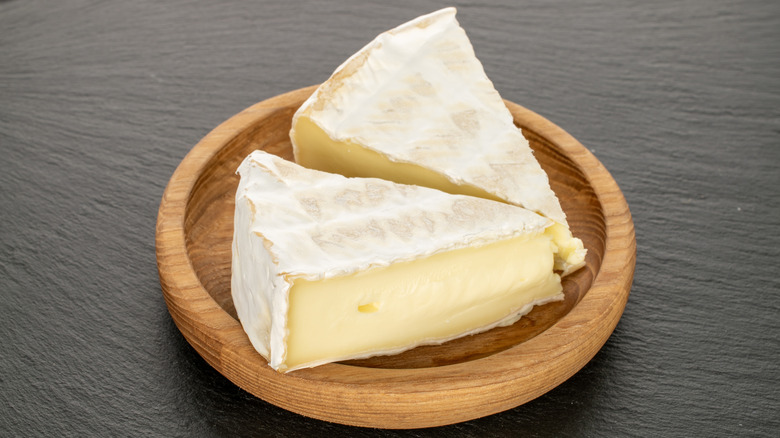
Brie is a rich, buttery cheese with hints of mushrooms and nuts. This soft, cow's milk cheese is known for its soft, almost custard-like consistency that flows deliciously onto toast or crackers, where it adds rich, creamy decadence to just about any dish.
But that very softness makes it a poor choice for pizza, as it's another cheese that doesn't stretch and will just completely melt. While cheeses like mozzarella have long protein chains that allow them to stretch, brie simply separates into a greasy pool of oil and milk solids that will overwhelm even the thickest pizza crust. (Although that doesn't sound too bad for a deep-dish pizza, does it?)
Now, that doesn't mean brie has no place on your pizza, as it can be a tasty topping when you balance small cubes of it on top of your dish. Or you can simply blend it with another cheese, such as mozzarella, to add that rich brie flavor to your recipe. You can even wrap a wheel of brie in dough to create a melty tub of cheese goodness that's less like a pizza and more like a bread bowl full of cheese. And yeah, it looks as good as that sounds.