

11 Things Customers Steal The Most From Grocery Stores
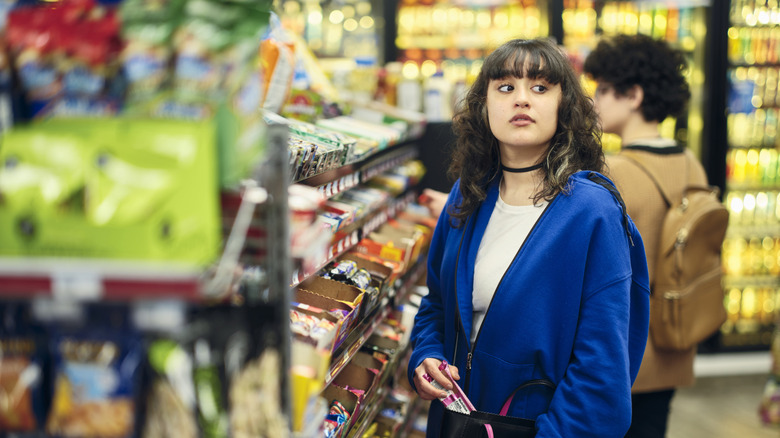
We've written about the most common restaurant items stolen by customers, but we have yet to wade into the waters of the top products snagged by shoppers at grocery stores. While we can understand that sometimes misunderstandings or trouble can arise when shopping with reusable bags (which may land you in handcuffs), this article covers the actual action of product pinching.
When it comes to grocery stores, they are basically kryptonite for shoppers with sticky fingers. The temptation to take, take, take (and then maybe even resell) is large, and, sadly, seems to be getting more in alluring by the day. Those aisles upon aisles of pick-me merchandise range from daily basics to tiny luxuries. These grocery products give plenty of opportunities for folks who've concluded that price tags (much less actual payment) clearly does not apply to them.
And, while shoplifting in the retail space is hardly a new phenomenon, grocery stores do seem to have their own quirky little subculture, where shoplifter profiles take on a clear (albeit seemingly bizarre) approach. In the grocery store juggernaut, some commonly lifted items may seem apparent, while others may really surprise you. So, what exactly are shoppers stealing most often? We dug into just that, to uncover the top items that drive the grocery world's biggest losses.
1. Packaged premium meat
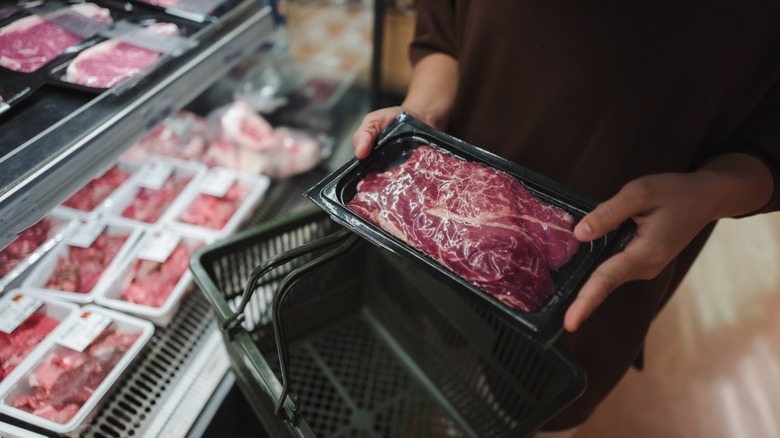
If you're wondering what grocery-store thieves have their eyes on, packaged meat is high on the list. Ribeye steaks, bacon, and ground beef are particularly vulnerable, partly because valuable cuts can be resold for a hefty profit, and partly because rising food costs have made even basic proteins more difficult to afford. Bacon and ground beef happen to be among the top most overpriced food items from Aldi mentioned by customers.
And, while grocers realize meat theft is on the rise, safeguarding fresh meat creates a particularly tricky security issue. Unlike a tiny boxed item, many meats are bulky, perishable, and not exactly suitably primed for a standard security tag. Grocers have tried experimenting with various deterrents, spanning the spectrum from protective nets to safer boxes, even AI-assisted self-checkout monitoring (all with varying results). One specialized tagging approach reportedly reduced losses by 40%, while another retailer found the labor involved in applying nets surpassed the savings. Clearly, that magical anti-theft solution for steak and its siblings remains to be found.
The problem is not limited to this country. News coverage has highlighted the prevalence of meat theft in the U.K. and elsewhere, while American stores continue to introduce increasingly conspicuous measures to monitor meat cases. Some shoppers are startled by the sight of this beefed up security, while others reluctantly admit to understanding why it is happening. Regardless, the fact remains that it currently poses a serious security concern.
2. Non-alcoholic beverages and energy drinks
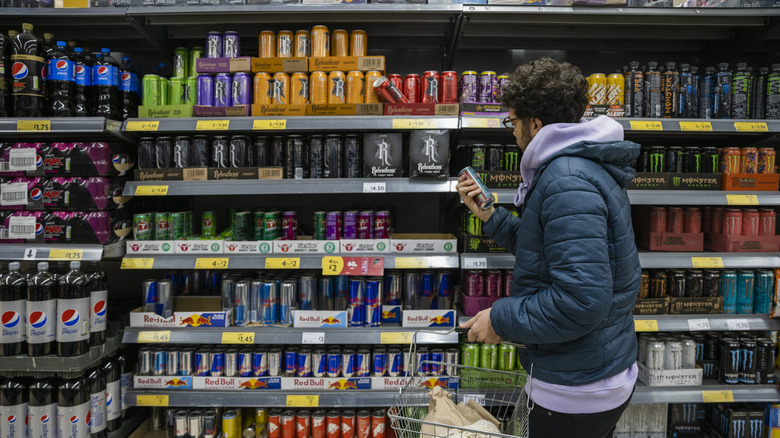
We've explained recently just why energy drinks normally come in tall, skinny cans, but what we haven't ventured into are the reasons why these highly caffeinated beverages are becoming some of the most commonly snagged by grocery store shoplifters. Energy drinks and other nonalcoholic beverages have joined the list of everyday grocery goods increasingly disappearing from store shelves. Some news reports point to teenagers as particularly common culprits in this category, with individual stores identifying these beverages as a significant factor in total store theft.
The category also fits into a larger shift in how grocery theft is being understood. A recent survey found nonalcoholic beverages among the most commonly shoplifted items, alongside food. A chief consumer finance analyst went on record connecting that pattern to financial pressure on American households and what they deemed as more of a survival-based type of shoplifting.
Basically, that means not every stolen energy drink is necessarily part of some grand criminal scheme. Researchers have pointed to high prices for groceries, gas, and other necessities as factors shrinking families' financial wiggle room. So yes, there is something pretty unexpected about an energy drink becoming a grocery-store theft target. But, beneath the tall cans and epic caffeine contents is a much bigger story about demand, affordability, and what happens when what used to be everyday purchases stop feeling quite so reachable to quench our thirsts on the daily.
3. Cheese
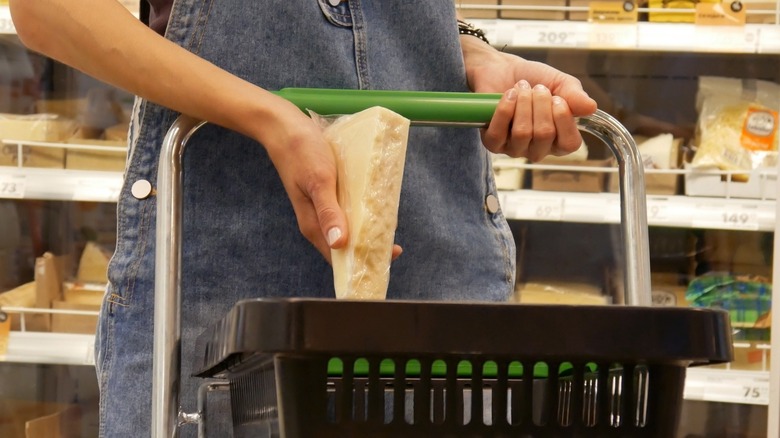
Cheese has a strange little advantage in the grocery-theft world — it can be worth a surprising amount of dough, without requiring much space. That makes everything from ordinary shredded cheddar to imported or otherwise fancy wheels and wedges very tempting targets (especially when the higher-end varieties can cost as much as $30 per pound).
News reports have cited cheese as an especially serious source of grocery loss, with some estimates suggesting nearly 4% of cheese inventory disappears through theft each year. The pricier artisan and imported varieties are particularly attractive because they can be resold, giving thieves a potential profit motive rather than simply a refrigerator full of lifted mozzarella. But, not every cheese thief is thinking like a black-market bandit. Some casual shoppers steal it for their own kitchens, too, particularly as food prices continue making formerly regularly enjoyed dairy treats now feel like once-in-awhile, special treats or rare luxuries. When a good wedge of cheese starts carrying a price tag that feels only appropriate for a very special occasion, it suddenly makes shoppers eye that dairy case a little differently.
Retailers face a massive security headache trying to protect these compact, valuable products without making the aisle look absurd. But, as skyrocketing prices and high resale value turn this everyday staple into a prime target for shoplifters and organized crime alike, let's just say someone is always trying to cut the cheese out of their profit margins.
4. Razor blades
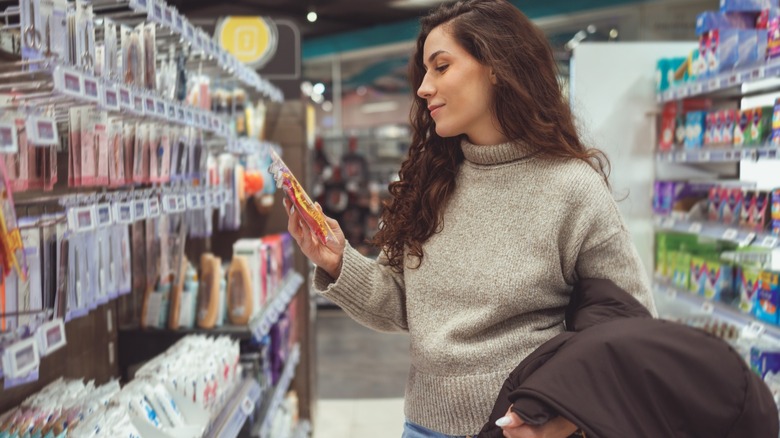
Walk into any grocery store, and it's easy to see why razor blades are frequently stolen. They are tiny, expensive, always in demand, and incredibly simple to slip into a pocket or backpack. Because of this, they have long been a top target for theft. Just one package can cost upwards of $20 or more, which is a lot of value packed into a very small box. For someone looking to steal merchandise for resale, that compactness is practically an invitation to swipe and sling.
But, there is another important piece of the equation, which is demand. People need razors (most are using them on a near daily basis), which means stolen brand-name blades and cartridges can potentially be sold at a discount without requiring much explanation (versus off-brand names that some buyers might blink twice at, wondering about the quality). With brand names, second-hand buyers just see the lower price tag and dive in.
News coverage has also highlighted how easily these products can "disappear" into a bag. Unlike a bulky grocery item that might attract attention, a tiny package of blades or replacements does not exactly announce itself on the way out the door. That explains why the razor aisle can feel strangely fortified lately. You might stroll freely past the bread, produce, and cereal, only to discover the shaving supplies have been placed behind a locked glass panel similar to the Mona Lisa at the Louvre.
5. Fresh produce and fruit
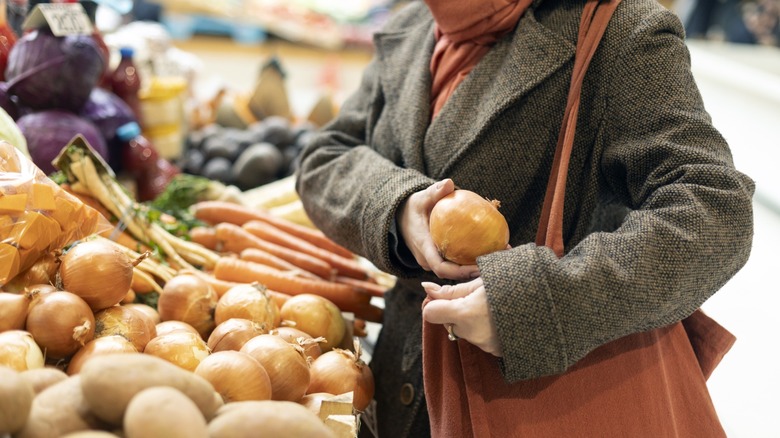
It's no secret that organic food is more expensive, and it appears shoppers are finding ways around paying for that premium tier of produce (or in some cases, even the regular fresh produce versions). In fact, Walmart customers name organic produce among the most overpriced foods in the store. This hefty price could help explain why shoplifters have started getting creative with the produce section. Fresh fruits and vegetables have become part of the grocery store theft equation, particularly as self-checkout has made prices easier to manipulate. One reported tactic involves ringing up expensive items, such as organic avocados or berries, under cheaper produce codes (essentially asking the register to believe an avocado is a banana).
The economics behind that behavior are difficult to ignore. A national survey found that more than a third of U.S. households are cutting back on fresh fruits and vegetables following a 6.1% annual increase in prices. Nearly three in ten families now consider a healthy diet (including fresh fruits and veggies) not realistic from a financial standpoint.
None of this makes stealing acceptable, but it does help explain why produce has entered the shoplifting chat. When berries, avocados, and other fresh foods become increasingly difficult to fit into a grocery budget, the divide between wanting healthier food and being able to afford it becomes glaring. Grocery retailers are taking notice, too, with industry discussions continuing to flag theft and fraud as big concerns.
6. Alcoholic beverages
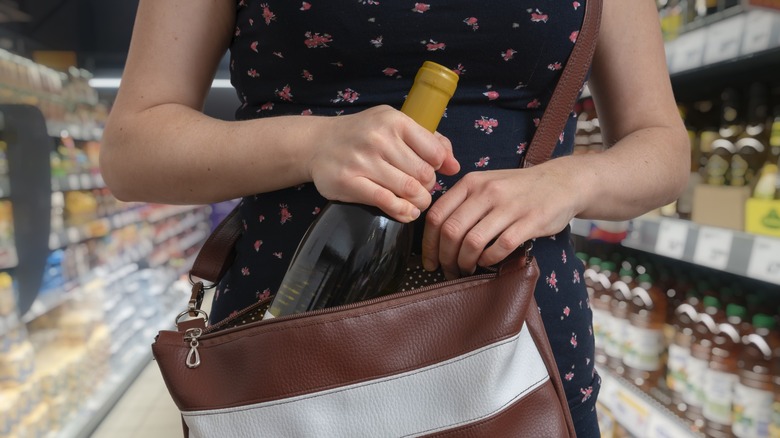
Perhaps the only thing aged longer than fine wine is the list of reasons thieves have for stealing it. Alcoholic beverages make especially tempting targets for shoplifters due to their perfect combination of value, portability, and long resale window. Unlike fresh meat or produce, an alcohol bottle doesn't become questionable within a few days' time. In fact, the pricier stuff can sit around for quite some time waiting for a buyer, which makes liquor particularly attractive to thieves looking for a quick payday.
Viral videos abound showing just how brazen alcohol thefts have become, with suspects filmed grabbing bottles and stuffing them into bags while security personnel and bystanders nonchalantly exist nearby. In some cases, the offenders just casually walk away (cool as cucumbers), and the lack of physical intervention has even become a major point of debate among viewers. Some commenters focus on the legal and practical limits faced by security staff, while others are stunned that scenes like these unfold so openly (and often).
These videos are hardly isolated incidents, with news commentary commonly reporting alcohol losses in the thousands of dollars.Reports also indicate alcohol theft is not merely an American headache. Retailers elsewhere have been dealing with the same problem. So the next time you see a booze bottle wearing what looks like a tiny necklace, there is a reason. Apparently, grocery store alcohol now needs fancy jewelry to fend off freeloaders.
7. Branded deodorants and body washes
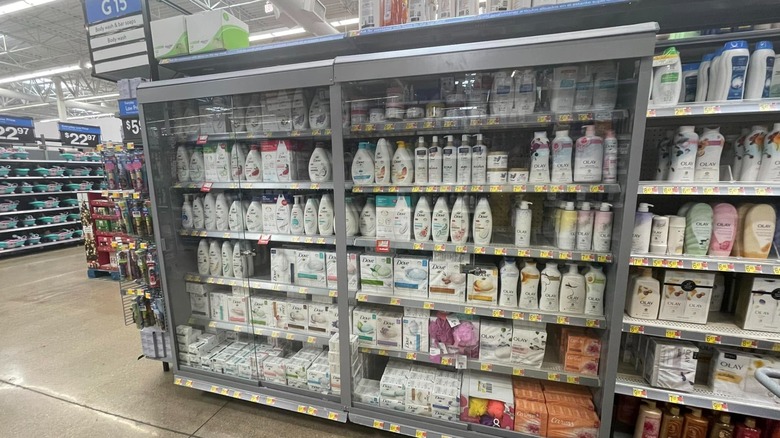
Theft of personal care products has risen the last few years, specifically name-brand items, like deodorants and body washes. There's pretty logical factors fueling this sticky-finger appeal. Much of the branded personal hygiene niche, including deodorant and body wash, is compact, recognizable, often in demand, and pricey compared to off-brand product picks.
It should also be mentioned how very attractive name brands are as moveable merchandise in the resale market for anyone looking to sling their stolen grocery goods. And, before you think this theft is small potatoes, news coverage reports the health and beauty products category costing retailers billions annually, making this niche a source of no little loss. A consumer report found 30% of American shoppers admitting to shoplifting in the past, with personal hygiene products accounting for 20% of merchandise swiped. Many of said shoppers pointed to inflation and the economy as motivators behind their malfeasance.
The result is a pretty maddening supermarket experience. Need deo to combat the BO? Not a problem ... except that now you may need to find an employee, then wait for said employee to unlock a case. Social media users have noticed, posting photos of body washes and other personal-care products behind locked doors, while wondering when basic toiletries became something requiring security clearance. It is easy to joke about the now-fortified body wash aisle, but for retailers, these products are prime targets that are becoming quite the headache.
8. Baby and infant formula
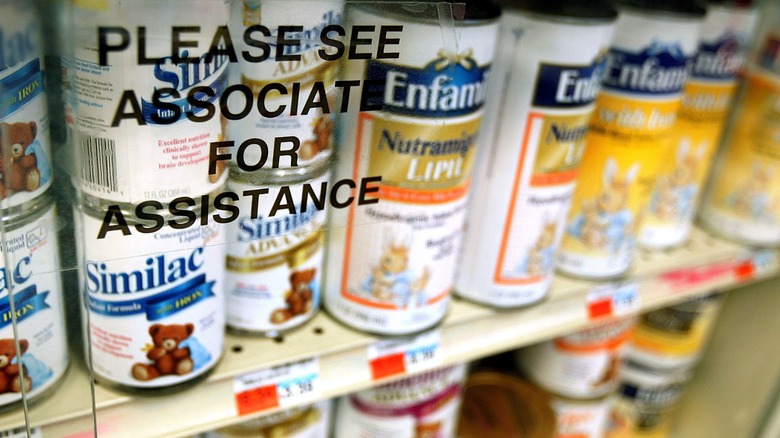
Baby and infant formula is among the most safeguarded products on grocer shelves, and there's a pretty sobering reason behind that beefed up security. This formula for mini humans is valuable, essential, and easy as 1-2-3 to sling on the resale market. Hence, it's unsurprising formula regularly appears on lists of commonly stolen items. Some theft is driven by regular parents struggling to afford food for their kids, while organized groups make up the other portion of thieves, taking large quantities and treating the product like goods for profit. That primed resale market gives baby and infant formula big appeal for an even bigger payday.
Shelf life is another part of the pick-me puzzle. Unlike fresh foods that need to be moved quickly or risk becoming unsellable, sealed formula can remain useful for some time, thus allowing a longer window for stolen items to be resold. News reports reflect this, documenting thefts involving thousands of dollars of formula from stores. The pricing issue is also hard to ignore. Baby formula has become substantially more expensive, turning something many families absolutely rely upon into an increasingly painful grocery expense.
Statistics reveal that over half of babies older than three months receive formula either exclusively or alongside breast milk, making demand for the product remarkably consistent. Translation: This is not considered to be a negotiable, luxury grocery pick. Stores understand this, and have responded with extra surveillance, even locked displays in some locales.
9. Over-the-counter medications or supplements
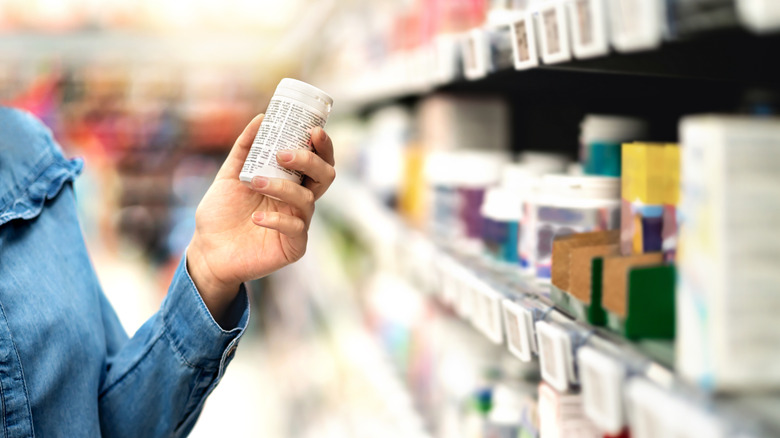
Another product category shoppers regularly rely upon for relief and maintenance of daily health (think pain relievers, cold medicines, even vitamins, supplements, and allergy pills) has also experienced quite the rise in theft. The reasoning behind these over-the-counter (OTC) products morphing into such desirable grocery-store targets? They are relatively small, priced above standard items in a store, and considered by many to be oft-reached-for necessities. They're also easy to carry away (all key ingredients for an ideal theft checklist).
Health and beauty products already represent a major source of loss for retailers, and medications and supplements fit neatly into that category. Reports have documented thefts involving thousands of dollars in over-the-counter medicines, while lists of commonly stolen Walmart products specifically include allergy remedies, sleep aids, diet products, and various OTC meds. The small packaging makes it possible to take several packets at once, and recognizable name that brands that already have established customer bases are considered the cream of the crop for shoplifters looking to resell the stolen merchandise.
There's another reason this category feels particularly frustrating for ordinary shoppers, which is that security measures being currently taken by stores are increasingly hard to miss. Medications, vitamins, and similar products are being placed behind locked cases in some stores, meaning customers may have to find a clerk before they can even put a little bottle of aspirin in their trolley (kind of ironic that seeking a headache remedy is becoming the source of one).
10. Cosmetics and makeup
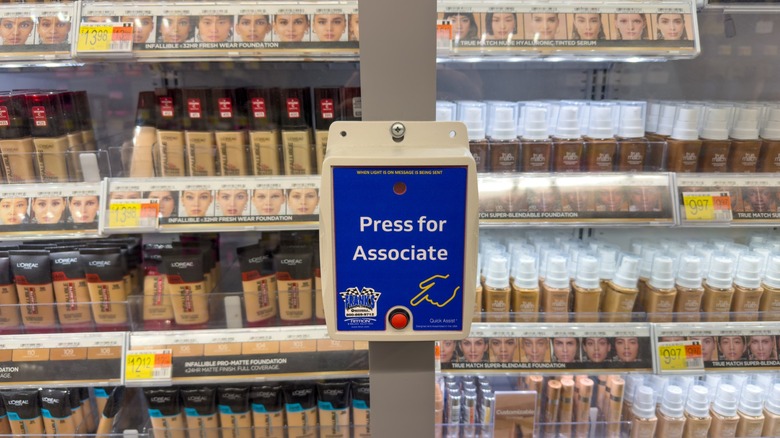
With many grocers broadening inventory to include cosmetics and makeup, that expansion has brought with it an influx of beauty aisle burglars. And, as with others on this list, cosmetics are a category where tiny products can represent surprisingly large losses. Everything from lipstick to mascara, foundation and even false eyelashes are attractive items for casual shoplifters and resale experts alike. They're small, mostly brand-named, and easy to conceal while making one's way out the door.
A shopper can snag a considerable amount of makeup while carrying only a small bag, making stolen beauty merchandise a near no-brainer for those with an "I'd rather not pay" mentality. The resale market adds another incentive. Name brands already have recognition, which means that buyers will likely be more comfortable and willing to purchase familiar cosmetics versus off-brand sundries. That explains why recognizable beauty merchandise is far easier to move when someone is trying to flip hot goods for cold cash.
As for regular folks, recent survey findings place beauty and hygiene products within the broader discussion of everyday essentials theft. As prices rise, some people report stealing necessities rather than luxury goods. Then there are the more dramatic cases, with police reporting large-scale cosmetics thefts, including sprees involving products in the tens of thousands taken from store chains in a matter of days. Retailers have responded with locked displays and additional cameras, which are leaving shoppers less than thrilled.
11. Coffee
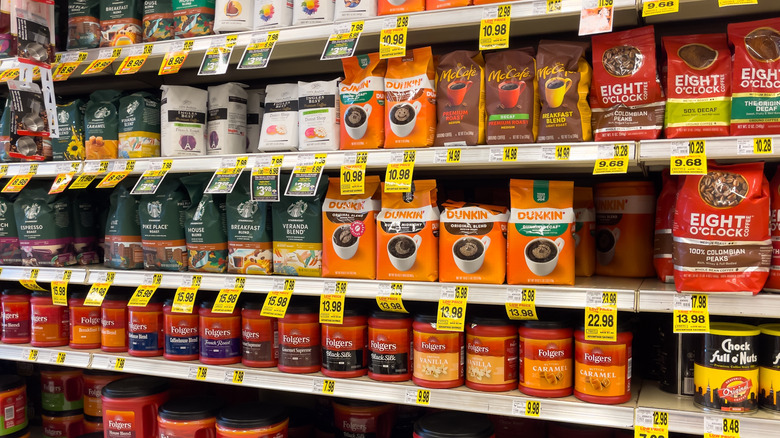
Coffee might not be the first thing that comes to mind when you think about grocery-store theft, but instant coffee and premium beans have become surprisingly common catnip for criminals. Some stores have experienced such a spike that they've taken to tagging coffee containers or moving them behind the checkout counter, leaving shoppers wondering when caffeine became such a closely guarded commodity.
Instant coffee does make a practical target, since packages can easily fit inside bags, large pockets, even a jacket. Plus, java has an undeniably steady demand, being something plenty of people already purchase regularly. It's the best way of waking up, after all. As for the price, with grocery costs climbing, for some, coffee has shifted from an every sunrise staple into something folks are having to grapple with giving up (or at least relegate to the once-in-awhile luxury category). That makes it appealing to someone who wants the product without having to pay a pretty penny for it, or for pro-thieves looking to resell.
For example, people have described grocery stores where their favorite brand of instant coffee is no longer sitting freely on the shelf for them to simply stroll by and procure. Instead, customers have to request it be freed from security prison before purchase, because jars keep disappearing. So, unfortunately, it seems the coffee aisle has also officially entered its own locked-up era. Your morning mug now requires patience, and even some human grocery store assistance.