

11 Countries Where You Won't Find A Single McDonald's Location
Since opening the first international locations in Canada and Puerto Rico in 1967, McDonald's has exploded around the world with over 44,000 restaurants. Anyone around the globe might feel justified in thinking the Golden Arches are ubiquitous, that every country has been infiltrated by American fast food (that doesn't mean you should swear off McDonald's while traveling, though).
Sure enough, over 100 countries have embraced the brand. Even in areas where religious beliefs prohibit consumption of certain meat, McDonald's has a following. It has famously adapted menus to meet quality standards, dietary needs, and differing palates around the world. In Guatemala, you can order an egg McMuffin topped with beans and fried plantains. Croatians can try a Lemon Vega, a spinach and cheese patty with Gouda and Batavia salad, while Italians will find panzerotti on their menus, a delightful fried pizza with tomato and mozzarella. All burgers in German McDonald's are made with German beef, and Irish breakfast sandwiches boast free-range Irish eggs,which is one way to ensure a better Egg McMuffin. In countries like India with high vegetarian populations, you'll find items like the McAloo Tikki Burger, a fried patty made with peas and potato.
With all this adaptation, it's hard to imagine a place that hasn't opened its arms to the Golden Arches, but with 193 member states in the United Nations, this leaves about half of the world's countries without Big Macs and Happy Meals. Whether it's been banned by the government, rejected by local tastes, or left after political or economic upheaval, here are 11 countries where you won't find a single McDonald's location.
1. Bolivia
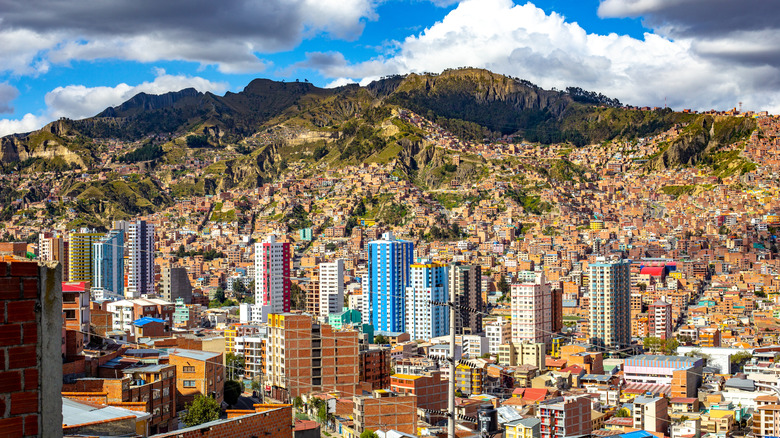
A McDonald's location was opened in La Paz in 1997 and was welcomed by citizens and politicians alike after Bolivia decided to allow foreign investment to boost its economy. Bolivians showed initial enthusiasm for the chain, with drive-thru lines reportedly disrupting traffic patterns. However, only five years later, in 2002, all the stores were closed due to poor performance. One issue McDonald's faced in Bolivia was affordability. A typical lunch in the late '90s cost around 7 Bolivian pesos, while the cheapest options at McDonald's would run a customer 25 Bolivian pesos.
Likely the largest obstacle for McDonald's was the deep tradition and appreciation for Bolivian food and its connection to identity. Several organizations in the country are working to reject Western influence on food and promote Bolivia's traditional and Indigenous foods. Even though McDonald's tried to replicate these dishes by offering a traditional hot sauce called llajua and attempting to introduce salteñas — the Bolivian empanada — its efforts came up short. Bolivians rejected the foreign fast food chain, instead choosing to patronize local street vendors and burger chains. After a few years of losses, McDonald's concluded that business in Bolivia was not sustainable and pulled all eight stores it had opened.
2. Iceland
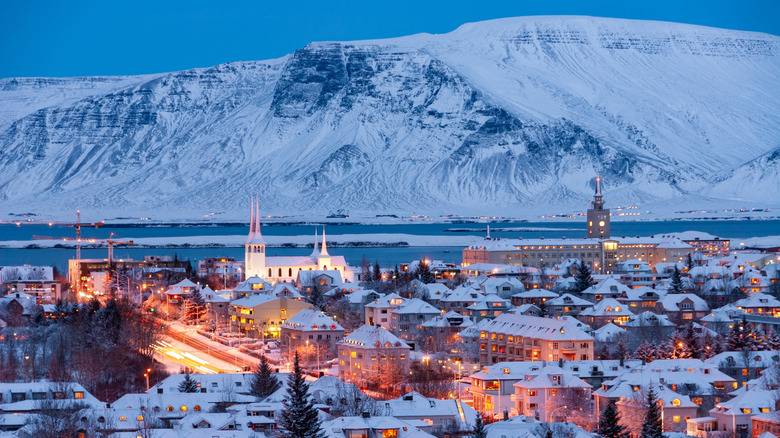
The opening of a McDonald's in Reykjavik in 1993 became a symbol of Iceland's newfound prosperity. It exemplified the country's ability to integrate into a globalized economy despite past impoverishment and colonization. In fact, the Prime Minister at the time, Davíð Oddsson, demonstrated this cultural shift by being the first to bite into an Icelandic McDonald's burger.
However, this integration came with similar economic growing pains to those of other industrialized nations, including a booming real estate market and high inflation, which led to debt accumulation. When the 2008 financial crisis hit, Iceland felt the economic decline as keenly as many other nations. One year later, the Reykjavik McDonald's locations closed, citing the increased cost of importing ingredients as unsustainable. After the impending closure was announced, 10,000 to 15,000 people per day lined up to purchase the last McDonald's hamburgers in the country. Many seemed to view the closure as a regression of Icelandic status from a global player to a forgotten nation. In a 2014 research article, Kristín Loftsdóttir interviewed one local who said, "Now we have the ultimate proof that we belong in the third class. Except that they have McDonald's in all the Third world countries."
While Iceland's economy has certainly recovered from the financial crisis and now boasts a thriving tourism sector, McDonald's has not returned. This is possibly due to a cultural shift that no longer needs the validation of an international chain but has found value in locally sourced products and cuisine.
3. Bermuda
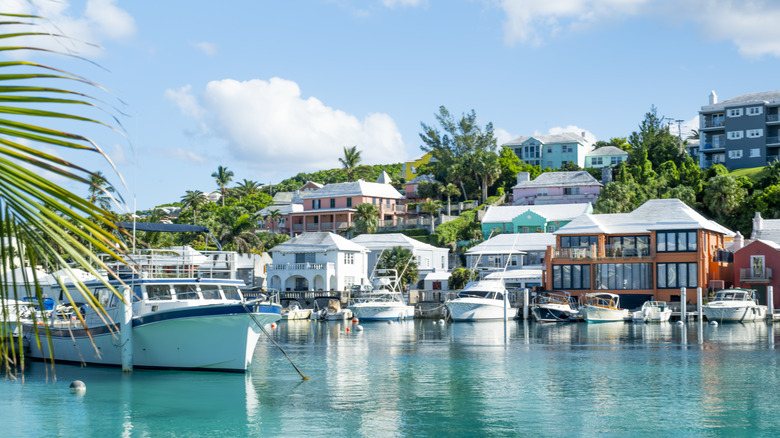
Not only has it explicitly banned McDonald's, but Bermuda also bans all foreign fast food restaurants. In 1977, the British territory passed the Foreign Restaurants Act, which prohibited any establishment with a relationship to a foreign company.
McDonald's got away with operating a location on a U.S. Navy Base from 1985 to 1995. Once the Navy base was closed, however, the McDonald's was forced to close with it. When some politicians fought to bring McDonald's and other fast food chains, like Pizza Hut and Taco Bell, to the country in 1997, Parliament passed the new, stricter Prohibited Restaurant Act of 1997. Outlets like The Spokesman-Review reported that the decision was made to maintain the "Old World image" to appeal to tourists. The only international restaurant franchise in Bermuda is a Kentucky Fried Chicken that predates the 1977 law and was allowed to remain after its passage.
4. Cambodia
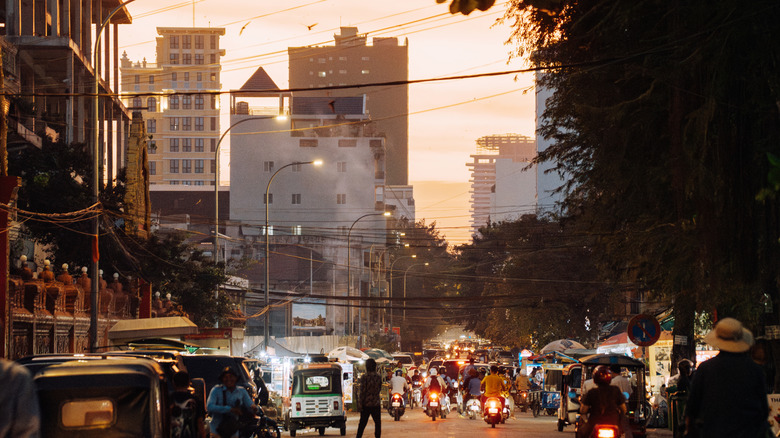
Cambodia does not currently host any McDonald's restaurants. However, the presence of many other fast food chains like Burger King, Starbucks, Krispy Kreme, and Domino's Pizza suggests the country is ready for the best fast food fries around. In 2025, Deputy Prime Minister Sun Chanthol discussed a potential location in Phnom Penh, but further progress is not evident.
Like the Icelandic government of the 1990s, the Cambodian government seems to view opening a McDonald's not only as an opportunity for modernization but as a symbol of modern economic acceptance. While several fast food chains have had success in the country, many, like KFC, have also struggled. It is difficult to say how McDonald's would fare, but a 2024 study into customer loyalty suggests that Cambodian patrons value brand image and reliability.
Looking to McDonald's success in neighboring countries like Vietnam and Thailand may offer insight into how it could perform in Cambodia. While McDonald's enjoys a wide presence in Thailand with around 240 restaurants and popular local items like the Samurai Pork Burger and McKhao Crispy Chicken Green Curry, the chain has less success than anticipated in nearby Vietnam. At nearly twice the cost of local street food, McDonald's in Vietnam is viewed as more of a luxury than an average person's meal.
5. Nigeria
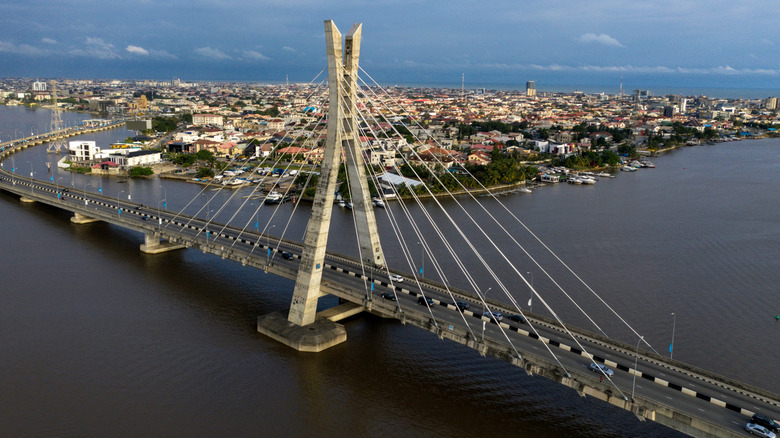
The African continent holds only four countries with McDonald's restaurants: Egypt, Morocco, South Africa, and Tunisia. This leaves the other 50 countries without McNuggets or the South African Boerie & Hash Brown Stack.
Nigerians may not have access to McDonald's, but the country still enjoys fast food establishments, many of which are local chains resembling popular Western franchises. Mr. Bigg's is a popular restaurant with over 170 locations around the country. While its logo design is reminiscent of McDonald's red and yellow motif, its menu of rice dishes and meat pies bears no resemblance to American fast food.
While KFC and Domino's Pizza have opened franchises in West Africa's most populous nation, McDonald's may be hesitant to test the market. Other factors likely under consideration are high operating costs and the country's infrastructure. Nigeria and other African nations may lack reliable roads and electricity for a franchise to be considered.
6. Russia
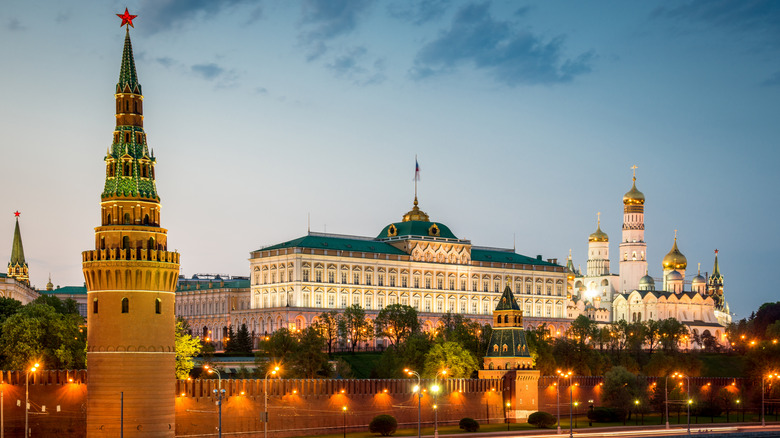
McDonald's operated restaurants in Russia for over 30 years until its recent decision to close all locations due to the war in Ukraine. When the first McDonald's opened in Moscow in 1990, it was seen as a sign of the end of the Cold War and the USSR's openness to the West. Like in other countries, many people waited in line for their first taste of a McDonald's burger.
The chain's popularity grew, and Russia eventually had some 850 locations. Then, in May 2022, the corporation made the difficult decision to sell all its locations due to the humanitarian crisis caused by the war in Ukraine, stating that business ownership in Russia no longer aligned with the company's values. The chain also pledged to pay Russian employees until the final sale of the restaurants and ensure their future employment. Many of the restaurants have since been rebranded as Vkusno & Tochka, or "Tasty and That's It" in English, and offer a menu similar to their former American counterpart.
7. Iran
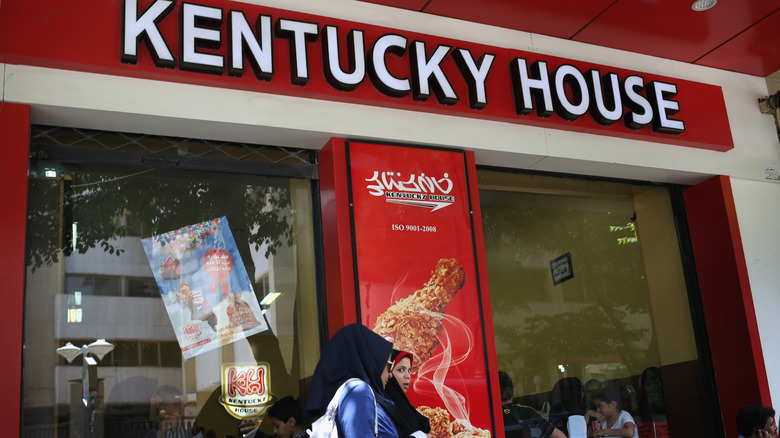
With the undeniably turbulent relationship between Iran and the West, specifically the U.S., it is no surprise that Iran has not had any American fast food chains since the 1979 revolution. However, that has not stopped Iranians from enjoying fast food. Since Western franchises are not welcome in the country, inventive Iranians have opened their own knock-off versions of many popular fast food restaurants.
Among them is Mash Donald's, which could easily be mistaken for the genuine article with its golden arches, red facade, and clown mascot. One look at the menu breaks the illusion, as this restaurant does not specialize in burgers but sells baguette sandwiches and falafel. Other Iranian knock-offs include Subways, Pizza Hat, KFC (Kabooki Fried Chicken), and Burger House. While the owners rely on an association with Western fast food for visibility, the menus represent a melting pot of cuisines with Westernized names like Dahbel Dahn (KFC's Double Down) and Wooper.
While it is surprising that most American corporations have not taken legal action against these businesses, strained relations between the U.S. and Iran make enforcing trademarks difficult. For the most part, corporations have decided it's not worth the money to enforce their trademarks in a country where they are unlikely to be opening franchises anytime soon.
8. Montenegro
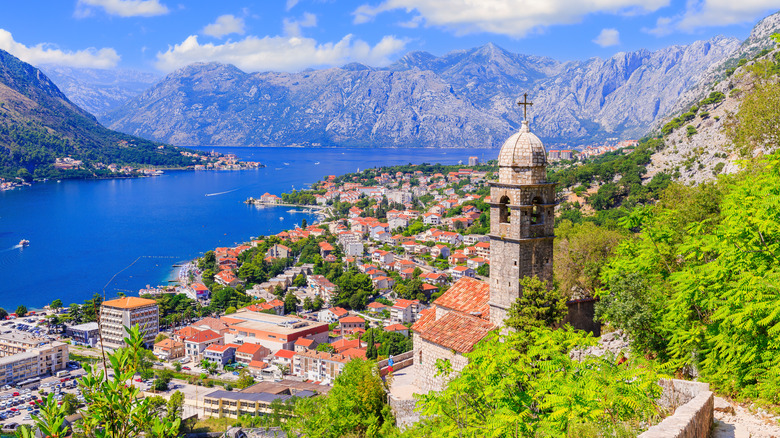
While Montenegro had a mobile version of McDonald's in its capital city of Podgorica in 2003, that location lasted only three months. It has been speculated that the location closed after several local businesses banded together to convince the government to oust the foreign chain for fear of the disruption it would bring to their operations. This is only a theory, however, as the Montenegrin government has stated that no one is banned from doing business in Montenegro.
Though the government has issued this claim, you won't find Western fast food franchises in the country. Rather, local restaurants maintain popularity, with some serving a Balkan take on a burger and fries. In 2022, a Burger King opened in Podgorica with high traffic for its opening, and by 2025, the chain had six spots throughout the country. Montenegro is not listed as an international location on Burger King's website, but these spots seem to be actual franchises rather than the dupes of Iran. However, one look at recent reviews of these restaurants suggests their popularity may be dwindling.
9. Bangladesh
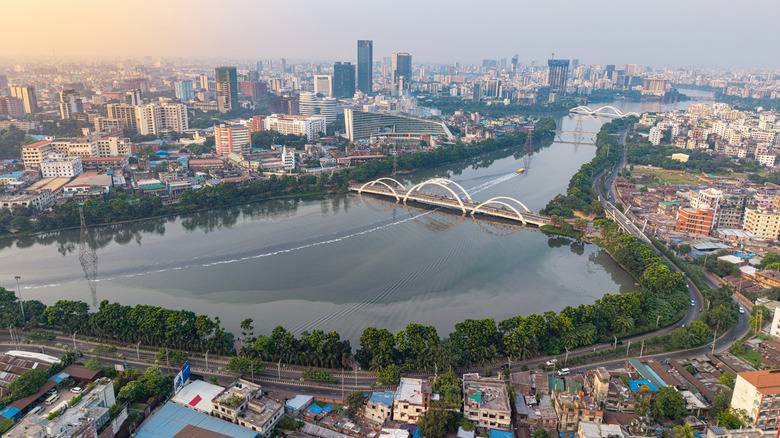
Despite McDonald's success in neighboring India, with its popular fried paneer sandwich, the company has never had a presence in Bangladesh. This is not for lack of interest. Fast food chains like KFC and Pizza Hut have already established themselves in this growing nation, and a 2013 study found that young people who see advertisements for McDonald's when watching international television have expressed a desire for the Golden Arches.
The obstacles to establishing a McDonald's in Bangladesh seem specific to the chain's franchising requirements and lack of necessary infrastructure. A McDonald's franchise might be cost-prohibitive, as Investopedia reports that initial investment often ranges from $1.5 to $2.6 million. McDonald's prefers to own its franchises' properties, and real estate in Bangladesh's desirable areas is very expensive. Furthermore, the country's food system does not have a supply chain like that of the U.S. or other Western nations, where a corporation like McDonald's can track the origin of each ingredient. McDonald's has high standards for ingredient sourcing and a commitment to supply chain integrity.
10. North Korea
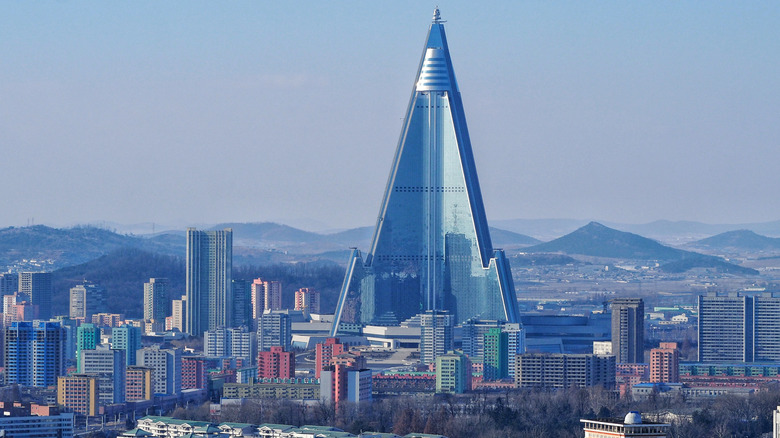
As a totalitarian state with starvation of its citizens and hostility toward Western influence, North Korea does not represent a desirable market for McDonald's. With restrictions on travel to North Korea from the U.S., it's difficult to imagine how a franchise would even be negotiated.
With that said, in 2018, leader Kim Jong Un expressed willingness to allow an American hamburger franchise to open in North Korea, possibly as a show of easing tensions between the two nations. The gesture has also been interpreted as simply playing into President Donald Trump's famous love of fast food. While the intention may have been unclear, no further efforts seem to have been made to open a location. If the decision to sell off its stores in Russia for humanitarian causes is any indication, McDonald's likely has no interest in expanding to North Korea.
11. North Macedonia
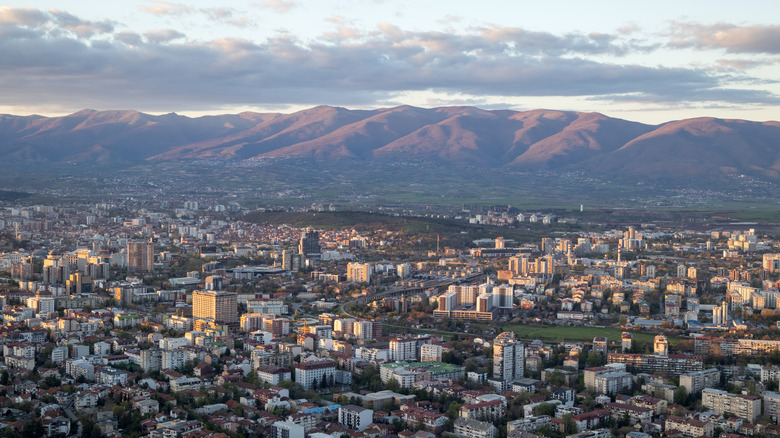
North Macedonia once had seven McDonald's locations operated by franchisee SJ Company, with the first location opening in 1997. Then, in 2013, the company unexpectedly lost its license to operate the restaurants and was forced to close all locations. The reasons for the license revocation remain unknown, but Macedonian officials clarified that it was not due to any infringement during state inspections.
North Macedonians don't seem to miss the American chain much, as they have many other burger restaurants to choose from with colorful names like Burgerslut, Junk Food, and Space Burger. While the capital city of Skopje boasts plenty of these quick-service restaurants, local food traditions do not favor hurried dining experiences. Rather, Macedonians value slow meals where food is savored as much as conversation. Traditional dishes like burek, a flaky pastry containing fillings like meat, cheese, or spinach, can be time-consuming to make, and the local penchant for hospitality demonstrates respect for that work.