

The Water Mistake That's Quietly Killing Your Sourdough
If you're riding the sourdough struggle bus and troubleshooting why you can't seem to get a big, beautiful, crusty loaf like you see all over social media, the issue may actually be as simple as the water you're using. Or, more specifically, what's in it.
Hannah Dela Cruz, founder of Make It Dough and best-selling author of "Sourdough Every Day," provides insight into this by saying, "Water in some areas contains high levels of chlorine, which can affect the health [of your starter]. In most areas, using tap water is perfectly fine for maintaining a sourdough starter, so there's no need to automatically use filtered water." However, Dela Cruz cautions that if you can smell chlorine coming from your tap, it may be enough to affect your starter activity.
To fix chlorine is in your tap water, Dela Cruz says an activated-carbon filter rated for chlorine reduction can effectively reduce it. If you're also worried that the quality of your tap water may be affecting your sourdough overall, Dela Cruz recommends using filtered water.
If you live in an area with soft water, you may have heard that it's often credited with producing great-tasting breads and baked goods, like the bagels that come from New York City. While soft water can affect dough development and fermentation, Dela Cruz says that the skill and craftsmanship of bakers likely plays a much larger role. However, Dela Cruz also adds that if you're filtering soft water to reduce chlorine, most of these types of filters do not remove the positive qualities associated with soft water.
Other water variables that may be negatively affecting your sourdough
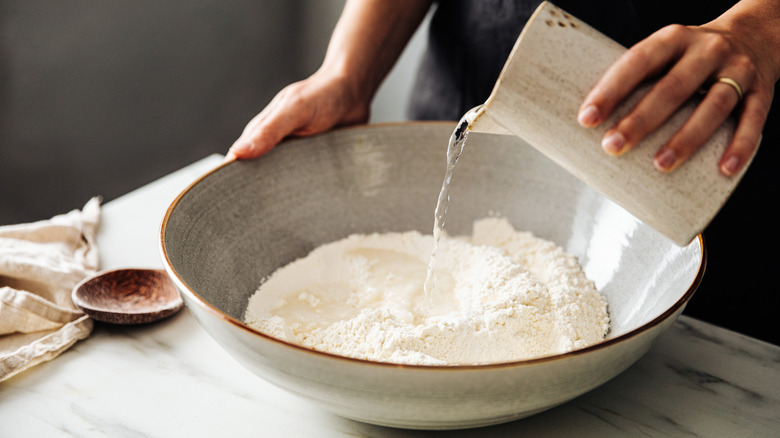
While heavily chlorinated water can affect your sourdough starter, the mineral content of your water matters, too. Water that retains some level of minerals may be beneficial to your starter. This means using water sources that are completely void of minerals, like distilled or reverse osmosis water, may not be ideal for maintaining a healthy starter. At the same time, excessively hard water with a high mineral content can interfere with the activity of the beneficial microbes in your starter. If the water used in your household is mainly distilled, reverse osmosis, or very hard water, consider feeding your starter with an alternative source of water that still contains some amount of minerals, such as non-chlorinated tap or bottled water.
If it's not what's in (or missing from) your water that's causing the downfall of your sourdough, the temperature of your water may be to blame. Water temperatures can influence how quickly your starter ferments, with cold temperatures slowing microbial activity (and resulting in a more flavorful bread) and warmer temperatures speeding it up. However, water that's excessively hot can damage or kill the yeast and bacteria your starter needs to thrive — it's one of the biggest mistakes beginners make with sourdough bread. For that reason, room temperature water that's around 75 to 82 degrees Fahrenheit is a good range for feeding your starter.