

Remember The George Foreman Grill From The '90s? Here's What It Looks Like Today
We may receive a commission on purchases made from links.
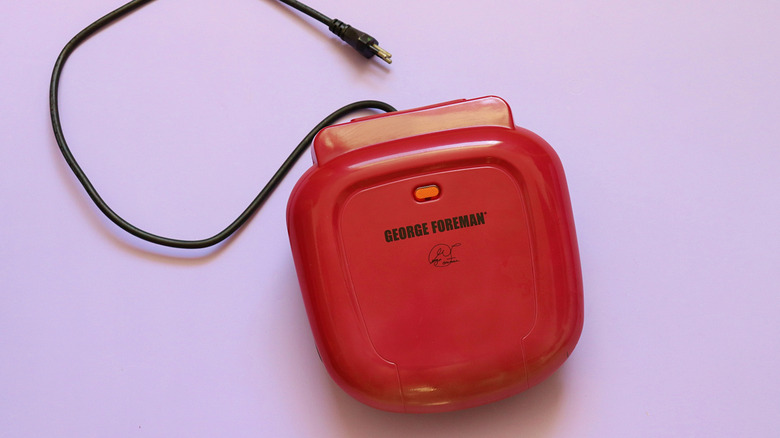
Boxing is still a pretty big deal these days — people don't shell out pay-per-view money for just anything — but the sport used to be much more popular. Long before Mike Tyson fought Jake Paul in a Netflix spectacle that depressed everybody, he was one of the most famous athletes on the planet. Muhammad Ali was the subject of one of the most iconic photos of the 20th century, and George Foreman parlayed a heavyweight boxing career into a career selling indoor grills. Even though Foreman passed away in 2025, his namesake grill lives on, though it looks a bit different than it used to.
Some models still have that familiar clamshell shape, as well as those deep grooves perfect for imprinting charred marks on whatever it is you want to cook, but there have been a few improvements, as well. It used to be the case that you would have to scrub the grill to get it clean; nowadays, the device uses dishwasher-safe removable parts.
Other recent models include special plates that allow you to make waffles, paninis, and even muffins. It has gotten a bit of an aesthetic makeover, too, with several product lines forgoing the bulky plastic exterior for shiny stainless steel. The newer appliances are pretty enough to make you want to keep one by your bedside, like Michael Scott in that one episode of "The Office." (Well, maybe not, considering what happens to his foot.)
Some of the new George Foreman Grill models are pretty spiffy
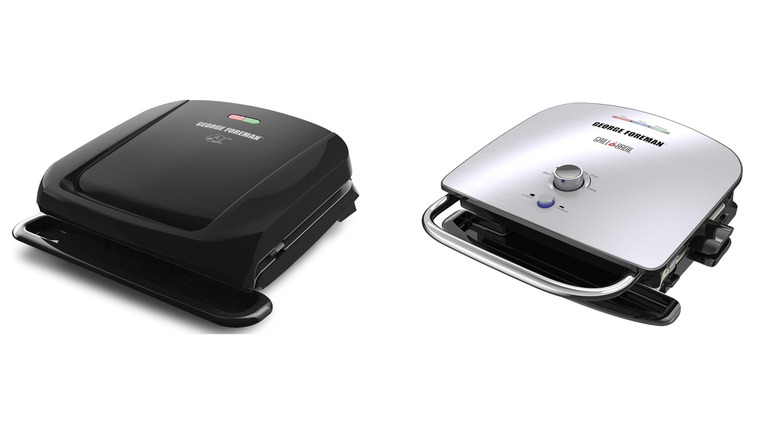
George Foreman Grills are still going strong, with several different product lines. The Advanced models come with features like four removable plates and a built-in nonstick surface, and, according to the company's website, they heat up 35% faster than the original. On Amazon, one such Advanced model sells for $41.99 and has an impressive 4.6-star rating from more than 32,200 reviews.
There are also the Premium models, which are a lot like the Advanced models but have a few more bells and whistles. Instead of having room for four servings of meat, they may come with space for five and can include seven different cooking options, including broiling and baking. Some also have a digital timer and temperature control settings, which allows you to cook your food more precisely.
If you're looking for a less messy way to cook, you can even get a Smokeless model, which is just what it sounds like. Using a device that cools the collected fat before it burns, it can reduce smoke by up to 85%.
The George Foreman Grill took off in the fat-fearing '90s
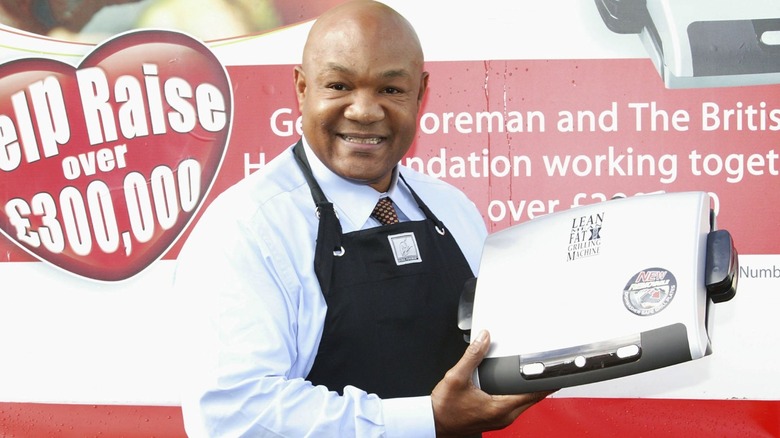
It may not surprise you to know that George Foreman didn't invent the George Foreman Grill. (He would have needed enviable time management skills to tinker with the design while training and boxing.) The device was the brainchild of one Michael Boehm, a man from Batavia, Illinois, who wanted to create an indoor grill that could cook both sides of the meat at once; that way, you wouldn't have to flip. (The perfect number of times to flip a steak on the grill? If it's a George Foreman Grill, zero.)
The countertop appliance also had another benefit that made it pop off in the 1990s. Because it drained the fat from the meat and collected it in a pan beneath the grill, it could be sold as a way to reduce your fat consumption — which was in high demand back in the '90s. Heck, even the discontinued low-fat Lays chips that caused uncontrollable diarrhea weren't an immediate dealbreaker for folks during that era.
After Boehm and co-inventor Robert W. Johnson quietly patented the grill, their employer Tsann Kuen manufactured the first models. Eventually, Salton Inc. got the rights to the grill, and the endorsement opportunity made its way to Foreman. The boxer actually almost passed it up, but after his wife Mary cooked a burger for him with it, he decided to lend his name to the "Lean Mean Fat-Reducing Grilling Machine," turning the George Foreman Grill into a kitchen appliance heavyweight.