

12 Popular British Candies, Ranked Worst To Best
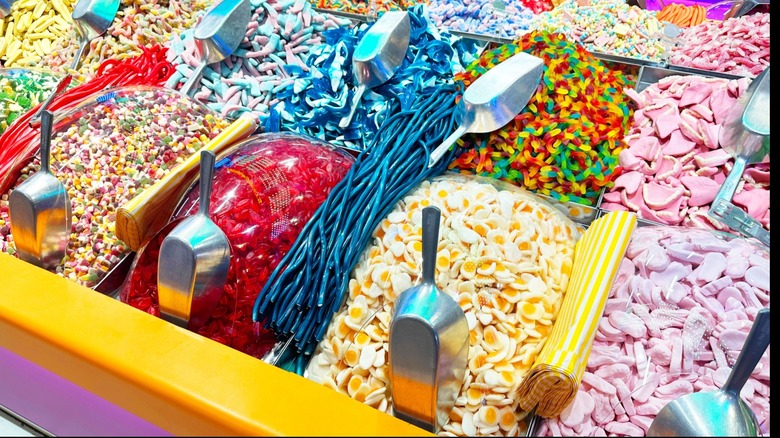
From iconic ad campaigns quoted in playgrounds and offices alike to a small chocolate bar shaped like a frog that has become a common reference point for inflation, "sweeties" transcend mere confectionery in Great Britain.
Sugar has been a mainstay of British industry since it arrived in the 11th century. The sweet white stuff was a symbol of wealth for centuries among the aristocracy in England. Queen Elizabeth I attended a banquet at the Earl of Hertford's home, Elvetham, in 1591, where the most notable dishes were statues of huge beasts like lions and apes made entirely of sugar.
Sugar became a widespread confection by the 17th century and could be found in pantries everywhere, used to sweeten tea and dishes, and sugar baking had become one of the country's first industrial activities, with refineries across the length and breadth of the island. The Oldest Sweet Shop in the World (still operating today) opened its doors to the people of Harrogate in 1827, and many more shops followed suit during the Victorian era as candy, or sweets, manufacturers switched focus to colorful treats like Fruit Pastilles and Jelly Babies (more on them later) created with children in mind.
Candy is a way of life on both sides of the pond. And, unlike the Swedes, who like to limit candy intake to Saturdays on a day they lovingly call lördagsgodis, every day is a good day for sweets in Britain. I am channeling my inner Ron Weasley as he introduced Harry Potter to a magical world of confectionery aboard the Hogwarts Express, using all of my experience and knowledge over decades of exploring sweet shops to give you the lowdown on popular British candies, ranked from sugary swerves to sublime must-tries.
12. Fry's Turkish Delight
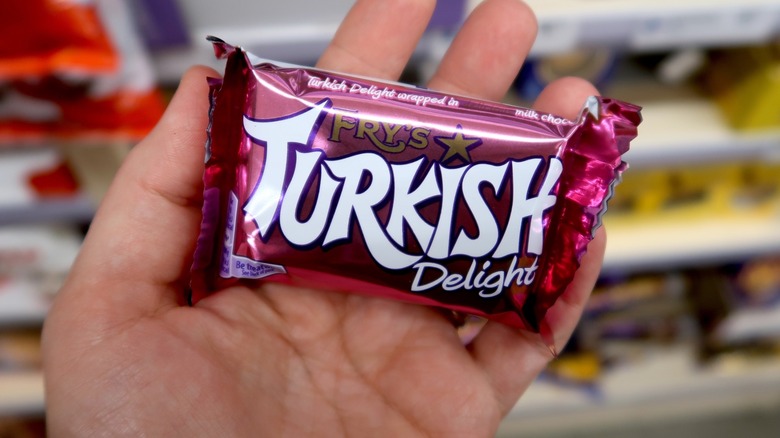
Bristol-based J. S. Fry & Sons were one of the first chocolatiers in Britain. Joseph Fry created the first solid chocolate bar in the world in 1847. The groundbreaking chocolate company went on to produce the first hollow Easter egg in 1873, 80 million of which are now sold in the U.K. every year. The chocolate landscape in Britain today would not be the same without Fry's.
In 1919, J. S. Fry & Sons merged with Cadbury's, and production of Fry's Chocolate Cream, Peppermint Cream, and, of course, Turkish Delight moved overseas when the original Keynsham plant closed its doors for the final time in 2011.
Fry's Turkish Delight isn't as delightful as the name suggests. This unique treat tastes like powerful perfume and rosewater in a thin chocolate casing, and has the texture of low-quality gelatin inside. Fry's Turkish Delight is nearly as divisive among British folk as Marmite.
Reddit users report Fry's Turkish Delight to be one of the few British candies available on American shelves. One British Reddit user described them as "Absolutely minging," while another said it was like "a chocolate covered toilet block." On the flip side, fans of Fry's Turkish Delight go all-in, calling it "God tier," and "the blood and the life."
I land on the toilet block side of the fence, but would suggest you sample Fry's Turkish Delight for yourself. I'm sure you won't have tasted anything like it before, and not necessarily in a good way.
11. Maynards Bassetts Liquorice Allsorts
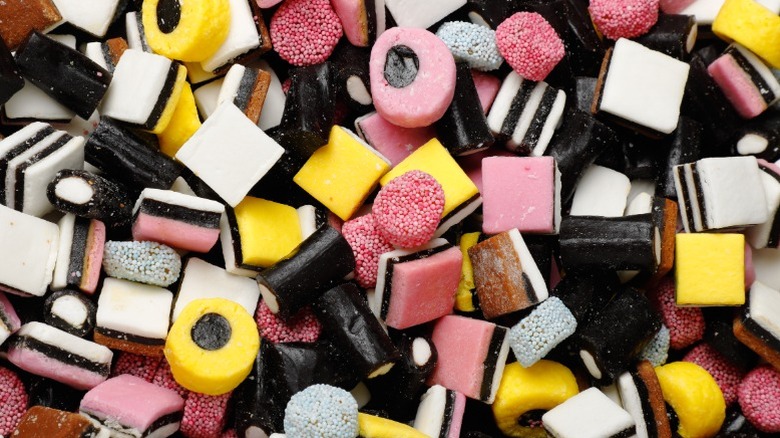
There is a world in which you can train your brain to love licorice, like one of our writers once attempted by slowly introducing candy with higher levels of liquorice content. I haven't got this level of commitment, which is why Liquorice Allsorts take the second-lowest ranking in this roundup.
Liquorice was introduced to Britain around the 11th century, when sugar first appeared, returning with monks and crusaders from the Middle East. At the time, it was thought to have medicinal properties. British Reddit users are much less divided on Liquorice Allsorts than Fry's Turkish Delight, however. One Reddit user claims to "buy them for people I dislike at Christmas," and another simply said, "They are dirty and gross." In a separate ranking of the nine different Liquorice Allsorts, a Reddit user gives the blue bobbly one top spot, "along with its pink buddy," and ranks the three different colored sandwich-shaped options rankings as "If I must," "As above," and "Dog s***."
I would put the whole bag in that final category. I live my life by one simple rule: YOLO (you only liquorice once), and this bag of medicinal muck is not worth the calories.
10. Flying Saucers
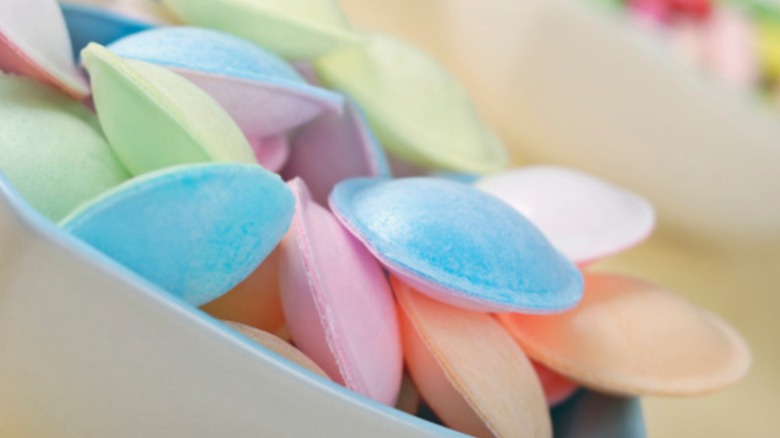
Soaring into mouths across Britain from Flanders, Belgium, Flying Saucers are a novelty treat that skyrocketed in popularity during the Space Race of the '50s and '60s. Flying Saucers are UFO-shaped, made from edible rice paper, and contain a sherbet with just enough fizz to keep you interested in another. The novelty has kept them around in traditional sweet shops that sell candy by weight, but you won't find Flying Saucers in the candy aisle of as many supermarkets as in their heyday. Vegans might be tempted, especially around Halloween, as Flying Saucers don't contain dairy.
Admittedly, I have some nostalgia attached to Flying Saucers. Their low weight meant you could get more bang for your buck in the sweet shop than heavier gummy candy, but after a couple of these saucy numbers, you're ready to move on to something with a bit more bite to it. By the time you're eating your third or fourth, they start to taste like you're eating the cardboard off a package left on the doorstep on a rainy day. One Reddit user compared them to "communion wafers," while another "thought they were terrible" and left "90% on the treat shelf."
9. Swizzels Parma Violets
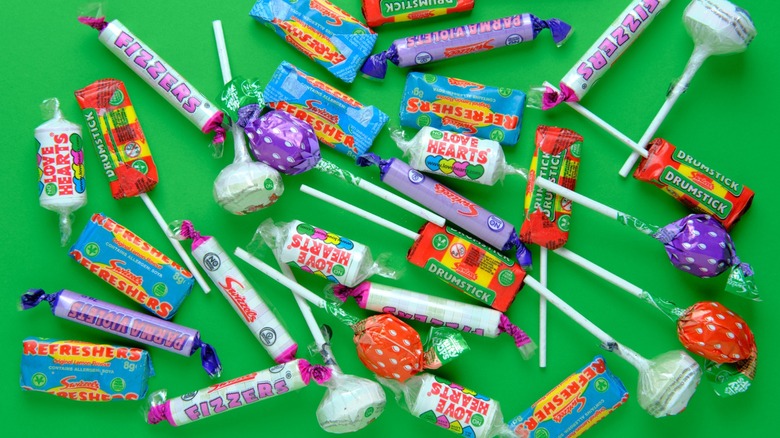
Swizzels describes Parma Violets as having a "floral flavor that divides the nation," but this doesn't stop them from celebrating the sweet on National Parma Violet Day on June 26 each year. Swizzels has been in the biz since 1927, serving up innovative sweets from Derbyshire, England. Its candy catalog includes fan favorites like Love Hearts, Drumstick Lollies, Fizzers, and more. But none have as recognizable a flavor as Parma Violets, which taste to some, myself included, like a powdery disc of potpourri.
Originally marketed as breath fresheners to pubgoers after World War II, Parma Violets soon became a sweet shop staple across the country. Reddit is, unsurprisingly, divided and falls into two camps: people who like floral candy and people who despise it. One Reddit user describes them as "flowery but strangely" likable, while another calls them "a special kind of extra-disappointing sweetie reserved exclusively for '90s party bags." Parma Violets are nowhere near as overpowering as Liquorice Allsorts or Fry's Turkish Delight, but it is easy to get bored of the perfume-like flavor.
8. Bounty
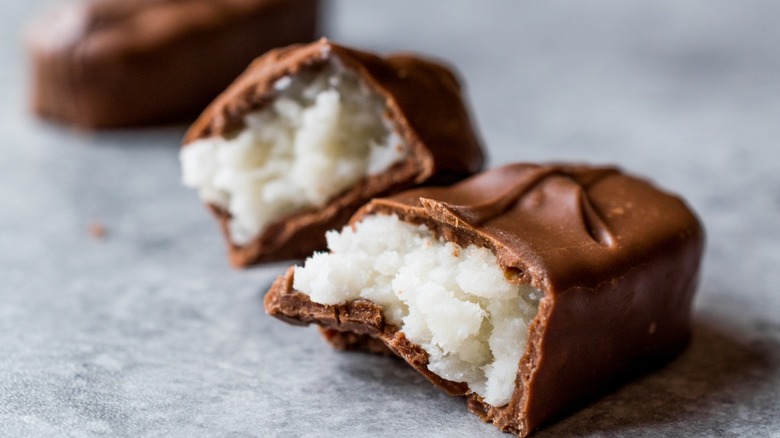
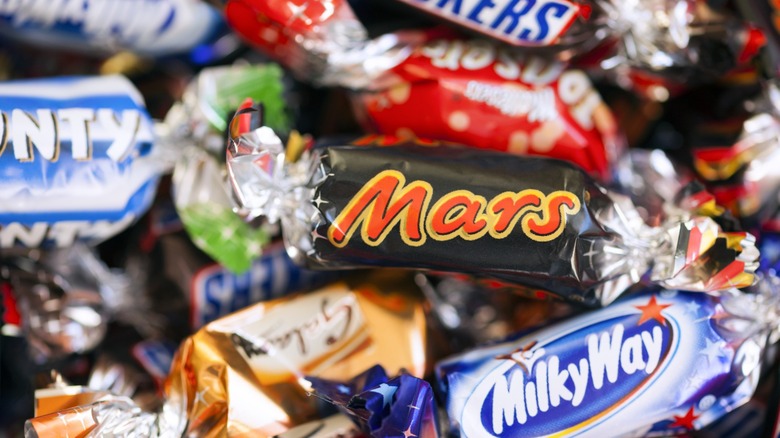
Bounty chocolate bars are a distinctive candy, and are not to be confused with Bounty toilet paper in the U.S., although some people may prefer to eat toilet tissue. At first glance, it may look like a regular chocolate bar, but your first bite will reveal a white coconut-filled center with a teeth-squeaking texture. In times of yore, the last person around the Christmas table to receive the box of Mars Celebrations, a selection of bite-sized chocolate offerings bought in the millions across Britain around Christmas, would be left with the awful sight of a sea of Bounty bars swimming at the bottom. Due to this Bounty phenomenon, Mars even ran a Bounty-free run of Celebrations in time for Christmas 2021. But the Bounty bars returned to tubs everywhere shortly after.
Bounty has staying power; it was released in Britain back in 1951. Coconut gained popularity in baking during Victorian and Edwardian times, and people were familiar with the taste by the time Bounty arrived. Being a Bounty lover really boils down to whether or not you love coconut flakes. People who love Bounty bars really love them, whereas everybody else will leave them where they belong ... in the bottom of the Celebrations tub.
7. Freddo
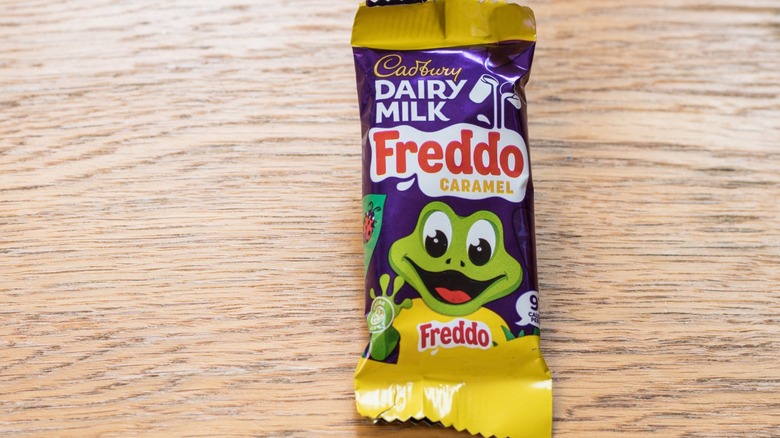
"How much is a pint of milk?" A common question that was once a great gauge of inflation, or to call somebody out for not doing their own grocery shopping. In recent times, another question has replaced this adage: "How much is a Freddo?"
This small frog-shaped chocolate bar was the perfect snag for kids with dwindling pocket money in the '90s, as it was a chance to taste that classic Cadbury's chocolate for just 10 pence. When it was first released, Freddos were even cheaper at 2 pence. Nowadays, a Freddo will set you back a whopping 39 pence. This increase in price would make the Freddo creator "roll over in his grave if he could see it now; he'd be disgusted. It was a penny chocolate. Since dad died, I haven't bought a Freddo," said his daughter when asked about pricing in a Guardian interview in 2025.
It's not just the price that has changed; the size has gone the opposite way. Freddos are yet another treat that has been shrinking for years. Freddo multipacks contained five bars until last summer, but now contain only four. Individual Freddo bars have technically increased by 1 gram to 18 grams since their initial launch, but are down 2 grams from their heaviest weight of 20 grams in 2007. Freddo is much less divisive than the others on the list above, and the caramel Freddo deserves an honorable mention, too. When you pick up a Freddo, you know what you're going to get. The only problem may occur when you see the price ring up at the checkout.
6. Yorkie
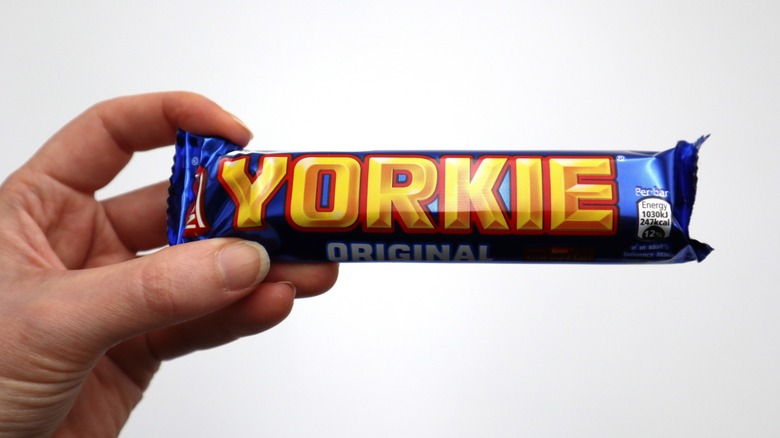
Yorkie is synonymous with a misogynistic advertising campaign that launched in 2002, going one step further than the 1976 "Keep on Truckin'" advert that launched the product, depicting a happy, if slightly sinister, truck driver enjoying a Yorkie bar before allowing a lady in a sports car to pass him at a light.
In the commercial in question, a woman dressed up as a male builder is asked a number of sexist questions by a shopkeeper to determine if she is actually a man. The slogan at the end: "Five big masculine chunks of chocolate, it's not for girls!"
The controversial ad campaign certainly got people talking, and it saved dwindling Yorkie sales, which increased by more than 29% over the following 12 months. Yorkie bars even featured in army ration packs with the slogan: "It's not for civies." However, the marketing campaign "would not be allowed today," according to the marketing director Andrew Harrison, the man behind the idea.
"It's not for girls!" was featured on Yorkie bars until 2011, when Nestlé dropped it completely. Clearly, masculinity has taken on a different meaning over the years, as the "five masculine chunks of chocolate" is another victim of shrinkflation. One Reddit user reflected, "Back when they were 70g not the measly 46g we get today."
Whether you think this advertising campaign was a clever way to promote a waning brand or simply offensive, the big hunks of chocolate were delightfully giant at their peak, especially if your budget had limited you to wafer-thin Freddos.
5. Revels
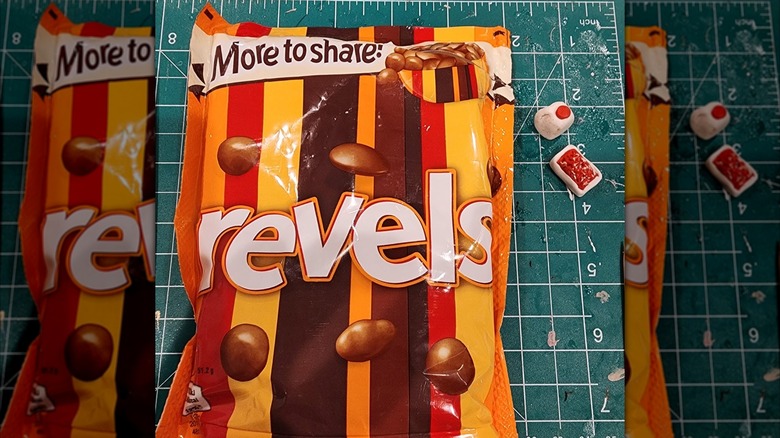
People who enjoy variety will love Revels. Although each chocolate ball looks similar, the texture and flavor inside vary widely, including toffee, raisin, orange creme, malted milk, solid milk chocolate, and the divisive coffee creme.
The marketing department can take a bow for elevating Revels to legendary status with the "Take a Chance" ad campaign, which depicted two men in a face-off, taking turns choosing a Revel until one finally selected the coffee flavor and was defeated. This campaign was followed by a 2008 campaign to "evict" a flavor based on a public vote. Coffee was sent packing, replaced by a strawberry creme Revel, but the public outcry that followed led to its reinstatement in 2009.
Revels have been around since 1967, and while the flavors have changed since then (coconut, toffee, and peanut were the OG flavors), true Revels fans keep coming back for more. Boxes of Revels are widely available in movie theaters across Britain, and in my mind, are a perfect snack for moviegoers. The variety of flavors keeps it interesting and each one offers something different for the palate. I don't even mind the taste of the notorious coffee Revel.
4. Bassett's Jelly Babies
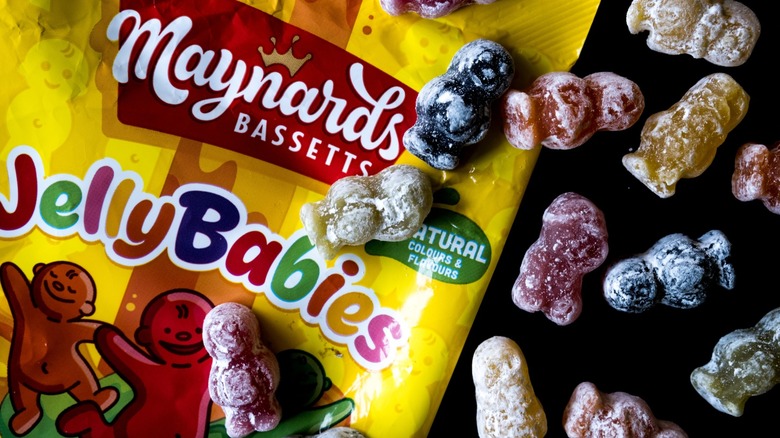
For generations, the children of Britain will remember listening to the sound of screaming Jelly Babies after dropping them into hot potassium chlorate and holding them over a Bunsen burner in science class. But this popular science experiment isn't why these soft, chewy, oh-so-sweet baby-shaped candies feature so prominently on this list.
An Austrian confectioner working for Fryers of Lancashire created the popular sweet way back in 1867. Originally named "Unclaimed Babies," the name was thankfully changed in the 1950s to Jelly Babies. Bassett's revived the sweet in 1918 as Peace Babies to mark the end of World War I. Despite a rough start with a name that sounds like something from a horror film, Jelly Babies have a uniquely delicious quality that has extended their shelf life to 150-plus years. Bassett's Jelly Babies come in strawberry, lemon, orange, lime, raspberry, and blackcurrant, each bursting with flavor and a lovely soft chew that leaves you drooling for more.
3. Crunchie
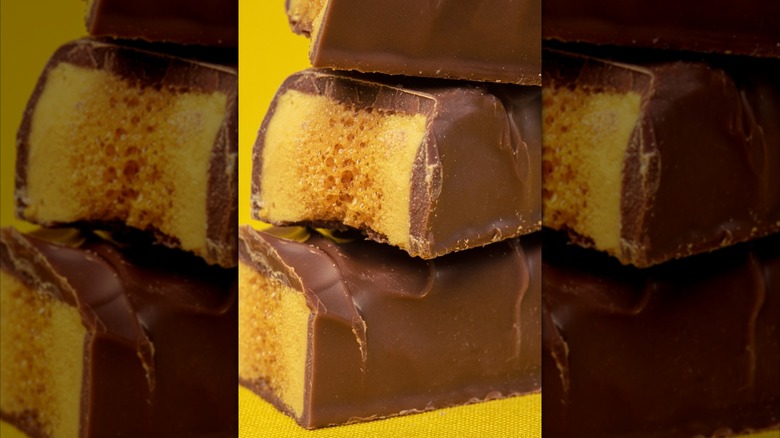
Michael Palan, one of The Takeout's most prolific writers, ranked 21 Cadbury Chocolate Bars in summer 2025 and had Crunchie bars in the number 20 spot. He described the Crunchie's honeycomb interior as looking "like a peach pit, and having an unappealing, coarse brick crunch that somehow never moistens within the mouth. Imagine a freeze-dried ice cream that never reveals its melty magic."
I have to disagree with the great man on this occasion (and with his ranking of Chomp at number one), and agree with most of the Reddit users on this post who are outraged to hear an American call the Crunchie the "worst British candy."
Crunchie's honeycomb center has a bite to it for sure, but it definitely melts in the mouth if you take smaller nibbles. Maybe you need to be born in England to truly understand the allure of the Crunchie. Sure, it is unlike anything else on the shelf, but that is also its superpower. The contrast between the chocolate and honeycomb texture, and the flavors complementing each other in every bite. For me, the Crunchie is an underrated chocolate bar.
2. Rowntree's Fruit Pastilles
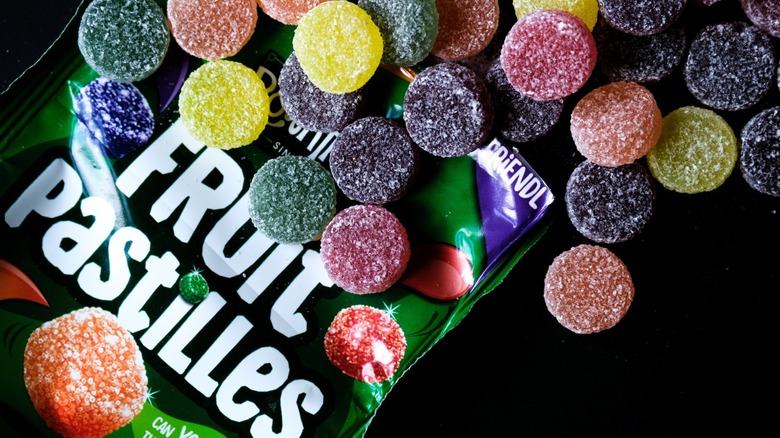
Fruit Pastilles were one of the first British candies targeted at kids. Talk about staying power, these sugar-coated, chewy, and gummy delights have been tantalizing taste buds since 1881. The five flavors that arrive in no particular order in each packet are: blackcurrant, lemon, strawberry, lime, and orange. Everybody has their favorites, but the strawberry and lime are popular picks when I'm indulging in a tube (or family-size bag to myself).
Rowntree's changed the recipe in 2020 to make Fruit Pastilles completely vegan. While this is great for vegans, many non-vegans noticed a change in the taste and texture, with one Reddit user claiming, "They used to taste fantastic but since the changed the recipe to vegan they are truly horrid. Why Rowntrees decided to take the choice out of their customers hands rather than make both the traditional recipe and the new vile vegan ones truly baffles me and I like many others have stopped buying them."
Personally, I have not experienced any "explosive bathroom time," like one Reddit user after eating Fruit Pastilles, and I always look forward to getting off the plane at Heathrow and snagging a tube from the airport to eat on the drive home.
1. Terry's Chocolate Orange
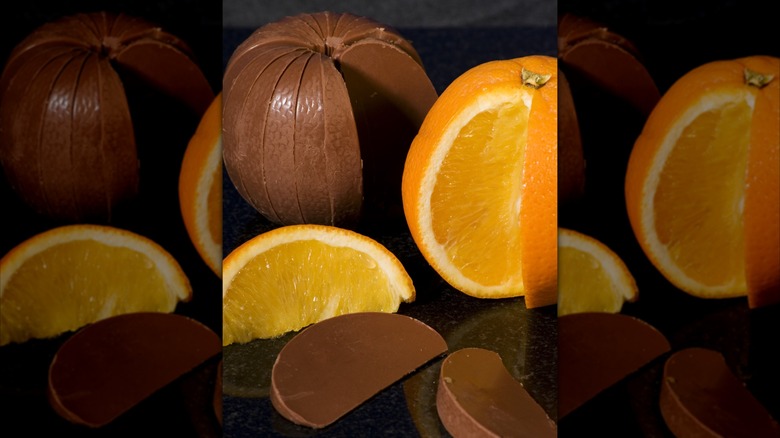
Nothing beats cracking a Terry's Chocolate Orange on the table, unwrapping the golden aluminum, and peeling back the sticker to reveal 20 perfectly formed chocolate orange segments on Christmas Day (or any day, for that matter). Terry's first attempt at a fruit-shaped chocolate was with the Terry's Chocolate Apple in 1926, before the York-based confectioner settled on the orange shape in 1932.
Terry's classic stocking stuffer scores high on taste tests and shareability, and has had the staying power to satisfy customers for nearly a century. Terry's Chocolate Orange also has a claim to one of the best chocolate advertisements that includes British actress Dawn French's quotable line: "It's not Terry's, it's mine!" While Terry's has been available in a variety of flavors, from dark chocolate and white chocolate to mint chocolate and even raspberry, nothing comes close to the classic Terry's Chocolate Orange flavor.
Methodology
The first metric I considered is, of course, the taste test. While we all have different tastes when it comes to candy, I am using my own experience, Reddit users in the know, and polls of candy-obsessed Brits I know to get a consensus on whether a candy is just weird, or the person eating it is.
Next on the agenda is how culturally transformative and meme-able a candy is in the wider British zeitgeist. A confectioner might offer a very tasty piece of candy or bar of chocolate, but if it doesn't have as much of an impact as a Wonka Bar with a golden ticket inside, it's not going to rank highly in this roundup.
Finally, I am considering the staying power of sweet treats. Caramac was once a firm favorite among British audiences for its unique caramel flavor and melt-in-the-mouth taste, but it was discontinued in 2023, so it can't be considered a "popular British candy."