

11 Times Pepsi Seriously Flopped
We may receive a commission on purchases made from links.
There's not a single soda company that doesn't have a graveyard of failed products. Few, however, have been as varied and colorful as Pepsi's. Over the past few decades, the company has pulled out all the stops to win over soda drinkers. Whether that meant chasing a health trend, cheekily riding a pop culture moment, or infusing pepperoni pizza with Pepsi, the brand was never afraid to put itself on the line time and time again in a bid to win over consumer favor.
While nostalgia buffs and soda geeks continue to wax eloquent about the range of Pepsi flavors both past and present, it's worth noting the memorable missteps the company has taken. Some of these you'll remember. Others you've probably never heard of, which is sort of the point. Together, they tell the story of a brand that has never been afraid to take a swing, even when it meant striking out spectacularly.
Pepsi A.M.
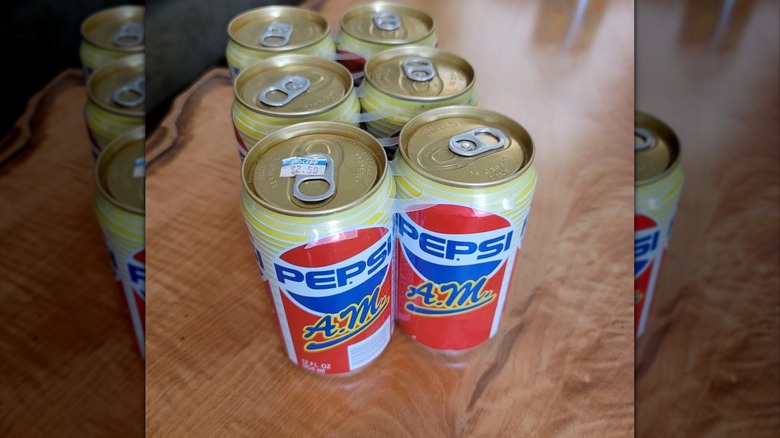
It was 1989, and coffee consumption in the U.S. had been steadily declining for some time. PepsiCo decided that it was time to take this problem into its capable hands. What if people who didn't want to drink coffee in the morning were offered an easy alternative? Enter Pepsi A.M. — a new formula with about 28% more caffeine than normal Pepsi. Not only was this created to jolt you awake, but it was also positioned squarely as a breakfast beverage.
In the latter half of 1989, the drink was tested out in cities including Cedar Falls and Waterloo, Iowa, and Fort Wayne, Indiana, with a diet version rolled out alongside it. What happened in reality was no surprise. People were not interested in cracking open a can of soda before their morning cereal bowl. And let's get real, Pepsi A.M. still had 77% less caffeine than a cup of coffee, so it wasn't even delivering the promise a cup of strong coffee carried. Consumers who did try it apparently weren't won over by the taste or the concept, and the product never expanded beyond its limited test markets. By 1990, PepsiCo quietly ended the test marketing and let it fade away, just a year after it began. Looking back, Pepsi A.M. may have just been ahead of its time. With all the high-caffeine energy drinks available in the market now, it just might stand a chance again!
Crystal Pepsi
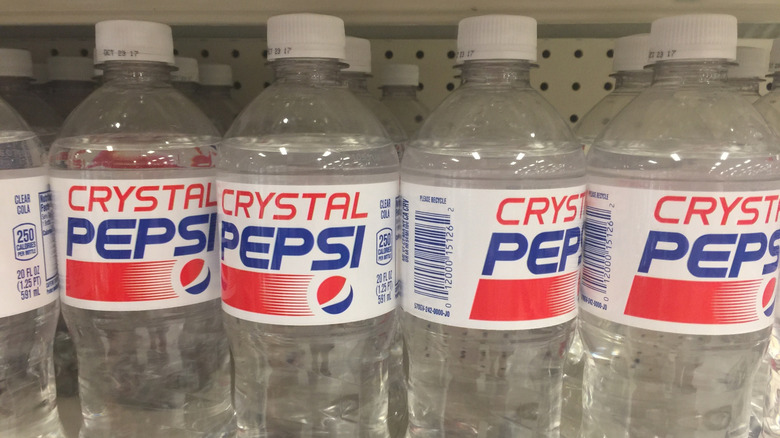
In 1992, Pepsi announced its double whammy of a drink — a new beverage that was clear and caffeine-free. In a bid to reinvent what a cola could be, this was a genuinely novel visual gimmick backed by quite a splashy marketing campaign, including a Super Bowl spot set to Van Halen's hit song "Right Now," all designed to feel edgy and forward-looking.
The good news was that initially this strategy worked. Crystal Pepsi's early days were marked by meteoric sales, award recognition, and immense public curiosity. However, almost as quickly as the drink rose to fame, it died a natural death. Around two years after its widely heralded debut, PepsiCo abruptly pulled the plug on the product (joining a long line of discontinued sodas). If we had to hypothesize what went wrong, a major factor was the mismatch between target audience and product placement. Crystal Pepsi was marketed as a "health drink" to health-conscious individuals, who in reality were not falling for a fizzy, sugary soda just because it looked different. In turn, cola drinkers were thrown off by a product that broke a basic expectation: Cola is supposed to look like cola. The failure became so legendary that Time even named it one of history's biggest product flops. However, this has not stopped PepsiCo from revisiting the concept a few times throughout the decades. Unfortunately, the revivals don't last long, proving some ideas are better left in the past.
Josta
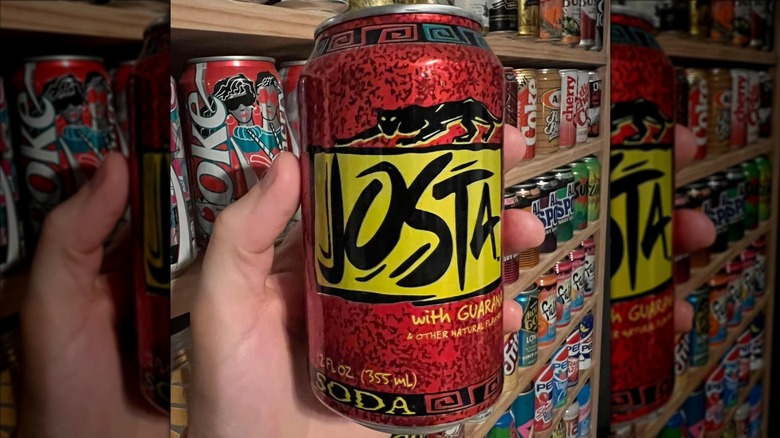
If there was one trend that Pepsi saw coming, it was energy drinks taking over the market. The idea of a caffeinated, stimulant-packed soda was an inevitability in the mid-1990s — around the same time Red Bull was building buzz internationally. PepsiCo decided it would be the first in the U.S. market and launched Josta. The beverage is still widely considered the first energy drink ever released by a major American beverage company.
What made Josta different from other caffeine-laden drinks was the inclusion of guarana — a caffeine-rich Amazonian berry that most American shoppers had never heard of. PepsiCo leaned heavily into the exoticism and mystique of the ingredient and marketed Josta as a bold departure from other drinks available. The tagline, "better do the good stuff now," gave it that edgy, slightly reckless energy that was a perfect fit for the time.
Josta definitely made a mark and built a loyal following for a while. Young drinkers were hooked, but they unfortunately did not form the large market share that Pepsi needed to succeed. By 1999 (just four years after its launch), the company announced that it was discontinuing Josta. It was even reported that the drink's popularity never expanded beyond its original rather narrow market capture. And even though some of these same loyal fans started a "Save Josta" campaign that amazingly outlived the drink by decades, it just couldn't make the product stick around.
Pepsi Blue
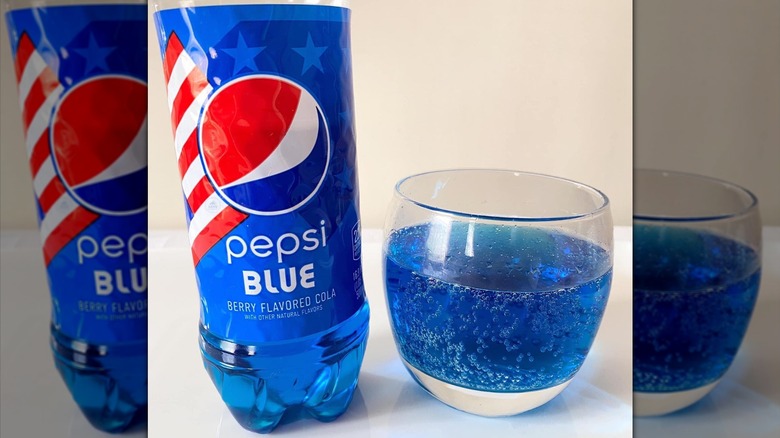
By 2002, PepsiCo was digging deep to find a fresh weapon in the cola wars. What the brand came up with was an unlikely contender. Pepsi Blue was a bright, berry-flavored soda that hit the stores within days of Coca-Cola's own splashy new release, Vanilla Coke. Marketed as a drink for teenagers, PepsiCo pulled out all the stops and snagged Britney Spears, then arguably the biggest pop star on the planet, to front the ad campaign.
So far, so good. Initial focus groups reportedly liked the berry flavor during testing, but it was the color that sealed the pitch, since Pepsi wanted something that looked nothing like a traditional cola. However, as with any marketing gamble, there are two sides to every release. Not looking like a traditional cola also worked against Pepsi's favor. The flavor divided people hard, and many compared it to cough syrup or even worse, to crayons. Sales reflected this divide and fell sharply as early as its second year of production. By 2004, it was pulled from shelves in the U.S. and Canada, even as it lingered in a few overseas markets. Pepsi Blue was reintroduced for a short period in 2021 in the hope that nostalgia might work in its favor. Unfortunately, the revival came and went quietly, proving that even nostalgia has a shelf life.
Pepsi Edge
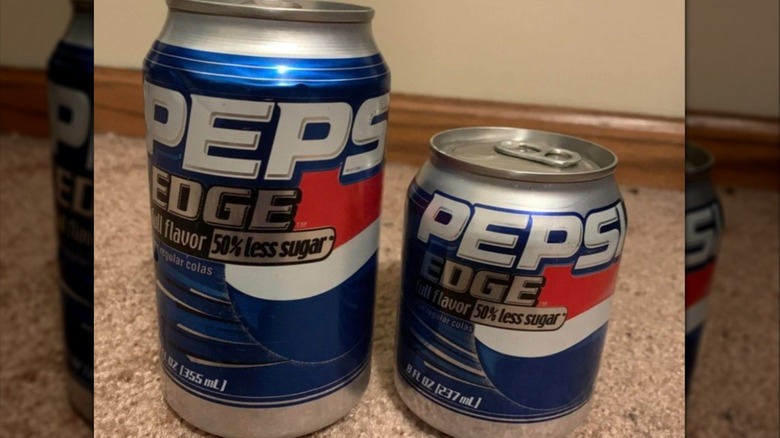
Around the same time Pepsi Blue was fading out of existence, another trend was sweeping across the country. In 2004, the Atkins Diet had everyone counting carbs instead of calories, and Pepsi decided to step up to the plate and deliver accordingly. The company launched Pepsi Edge — a beverage that was positioned to deliver the full cola flavor with half the sugar, carbs, and calories of the original. Proudly proclaimed as its biggest launch in years, Pepsi Edge was built on a blend of Splenda and high-fructose corn syrup — almost a mirror to Coca-Cola's C2 mid-calorie drink: each company hoping to own the growing low-carb market before the other one got there first. Consumers, on the other hand, wanted either the full-calorie regular version or the zero-calorie diet option. Pepsi Edge was too in-between for both parties.
Sluggish sales and a stubborn market forced PepsiCo to pull the drink off the shelves barely a year after its big launch. Press coverage at the time also indicated that the company was redirecting its efforts toward Diet Pepsi and Pepsi One instead — proof that the mid-calorie experiment had indeed failed.
Pepsi Jazz
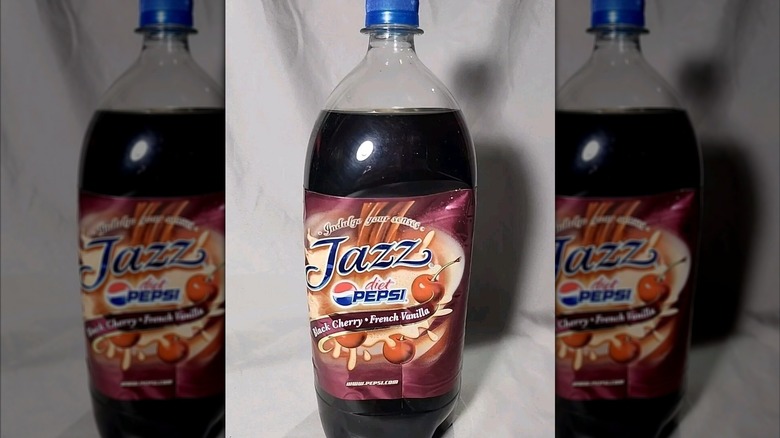
By 2006, everyone had their hands in the diet beverage pie. The basics were more than amply covered, so PepsiCo went looking for a way to make diet cola feel like a treat and introduced Pepsi Jazz. This product was a zero-calorie line of drinks dressed up in dessert-inspired flavors like Black Cherry French Vanilla and Strawberries and Cream, with Caramel Cream added to the lineup the following year.
The company went all out on the marketing and advertising strategy as well, leaning hard into a moody, sophisticated aesthetic. One print campaign even played actual jazz music when readers opened the ad in magazines like People. The tagline, "The New Sound of Cola," tried to position Jazz as something more elevated than a typical diet soda. However, it was the flavors that were the real gamble. When you layer cola with sweet, dessert notes like cherry, caramel, and vanilla, the flavor balance is always precarious.
Although they may have worked well as cookout drinks made with Pepsi, reception to these beverages was mixed from the start. Some drinkers loved the novelty and found the combinations genuinely enjoyable, while others found the flavors artificial-tasting or simply too sweet to finish a full bottle. Ultimately, the lineup lasted around two years on the shelves before it was taken off completely — a reminder that a clever marketing concept can only carry a product so far if the flavor itself doesn't hold up to repeat purchases.
Pepsi Natural
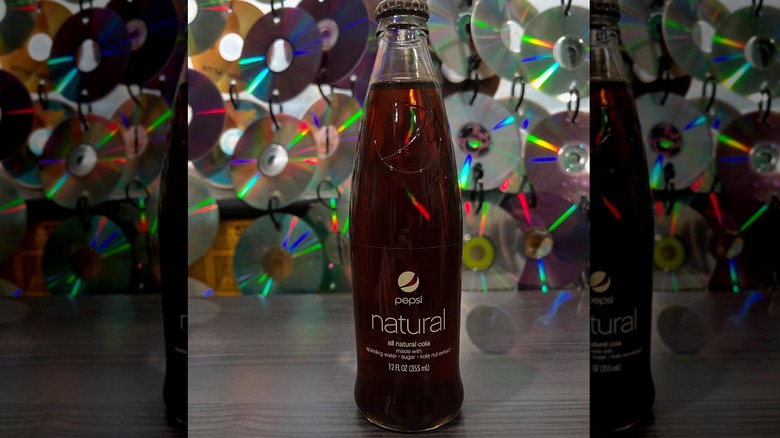
One thing you have to hand to PepsiCo is that the company always met potential trends head-on. In 2009, at the peak of health-conscious consumers villainizing high fructose corn syrup, the company launched Pepsi Natural. This was marketed as a premium cola made without corn syrup or artificial ingredients. Instead, it was created from lightly sparkling water, natural sugar, natural caramel, and kola nut extract. This amber-colored drink was packaged not in a can but instead in a sleek glass bottle — almost a deliberate nod to the elevated, old-fashioned soda fountain drinks of yore.
Pepsi Natural was initially launched in only 10 regional markets, including New York, Los Angeles, Chicago, and Seattle. Placing it specifically in the natural and premium food aisles rather than alongside regular sodas was a deliberate decision as well. Unsurprisingly, the drink came with a premium price tag, and that likely turned out to be part of the problem. With the glass bottle price hovering close to that of craft beers rather than anything else in the cola aisle, customers remained unconvinced that the taste difference justified the cost. Early reviews were mixed, with some praising the smoother mouthfeel and reduced bloating, while others found the flavor unremarkable once the novelty wore off. Pepsi Natural never expanded much beyond its original test markets, and within about a year, it quietly disappeared from shelves.
Pepsi Next
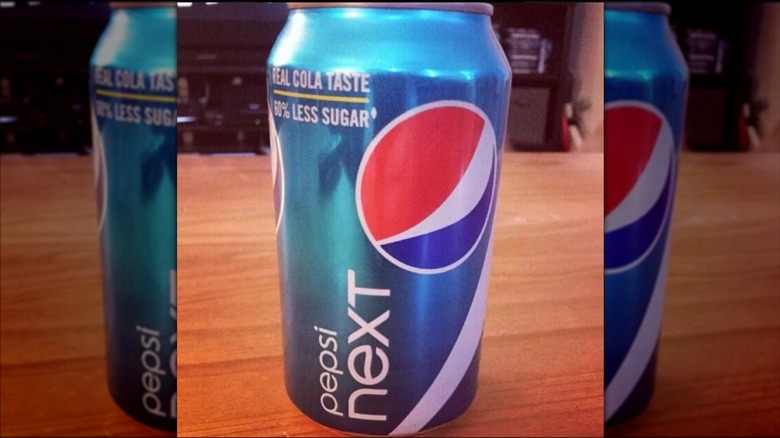
Over the years, Pepsi faced recurring complaints regarding its drinks. People who found regular Pepsi too sweet also disliked the diet versions, citing an off-putting, artificial aftertaste. In 2012, PepsiCo decided to take another swing at the middle ground it had already failed to find earlier with Pepsi Edge. This time it launched Pepsi Next. With 60 calories per can — roughly half of regular Pepsi — the launch was labeled as the company's biggest one in years. Marketing campaigns included Nicki Minaj as a spokesperson and Eva Longoria handing out samples in Times Square, indicating that budgets were not spared either.
Industry analysts, however, were immediately skeptical. Shortly after its initial launch, a Euromonitor beverage analyst warned that the drink was the company's attempt at "rehashing a failed concept behind a new flavour" (via Beverage Daily). The analyst also noted that this wasn't the first time Pepsi had made the same mid-calorie mistake. Why would anyone settle for "close but not quite" on taste in exchange for only half the calories saved when drinks like Pepsi Max (and Coke Zero) were already in the market offering full flavor at zero calories? That skepticism proved well founded. In 2015, PepsiCo quietly discontinued Pepsi Next in the U.S. — marking another time in just over a decade that PepsiCo had tried and failed to make the mid-calorie category work.
Pepsi True
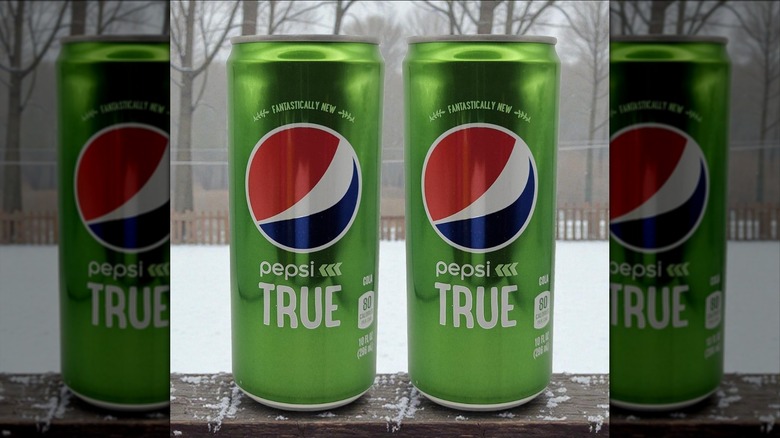
Lessons remained unlearned throughout 2014; Pepsi was circling back to the mid-calorie cola with a persistence that must be applauded. This time around, the attempt did come with a genuinely different angle. Pepsi True promised a blend of real sugar and stevia leaf extract (unlike earlier versions of Pepsi Edge and Pepsi Next with their heavy use of artificial sweeteners). By cutting sugar content by roughly 30%, Pepsi True was offered as a direct rival to Coca-Cola's own stevia-sweetened Coca-Cola Life, launched just weeks before in a matching green can.
Pepsi True also stands out for its unusual launch strategy. Instead of a splashy national campaign, the product debuted exclusively on Amazon. This was a deliberately small, controlled introduction before any wider retail push. From then on, the company took its time, slowly expanding the drink into actual retail markets months after the initial online launch. One might say that this cautious rollout was a reflection of the real uncertainty about whether stevia-sweetened colas could win over mainstream soda drinkers. Stevia has a reputation for a bitter aftertaste that's notoriously hard to mask. Pepsi True definitely lasted longer than some of its mid-calorie predecessors but was ultimately discontinued within a couple of years, quietly disappearing without the fanfare of a big announcement.
Pepsi Fire
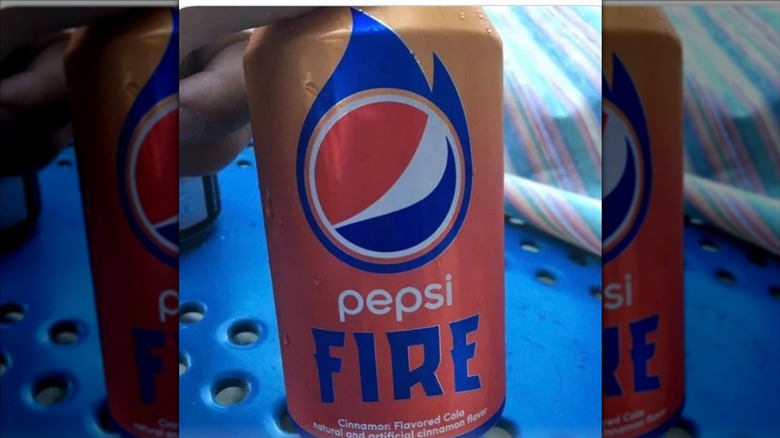
In 2017, Pepsi's marketing director announced Pepsi Fire in a statement: "An unexpected and spicy twist to our classic cola taste." This was produced and introduced as a summer novelty rather than a permanent addition and was set to run for just eight weeks under the tagline "Get It While It's Hot." Squarely aimed at millennial drinkers, this limited edition was a twist on the classic Pepsi spiked with a cinnamon flavor. Some might say it was chasing the Fireball whisky trend of the time, and they might be right.
The beverage was backed by a genuinely novel launch. From a Snapchat campaign to a limited-edition Slurpee version at select 7-Eleven locations, the modern promotional push was designed to create a buzz. Sadly, the buzz didn't stick. Cinnamon and cola turned out to be a genuinely divisive combination, with plenty of drinkers finding the flavor either too mild to notice or oddly syrupy rather than pleasantly spicy. However, because Pepsi Fire was designed from the outset as a limited run, it technically achieved exactly what it set out to do: sell for eight weeks and disappear. But unlike genuinely successful limited editions that generate demand for a comeback, Pepsi Fire quietly exited without much of a following clamoring for its return, making it feel more like a misfire rather than marketing know-how.
International Pepsi fails
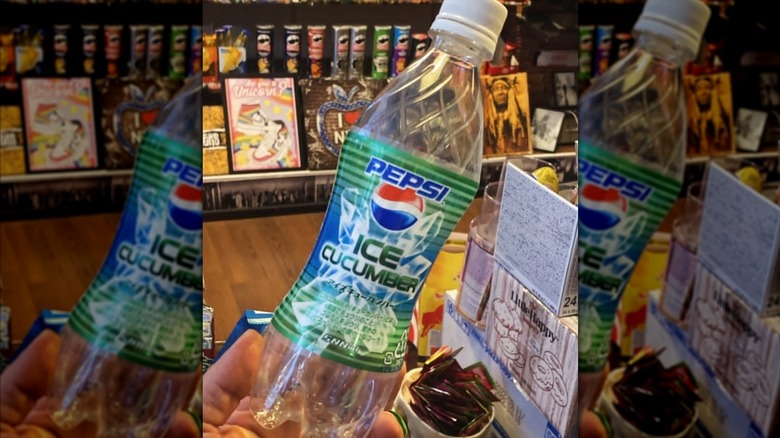
Not every failed Pepsi made it to American shelves. For example, there is a thriving market for unusual Pepsi flavors in Japan. And by unusual we mean borderline bizarre. These were flavors that would probably never survive in a U.S. grocery aisle but somehow made sense elsewhere.
What resulted was a rotating array of wild and wacky limited editions, and while most were whisked off the shelf within months, that didn't stop some from achieving cult status around the world. Pepsi Ice Cucumber may be the most famous example. Launched in the summer of 2007 as an antidote to the summer heat, this pale green, cucumber-flavored soda hit convenience stores around Japan. Despite containing absolutely no cucumber, the beverage soon snagged a space on every soda bottle collector's list. Other entries over the years have included Pepsi White (which we tried back in the day), Pepsi Baobab — flavored like fruit from the baobab tree — strawberry-milk flavored Pepsi Pink, and Pepsi Ghost, a mystery-flavor Halloween release where you had to guess what you were tasting.
The best part of this lineup of wild flavors? None of them were built to last, and that was the whole point. Seasonal inclusions generated curiosity and social media hype, but maybe not enough sustainable sales. So, you could consider them a flop if viewed under this lens alone. However, the fact that they are still talked about and discussed decades later is a win by any standard.