

The Hands-Down Best Way To Cook Chicken For Maximum Nutrition Might Surprise You
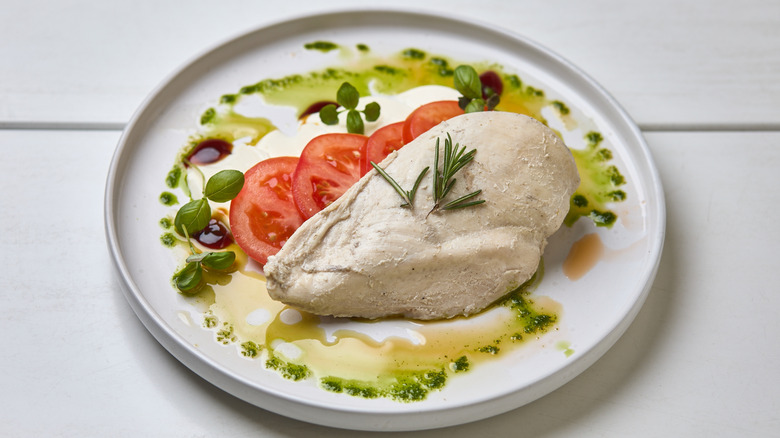
Many think of chicken as a healthier alternative to red meat, with many consumers constantly looking for the most nutritious ways to enjoy the poultry. While this often brings up the question of whether white meat is better than dark meat, what's really important is how you choose to cook your chicken. We had the chance to speak with Amy Shapiro, MS, RD, CDN, the lead nutritionist at ButcherBox, about how to make the most nutritious chicken possible, and she said the best ways to cook the poultry all include using moisture rather than high-heat grilling or frying.
"If I had to pick one method, it's gentle, moist-heat cooking like poaching, braising, or even using a slow cooker at a moderate temperature," Shapiro reveals. "These offer light-touch treatment for what's already a great protein source."
Poaching chicken is known as a great preparation step before grilling it, but using the technique from start to finish is quite underrated. Such gentle cooking methods are ideal because they don't cook away the nutrients in the process. "Chicken is rich in B vitamins, including B6 and niacin, which are water-soluble and heat-sensitive," Shapiro explains. "So, the gentler you cook chicken, the more it retains its vitamins and nutritional value. Moist, moderate-heat methods shorten the exposure to high heat, helping to keep those vitamins intact."
How to make poached chicken nutritious and flavorful
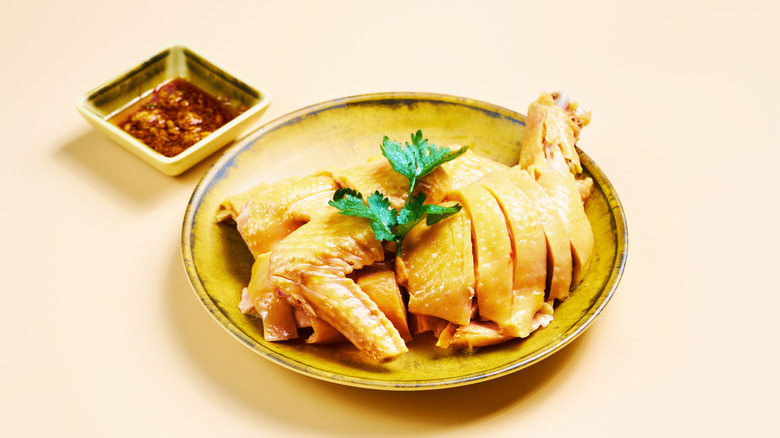
Now, even if it's the healthiest way to cook the poultry, many are concerned that poaching chicken will make the meat incredibly bland. Amy Shapiro even acknowledged as much, noting that poached chicken cannot benefit from the Maillard reaction or caramelization — both of which are incredibly common ways to make the most flavorful chicken possible. However, that doesn't mean that moist-heat cooking methods can't produce tasty chicken.
For starters, choosing the right liquid can make all the difference when poaching chicken. "Water is always an easy option, but I also recommend broth or even tomato sauce or salsa," Shapiro says, also noting that chicken broth and bone broth are both viable candidates that don't add excess sugar to the mix.
Or, even if you do want to use water for poached chicken (which should be poured in cold for best results), you can always add flavor to the liquid to improve your meat's eventual taste. "I'm a big fan of garlic cloves, peppercorns, a bay leaf, and fresh herbs like thyme or parsley stems," Shapiro recommends. The expert nutritionist also says that enhancing your chicken's flavor doesn't end when the meat is done cooking. "I also suggest a finishing touch after cooking, like a squeeze of lemon, a drizzle of good olive oil, hot sauce, which is my favorite, or fresh herbs stirred in right before serving," she adds.