

6 Bagged Salad Red Flags You Should Never Ignore
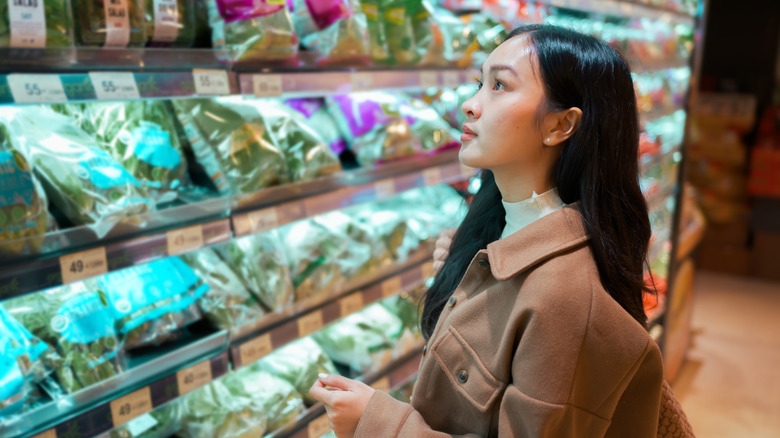
Leafy greens are responsible for an estimated 2,307,558 illnesses per year in the United States. That's just a regular year. As of August 18, 2026, the Centers for Disease Control (CDC) has confirmed 15,716 cases of cyclosporiasis, a gastrointestinal illness linked to the Cyclospora parasite, and 11,841 cases are pending. While the cases represent a cluster of ongoing outbreaks, the largest outbreak, responsible for at least 10,930 illnesses, is linked to iceberg lettuce from pre-packaged salad mixes.
Those numbers shouldn't stop you from eating your veggies, though immunocompromised folks may want to be extra careful. Still, there are steps you can take to reduce the risk of getting sick from salad mix — and red flags you should never ignore.
What's so bad about a salad mix? While a whole head of cabbage has a fairly direct route from farm to store, bagged mixes go through more processing and handling. Cutting, packaging, and even cleaning can increase the risk of contamination. Also, many salad mixes combine leaves from multiple farms. If produce from one farm is compromised, it'll contaminate the whole bag. That doesn't mean you have to give bagged salads up for good, but it does mean you should be extra careful. Keep an eye out for these science-backed warning signs.
The leaves are wet, slimy, or damaged
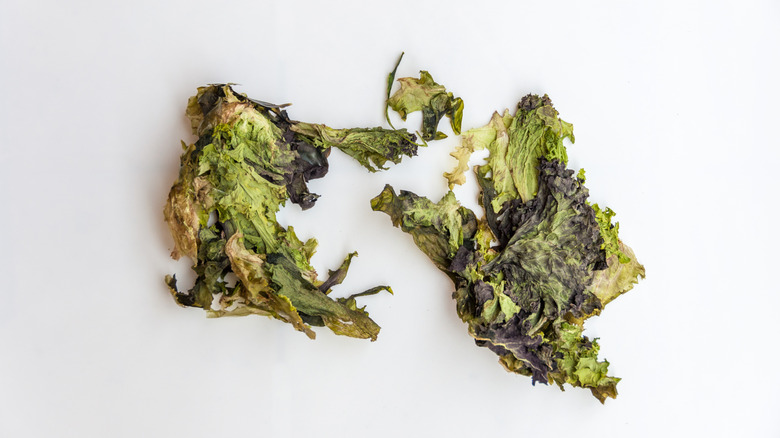
Slime, brown salad sludge, and damaged leaves are some of the most obvious signs of a bad bagged salad batch. Damaged leaves spoil quickly, and salad juice and a slimy texture are both signs that the leaves are starting to decay. Decay "feeds" bacteria. Listeria and salmonella both thrive in the juices from decaying leaves, so sludge accelerates the growth of any pre-existing bacteria. One thing you don't have to worry about? A slight pink tinge around the base of the lettuce. The pink tinge is a protective measure against stress — like a snipped stem — and it's safe to eat.
Sometimes, it's tough to find a bag that's totally damage-free. The good news? Accidentally eating a few slimy, wilted greens probably won't kill you, or even make you sick. If there are only a few gross greens per bag, you can safely toss them and eat the rest. Just don't try to save a bag soaked in salad juice.
Opting for clamshell packaging over soft-sided bags can help keep leaves from getting crushed, so they'll stay fresh longer. Avoid mixes that combine different types of greens or veggies helps, too. Some types spoil faster than others, which speeds up the process for the whole salad.
If you're unsure whether the greens are safe, cooking them can help kill off potential pathogens. While light, delicate lettuces are best served fresh, hardier greens like spinach and kale can handle the heat. Throw them in a soup or stir-fry.
It's from a sketchy source
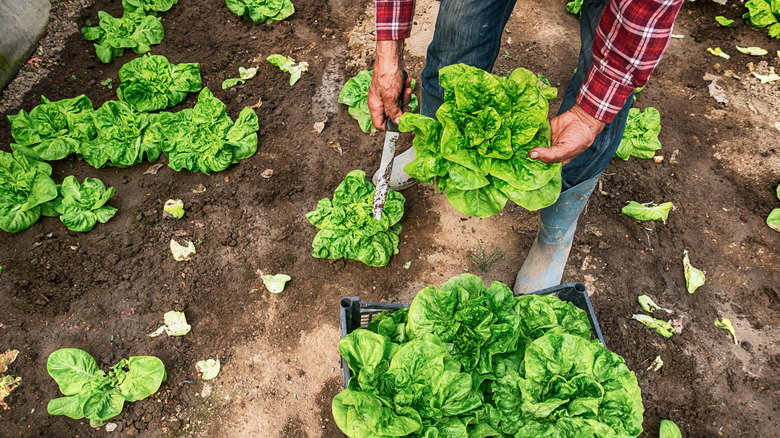
Taylor Farms has gotten a lot of bad press lately. According to the FDA, lettuce grown in one of the company's Mexico facilities is the likely source of the largest Cyclospora outbreak. Shortly after Taylor Farms issued its lettuce recall, it issued another recall for jalapeños linked to a salmonella outbreak. It's not the first time the company has had a headline-making recall, either. In October 2024, an E. coli outbreak linked to McDonald's quarter pounders sparked recalls across the fast food industry. The likely culprit? Onions sourced from Taylor Farms.
No company is immune to recalls. Taylor Farms is the top salad supplier in the U.S., so the company is bound to have frequent recalls based on pure volume. There's no evidence to suggest that Taylor Farms is worse than competitors, though critics have raised questions about the company's safety standards.
Some sources recommend opting for indoor-grown veggies, and shoppers are flocking to farmers' markets in hopes of safer produce. While some safety experts say that these sources might be theoretically safer, neither is a foolproof way to avoid illness — and there isn't much hard evidence to support either claim. One analysis of hydroponic safety echoed the old scientific adage: More research is needed.
Your best bet is to keep up-to-date on safety recalls. Sign up for FDA alerts, and safely dispose of recalled food. Don't try to cook it — some pathogens, like E. coli, can't be cooked off.
The bags are displayed in open refrigerator cases
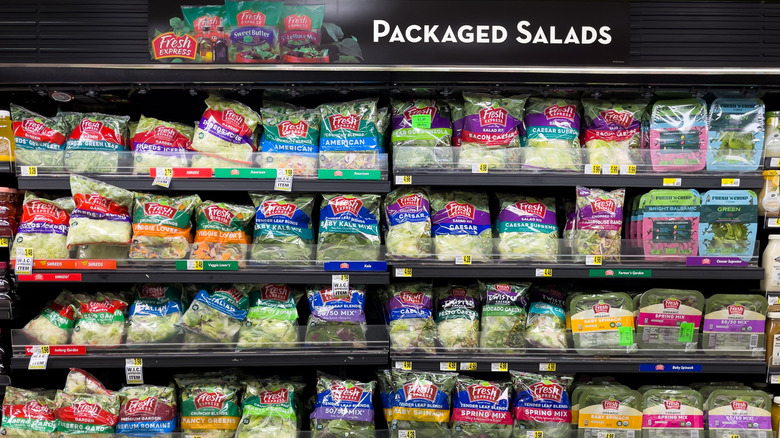
Open refrigerator cases are a common sight in supermarket produce departments. For retailers, they provide an attractive and easy-to access way to display produce. But for customers, they're a red flag. The FDA recommends keeping leafy greens at or below 41 degrees Fahrenheit. However, temperatures in open refrigerator cases tend to fluctuate, often creeping over the recommended minimum.
If you have the choice, opt for greens kept behind closed refrigerator doors. That's not always possible, though. If your store only stocks greens in open cases, rummage through the packages to find the ones in the middle of the case. Packages at the front may be too warm, while the icy temperatures toward the back can damage leaves.
Supermarkets aren't the only place where greens can be exposed to temperature abuse, though. Your careful freezer case calculations won't matter if you make your own safety mistakes. Use an insulated bag to bring your salad mixes home from the store, and make sure your own fridge is cold and consistent. Keeping bagged greens in the crisper drawer can help keep them fresh. Check the settings on your crisper — you're probably using your crisper drawer wrong — and be sure you don't crush the greens if the drawer is overcrowded.
There are water droplets inside the bags
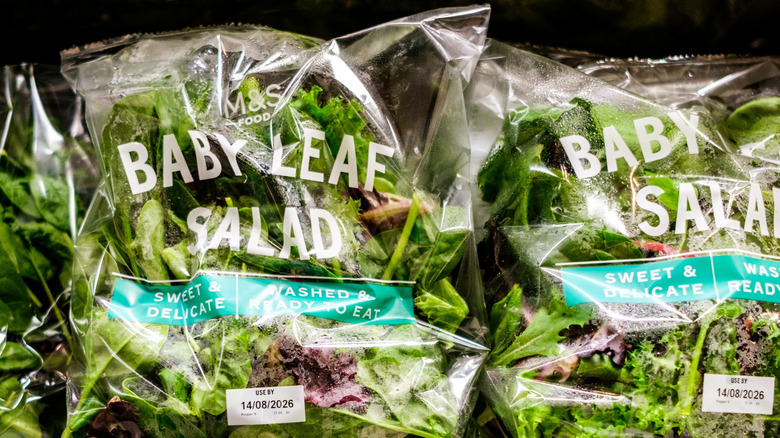
Unlike salad sludge, fresh, clear condensation isn't inherently a sign of spoilage — but it's still something to avoid. Condensation means that food has been exposed to temperature fluctuations, and temperature fluctuations are bad news. Even if the bags are safely stored behind closed refrigerator doors, they might've been exposed to higher temperatures during stocking or transportation.
Moisture can speed up spoilage, too. Fresh water isn't as bacteria-friendly as salad juice, but it does put the leaves on a fast-track to decay. Bagged salads are dried in a centrifuge before they're packaged, so the safest, freshest salads will be entirely moisture-free. Re-packaging the greens in a clean plastic container with a paper towel can help keep them fresh and dry, but don't open the bag until you plan to eat them. Your DIY paper-towel-and-Tupperware technique can't compete with the specially designed packaging and safety procedures that manufacturers use, and opening the bag can introduce new contaminants.
The salad is nearing its expiration date
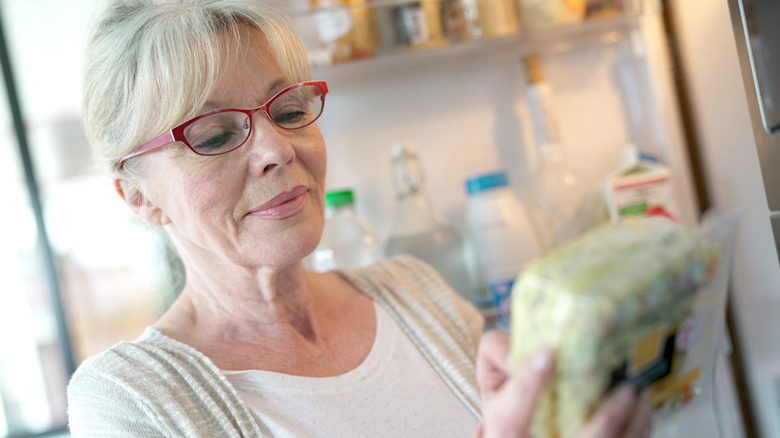
Bagged salads spoil within a few days, so check the expiration date before grabbing a bagged salad from the store. That said, you shouldn't automatically assume that the mix dated furthest in the future will automatically be the freshest. Best-by dates aren't guarantees, and those theoretically fresh greens could've been exposed to temperature abuse or other variables. It's better to opt for a fresh-looking bag that expires in a few days than a bag of decaying leaves that promises an extra week of shelf life.
That said, it's good practice to throw away your bagged salad after the expiration date. Pathogens can grow before greens show any signs of spoilage, so you shouldn't assume they're good to go just because they look fresh. A 2021 study found that microbes on bagged salads tended to skyrocket around the expiration date. Don't be a food waste martyr: Ditch the expired greens.
If you know that you won't eat your greens before their expiration date, consider freezing them. Tough, hearty greens like kale and spinach can be frozen for later use in soups and smoothies. Just make sure to blanch the greens by giving them a quick dip in a pot of boiling water first. Blanching helps preserve nutrients, kill off any pathogens, and keep your veggies tasting fresh. Not all leafy greens are freezer-friendly, though. Never freeze light, delicate greens like lettuce — they'll turn into pure mush.
The leaves are cut or shredded
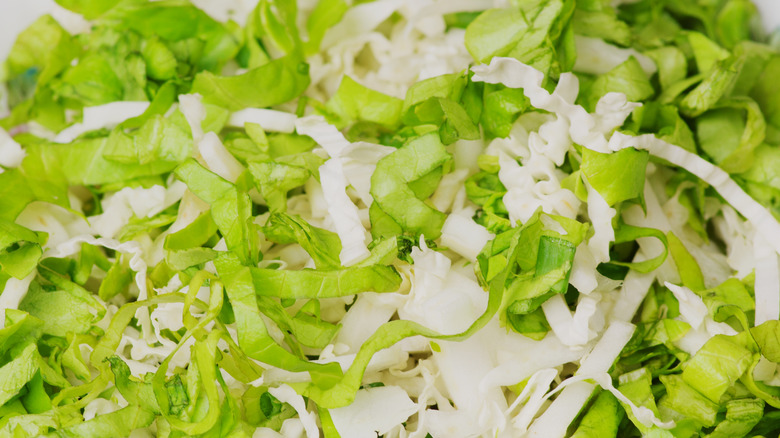
Larger greens, like lettuce, kale, and collards, are often cut or shredded before packaging. Pre-cut leaves are convenient — cleaning and cutting whole leaves can take a surprising amount of time — but they also pose a major safety risk. Each cut provides an opening where pathogens like E. coli can invade, and dirty cutting equipment can introduce new contaminants. Cutting can even affect the nutritional content: Oxidation from the cut edges of the greens can degrade vitamins C and B.
If you don't want to bother with cutting up leafy greens for salads, consider switching to varieties with smaller leaves. Since the greens are only snipped at the stem, pathogens have fewer points of entry. If you don't mind extra prep work, though, opt for whole heads and full-sized bunches instead. Larger leaves may be less convenient, but they're safer — and hacks using a pizza cutter can speed up the chopping process. Another plus? Full-sized bunches last longer. Depending on the variety, a whole head of cabbage can last up to two months in the fridge.