

11 Long-Gone American Restaurant Chains Boomers Miss The Most
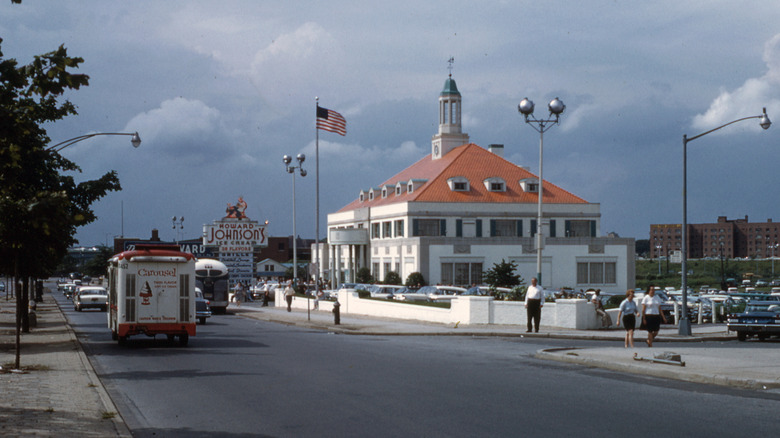
Boomers may stereotypically be associated with a few debatable opinions, like "Millennials killed the housing market" or "young people should stop eating so many expensive avocados and cancel Netflix and then they'd be able to afford life." However, despite younger generations' tendency to dismiss boomer opinions as being out of touch and out of date, they did get some things right — really right.
Take, for example, the American restaurant chains that boomers frequented on the regular. These are old-school, Americana-rich restaurants that served up true comfort food and fast food at its finest. We'd be so lucky to have these chains back in our local neighborhoods!
Let's take a trip down memory lane and peruse some of the top, long-gone American restaurant chains that boomers miss the most. If you are a boomer, you're likely to feel a swell of nostalgia. If you're not, you're likely to feel a little jealousy at the fact that these restaurants peaked before your time.
1. Burger Chef
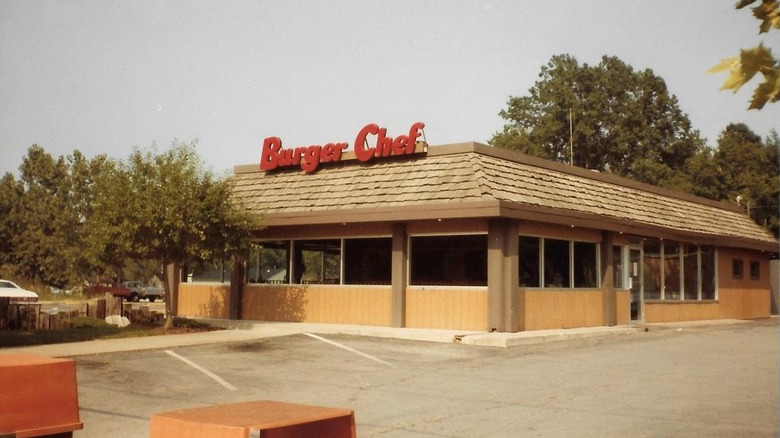
No, it wasn't just a fictional restaurant made up for the sake of "Mad Men." Burger Chef was the real deal.
Burger Chef was a product of the 1950s — as was the case with so many of the brands on our list. The chain cemented itself in Indiana before heading across the country with one of the initial iterations of what is now the recognizable fast food combo.
Even though you might not know Burger Chef's name in the 2020s, by the late 1960s, it was a big deal. During this decade, Burger Chef would go head-to-head with some of the largest (and still largest) fast food names in the biz.
Unfortunately, after General Foods purchased Burger Chef, the chain declined and the last outpost closed in 1996. Still, many boomers have fond memories of this chain, taking to Reddit to say that the chain's food was far superior in quality to what you can get at a fast food restaurant now, with flame-broiled hamburgers, fish sandwiches, milkshakes, and fries that all surpass what you'll get at your standard drive-thru today.
2. Howard Johnson's
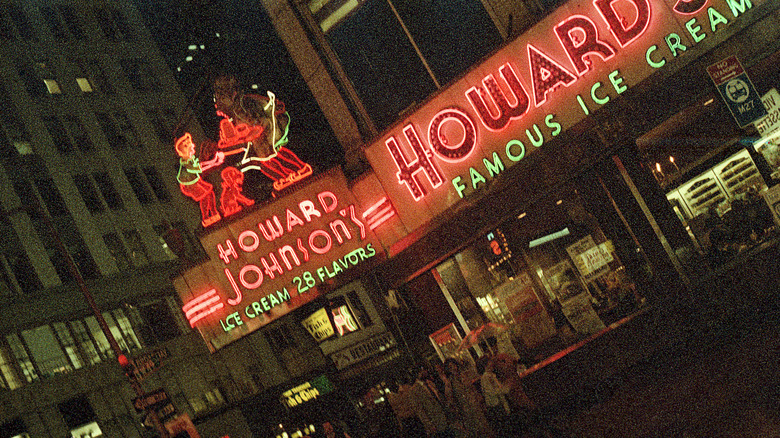
Howard Johnson's is another boomer brand that made an appearance on "Mad Men." It's no wonder, though. At one point in American history, this brand — sometimes just referred to as "HoJo's" — was absolutely the place to stop during a long drive.
The brand's namesake Howard Johnson got his start in the ice cream business, before expanding his culinary explorations in 1929, opening a full-scale restaurant. A little over a decade later, there were more than 100 Howard Johnson locations in the Eastern U.S. The restaurant served, of course, ice cream, but its fried clams also became a favorite.
Baby boomers in particular will rave about Howard Johnson's food, but if you need another stamp of approval before you'll believe in this defunct chain's culinary prowess? Well, master chef Jacques Pepin himself worked at Howard Johnson's as a recipe developer for the chain for a decade. If that's not enough to convince you that Howard Johnson's had great food, I don't know what would.
3. Hot Shoppes
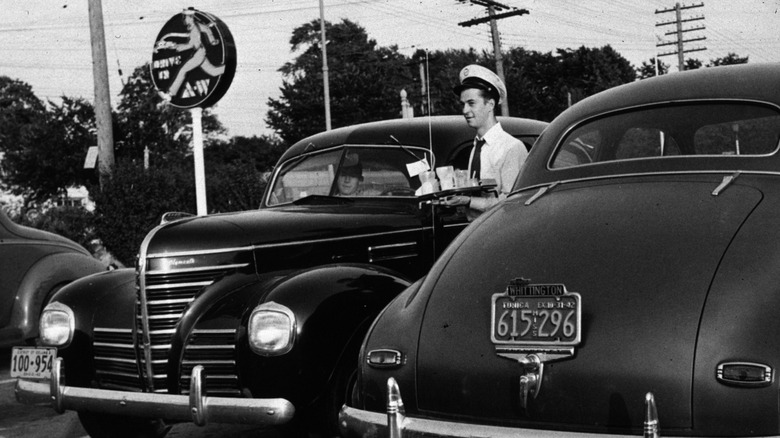
You may not know Hot Shoppes, but you know its business successor. Hot Shoppes was established in the 1920s. The owner? J. Willard Marriott — yeah, the same guy who would go on to found the hospitality giant.
Morphing from a roadside tamale and root beer stand into a full-fledged restaurant, Hot Shoppes evolved quickly, stretching its Washington, D.C. roots. A roadside stand became a nine-seat root beer stand. Then came a drive-in restaurant. (In fact, it was the very first drive-in restaurant in the region.) Hot Shoppes got into the airline catering business and also oversaw cafeterias during World War II and into the decade to follow, at a range of large organizations. Later, in the 1950s, Hot Shoppes introduced what it called a "whopper" of a sandwich, reminiscent of a Big Mac and the only double-decker hamburger on the East Coast, officially christened the Mighty Mo burger (and best served, according to many boomers, alongside an orange freeze drink and onion rings).
Of course, now, we know the Marriott family for their hotels, not their hamburgers. The last Hot Shoppes restaurant shuttered in 1999.
4. Kenny Rogers Roasters
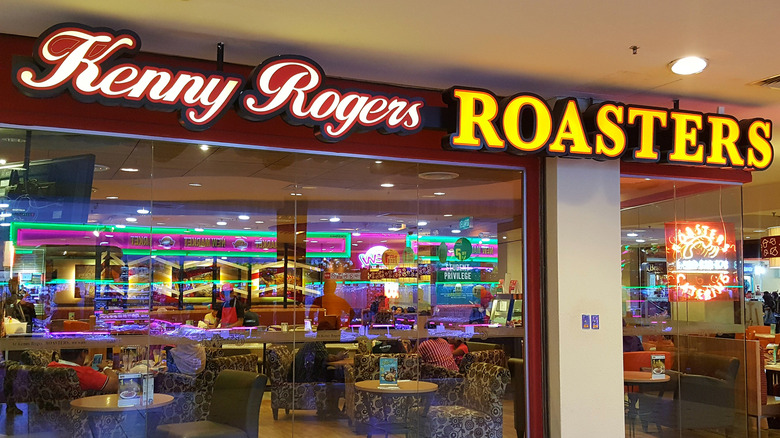
If you're of the younger set and never had a chance to visit Kenny Rogers Roasters, a good comparison might be Boston Market (though at this point, you'd be lucky to have ever had the opportunity to dine at that quickly disappearing chain as well). Yes, associated with the country music star of the same name, Kenny Rogers Roasters was a rotisserie chicken restaurant that launched in the 1990s — right in time for a lot of boomers to load up the kids or grandkids and take the family there for a supposedly "healthy" Friday night dinner.
The first Kenny Rogers Roasters opened in Florida, with the brand's footprint quickly expanding to more than 350 outposts. The restaurant was such a part of '90s culture that it scored a guest spot on "Seinfeld!" Unfortunately, Kenny Rogers Roasters closed its last U.S. restaurant in 2011 — but, for all those boomers who remember it fondly, they can still find franchises operating in Asia.
5. Beefsteak Charlie's
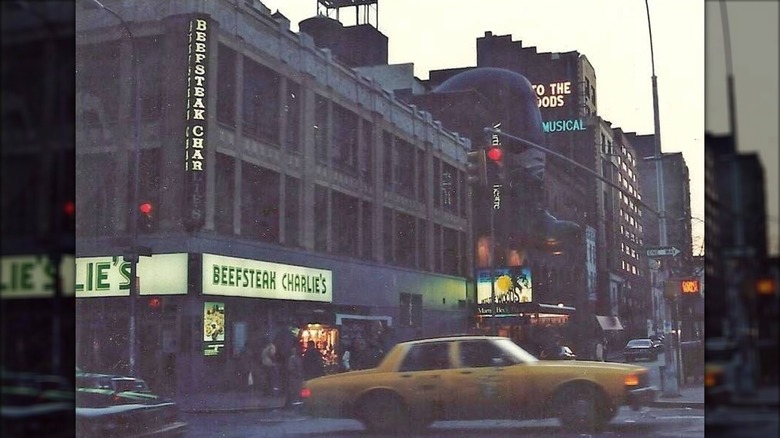
Beefsteak Charlie's was more of a regional chain, with more than 60 locations on the East Coast. The brand survived in one form or another for around a century, but it became known for one key thing: you could get a whole lotta food and a whole lotta drinks for very little money.
We're talking unlimited shrimp cocktails, a go-back-and-fill-your-plate-with-more salad bar, and never-ending beer and wine. The Beefsteak Charlie's grazing menu from the 1970s and '80s was a thing of budget-friendly beauty. You could mix and match appetizers, sides, and desserts, paying $1 per item; you could build a meal out of chicken wings, stuffed clams, ribs, and dessert for under $5! Meanwhile, that same menu priced cocktails for $2 or less.
As one patron recalled on Facebook, a Beefsteak Charlie's TV commercial jingle went as such: "You're gonna get spoiled, We will treat you right, You're gonna get spoiled, At Beefsteak Charlie's tonight" — and that's seemingly very, very accurate.
So whatever happened to Beefsteak Charlie's? You'd probably expect that all those cheap prices would put a brand under, but some chalk up Charlie's decline to poor business decisions. As the company changed hands over the years, it just couldn't stand the test of time. As such, so many of us are left without ever experiencing the majesty of Beefsteak Charlie's budget-friendly eats.
6. Sambo's
Sambo's is a restaurant chain with a bit of controversy attached to it. Highly popular in the 1970s, Sambo's could be found throughout the United States. At the brand's zenith, it boasted more than 1,000 locations. Yet, even with that 1970s popularity, Sambo's couldn't make it into the 1990s. Officially, the brand filed for bankruptcy in the early 1980s, and then one final restaurant kept on using the name up until it finally closed down in 2020.
If you're a millennial, the name "Sambo's" may not cause any alarm bells to ring in your head. However, the name is linked to a story and character called "Little Black Sambo" that was highly racist, and those connections were woven into the brand's identity.
Still, boomers remember the chain fondly, for its food. At one point, you could get a bottomless cup of coffee for a dime. Favorite menu items included the silver dollar pancakes and steak and eggs.
7. Farrell's Ice Cream Parlor
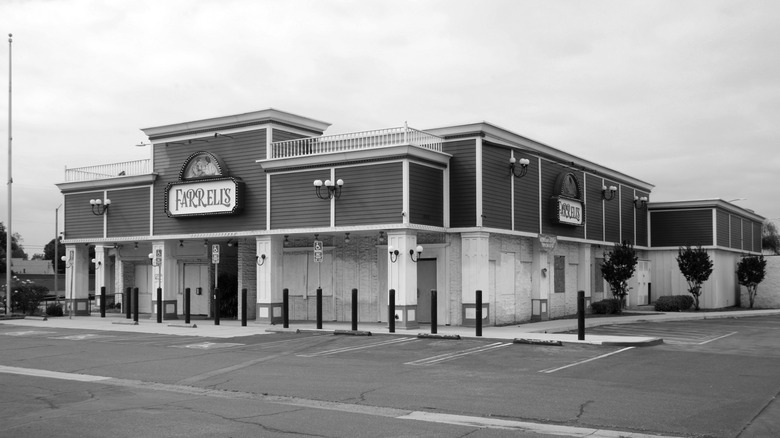
Farrell's Ice Cream Parlor may have been founded in the 1960s, but it had a distinctly older aesthetic going for it. Think 1920s soda jerks. Obviously, an ice cream parlor is going to likely be a big hit with young people, so it's no surprise that this chain holds a certain nostalgic appeal to boomers, who would've been in their teens or early 20s at the time of this restaurant's launch.
But don't go thinking that this was just any ole ice cream parlor serving up your staple hot fudge sundaes and the like. Farrell's knew how to go big or go home.
Two of the favorites were the Pigs' Trough and The Zoo. Both were more or less oversized banana splits, but they're hardly one and the same. The Pigs' Trough contained six scoops of ice cream, whereas The Zoo contained a whopping, jaw-dropping, stomach-splitting 30 scoops of ice cream. That Zoo could weigh more than 5 pounds. Of course, ordering one was an occasion, both for the boomers ordering it and the staff who made quite the big deal when bringing it out. The very last Farrell's Ice Cream Parlor shuttered in 2019.
8. Woolworth's lunch counter
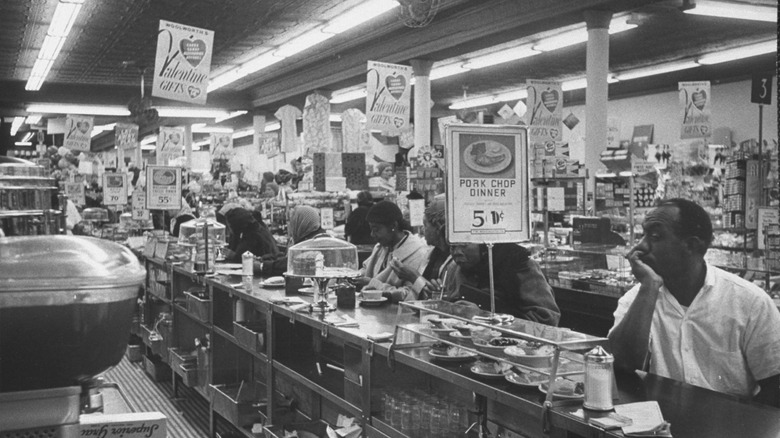
The concept of going into a department store and eating lunch has more or less fallen to the wayside in the modern era, but there was a time when you could go into plenty of such stores and not only shop for everything you needed for both your closet and home, but also grab a quick lunch. Such was the case with Woolworth's lunch counter. The chain department store was highly popular in the 1960s. However, today it's associated with a very specific part of American history: the Civil Rights Movement.
At one point, these lunch counters were only open to white patrons. As such, during the Civil Rights Movement, sit-ins began occurring, as Black patrons asked for the same service that their white neighbors experienced. Today, you can see a literal Woolworth lunch counter that was part of such a sit-in on display at the Smithsonian National Museum of American History. Despite the cultural importance, though, a lot of boomers remember Woolworth's lunch counters for the swivel seats, root beer floats, pizza, and hot dogs.
9. Dutch Pantry
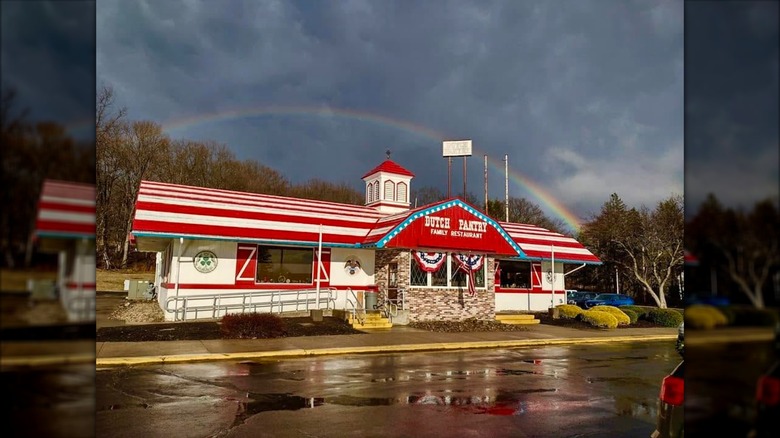
Suitably, the Dutch Pantry brand got its start in Pennsylvania Dutch country. With the first restaurant opening in the 1940s and then the chain expanding throughout the next two decades, until you eventually had what some refer to as the OG Cracker Barrel of the East. Fans and past employees alike fondly recall the restaurant's fritters, famous ham and bean soup, and homemade salad dressing.
While Dutch Pantry didn't grow to quite the same heights as some of the other chains on this list, it did have near 100 locations at one point, with locations specifically situated and designed to appeal to road-trippers. Poor ownership and management decisions eventually led to the demise of Dutch Pantry. While the overall brand and company is gone now, you can still find two old local outposts that have managed to survive, with one location in Dubois, Pennsylvania, and another in Clearfield, Pennsylvania.
10. Arthur Treacher's
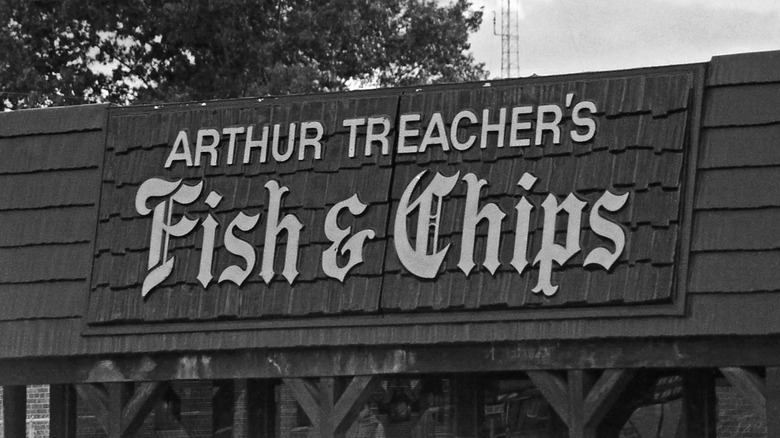
One fun fact about Arthur Treacher's, which specialized in fried fish and fries, is that one of the original founders was Dave Thomas (aka, Wendy's dad, aka the founder of the burger chain you can now find all over the world). Unfortunately, Thomas didn't have the luck with Arthur Treacher's that he would have with Wendy's.
This restaurant brand really tried to embrace a British fish and chips shop aesthetic. Story goes that the kitchens used recipes gleaned from real fish and chips shops in England. Even the name was taken from a British actor. The approach worked for a time, with nearly 1,000 locations popping up around the United States into the 1970s. The menu was a lot of what you can find at a typical fried seafood fast food chain today — for instance, a 1970s combo promised two fish fillets, fries, coleslaw, and a soda for $1.69. However, some fans feel that similar, still-standing brands like Long John Silver's can't hold a candle to Arthur Treacher's.
11. Valle's Steak House
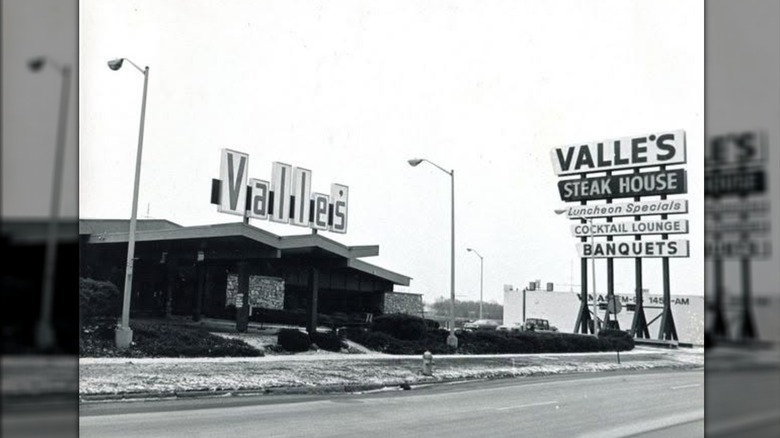
Yet another East Coast chain that boomers loved and that's now met an unfortunate fate is Valle's Steak House, which got its humble start in the 1930s. It was originally a café before the chain grew into the steakhouse business and became a staple throughout New England and beyond. The chain expanded to have dozens of locations under its purview, but while many of the chains on this list thrived in the 1970s, Valle's Steak House came upon quite a few challenges during this decade, such as the original founder's passing. For a few decades further, Valle's locations would close, with the final closing occurring in 2000.
Serving up two-person salads, 1-pound sirloins, and lobster, Valle's catered to those looking for good food at a reasonable price. The chains also offered event spaces, and it became a go-to place for a special occasion, from weddings to prom to graduations. Luckily, Valle's restaurants could easily hold lots and lots of diners — buildings were designed so that they could cram in as many as more than 1,000 customers in one go.