

The Common Croissant Mistake The French Would Never Dare Make
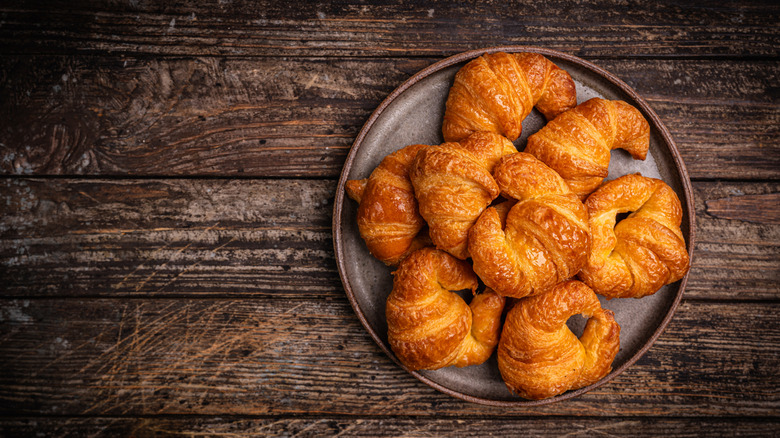
When most people think of croissants, they think of France. The flaky pastry icon is one of the French foods that aren't actually French in origin, but France is where croissants as we know and love them were popularized and the country arguably does croissants better than anywhere else in the world. Case in point, you're probably making a croissant mistake that would fill any self-respecting French person with shame: Confusing the croissant au beurre with the croissant ordinaire.
The difference is relatively straightforward — a croissant au beurre is made with pure butter while a croissant ordinaire contains vegetable fats or margarine (one of the vintage ingredients that have fallen out of favor). Unsurprisingly, croissants au beurre are the more prized (and typically pricier) pastry beloved for their rich, natural, and incomparably buttery flavor. Luckily, it's easy to tell the difference with just a glance. Croissants au beurre are typically straight, while croissants ordinaire are usually crescent-shaped. While this golden croissant guideline isn't official (it's perfectly legal for a bakery to sell an arrow-straight croissant ordinaire), the unwritten pastry rule is widely accepted across France and elsewhere.
Why are croissants au beurre straight?
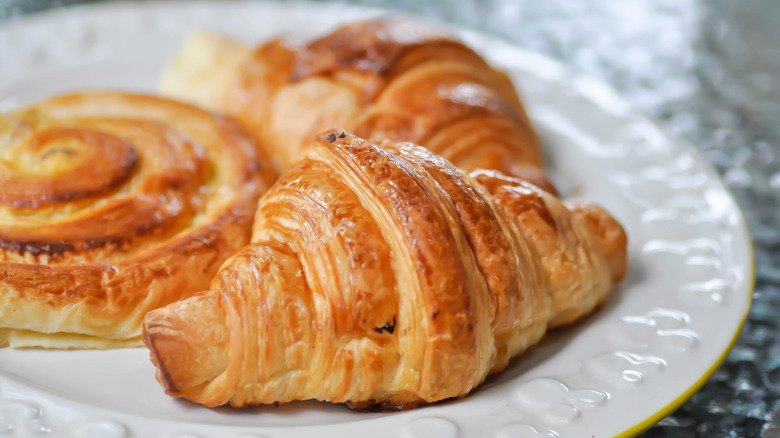
The exact origins of the croissant are hotly disputed, but what's clear is that early croissants were most likely curved – in fact, croissant is French for "crescent." Straight croissants likely didn't come about until the mid-19th century when the rise of margarine inspired bakers to distinguish pricier, all-butter pastries from cheaper, margarine-containing treats. This begs the question: If the original croissants were curved and made with butter, why are modern croissants au beurre straight and croissants ordinaire curved, not the other way around?
The answer is surprisingly practical: Curved croissants are more difficult and time-consuming to shape than their straight counterparts, but one of the benefits of using margarine in pastries is that it's easier to knead and shape than butter (by the way, here are 12 essential tips for cooking with butter). So, it made sense for bakers to curve the margarine-laced pastries and leave the buttery ones straight, at least for everyday purposes. That said, you can certainly still find crescent-shaped all-butter croissants, particularly at high-level pastry competitions. However, if you see these two croissant shapes side-by-side in France, you can be fairly certain of the buttery distinction. If you're looking for more ways to level up your pastry game, here's the croissant etiquette rule you didn't know you were breaking.