

12 Of The Biggest Aldi Scandals, Explained
Ever since Aldi opened its first U.S. store in 1976, the German-based discount supermarket chain has steadily grown to become one of the most popular chains in America. In fact, Aldi has not only expanded to include over 2,600 locations in 41 states, it's also become a trusted brand with American customers. In fact, a recent nationwide survey by Newsweek and the market research company BrandSpark named Aldi as the most trusted "discount supermarket" and "small format grocery store" in several areas of the country. (It was only beaten out in a couple locations by Walmart.)
The chain is best known for its low prices and large range of private label offerings, although we should point out that it does carry brand-name items, too. The myth that Aldi only offer its own products is just one of the 14 things you've always believed about Aldi (that aren't true).
But, Aldi's not been without controversy, as the brand has weathered a number of scandals and negative news stories throughout the years. However, it's largely emerged from all of them with its positive reputation intact, as customers continue to search out its affordable prices and unique range of products. So, we've put together a list of those Aldi scandals that it'd probably prefer you forget about ... again.
1. Aldi was accused of deceiving and confusing customers with its private label brands
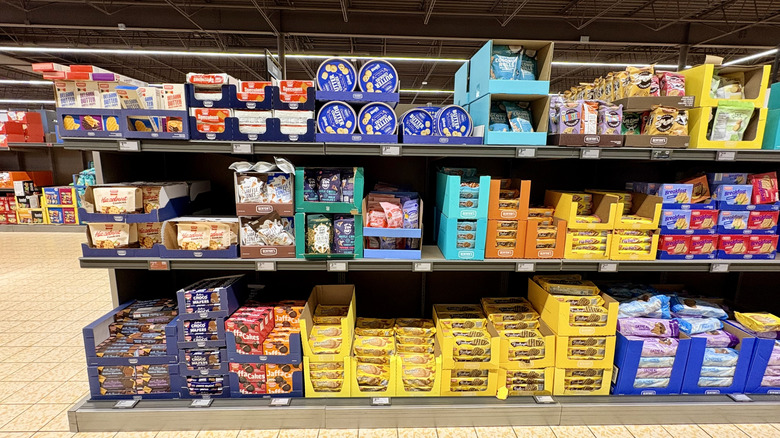
One of the ways that Aldi saves customers money is by offering those private label brands, which are store-exclusive versions of popular items like chips, cookies, or other snacks. These store brands can be much cheaper than the name-brand versions, despite the fact that they're often made by the same manufacturers. (In fact, you might be surprised by the 11 major brands behind Aldi's own products.) And that cost savings make sense, as private label offerings don't need to advertise and can be sold much closer to their manufacturing costs. So, win-win, right?
Well, that doesn't mean the name brand companies are happy about that. And in 2025, Aldi was sued by Mondelez International, that claimed that the supermarket had "blatantly copied" several of its products, including Oreos, Chips Ahoy!, and Nutter Butters. The lawsuit said that the Aldi versions went beyond simply providing a cheaper alternative and accused them of using similar packaging that was "likely to deceive and confuse customers."
It wasn't the first time Aldi had been accused of this. In 2024, an Australian court found that Aldi had "flagrantly" infringed on the copyright of a brand of "Baby Bellies snack puffs," and even copied the cartoon owl used in the logo.
2. It mistakenly sold horse meat as beef
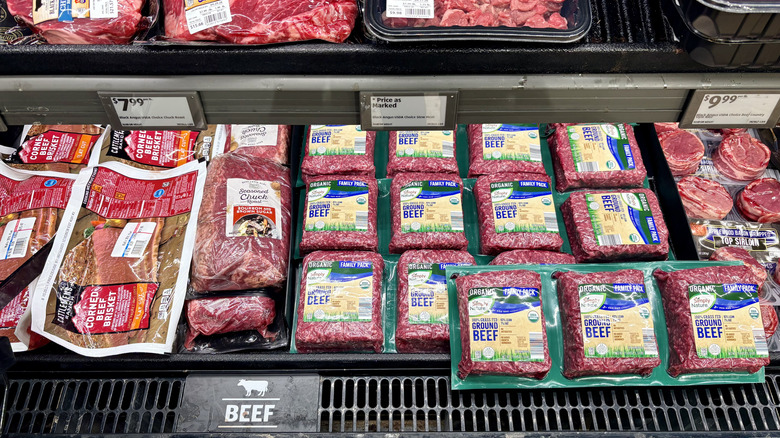
While selling horse meat for human food has been frowned upon in the U.S. for years, in other parts of the world it's still consumed on a regular basis. But even if you don't have a problem with eating ground horse meat, you probably don't want to get it when you're buying beef.
But that's what happened in 2013, when Irish and U.K. meat inspectors discovered that a range of Aldi products, including frozen lasagna and hamburger patties, didn't contain the beef that was listed as ingredients, but were instead — you guessed it — made with horse meat. And not just a little bit, as some of the ingredients contained no beef and 100% horse meat.
Aldi blamed the mistake on its French supplier, Comigel. Aldi wasn't the only supermarket affected, though, as U.K. supermarket giant Tesco's and German chain Real were also hit with similarly counterfeit beef. The scandal caused the European Union to announce that it would ramp up DNA testing on meat products to find similar cases.
3. Aldi accidentally received banana crates full of cocaine more than once
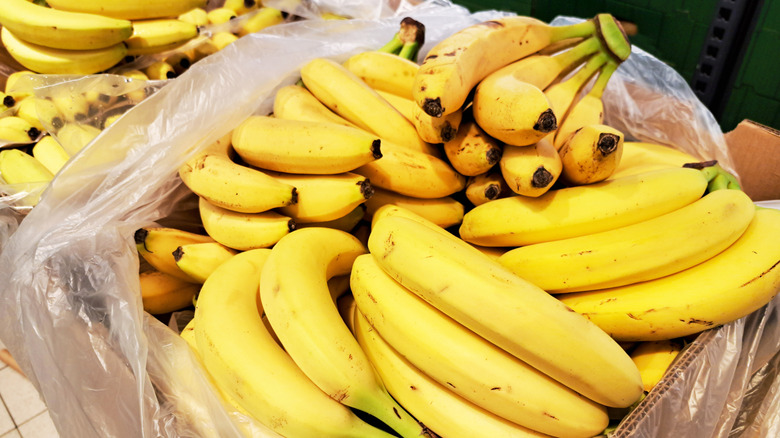
Bananas are a great food to snack on, as they're loaded with potassium and vitamin C. But you probably wouldn't expect your local grocery store bananas to also be loaded with massive amounts of cocaine. But that's what store workers at several German Aldi stores discovered in January 2015, when they opened multiple boxes of bananas, only to find 5 million pounds (the U.K. money, not the weight) worth of cocaine mixed in with the produce.
Now, you'd think this kind of thing would only happen once in a chain's history, but only a few months later the same thing happened to Aldi again, only this time police found 11 million pounds worth of the drug in the shipment. Okay. But the same illicit banana scheme couldn't happen again, right?
You'd think so, but in 2019 it happened a third time, with workers finding half a ton of cocaine in shipments across six German Aldi's stores and one warehouse. Police confiscated the drugs — with an estimated street value of around $28 million — which they believed to have been smuggled in from Latin America.
4. Workers alleged that Aldi used cameras to spy on employees
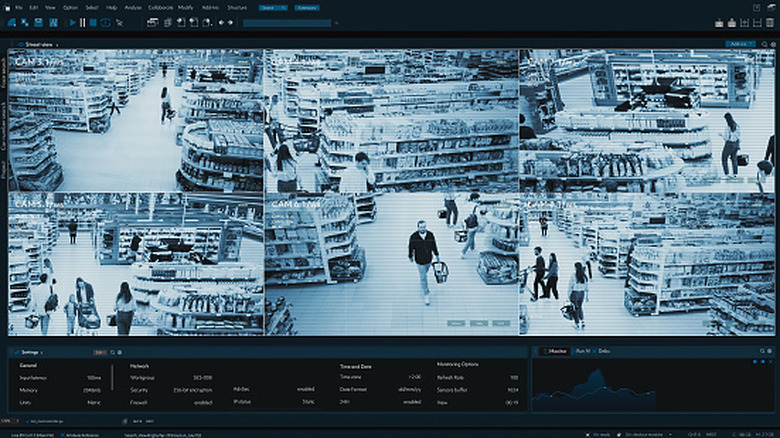
In 2012, the German newspaper Der Spiegel ran an article alleging the chain reportedly used hidden cameras to spy on employees, including monitoring their outside relationships. The source of these claims? An unnamed former "corporate detective" who had worked for Aldi on several assignments. He also claimed that he was tasked with installing hidden cameras in employee changing rooms, and hired to secretly monitor employees' job performances and relationships as part of his work. Aldi subsequently denied the claims, saying that the company's hired detectives did not monitor work performances.
But it wasn't the only time the chain was accused of improperly using security cameras, as that same year saw another article from Der Spiegel alleging Aldi's detectives used security cameras to secretly film female customers wearing short skirts and low cut tops. The footage was then reportedly saved and traded between store managers across the country.
5. It was sued over an exploding turkey burger
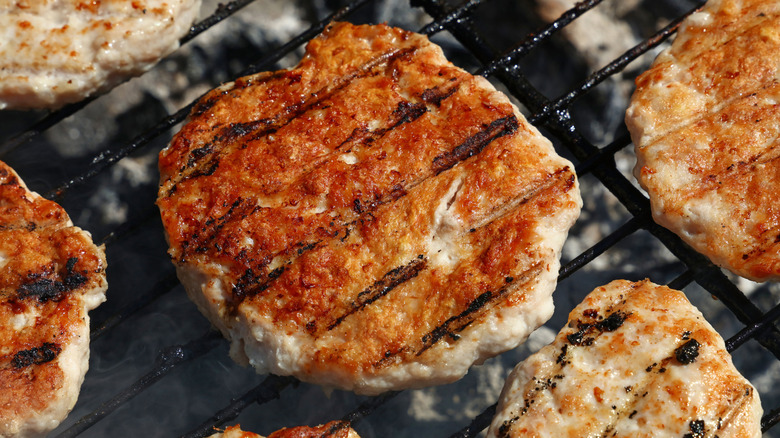
You know how you generally don't want your food to explode when you cook it? Well, the opposite happened to Aldi customer Gloria Besley, who claimed that she bought some Kirkwood turkey burgers (an Aldi private label brand) at a Pittsburgh-area Aldi store in 2018. But when she tried to fry them up according to the package's directions, the burger allegedly exploded and permanently scarred her hands and forearms.
She subsequently filed a lawsuit against the brand, asking for more than $35,000 in damages. A year later, Aldi settled with her, although the amount of the settlement wasn't publicly revealed.
But why would a turkey burger explode? We actually wrote an article covering the science behind Aldi's exploding turkey burger scandal, but the quick version is that the ice crystals in frozen turkey meat can quickly expand when exposed to the hot oil of a frying pan. That can cause a quickly expanding cloud of steam which causes the meat to, well, explode. It's the same reason that deep-frying a frozen turkey can cause an even more violent explosion. (And a very dicey Thanksgiving.)
What's the solution? If you're going to fry turkey meat, you should make sure to thaw it out and pat it dry first.
6. An Australian government agency claimed Aldi sold lead-contaminated faucets
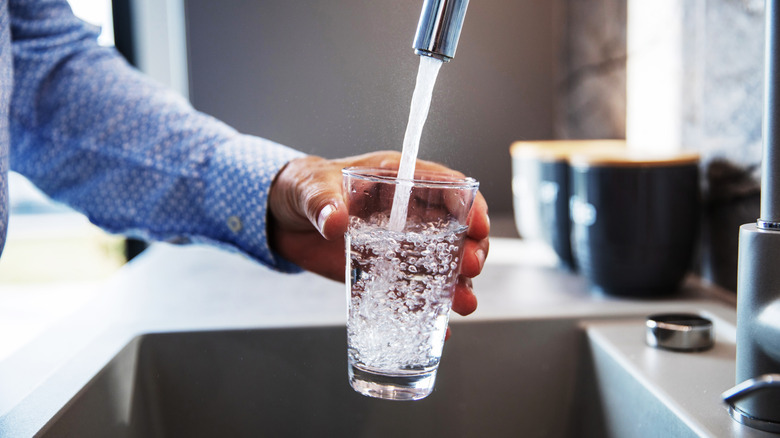
In 2017, Aldi was hit with bad press in Australia, after the government organization Queensland Building and Construction Commission (QBCC) announced that its tests had found that the chain's Easy Home Spiral Spring Mixer Tap faucets might have been contaminating drinking water with 15 times the maximum allowable level of lead. It was reported at the time that around 12,000 of the $79.99 faucets had been across all of Australia.
News of the report quickly spread across the country, with multiple news items advising customers to avoid using the faucets while the investigation continued. Aldi denied that its faucets were unsafe, pointing out that the taps had passed Australian standards for lead before they went on sale.
A later battery of tests by the Australian Competition and Consumer Commission (the government's consumer safety division) found no heightened lead exposure from the faucets, which it said were safe for consumer use. But later that year, the QBCC announced that a new round of tests had found 21 times the safe levels of lead in the taps. In the end, the taps weren't recalled or pulled from shelves, and Aldi later issued a statement criticizing the QBCC.
7. Aldi was hit with multiple lawsuits for allegedly not paying employees overtime
While we've heard about plenty of customer complaints about Aldi, it's also drawn criticism from its employees, too. And several of those employee complaints have grown into full-blown lawsuits.
In 2019, the chain agreed to pay $9.8 million to settle a lawsuit over not paying overtime to managers at 10 New York state stores, who were paid a flat rate with no hourly overtime. In 2021, it settled a similar overtime-related lawsuit in California, this time for $2 million.
In 2021, Aldi agreed to pay $2 million after it was hit with a class action lawsuit accusing it of failing to pay overtime to employees. And in July 2026, the company agreed to a $38 million settlement in a class action lawsuit in Australia which alleged that it had underpaid store and warehouse workers for time spent working before and after their scheduled shifts.
8. Its frozen taquitos were pulled from shelves due to possible metal contamination
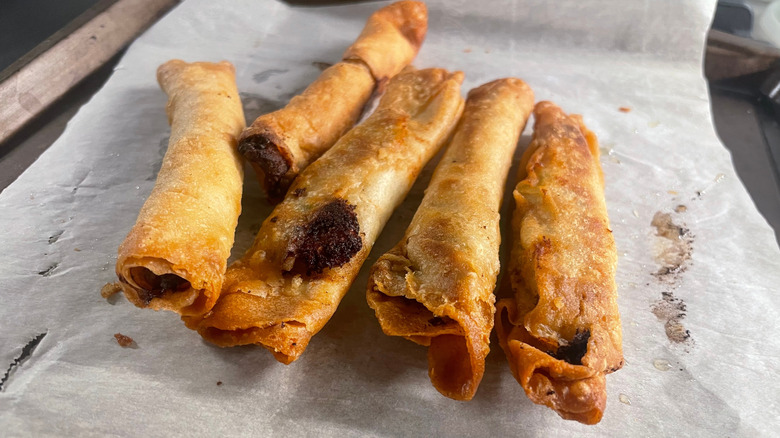
In 2025, a nationwide recall was issued for the Aldi's Casa Mamita brand Chicken and Cheese Taquitos after a customer reported finding a piece of metal in their food. According to the USDA recall notice, another customer also reported having a dental injury from the product, although there were no additional reports of illness or injury.
The taquitos were manufactured by Bestway Sandwiches of Valencia, California, which recalled the items after receiving customer complaints. The recall ended up affecting 31 states and involved an estimated 24,870 pounds of frozen taquitos. Customers were advised to immediately dispose of the product.
There was no word on a cause for the fragments, but according to food safety expert Darin Detwiler, these kinds of metal shards are commonly caused by mechanical equipment wearing down. And plants used metal detectors, magnets, and X-ray machines to catch these types of dangers, but they still occasionally get through into finished products. If you're worried about hearing about these alarming food recalls, we have some handy tips on how to stay up to date with the latest food product recalls before it's too late.
9. Customers claimed that Aldi misrepresented its 100% Pure Avocado Oil
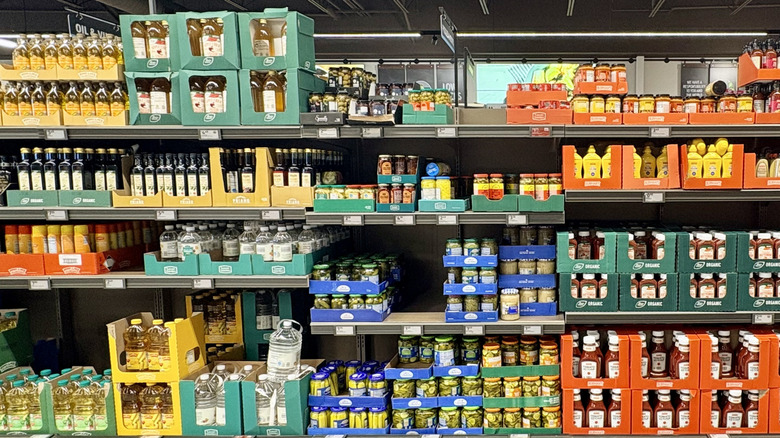
In another case of customers feeling like they didn't get what was advertised on the label, Aldi was sued in 2024 over claims that its "100% Pure Avocado Oil" was actually mixed with other oils.
The dispute came over Aldi's Simply Nature 100% Pure Avocado Oil, which listed "refined avocado oil" as the only ingredient on the label. But according to the lawsuit filing, independent testing found that the oil didn't match the fatty acid profile of pure avocado oil. The suit also pointed to a then-recent study by the University of California published in the journal of Applied Food Research, which found that Aldi's avocado oil had been adulterated with sunflower or safflower oil.
Both sides ended up settling the case in 2025, with the judge dismissing it without prejudice and neither side paying any costs. However, Aldi is still selling its Simply Nature 100% Pure Avocado Oil, so you can always swing by and grab a bottle if you want to check out its quality for yourself.
10. Aldi's soft cheeses were recalled over possible listeria contamination
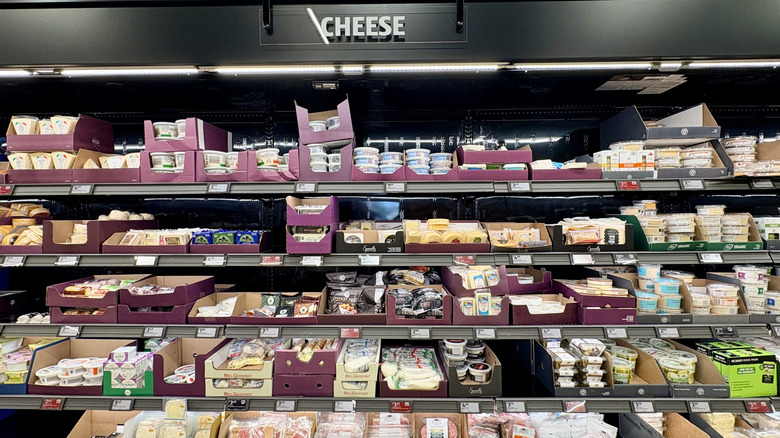
In 2024, multiple Aldi soft cheeses were pulled from shelves over concerns of listeria contamination. According to the FDA recall notice, the six recalled cheeses (a mixture of brie and Camembert) were all produced at the chain's manufacturing facility in Lena, Illinois, with a best-buy date of December 24, 2024.
How bad can listeria be? Well, listeria bacteria can cause fever, headache, and diarrhea, particularly dangerous to pregnant women or anyone with a weakened immune system. This bacteria can commonly spread throughout food production plants, but is easily killed by heating suspected food to high temperatures.
Now, this kind of contamination isn't confined to Aldi, as soft cheeses are just one of the 11 foods most likely to be contaminated by listeria. Those types are more susceptible to this kind of bacteria because of their heavy moisture content, unlike drier, harder cheeses.
11. Its suppliers were charged with price-fixing vegetables
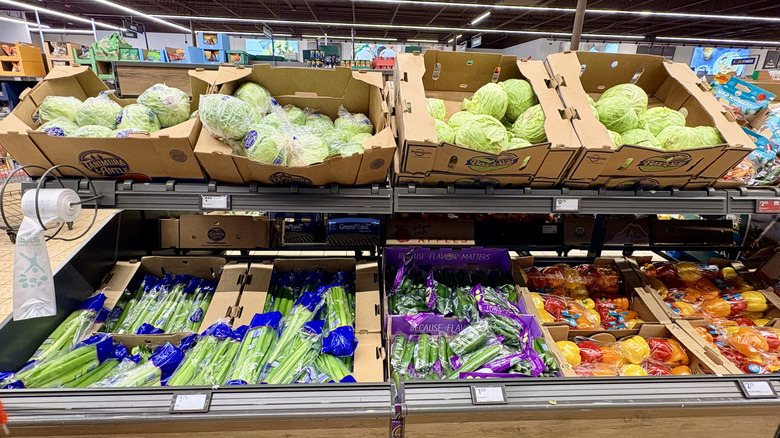
In 2024, an Australian regulatory agency filed a civil lawsuit against four Aldi suppliers, accusing them of price fixing produce. The Australian Competition and Consumer Commission (ACCC) claimed that four wholesalers — Perfection Fresh Australia, Hydro Produce, Veli Velisha Fresh Produce and Velisha National Farms, and M. Fragapane & Sons — allegedly worked together to drive up prices on a variety of fresh vegetables the suppliers sold to Aldi, including broccoli, cauliflower, iceberg lettuce, cucumber, zucchini, and Brussels sprouts.
And while slightly more expensive vegetables may not sound that serious, this kind of price fixing is defined in Australia as "cartel conduct." If you're convicted of it, you can face some pretty hefty fines: up to $10 million for a business or $500,000 for a private individual.
In response, Aldi issued a statement to Reuters that pointed out that it was "not the subject of these allegations, nor has it been investigated for any potential wrongdoing." But having jacked up prices on essential produce, even if it wasn't aware of the price fixing, isn't going to help Aldi's reputation.
12. It allegedly labelled its salmon as sustainable
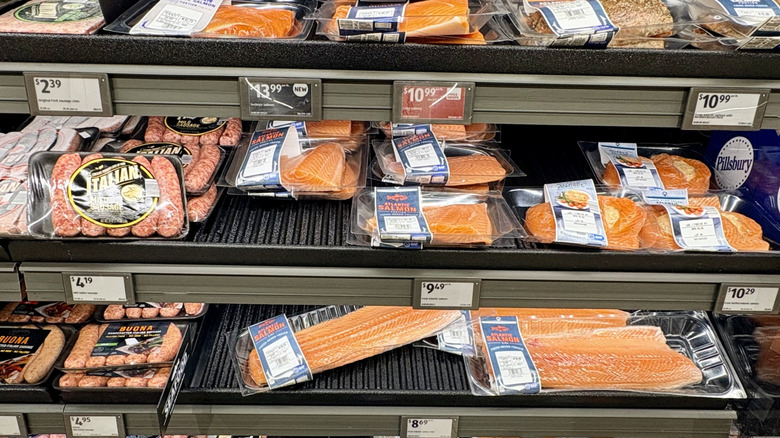
In 2021, Aldi was hit with two lawsuits over its Atlantic salmon products, which the chain described with the slogan "Simple. Sustainable. Seafood." But the lawsuit argued that the salmon wasn't actually sustainable.
One lawsuit, brought by the nonprofit group Toxin Free USA, claimed that the chain sourced its "sustainable salmon" from industrial farms in Chile that used "environmentally destructive practices," including use of the toxic chemical ethoxyquin. According to the court filing, the plantiffs also criticized those farms for crowding thousands of fish into tiny pens, which they claimed spread disease, parasites, and fish feces into the nearby environment.
The other lawsuit was a class-action filed by the same law firm Richman Law & Policy, on behalf of a customer who claimed they were deceived into thinking the fish was sustainably sourced by the packaging.
Aldi argued that its salmon could be listed as sustainable, as it was also BAP Certified, a designation given by the non-profit trade association the Global Seafood Alliance for items that are sourced in accordance with its "best aquaculture practices."
The lawsuits were dropped in 2024, after entering mediation. While Aldi continued to deny that its label of "sustainable" was misleading, it agreed to revise its marketing and to transition its salmon products to other aquaculture facilities.