

The Science Behind Aldi's Exploding Turkey Burger Scandal
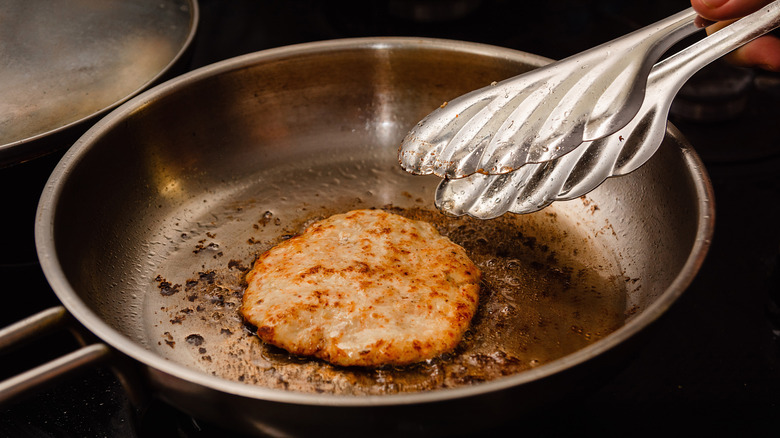
We may not be able to ascertain what went through Gloria Beesley's mind on that fateful day in July 2018 when the frozen turkey burger from Aldi she was frying suddenly exploded, leaving her with permanent injuries and considerable trauma. However, we can assume that, after variations on "Hey, did my burger just explode?" and some well-chosen expletives, Beesley thought, "How did that happen?" The answer can be found with the help of science, which points to the problems created when frozen items encounter heated oil.
A lawsuit filed against Aldi in 2019 claimed that Pennsylvania native Beesley purchased Kirkwood brand frozen turkey burgers from one of the chain's locations in Pittsburgh and cooked them according to the frying instructions on the packaging. Per those instructions, Beesley reportedly placed the frozen burgers in a preheated pan containing a small amount of vegetable oil, but instead of a delicious and heart-healthy meal, she wound up with second-degree burns and permanent scarring. She subsequently filed a lawsuit against Aldi for $35,000, which was later settled out of court.
To paraphrase Matt Hooper in "Jaws," this was no freak kitchen accident. Frozen meat of any kind, including turkey, contains a great deal of water in ice form. When the water in frozen meat comes in contact with hot oil, a chain reaction occurs. The ice melts and becomes liquid and then steam, which causes the water molecules to separate and expand more than 1,700 times their original volume. That steam rises quickly, carrying hot oil with it, and the result can be summed up simply as: kaboom.
How to avoid exploding turkey burgers
If this phenomenon sounds familiar to you, it's likely you've heard warnings about deep-frying frozen turkeys during the holidays. The endgame is the same — submerging a frozen turkey in boiling oil will not only cause an explosion, showering the area and any unlucky onlookers with dangerously hot oil, but it may also cause a fire when the oil comes in contact with a heat source like an open flame. This may sound like an amusing stunt Jonny Knoxville might conjure, but deep fryer fires result in a significant amount of injuries, property damage, and deaths each year.
The solution to this frozen meat in hot oil danger is to thaw and pat dry the turkey burger before introducing it to the oil in the pan. Patting the burger dry assures that any water from ice crystals that may have gathered on the meat is absorbed and also prevents spattering. There is also another very good reason to avoid frying frozen turkey burgers: The burger's internal temperate may not reach a high enough temperature to ward off any potentially harmful bacteria (that magic number is 165 degrees Fahrenheit, for the record).
Knowing this information ahead of time might've saved Ms. Beesley and Aldi's corporate lawyers the considerable headache of a legal fracas (not to mention the pain from her injuries). It might also spare you from a similar fate, for which we simply say: You're welcome. Just avoid these common mistakes when thawing frozen meat.