

11 Kitchen Tools Real-Life Pioneers Were Never Caught Without
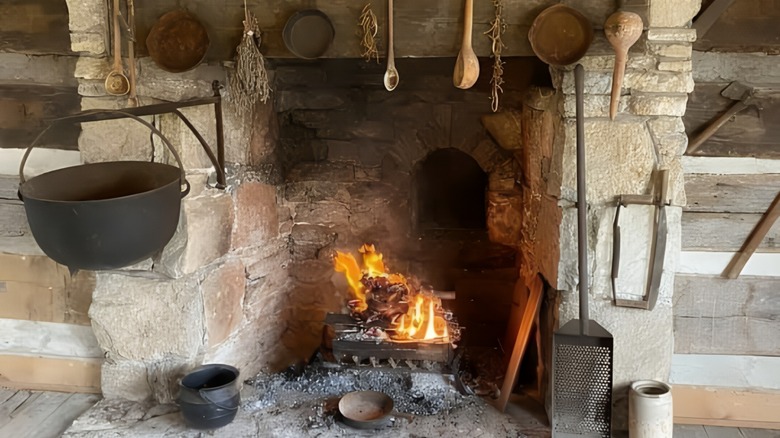
Long ago, before stand mixers were sitting pretty as can be on marbled countertops, before air fryers hogged much of the cabinet space like the modern diva appliances they are, and even pre-dating electricity being a standard power source, pioneer homesteads boasted no frills kitchens. In these no-fuss early American cucinas, nearly every single meal was crafted not with fancy Cuisinart or KitchenAid gadgets, but with bare hands, a few rudimentary kitchen tools, and a whole lot of elbow grease and ingenuity.
We've explored pioneer-age desserts, as well as what pioneers cooked to eat on the Oregon Trail, but those memorable meals didn't simply appear by magic. Behind every hearty stew, scratch-made pie, hand-kneaded bread loaf, or iron kettle packed with simmering, soon-to-be-jarred preserves, was a tiny arsenal of trusted kitchen tools, each earning their coveted place among the few due to the pioneers' strong reliance on their daily use.
You see, a frontier kitchen wasn't boasting appliances bought simply for matchy-matchy, aesthetic appeal (we see you, color-coordinated fridge, blender, even toaster oven appliances). In pioneer days, every single item had to justify the space it occupied (be it in a wagon, or a log cabin). Suffice to say, if a kitchen tool didn't prove its consistent use in the vital daily pioneer chores of grinding, stirring, baking, preserving, or feeding a frontier family through one more brutal winter or sparse summer, it had no place and just didn't make the cut. These are the kitchen tools that did.
1. Cast iron spider Dutch oven
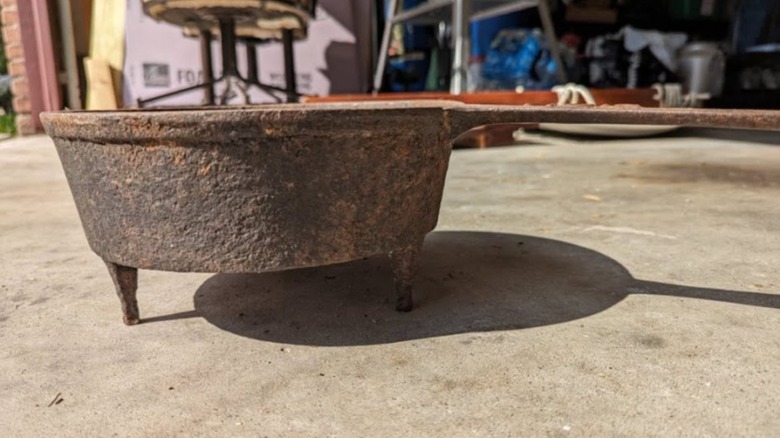
These days, the price tag for a quality Dutch oven can be quite expensive. But for a pioneer woman standing beside a crackling hearth, that weighty, cast iron pot wasn't a luxury purchase, but a practical tool that was the core of the kitchen. If there was one single piece of cookware that earned its place on every wagon en route to a pioneer homestead, it was the cast iron spider Dutch oven. We've explained why it's called the Dutch oven, but what exactly did it do? Well, unlike some of our modern cookware that specializes in one job, this multifaceted pot could accomplish nearly everything pioneers required.
Perched on three sturdy legs and placed directly over glowing coals, it could simmer a stew, bake biscuits, roast a supper, and heck, this Dutch oven could even deep-fry food, all in a single day. Its clever lid was part of the oven's magic, as more hot coals were piled directly on top of it, thus surrounding the food with heat from every direction (essentially transforming a standard pot into a bonafide oven).
The stable trio of legs kept it balanced and sturdy when placed over loose and shifty campfire coals, while this same pot could do everything (all without requiring a single other fancy-pants kitchen gadget). Some creative cooks were even said to have flipped the lid over, pinch hitting the pan top as a griddle.
2. Hash knife
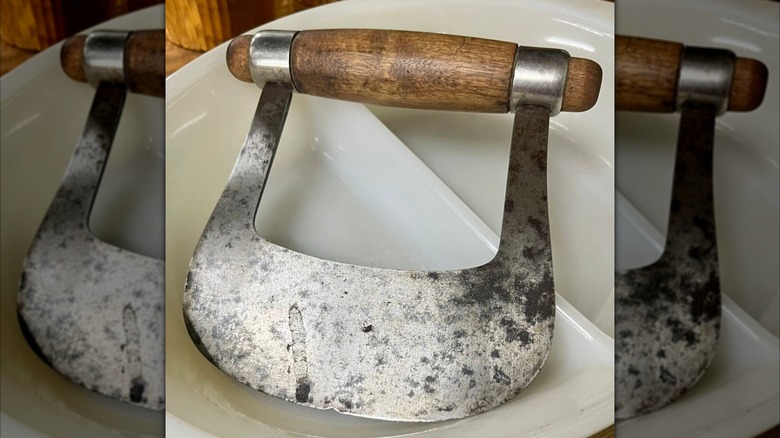
Kitchens of the 21st century are glutted with gadgets, each promising purchasers the ability to magically make their meals faster, better, and easier. Each modern-day tool appears to also be engineered so specifically. You have the one designed to chop faster than lightning, the other aimed precisely for dicing ... well ... most precisely, and what's more? You've got a tool made just for mincing. But out on the rugged frontier, when one tool needed to handle all these jobs, the hash knife willingly stepped up to the plate (or butcher block, shall we say).
The hash knife was unusual in appearance, as instead of a handle attached to one end like a standard sheath, its grip stretched across the top of a broad, curved blade. This specific design was engineered so, that by rocking the blade back and forth, pioneer cooks could reduce tough meat, vegetables, and more into tiny pieces quickly.
Hash (the mix made of chopped leftovers that gave the knife its name), was a usual way pioneers stretched precious food supplies, making this particular tool a daily essential. Also, since pioneers prized efficiency, folks in those days considered the hash knife one of the most dependable tools one could have (a jack of all trades, if you will). Its reputation even became so well known that an entire Texas cattle outfit eventually adopted "Hash Knife" as its famous ranch brand, proving just how familiar the tool had become across the American West.
3. Flour sifter
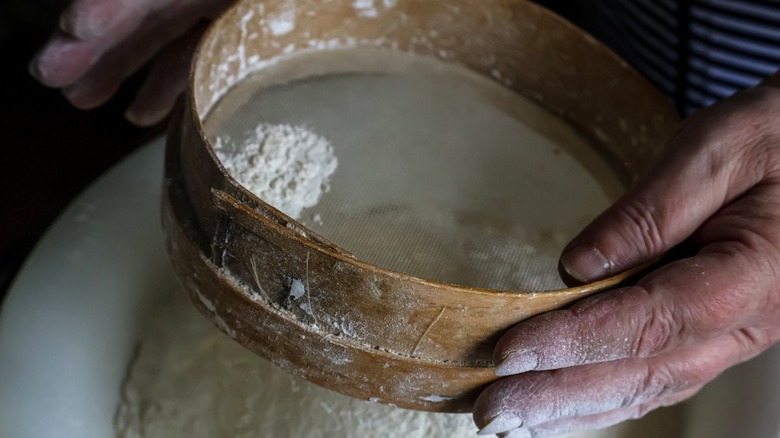
Today, you may find bakers boasting of going above and beyond to painstakingly sift their flour to ensure lighter cakes, maybe fluffier biscuits. But if you were a pioneer in olden times, your reasonings for this flour sifting step had a far different purpose. Instead of simply ensuring your baked creations looked beautiful and had the texture you deemed most pleasing, flour sifting had more to do with practicality and preservation than presentation. Even celebrity baker Paul Hollywood has acknowledged this fact.
On the frontier, there were no tightly sealed flour bags to be found in supermarkets. Instead, pioneers' flour was relegated to cloth sacks or barrels made of wood (sometimes sitting for weeks on end). And during those days in these none-too-secure-vessels? The flour was left vulnerable to invasion by all sorts of things (moisture, dust, even hungry weevils and other nibblers). So, you will understand why, for the pioneers, before a single biscuit or johnnycake could be baked (shoot, even before the batter could be mixed), that flour needed a culinary exorcism of sorts (ridding it of all manner of evils via sifting).
So, instead of separating the wheat from the chaff (that's a nod to the big book the pioneers loved so much), frontier cooks were weeding out those weevils! Most often using a flour sifter consisting of an early wooden frame fitted with horsehair mesh, cooks would meticulously separate usable flour from ... everything else, so the actual baking could finally commence.
4. Wooden spoon
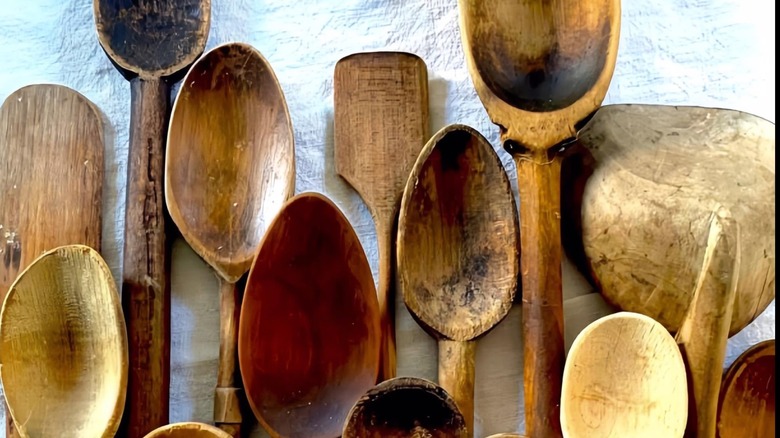
It's easy to picture a wooden spoon hanging from a nail beside a pioneer hearth, worn down after delivering countless meals on the frontier. While today's kitchens showcase near countless thingamabobs (maybe even junk drawers filled-to-bursting with serving bobbles and bits), cooks in the pioneer era relied on little more than a single, tried-and-true spoon made of wood. And that chosen utensil? It was hardcore, able to survive just about anything the frontier demanded.
Why wood? Well, not only was it the simplest material to procure for pioneers (found readily available in outdoors nearby or en route), but it was really just the smartest option, too. This is because out West, blacksmiths weren't folks you could count on to be found that far from cities of trade. So, families resorted to carving their own kitchen utensils from whatever timber they had available, creating tools sturdy enough to tackle everything from none-too-thin hash to rich, chunky stews, and even thick dough for bread ... all without cracking under the pressure (literally).
Yet one more practical edge wooden spoons posed for pioneers? Unlike metal, wood wouldn't get so hot (enough to seriously burn the hands of cooks as they were gripping the spoons to stir dishes over an open fire). And in any book (modern ones too), no scorched palms is always preferred. Also, since the kitchen toolbox was limited for pioneers, every utensil had to pull double or triple duty. The wooden spoon definitely met that multifunctional mandate.
5. Mortar and pestle
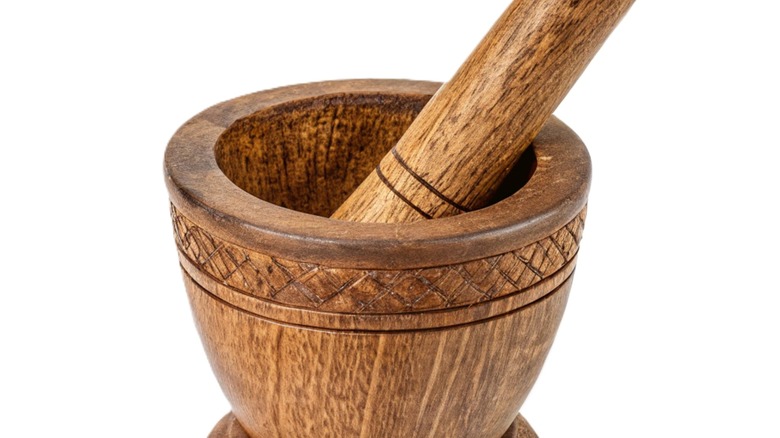
It may be the kitchen tool chef Gordon Ramsay swears by for spices today, but the mortar and pestle has actually been around for ages. Let's just say the mortar and pestle strolled so your spiffy electric spice grinders could sprint. Yes, way before electricity-fueled grinders were humming away in modern kitchens, the mortar and pestle's thud-smash-scrapes could be heard echoing through log cabins.
In frontier days, everything was done by hand (including rhythmic pounding of all sorts of things into paste). While it did require an immense amount of elbow grease, history reports this dynamic duo got the job(s) done (plural intended). Plural because a mortar and pestle handled far more than supper. Although there was coarse salt that had to be broken into plausible pieces, dried herbs that needed crushing before kissing stews with delectable flavors, and spices that demanded to be ground into soon-to-be-made glorious dishes, this kitchen tool's sorcery didn't stop at cuisine.
For instance, when ailments would darken homestead doors (often miles away from any proper doctor or medical facility), the mortar and pestle often saved the day. Taking off the hat of sous chef, this kitchen tool donned an apothecary cap, transforming everything from dried roots, herbs, and beyond (the list of natural remedies goes on and on), into powders and pastes (perhaps a poultice or two). Historical collectives still demonstrate this process for visitors, recreating the daily work of grinding and preparing ingredients exactly as pioneer families once did.
6. Apple peeler
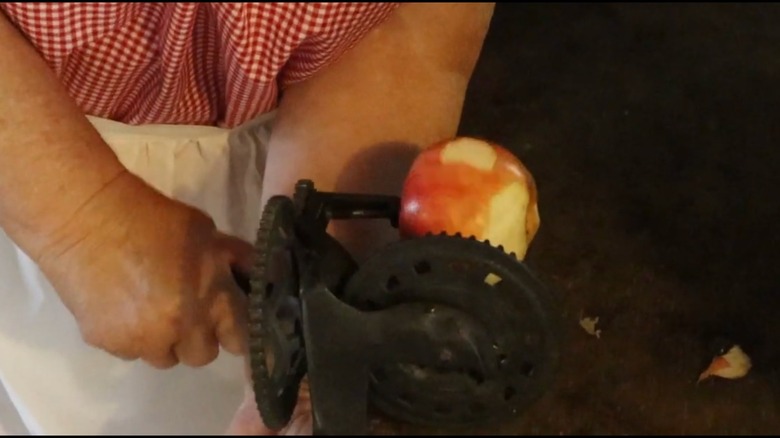
Walk into a living history museum today, and you might still spot one spinning away with surprising speed. A crank turns, an apple twirls, and within seconds the peel falls away in one long curling ribbon. It almost feels like magic, until you remember pioneer families had already figured this culinary trickery out generations ago. Apples showed up in many pioneer dishes, with many families planting orchards knowing the juicy fruit could be enjoyed myriad ways (picked fresh from the tree during harvest, then preserved to last through winter in various shelf-stable states).
And since Johnny Appleseed's bounty appeared in so many pioneer recipes, peeling them was no small chore. To be as efficient as possible while tackling this frequent task, pioneers looked to a hand-cranked apple peeler. This way, instead of laboriously relieving each fruit of its skin via small knife, cooks could make fast work of it, the peeler allowing them to prep large batches of pectin-filled fruit headed straight for pies, preserves, or even to be dried and sliced. Especially when readying for winter, when egads amounts of apples needed processing before the frost descended on the frontier, this time-saving kitchen tool really made a difference.
Fun fact? The nifty invention wasn't even new to the pioneer era (the earliest patent for an apple parer dates back to 1803, just as westward expansion was gaining steam). By the time homesteads started filling up the frontier, apple peelers were familiar sights.
7. Butcher and skinning knives
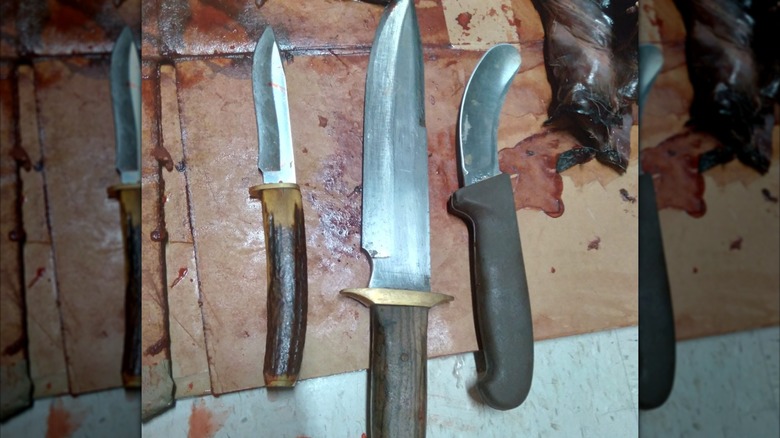
Let's talk butcher and skinning knives, because sure, a pioneer kitchen was the place where baking and cooking magic happened. But let's not forget it was also a place where plenty of butchering was taking place, too. Unlike today, where you can saunter down to the corner store and have a bonafide butcher do the dirty work for you (simply sliding your card or currency across the counter to pay for a prettily packaged cut of meat that took zero effort on your part ... and decidedly less knife skills).
But on the frontier, before that dinner stew meat ever reached the pot, someone had to skin it and extract every usable portion by hand (which explains exactly why a dependable knife, or two, was so needed). Many frontier knives featured handmade wooden handles, while their steel blades were kept sharp through constant care. They weren't just for preparing meat, either. A keen edge took care of everything from slicing salt pork to cutting materials around the homestead, and could even help produce sparks when starting a fire in a pinch.
The knife also reflected an entirely different relationship with food than most people know today. As alluded to before, when nothing arrived prewrapped or ready-to-go thanks to your friendly neighborhood butcher, every roast, chicken, rabbit, or deer was completely up to the pioneer family to skin, slice, then ... finally ... savor.
8. Cast iron waffle iron
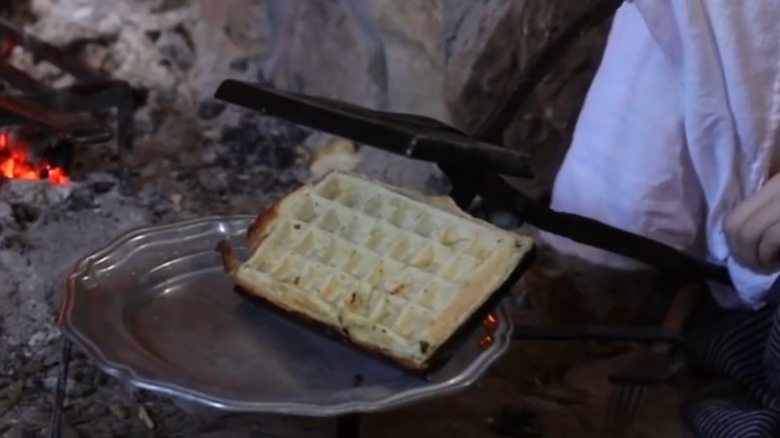
When it comes to 21st century breakfasts, modern waffle makers practically do all the work for us. But pioneer versions? Those kitchen tool relics involved not only a heaping dose of flour, but also of patience (and likely more than a few burnt fingertips). Before electricity hit the kitchen scene, pioneer cooks powered their cast iron waffle irons with nothing but glowing coals or open flames (and a generous amount of sheer will and muscle). It was a physical job, holding these weighty cast iron contraptions above the chosen heat source, while rotating them ever-so-carefully (remember those singed fingers) to ensure each side browned (not burned) to breakfast-worthy perfection.
As you can imagine (at least based on that description), the waffle making process for pioneers resembled more like a forger in a smithy versus a frontier chef baking brunch. But just one bite of the delectable waffles those impressive home cooks turned out would correct that mental image in an instant.
The idea itself is centuries old, first noted when ancient cooks baked flat cakes between metal plates over open fires. European bakers would transform the recipes and the irons, so by the time pioneers settled the American frontier, waffles were already well-loved fixtures (although preparing was clearly a workout). Cooking technology slowly improved through the 1800s, but the basic principle stayed the same. Heat from the fire-cooked batter placed between two cast iron plates, producing the familiar golden-grid-ironed goodness people still recognize today.
9. Cast iron skillet
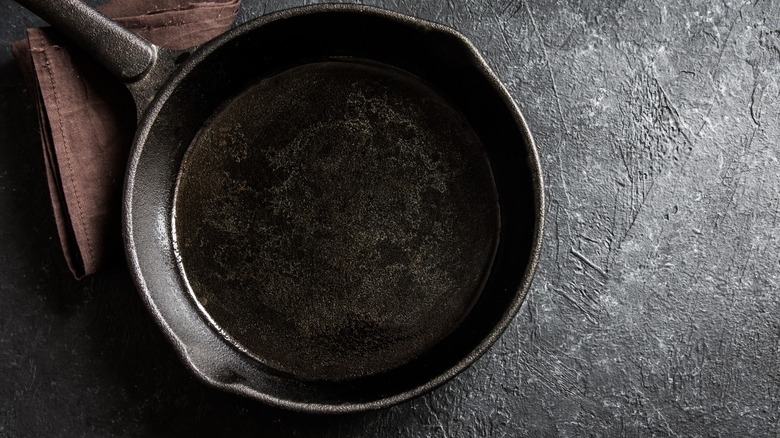
On the Western frontier, where kitchen supplies had to survive long wagon journeys, followed by years of daily wear and tear from near constant cooking, only the most hardcore tools earned valuable space in the log cabin cache. The cast iron skillet was one of them. Families willingly hauled these remarkably heavy pans across the country because they knew exactly how indispensable they would become once the home fires were lit. Every extra pound hauled justified itself meal after meal.
After all, a skillet was able to handle any meal (breakfast, dinner, and everything in between). Salt pork sizzled, eggs scrambled, and even cornbread crusted up beautifully once the pan absorbed the steady heat from the crackling coals beneath. Then there's the durability factor. On the frontier, tools were expected to last. Period. And if properly cared for, a cast iron skillet stayed useful for generations, which explains why it became one of the few constants in pioneer kitchens. Many homesteads owned very few cooking vessels, but this trusty pan almost always made the cross-country journey.
Imagine unpacking a wagon after weeks spent traversing the dusty Oregon Trail. Even before furniture was arranged or sparse items of decor was hung on walls, chances are that cast iron skillet was pulled immediately out to whip up something hot and hearty ... doing more to make that hearth feel like home than near anything else could. So, behold, the power of the humble cast iron skillet.
10. Reflector oven (Tin Kitchen)
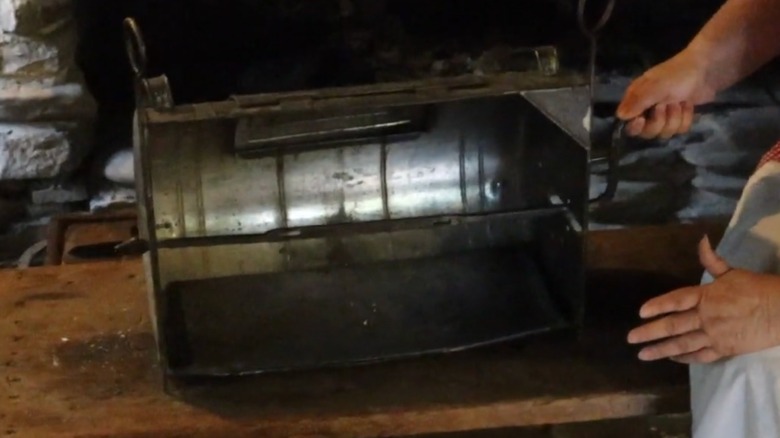
Before any scientist had even the smallest inkling of today's snazzy electric ovens (complete with convection settings), pioneer cooks had already figured out a pretty ingenious way to procure consistent heat from a simple fire. We're talking about the reflector oven (sometimes called a tin kitchen), which may have been rudimental in appearance, but was one frontier-era appliance that managed to pull off quite impressive kitchen feats.
When placed directly beside the hearth (or a campfire) with its open side facing the flames, the curved tin chamber would bounce radiant heat around whatever delightful soon-to-be-meal sat inside. Depending on the setup, that pioneer dish might be chicken slowly roasting while spinning on a spit, or maybe it was a beef cut slowly browning to an exquisite hue, or even a pan of quick bread baking on a surprisingly even scale. Some models even featured a small rear door, which was placed there to enable the cook to baste meat or easily check the meal's progress.
Historical societies and museums are still known to showcase reflector ovens during live demonstrations, perfectly illustrating just how resourceful frontier kitchens really were. Watching one in action, it's easy to understand why pioneer families valued these tin kitchens so highly. Rather than placing food directly over unpredictable flames, the oven tamed the fire's intense heat, transforming it into something softer, and far more controlled.
11. Butter mold
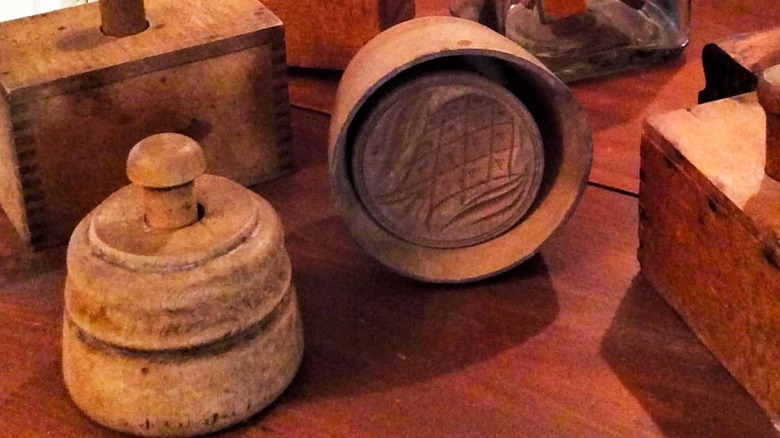
Now, onto butter molds. Such a unique history butter molds possess! Pull up a chair as we end this article by diving into their role played in pioneer days of churned dairy. Once a pioneer family finally settled on its own homestead and a dairy cow joined the ranks, butter making quickly became part of the regular routine. Like many frontier chores, churning cream required more than a little elbow grease. And after all that, the work still wasn't complete! That's where the humble butter mold came into the equation. Its job was to transform soft, freshly churned butter into blocks of golden goodness ready to unveil at the table (some even included fancy etching for aesthetics).
Most molds back then were carved from wood (though metal and glass versions appeared later). Before use, wooden molds were soaked in cold water so the butter would release cleanly. Pioneers would press the butter firmly inside, snap it back out, and voilà! An ordinary dairy spread suddenly looked fit for company. Flowers, animals, even family initials frequently adorned the finished butter, giving each household its own distinctive dairy insignia.
Those decorative markings also acted similar to branding of cows on ranches (helping identify which farm produced the butter). Today, butter molds often appear in living history museums alongside butter-churning demonstrations, offering visitors a rare glimpse into the care that followed every batch of the freshly-made dairy delight.