

Want To Finally Know Where Costco's Blueberries Come From? It's Complicated
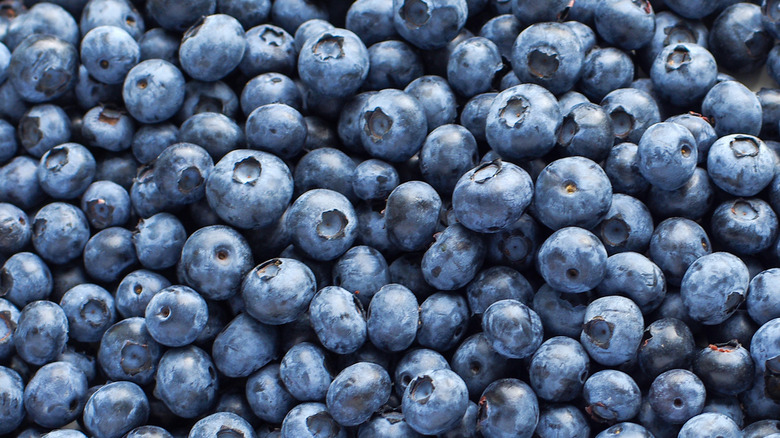
The American food supply chain is globalized and has been for quite some time, which can make it difficult to pinpoint where exactly our food is coming from. In an ideal world, customers would have access to a well-drawn map of where their food started out and how it got to their plate, but that's difficult for grocery stores to manage. That difficulty can help explain why deciphering where Costco sources its blueberries is more or less an estimated guess with infrequent clarity.
To its credit, Costco's website does specify that its fresh blueberries are sourced from the United States, Mexico, Canada, Chile, Peru, Argentina, or Uruguay. But while that is helpful in the sense that it tells us the blueberries basically come from all over the Western Hemisphere, it does lack somewhat in the details department. One of the common mistakes people make when shopping for blueberries is not buying local, but the fact that the United States is listed among the others doesn't mean the particular package you pick up will be American-grown.
That's not the case with the Kirkland Signature Organic Frozen Blueberries, which come from blueberry farms in Oregon, Washington, and California via the Scenic Fruit Company. This company used to sell frozen blueberries at Costco under its own brand but has since pivoted to supplying the Kirkland Signature version (which helps you save money at Costco). Because Costco doesn't display the companies behind its Kirkland brand products, it's possible this has changed, but there's been no news of a shift. A minor recall in 2023 of Scenic Fruit Company's frozen strawberries sold at Costco would suggest the partnership is ongoing.
Blueberry season can help you guess where Costco's berries come from
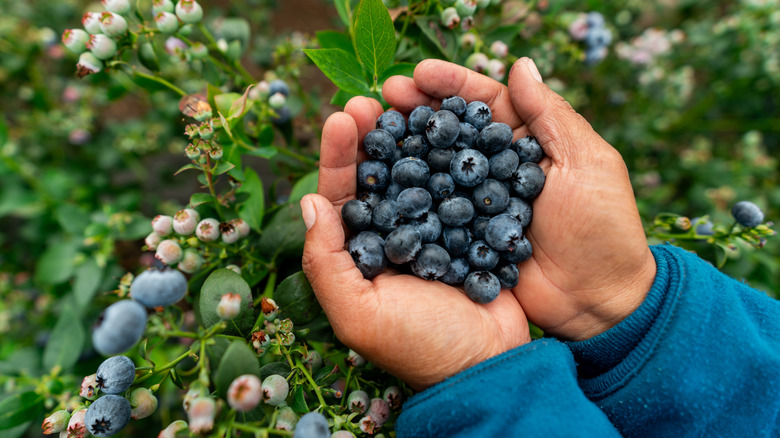
There's a good argument for purchasing frozen blueberries over fresh, but if you prefer fresh, you may still be wondering where those come from. Although specifics may be short, one way to increase your chances of identifying where Costco's blueberries come from is to pay attention to the seasons. Blueberries are in season from spring to early fall (exact dates vary by region), which means that if you buy fresh blueberries at Costco during this time there's a better chance you're purchasing berries grown in the United States, Canada, or Mexico. By the same ticket, if you purchase in the fall or winter months you're probably getting berries grown in Chile, Peru, Argentina, or Uruguay.
Thanks to American investments during the War on Drugs in the 1970s and '80s, Peru has grown to become the third largest exporter of blueberries behind China and the United States, so winter blueberries at Costco are most likely to come from there. As for which farms are responsible for the berries, it's really anyone's guess. Fortunately, Costco has earned a positive reputation for its high standards when it comes to suppliers, so even if Costco doesn't supply you with the names of each and every farm it works with, you can rest assured it takes quality seriously. It may simply be the case that a thorough explanation of each and every supplier for each and every product would become too labor intensive for the retailer to manage and could lead to legal issues as suppliers change, which would make them less adaptable in the long run.