

The Quickest Way To Clean An Oven With Just Dish Soap
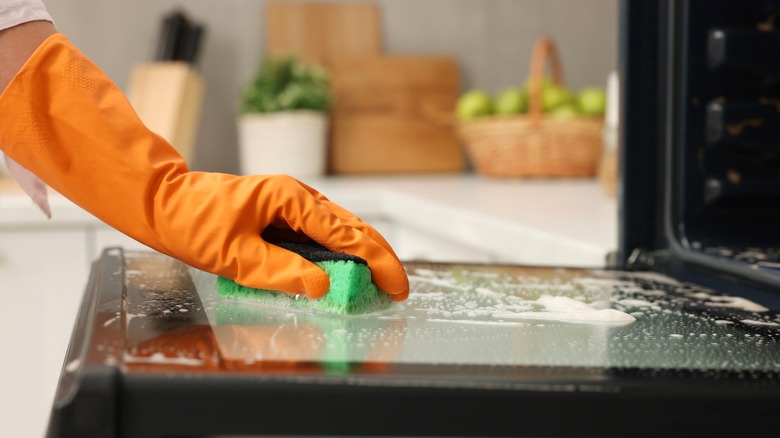
Many folks get a little squeamish about using store-bought degreasers and chemical agents to clean their oven. It's completely understandable — they tend to be caustic, and if you don't remove all the residue after a good cleaning you might get more than you bargained for with your next batch of crispy roasted potatoes. Fortunately, according to Renata Cruz, a cleaning expert and professional organizer at Coastal Maid San Diego, all anyone really needs to clean an oven is gentle dish soap.
"I honestly believe that using dish soap is among the very best of all of the simple and safe options for oven cleaning," Cruz said. "Clients have benefited from my recommendation to use dish soap since it works well without creating hazardous fumes, leaving behind any residual chemicals that could possibly affect food, or requiring the use of protective gloves, masks, or ventilated air systems, as many commercial oven cleaners necessitate." The trick is to maximize dish soap's effectiveness so it doesn't take long.
You only need to use a few drops on a soft scrubber or wet sponge, but it's important to apply the dish soap to the entire interior surface area, including the inside of the door. Then it's just a matter of giving your arms a short workout. Of course, some problematic areas might require a bit more attention. "On occasion, there may be some additional stuck-on mess, and in such instances I place the soapy sponge/scrubber onto the offending area for a minute or two so that the surfactants can dissolve the stuck-on mess prior to rubbing vigorously," Cruz said. If that doesn't work, a pantry staple can help.
Give dish soap more power with a common ingredient
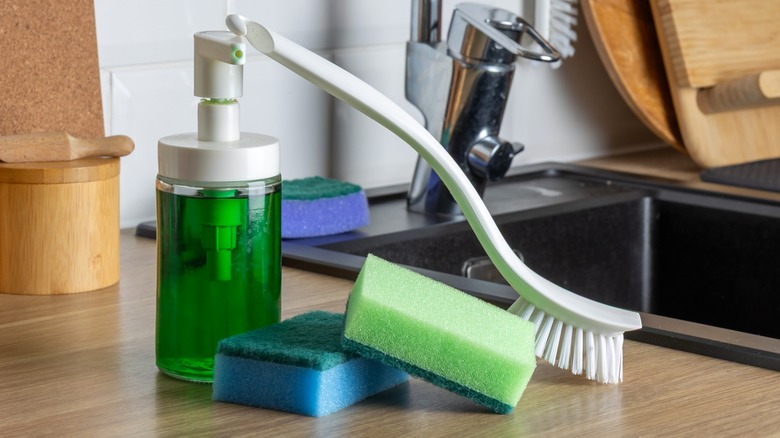
When particularly difficult-to-remove grime becomes an issue, dish soap alone may not get the job done (word to the wise — never line your oven with aluminum foil to avoid cleaning tough stains). Before you consider using the oven's self-cleaning feature, which can potentially damage the appliance, Cruz suggested reaching into the pantry for some trusty baking soda. "When seeking to achieve a deeper level of cleanliness, I create a paste using approximately 1 cup of baking soda and ½ cup of dish soap, adding water as needed to form a pasty substance," she said. "Then I spread this paste across the interior surfaces of the oven, letting it remain there for a minimum of one hour while occasionally misting with water to keep it slightly moist so it doesn't dry."
That should break up grime in the problem areas enough so elbow grease can finish the job with a scrubbing tool. Unless, that is, you aren't regularly cleaning your oven. When months — or years — of baked-on grime accumulate, using dish soap and baking soda to remove it can still work, but you'll want to add another tool to your oven cleaning toolbox. "When confronted with extremely difficult-to-clean carbonized deposits that have developed over many years of heavy use, I may need to repeat the process of applying the baking soda/dish soap paste or may choose to combine this technique with a razor-blade scraper to carefully scrape away severely carbonized deposits before applying the soap paste," said Cruz.