

This Economical Cut Of Beef Is Often Called The 'Mock Tender' — Here's Why
We may receive a commission on purchases made from links.
Almost anyone can recognize quality steaks like ribeyes and New York strips, but underrated cuts of beef are a bit trickier. Some of them are only seen occasionally at the grocery store, sitting next to popular hero cuts — like filet mignon — that demand one's attention. Still, if you're looking for affordable beef, those little misfit cuts should be on your radar, and the mock tender is no exception.
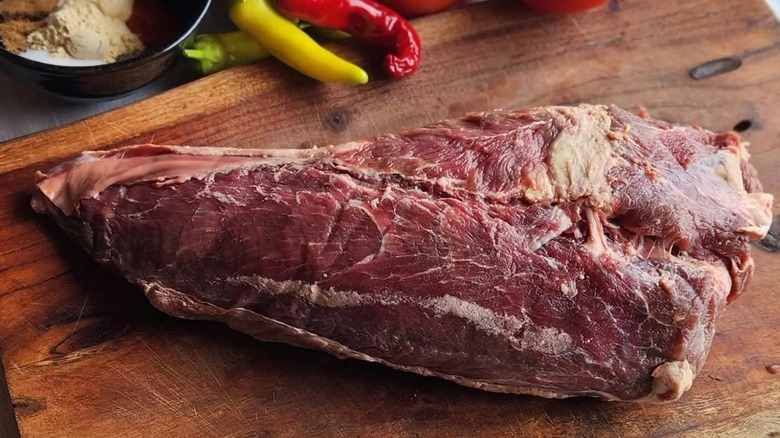
If the name doesn't ring any bells, that may be because you've heard it referred to by one of its many other titles, such as tender medallions, chuck filet, shoulder petite tender, chuck tender, and, oddly enough, fish steak. The name doesn't accurately represent what it is — mock tender is anything but "tender." It's a cut sourced from the chuck primal near the shoulder blade of the animal, an area that does much of the heavy lifting throughout a steer's life. As such, mock tender is lean and chock-full of chewy muscle fibers. Its primary appeal is its cheap price tag.
The mock tender acquired its name from its similarity in appearance to a tenderloin, but cooking the beef like you would an expensive filet is a mistake. Your jaw will be in for a workout chewing through all the tough connective tissue, leaving you unable to appreciate the bold, meaty flavor. However, if you give it the attention it deserves, mock tender can be a delicious way to save a few bucks on a beef dinner.
Two ways to make the most out of a mock tender
Just as you should always keep brisket far away from the grill, using high heat to cook a mock tender steak can result in a piece of meat that doesn't live up to its name. It's best prepared by searing it quickly before braising it for a couple of hours in a flavorful liquid. You can't go wrong with a simple combination of beef broth with red wine, dark beer, or balsamic vinegar, as the acids will help tenderize the meat. Including your typical braising aromatics, such as thyme, rosemary, and garlic, will boost the flavor profile.
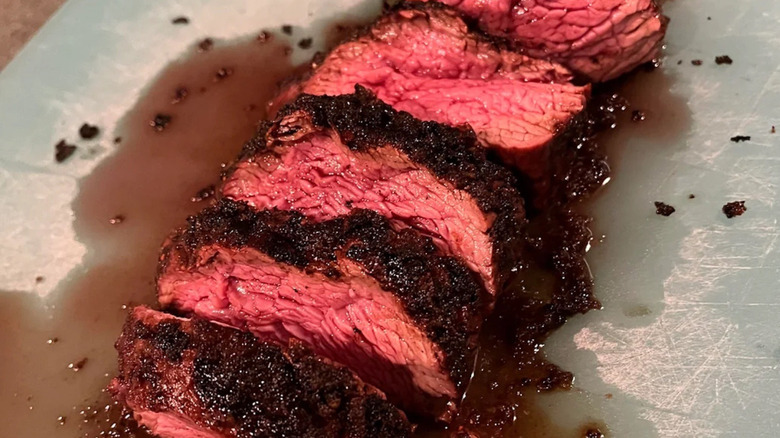
But fear not, heroes of the grill — with proper preparation, you can enjoy a mock tender with both a tasty char and a palatable texture. You'll need a meat tenderizer mallet to complete the initial work of breaking up some of those muscle fibers, but don't get overzealous. It's tough but still not resilient enough to withstand too much pounding.
Mock tender is one of those steak cuts you should always marinate before grilling. After tenderizing it by hand, let it sit overnight in a blend of ingredients similar to a braising liquid concoction, prioritizing acidic ingredients that will tenderize the beef. When you're ready to fire up the grill, aim for a medium-rare cook for best results. The timing will vary depending on the size of the cut, but just a few minutes on each side should be enough to deliver a juicy, charred cut of affordable steak at a backyard barbecue.