

5 Best Cheeses For Your Next Lasagna
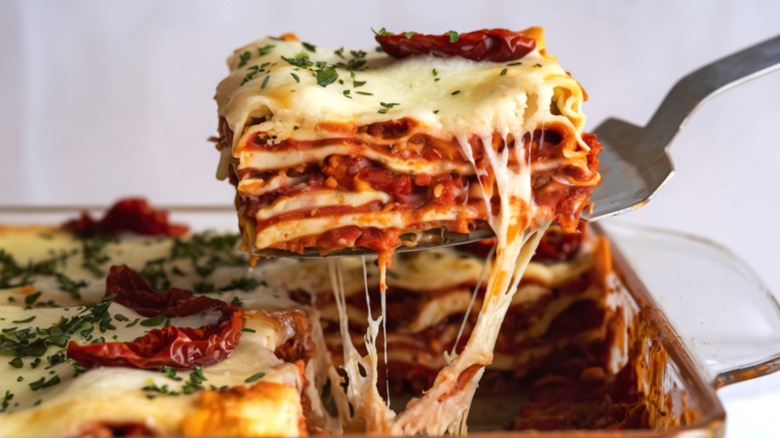
When you're making something like lasagna, the cheese can feel like a bit of an afterthought. Not that it's unimportant, of course, or that you should be careless when using it; but unlike tomato sauce (which can be upgraded with miso), it's not something you can make yourself (unless you have several cows and a lot of time on your hands). If you're not making a bechamel sauce, you may just decide to toss a simple cheese mixture on and call it a day, but we urge you to exercise a bit of care when sorting out your cheese because it really does take a lasagna from good to great.
We all love tangy, sweet tomato sauce and unctuous, tender meat (beef or sausage, depending on your taste), but what would lasagna be without cheese? Pretty darn boring, that's what. Can you imagine taking a square of lasagna from the pan and not seeing a luxurious cheese pull? It would be like a world without sunshine, we tell you. So, with that in mind, here are five of the best cheeses to use in your lasagna from the most typical to the most unusual. (It's not like we're asking you to use camembert or anything — we're not total radicals.)
Ricotta
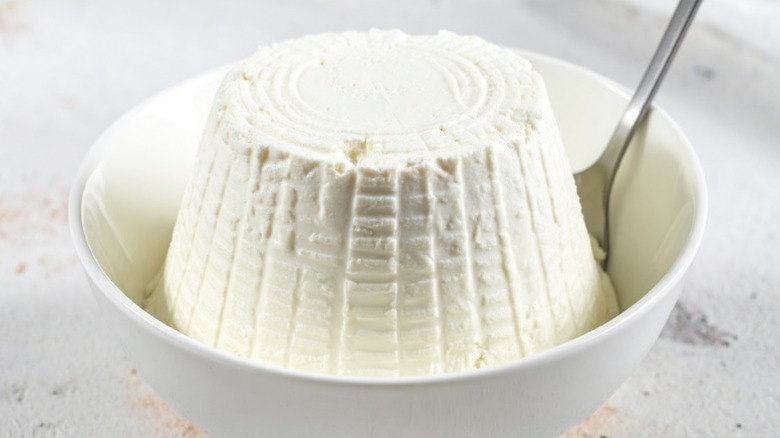
Ricotta would be a beautiful name for a girl were it not already a cheese. For anyone unfamiliar, it's a light, creamy cheese traditionally made using whey, a cheesemaking byproduct. (Today, most ricotta is made with milk instead.) If you eat ricotta on its own, it's not too dissimilar from cottage cheese, if perhaps a little lighter and sweeter. Generally, though, you're going to be putting it in some kind of dish, usually lasagna. Ricotta serves as the glue that holds each layer together, lending the dish valuable structural integrity while also providing some rich, creamy tang.
Some people use similar cheeses to fill the ricotta role in a lasagna, including mascarpone (which adds a creamy decadence that's almost distracting) and cottage cheese (which puffs up bigger due to having bigger curds than ricotta). But if you want a traditional, down-the-middle lasagna experience, go for ricotta. Just a quick word of advice, though: You might be tempted to spread an even layer of ricotta over the dish but you will soon understand that this is a fool's errand which results in your sticky, ricotta-coated spoon dragging noodles and sauce all over the place. Just add a few big globs of the stuff and trust it to spread out in the cooking process.
Mozzarella
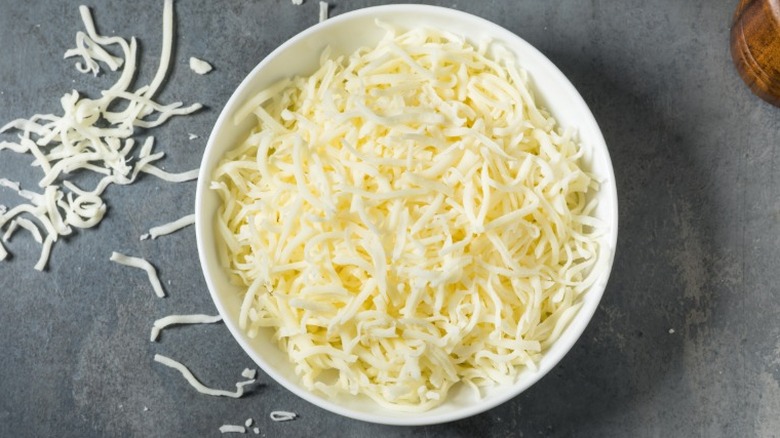
Here is how we get that mouth-watering cheese pull every cook dreams of. Mozzarella can be made fresh or turned into a low-moisture block of cheese, but in either case it doesn't have a particularly strong flavor; just a pleasant, mild milkiness. What it does have, however, is meltability, as you can probably guess from its presence on pizza and in mozzarella sticks. Mozzarella's malleable nature is exactly what makes it perfect for lasagna. If you want your dish gooey, stretchy, and irresistibly cheesy, mozzarella is the right choice.
Be warned, however, that not every kind of mozzarella is up for the task. If you know anything about the anti-clumping agents put in pre-shredded cheese you can probably guess why it isn't the lasagna hack it seems to be, but you should also be careful using fresh mozzarella as it can be 60% water or more. That moisture will seep out in the oven and quickly turn your lasagna into soup. (You can still use fresh mozzarella, just be sure to drain it first.) You'll ideally want to get your hands on a block of low-moisture mozzarella for lasagna. If you have a cheese grater you can shred it, otherwise just slice it up and scatter it in a layer.
Parmigiano Reggiano
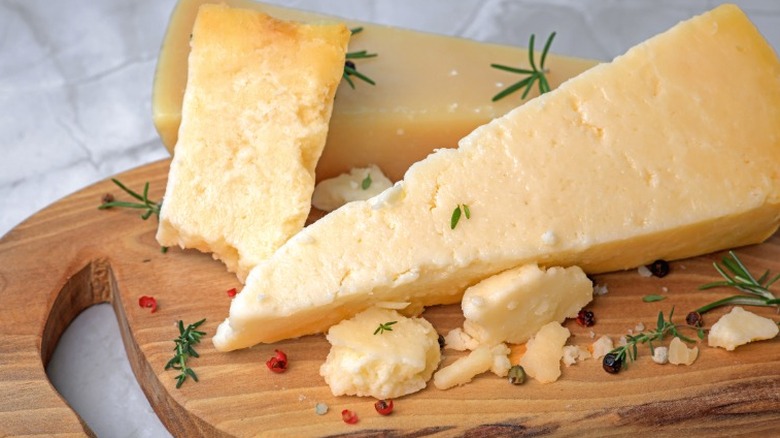
Like a closer in the MLB who comes in at the end of the game to seal the deal for the winning team, Parmigiano Reggiano (no, it's not just a fancy way of saying parmesan) has a very specific purpose in lasagna. When you're done assembling each layer and the ingredients are as high up in the pan as they can go, put one last layer of sauce on top and get out your cheese grater. Then take a block of this stuff and let it snow, let it snow, let it snow. By the time you're done, you'll have a layer of pale white cheese on top which some quality time in the oven will turn golden brown, bubbly, and perfect.
If you'd like, you can incorporate Parmigiano Reggiano (or parmesan, if you can't get your hands on the genuine stuff) more fully into your lasagna. If you've shredded mozzarella, there's no reason why you can't shred some of this nutty, tangy, delicious cheese along with it; mixing it up and adding it to the various layers. That way you won't just get one taste of parmesan-y goodness at the top of your lasagna — you'll be getting layer after layer of it.
Provolone
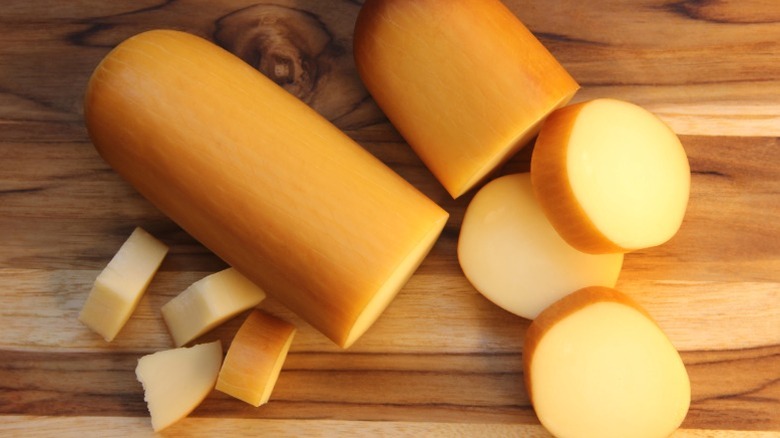
What if you like the stretch factor of mozzarella and the nutty richness of Parmigiano Reggiano, but you wished it had a little something extra? Maybe a little more bite? A little more danger, if you will? If so, it's time to make use of provolone, which is a brilliant addition to any lasagna cheese blend. You can use it instead of mozzarella or Parmigiano Reggiano, or you can throw it into the mix and let all the kids play nicely together.
Bear in mind, however, that the dish will taste different depending on what kind of provolone you get. There's provolone dolce (sweet provolone), which is a pleasant, creamy cheese with just a bit more tang than mozzarella. On the other hand, there's provolone piccante (spicy or sharp provolone), which can pack an absolute wallop if you're not prepared. Just be diligent when picking which variety you use. Shred or tear it into little pieces by hand and you'll have a dependable addition to your lasagna repertoire.
Fontina
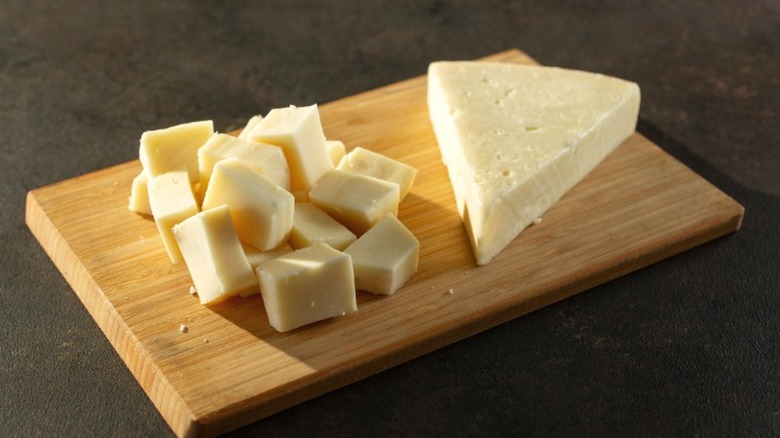
There are any number of cheeses you might want to put in the mix for your lasagna, including old reliable melters like gruyere and Emmental or outside-the-box additives like feta and gorgonzola. We're going to round this out with fontina, because it's just as terrific a choice as these other cheeses while adding a bit of its own flair. It's not as creamy as mozzarella, not as salty as Parmigiano Reggiano, and not as sharp as provolone; but it's a little creamy, a little salty, and a little tangy. It's a real jack of all trades, doing everything just well enough.
If you only use fontina by itself, it may not stand out; but mixed with any of the above cheeses or turned into a bechamel, it makes lasagna so much more robust, flavorful, and satisfying. If you make lasagna regularly, you can mix and match cheeses as you please and see what works. Who knows? You could discover a completely different top five from what we have here.