

Can You Eat Eggs That Are 2 Months Old? The Only Rule You Need To Know
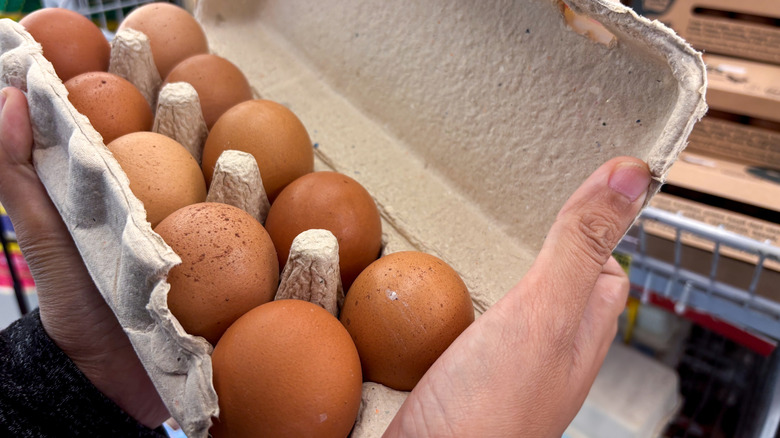
Your standard egg carton may only contain around 10 to 12 eggs, but chickens across the United States lay about 90 billion eggs per year. Even with so many potential omelets out there, you probably want the eggs you just bought to last a while. If you're not eating eggs every day, then how long are eggs good for? Can you eat eggs after two months?
According to the U.S. Department of Agriculture, a container of raw eggs should last for about three to five weeks in the refrigerator, although it may not be that long in practice. Keeping them any longer is pushing it, although there are ways to check freshness (more on that later). Keep in mind that your five weeks starts on the packaging date located on your egg carton, which all egg cartons in the U.S. legally need to have, rather than a "sell by" date. If you want to stay more cautious, a good rule is to assume you've got about three weeks from the day you bought them.
Once cracked and separated, those raw egg whites and yolks should both last up to four days in the fridge. Cooked eggs may not last more than a week, and if you've baked the eggs into anything else, check those other ingredients' refrigerator lifespans. If you live in a place where eggs are rarely refrigerated (like parts of Europe), it's much more unsafe to eat them after three weeks at the absolute maximum.
Keeping an eye on your eggs
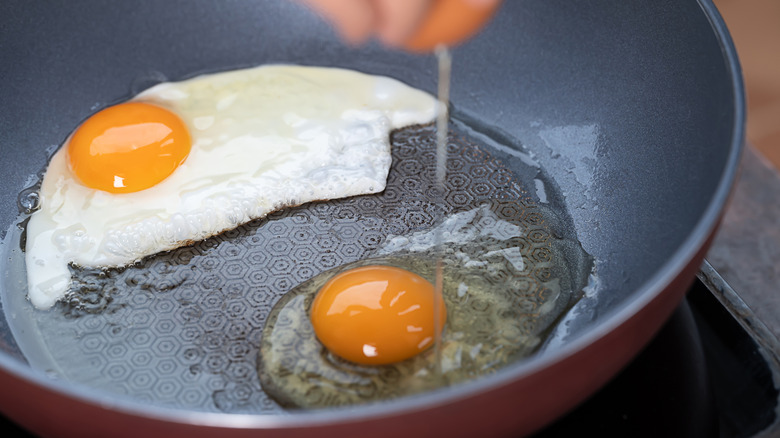
After those three to five weeks pass, there's only one real rule when checking if your carton of eggs has gone bad: Trust your eyes and your nose. Eggs are notoriously susceptible to salmonella, a common kind of bacteria which causes food poisoning. Only a small handful of eggs sold in cartons are pasteurized to kill those germs beforehand, so there is a risk of trace amounts growing on the eggs over time even if you do everything right when storing them. If you catch a sulfur-like whiff of that rotten egg smell, you should toss them, but also check for cracks in the shell or pink or iridescent egg whites.
If they don't spoil, the eggs can also simply grow stale and begin to grow dry. The float test that folks often recommend — a spoiled egg floats in water while a good egg sinks — is an egg myth you should stop believing. Eggs start to float once they get older, and an older egg hasn't necessarily become unsafe. Clear egg whites are another sign of an older egg. While eggs can be frozen for about a year before they start to degrade, you're strongly encouraged to break them open first, as only egg whites handle freezing well. Freezing tends to mess up and thicken the yolks' texture; adding salt to the yolks is an easy hack to perfectly freeze egg yolks.