

Grilling Hot Dogs Should Only Take You This Long (Otherwise, They Won't Be Juicy)
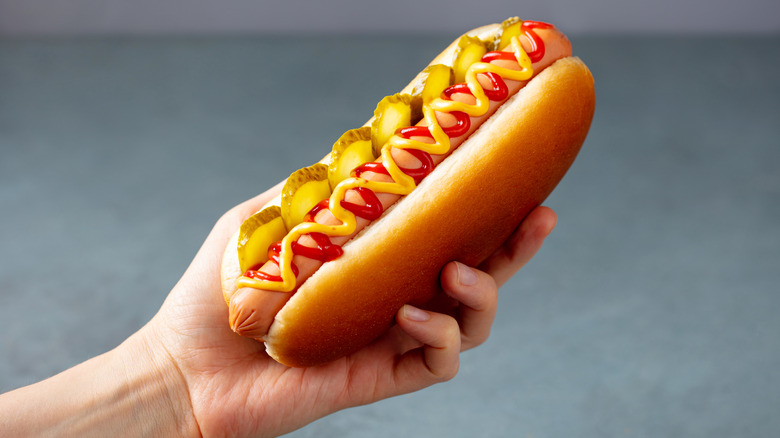
Another summer means another hot dog grilling season. Obviously, that's a good thing! Or, it should be. And yet, grilling the perfect hot dog isn't as easy as it sounds. There are plenty of opinions on the best and worst techniques for heating brats, but in a world where blue hot dogs are (for some reason) trending on TikTok it's hard to know who you can really trust. That's exactly why we took the time to find a reliable source for wiener warming advice. Ashley Lonsdale is the chef-in-residence at ButcherBox, so she knows a thing or two about how long it takes to grill a great hot dog.
Lonsdale says, "I would start checking standard hot dogs at around the 10-minute mark." She also notes that, unsurprisingly, larger hot dogs will take longer to grill. The details may vary between brats, but according to Lonsdale, "The optimal grill time is just until the hot dogs are evenly charred or crisped on the outside, and fully heated throughout on the inside."
This might seem obvious once you hear it, but according to Lonsdale, because hot dogs are almost always fully cooked when you purchase them you should think more about texture and flavor than true cooking. It might be tempting to leave them on longer, but for a juicy dog less really can be more, making that 10-minute mark a good place to start.
How to tell when a hot dog is done
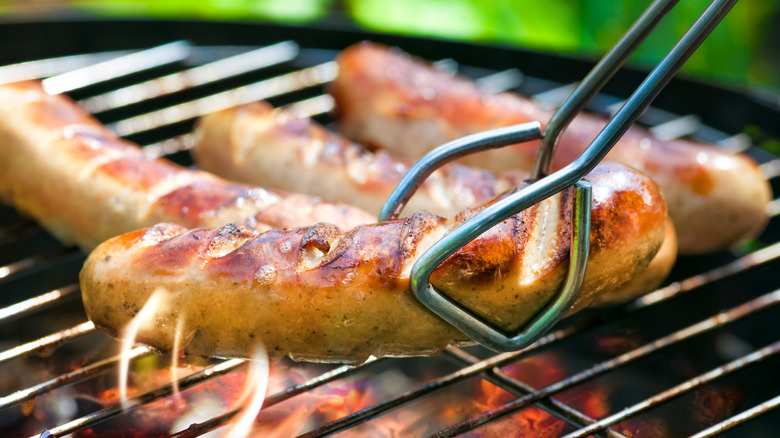
It's all very well to say a hot dog needs to be cooked for little more than 10 minutes until it's heated through, but how do you know when it's actually done? According to Lonsdale, this is when personal taste comes in. The generally agreed temperature for a toothsome hot dog is roughly 155 degrees Fahrenheit, but Lonsdale had more to say: "My ideal hot dog is blistered on the outside, creating crispy bits of texture to saddle up next to a pilowy-soft bun." However you like your dogs, "The exterior should be tight, but not wrinkled or shriveled." While using a meat thermometer is the best way to check internal temperature, this visual inspection is also important.
If you cook a hot dog for too long on the grill, it will start to lose moisture. This creates a tight, wrinkly outer layer and leads to a less-than-juicy final product. Lonsdale noted you'll probably find the texture to be unpleasantly dry at this point. High, direct heat can also lead to bursting. At the other end of the spectrum, Lonsdale says, "An undercooked hot dog will not be warm throughout or have enough texture on the outside."
Easy expert techniques for perfectly cooked hot dogs every time
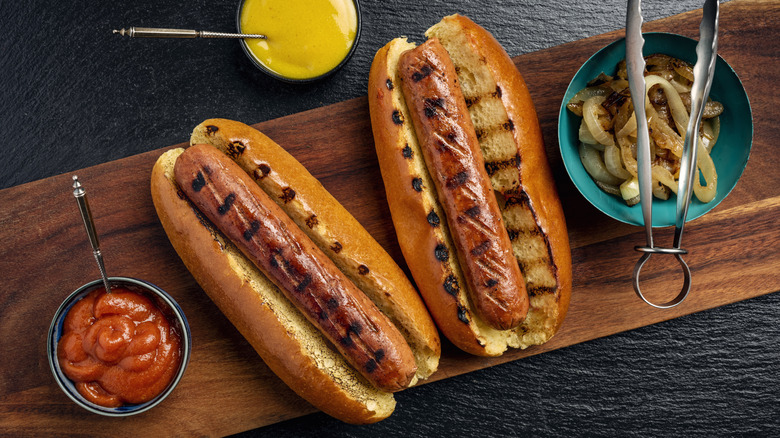
Luckily, both under cooked and overcooked brats are easy to avoid with just a few simple tricks. While 10 minutes is a good ball park, there are various factors at play. If you're not familiar with how a particular grill cooks, Lonsdale suggests starting out by cooking one hot dog and using that to work out the exact cook time needed before you throw the rest on the heat. As they need so little cooking time, you can practice before you really commit. Just make sure your grill is up to a steady heat before you start or the cooking time won't be representative.
Your first dog also gives you an opportunity to work on your technique — Lonsdale encourages dynamism when grilling hot dogs. "Don't be afraid to move them around the grill and flip them to get the whole exterior evenly grilled," she says, promoting a style that should allow you to play with both direct and indirect heat; leading to a snapping skin and a juicy dog. Ultimately, cooking hot dogs should be quick and easy, but it is a somewhat active process. The only other thing to remember is not to overcrowd the grill.