

Boxed Cake Mix Reaches Bakery-Level With One Simple Adjustment
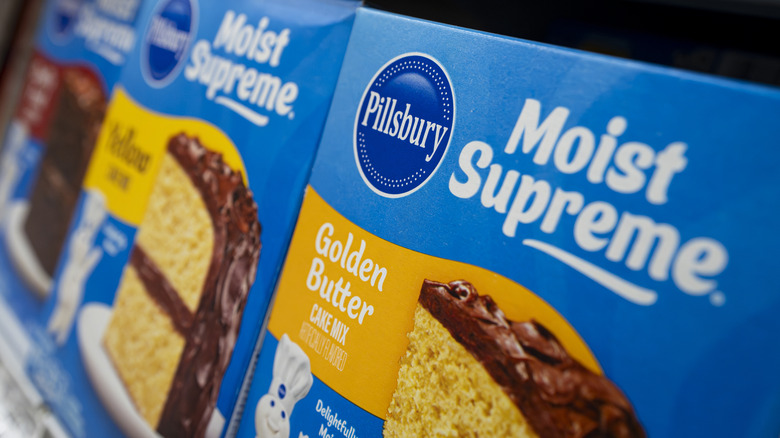
Let's face it — preparing a cake from scratch can be difficult and time-consuming, leading many to understandably seek simpler, faster alternatives for making the delicious dessert. This could mean opting for a luscious, two-ingredient, no-bake chocolate cake over a more traditional one, but it can also mean using a cake mix to get the job done. If you decide to do the latter, one way to make the cake more akin to one you'd find at a bakery is by baking it at a lower temperature and for a longer time than what the cake mix's instructions tell you to do.
We discussed this method with Chef Isaac Bernal, executive chef of the Representation of Spain to the United Nations, who shared the impact that baking cakes lower and slower has on your final product. "Some lower the oven temperature by about 25 degrees and bake the cake a little longer," Bernal told The Takeout. "That gentler bake helps create a more even crumb, helps prevent the cake from doming too much, and keeps it moister." This strategy also leads to a cake that's much more evenly baked and allows delicate cakes to retain their flavor.
As for why boxed cake mix instructions themselves don't already recommend this method, Bernal also provided some insight. "Boxed cake mixes are incredibly well formulated to work in as many home ovens as possible," Bernal reminded. "The ingredients to the instructions are developed for consistency rather than perfection."
Temperature tips when making cakes from boxed mixes
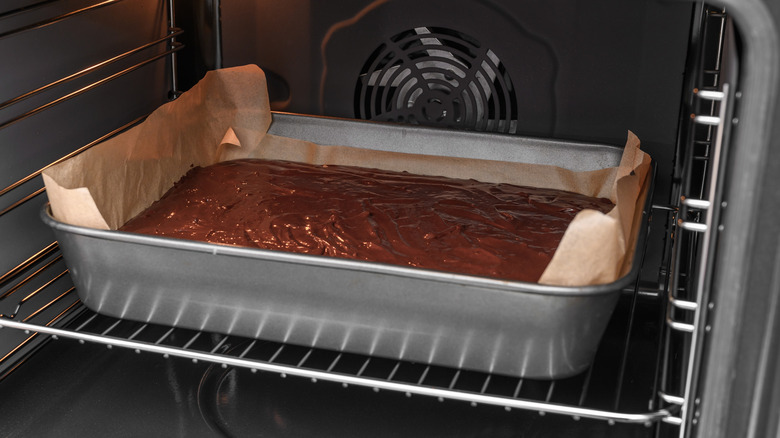
Temperature clearly plays a big role in baking a delicious cake, which is why not letting heat escape the oven during cooking is an important yet often forgotten factor to be cognizant of. "One mistake people make is opening the oven door too early. It should really be kept closed for the first ⅔ of the baking time," Isaac Bernal noted. "Every time you open the door the temperature drops, and that can affect how the cake rises."
However, the importance of temperature when making a cake goes far beyond just how hot your oven is. Bernal noted that the temperature of your ingredients when you begin to mix the batter is also something to keep track of. "There are a few more tricks I typically recommend, like using room-temperature ingredients whenever possible because they mix together more evenly," Bernal added. Using ingredients that are at room temperature in baking recipes is important, as it helps make your batter smooth and well-emulsified, leading to a more consistent and balanced end result.